'Factual inaccuracies and misjudgements' – Georgian Foreign Ministry responds to European Commission report


In response to the European Commission’s critical enlargement report, Georgia’s Foreign Ministry said the document contained factual inaccuracies and flawed assessments. It argued that these reinforced anti-Georgian narratives and narrowed the scope for constructive engagement between the European Union and Georgia.
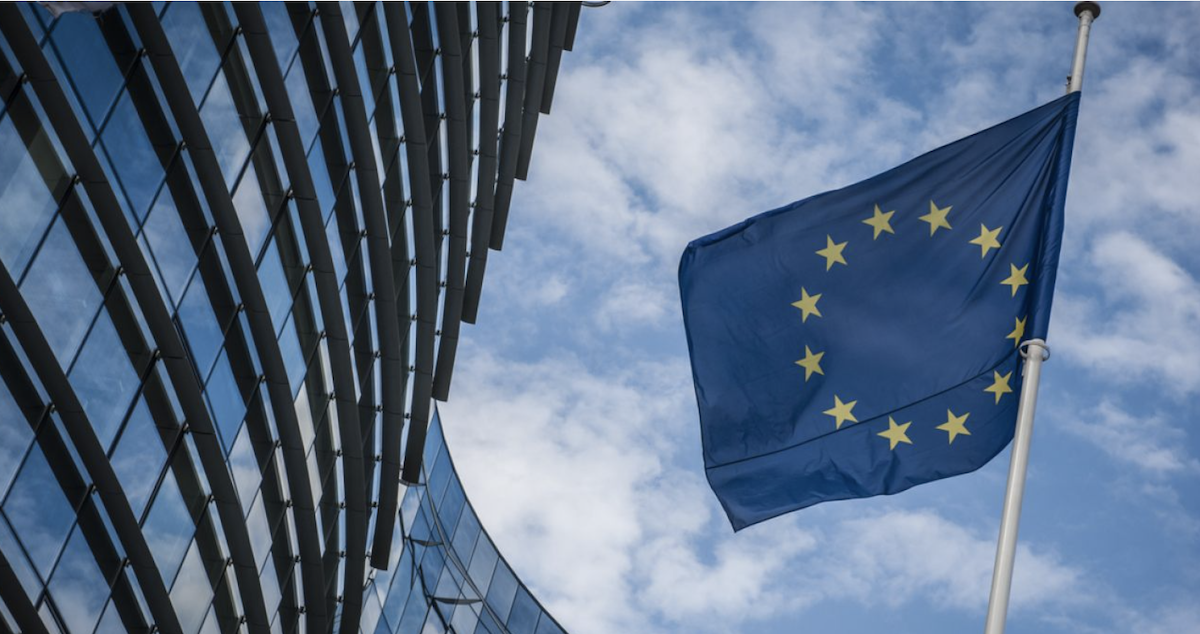
The Foreign Ministry says the report wrongly describes the Georgian authorities’ actions as “state capture”. It argues that governing the country is the duty of a government elected by an overwhelming majority in a democratic society.
“It is concerning that the European Commission’s report, through factual inaccuracies and flawed assessments, reinforces anti-Georgian narratives. This, in turn, narrows the scope for constructive engagement and dialogue between the European Union and Georgia,” the ministry said in a statement.
The ministry claims that the European Union held no meetings with Georgia at any level during the reporting period, despite the Association Agreement providing for them. It says this resulted from the suspension of dialogue with the Georgian side following the European Council’s conclusions of 27 June 2024. According to the ministry, this has limited the European Commission’s ability to assess Georgia’s progress objectively.
The ministry also argues that the report’s selective analysis of legal issues encourages their politicisation, undermines the rule of law and amounts to an attempt to interfere in the country’s internal affairs.
It further says that describing Georgian politicians’ responses to actions targeting Georgia as “hostile rhetoric” infringes on freedom of speech and damages the partnership between Georgia and the European Union.
“Although the enlargement report on Georgia has largely served to voice biased assessments and reinforce political speculation, the Georgian side will examine the European Commission’s report in detail and submit substantiated comments to the Commission,” the statement said.
The Foreign Ministry insists that Georgia’s leadership remains ready to engage in open and constructive dialogue with the European Union, based on mutual respect.
What does the European Commission’s 2026 report say?
According to the European Commission’s 2026 enlargement report, the state of democracy in Georgia has deteriorated further. The document sets out several key criticisms of the country’s government:
● Democratic backsliding and concentration of power: The European Commission says democratic institutions are weakening, political and civil liberties are being restricted, and the government is increasingly concentrating power in its own hands.
● Attempt to ban opposition parties: The Commission believes the proposal to ban five opposition parties threatens the country’s democratic foundations and raises further concerns about the use of the judiciary for political purposes.
● Electoral environment: The authorities have failed to carry out fundamental electoral reform. According to the report, the 2025 municipal elections took place in a polarised and repressive environment, marked by voter intimidation, pressure and legislative changes that gave the ruling party an advantage.
● Restrictions on civil society: The European Commission is concerned about the use of criminal proceedings and charges such as sabotage and assisting hostile activities by foreign organisations against civil society representatives. In the Commission’s assessment, this runs counter to democratic pluralism.
● Judicial independence: For the third consecutive year, the European Commission has recorded a deterioration in the judiciary. According to the report, judicial independence and impartiality have been undermined, while legal changes have increased the risk of state capture of the system. The Commission also criticised the harsh sentences imposed on demonstrators.
● Corruption and de-oligarchisation: The Commission says there has been no progress in tackling corruption. Georgia has had no anti-corruption strategy since 2020, and the authorities have taken no steps towards de-oligarchisation. The report also points to the role of oligarchic influence in facilitating state capture.
● Failure to meet visa-free travel requirements: Georgia has made virtually no progress on the European Commission’s previous recommendations, which concerned the protection of fundamental rights, combating discrimination and fighting corruption. As a result, the Commission has activated the revised visa suspension mechanism.
● Relations with Russia and sanctions: Georgia’s alignment with the EU’s foreign policy has fallen from 40% to 38%. The country has not joined most of the sanctions imposed by the EU on Russia, Belarus and Iran. The report also notes an increase in the number of direct flights to Russia.
● EU financial assistance: In response to democratic backsliding, the EU suspended €121.3 million in bilateral funding for the Georgian government in 2024. Georgia’s participation in new EU programmes under the Association Agreement has also been suspended.
● Anaklia port project: The European Commission notes that the project has become fully state-owned, construction work was suspended for several months, and budget funding for the project fell by 60% during the reporting period.
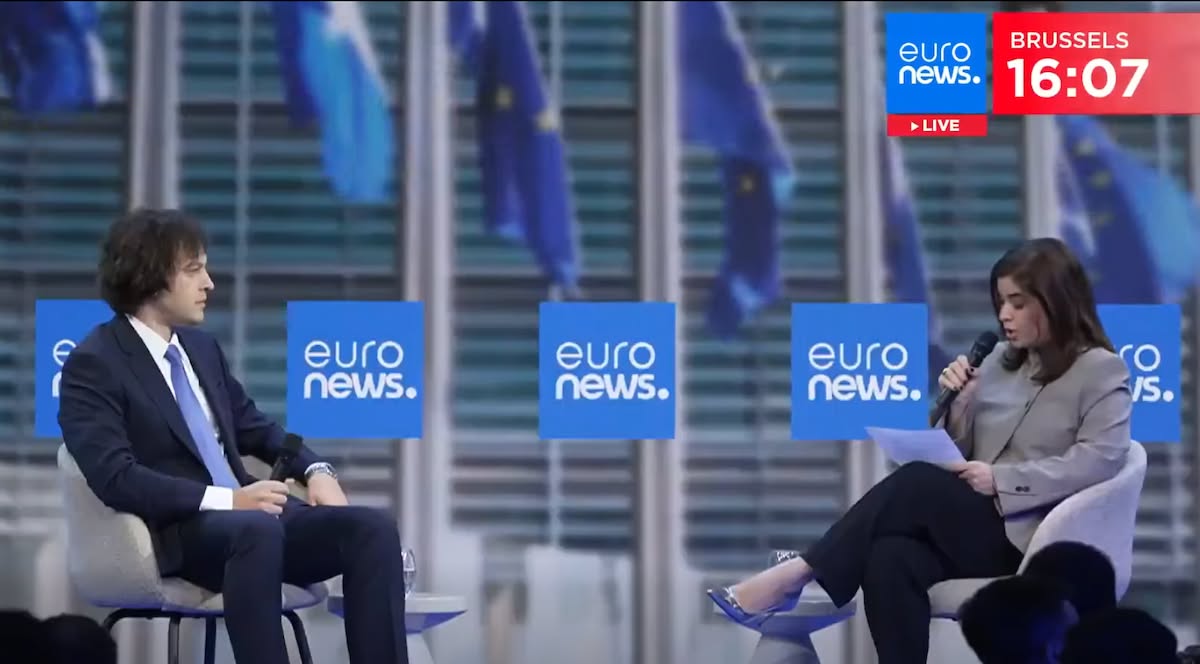
The European Commission’s report on Georgia