European Parliament resolution on banning opposition parties in Georgia: what it says






On 8 October, the European Parliament adopted its latest — and seventh — critical resolution on Georgia. This time, it focuses on the ruling Georgian Dream party’s attempts to ban five opposition parties and political groups.
In the resolution, the European Parliament strongly condemns the attempts to outlaw these opposition parties and calls for the immediate withdrawal of the constitutional lawsuit against them.
The draft resolution also once again calls for the release of political prisoners and sanctions against those responsible for Georgia’s democratic backsliding. It specifically names Georgian Dream founder and honorary chairman Bidzina Ivanishvili, party secretary-general Kakha Kaladze, Prime Minister Irakli Kobakhidze and Parliament Speaker Shalva Papuashvili.
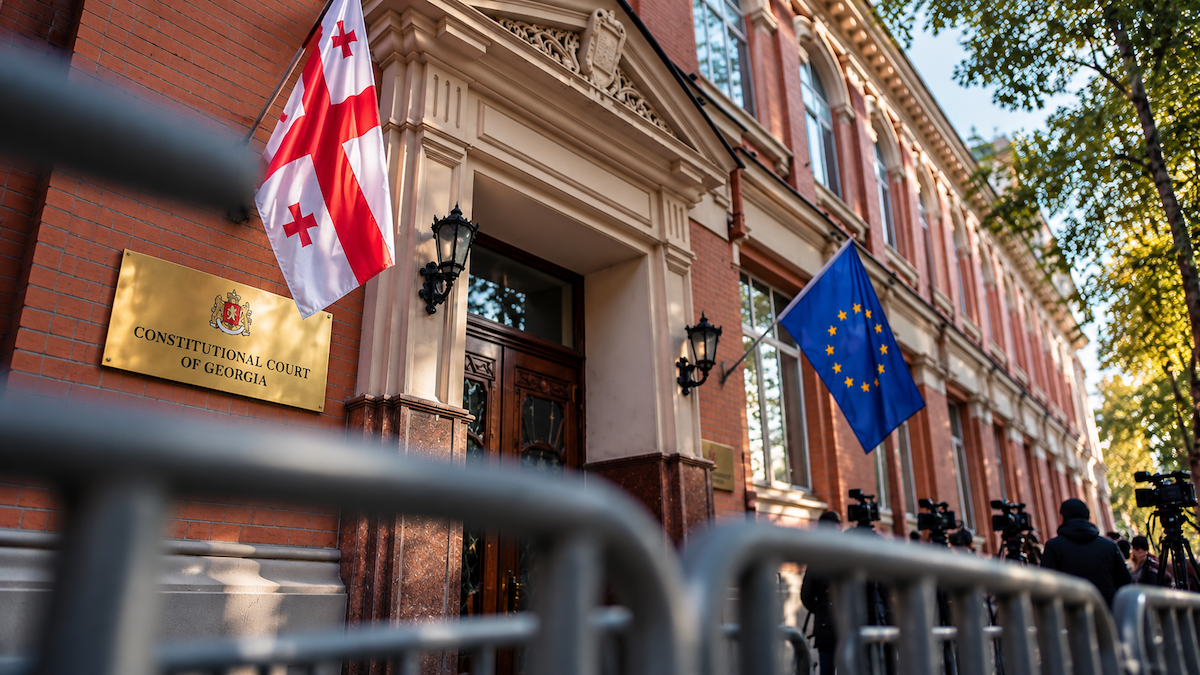
The document says that the actions of Georgian Dream have caused the situation in Georgia to deteriorate further. Democracy and media freedom have declined, while human rights and the rule of law face growing violations. The document says this increasingly conflicts with Georgia’s international obligations and responsibilities, including the Copenhagen criteria.
The draft resolution also notes that two German foundations — the Konrad Adenauer Foundation and the Friedrich Naumann Foundation — had to close their offices in Tbilisi after the authorities rejected their funding applications under the grants law.
The draft resolution also again refers to the persecution of journalists in Georgia who covered the authorities’ repression of the opposition and civil society.
According to the draft resolution, the European Parliament:
- Strongly condemns the attempt to outlaw Georgia’s opposition parties and calls for the immediate withdrawal of the constitutional lawsuit against them. It stresses that a functioning political opposition is an indispensable pillar of democracy and that using judicial mechanisms to eliminate legitimate political opposition is incompatible with democracy. It notes that banning the only opposition party represented in the Georgian parliament undermines the government’s previous narrative that it targeted only parties “under boycott”;
- Calls for the immediate and unconditional release of all political prisoners and everyone detained for peaceful protest, as well as the dropping of politically motivated charges of “sabotage”;
- Calls for the repeal of provisions that impose disproportionate restrictions on parties and individuals linked to banned parties. It condemns the improper use of legislation and state institutions to silence political opponents and calls for an end to obstruction of the activities of European political foundations;
- Expresses concern over the EU and most member states’ continued lack of action to deliver tangible results as the situation in Georgia continues to deteriorate severely. It reiterates its call for targeted sanctions and visa restrictions against those responsible for democratic backsliding, violent repression and political persecution — in particular, Bidzina Ivanishvili, Irakli Kobakhidze, Shalva Papuashvili and Kakha Kaladze;
- Reaffirms its unwavering support for the Georgian people’s European aspirations. It recalls its repeated warnings that any attempt to ban established political parties would move Georgia further away from the EU and make any progress towards EU membership impossible;
- Instructs its President to forward the resolution to the Council, the Commission, the Vice-President of the Commission / High Representative for Foreign Affairs and Security Policy, the member states and the “self-proclaimed authorities” of Georgia.
Timeline of European Parliament resolutions on Georgia
Since October 2024, the European Parliament has adopted six critical resolutions concerning the Georgian government. In these documents, MEPs have criticised Georgian Dream’s policies on democracy, the rule of law, human rights and the country’s European integration.
- The first critical resolution came on 9 October 2024 and focused on “Georgia’s democratic backsliding and threats to political pluralism”. The document criticised the so-called “foreign agents” law, the law on “family values and protection of minors”, pressure on civil society and the media, as well as the government’s rhetoric. The European Parliament also said Georgian Dream’s actions threatened the country’s EU accession process.
- The second resolution came on 28 November 2024, following the parliamentary elections. It focused on “Georgia’s worsening democratic crisis, the recent parliamentary elections and alleged electoral fraud”. The European Parliament criticised the conduct of the elections, citing pressure on voters, manipulation of the voting process and other violations. It also called for new parliamentary elections.
- The third resolution, adopted on 13 February 2025, focused on the “further deterioration” of Georgia’s political situation. The European Parliament condemned the Georgian Dream government’s actions against peaceful protesters, opposition figures and the media and called for the political crisis to be resolved through new elections. The document also addressed detained protesters, violence against journalists and the prosecution of political opponents.
- The fourth resolution came on 19 June 2025 and focused on media freedom in Georgia and the case of journalist Mzia Amaglobeli. The European Parliament criticised Amaglobeli’s detention and the ongoing criminal case against her. It also cited pressure from the Georgian Dream government on the media and critical voices.
- The fifth resolution came on 9 July 2025. It concerned the European Commission’s reports on Georgia for 2023 and 2024. The European Parliament said democratic backsliding in the country had intensified and that Georgian Dream’s policies had effectively halted Georgia’s EU integration process.
- The sixth resolution came on 12 March 2026 and focused on opposition politician Elene Khoshtaria and other political prisoners in Georgia. The European Parliament criticised the government’s repressive policies towards the opposition and civil society, saying that the laws and practices adopted by the authorities serve to suppress dissent.
European Parliament resolution on Georgia