Armenian election commission lifts ex-president Robert Kocharyan’s immunity






Robert Kocharyan stripped of parliamentary immunity
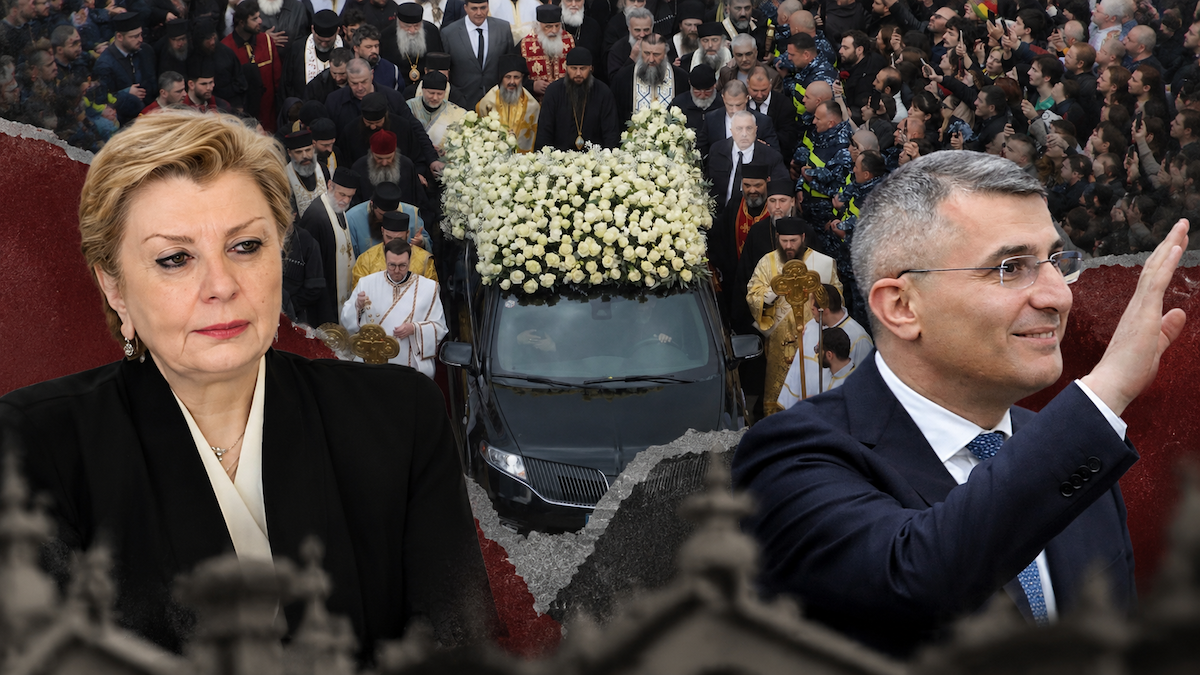
Armenia’s Central Election Commission has stripped former president Robert Kocharyan of parliamentary immunity. Kocharyan leads the opposition Armenia alliance, which won seats in parliament in the 7 June parliamentary election.
As a result, the Prosecutor General’s Office can now initiate criminal proceedings against him. The commission held the session behind closed doors and did not allow journalists to attend the discussion.
The Prosecutor General’s Office has not yet disclosed the charges it intends to bring against Kocharyan. According to his lawyer, Aram Orbelyan, prosecutors accuse the former president of abuse of office and money laundering.
Before the CEC announced its decision, Orbelyan left the building and explained the substance of the allegations to journalists. According to documents submitted by prosecutors, the case concerns an agreement signed by the Armenian government in 2004.
However, the lawyer said neither the former president nor any members of his family had any connection to the deal.
When asked why the authorities had returned to the agreement 22 years later, Orbelyan replied:
“I associate this with political processes. I do not see any other motive. I would also like to note that, in any case, the statute of limitations expired long ago.”
Former Armenian president Robert Kocharyan heads the electoral list of the Armenia alliance. According to the election results, the bloc will hold 12 seats in the new parliament.
- Armenia debates new mechanisms to tackle vote-buying
- Final election results in Armenia: Pashinyan’s party wins majority
- Opinion: Why Putin hasn’t rushed to congratulate Pashinyan on his election victory
What is known about the deal behind the prosecution’s case?
The former president’s lawyer shared details of the case with journalists waiting outside the court building for the CEC’s decision. According to Aram Orbelyan, the case concerns a deal concluded during Robert Kocharyan’s presidency and approved by the Armenian government.
“The government decision was never challenged in any way, and Mr Kocharyan has absolutely no connection to this transaction, nor do any members of his family,” he said.
Orbelyan also argued that the facts presented in the case “do not indicate the commission of any crime”.
However, prosecutors have linked the case to the former president because, several years later, in 2008, after Kocharyan had left office, his son Sedrak Kocharyan acquired a stake in the company involved in the deal.
“And now they are trying to somehow connect him to the 2004 transaction. The case concerns the territory of the Master Class tennis court,” the lawyer said.
According to Orbelyan, the company leased the land and began construction using its own funds. In 2008, however, it encountered financial difficulties and offered Sedrak Kocharyan a stake in the project while seeking investors.
“There is nothing criminal in this process. There are no circumstances that indicate the commission of a crime,” Orbelyan said.
“The prosecution stitched together some kind of case and went to the CEC”
Amid public debate over the decision to strip Kocharyan of parliamentary immunity, the head of the former president’s office issued a statement. Bagrat Mikoyan described the process as “a continuation of the unlawful actions that took place at the airport”.
On 14 June, authorities prevented Kocharyan from leaving the country, even though his office had announced his planned three-day trip in advance. The former president’s office said it was a private visit that had “been planned long ago but postponed because of the intensive election campaign”.
Officials did not explain the legal grounds for preventing Kocharyan from leaving Armenia. Both the Anti-Corruption Committee and the Investigative Committee stated that no investigation under their jurisdiction had imposed any travel restrictions on him.
Kocharyan is also a defendant in the March 1 case. The case concerns the dispersal of demonstrators who rejected the results of the 2008 presidential election. Clashes broke out between protesters and security forces. Ten people, including two police officers, died and hundreds suffered injuries. In that case, prosecutors accuse the former president of abuse of office.
However, in response to media inquiries, the court said the proceedings do not include a ban on leaving the country.
“The Investigative Committee and the Anti-Corruption Committee effectively confirmed that no criminal case existed. Consequently, someone prevented the former president from leaving the country by committing a direct criminal offence. Then today the prosecution, acting under the government, stitched together some kind of case and went to the CEC. But why did they go to the Central Election Commission? They do not care about the law,” Mikoyan said in the statement.
According to him, Prime Minister Nikol Pashinyan’s decisions have once again turned law enforcement officers into “accomplices to a crime”.
At that point, Mikoyan insisted that no information existed about any “new” criminal case.

Robert Kocharyan stripped of parliamentary immunity