Drone lessons in kindergartens and schools: how Russia is drawing children into the military system






Drone lessons in Russian schools
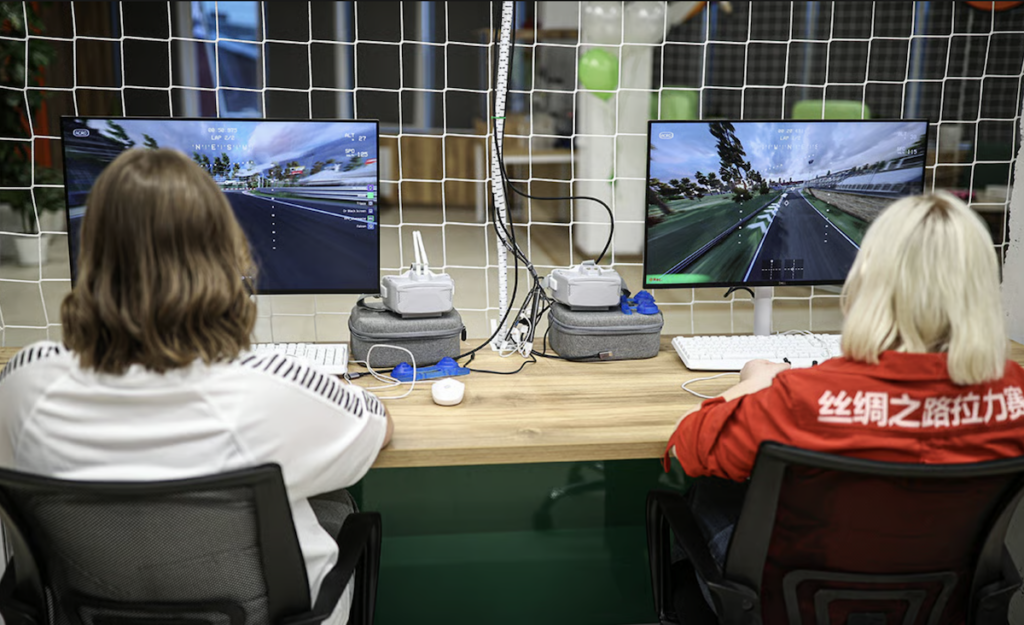
Since the start of the full-scale war, Russian educational institutions—from universities and colleges to schools and kindergartens—have sharply increased their purchases of drones, drone assembly kits, and pilot training software. According to calculations by Novaya Gazeta Europe, nearly 16 billion rubles have been spent on this over the past four years. Before the war, such spending amounted to about 300–350 million rubles per year, with drones mainly purchased by technical colleges and specialized universities. However, after 2022, ordinary schools have increasingly begun to show interest in them.
The reason is that the war has made drones one of the main tools of the modern army. Russia needed a large reserve of future operators, engineers, and loyal personnel starting from school age—and sometimes even preschool age: formally, this is presented as technological and career-oriented education, but in essence it is about early training of personnel for a militarized system.
Amid a sharp increase in government procurement, drones have become a source of major contracts and guaranteed budget funding for companies close to the state; Putin’s daughter is also involved in this business.
Material from Novaya Gazeta Europe.
____________________________________________________________________
Why drones have entered schools
Drones now play a key role in Russia’s war against Ukraine—from reconnaissance to strikes on targets at a distance. Both countries have already created separate branches for unmanned forces: Ukraine in 2024, and Russia in 2025. According to Latvian intelligence, drone strikes account for 70–80% of personnel losses on both sides. At the same time, armies need not only the devices themselves but also a large number of operators, and the success of missions largely depends on their training.
Since 2025, students in Russia have been actively encouraged to sign contracts with unmanned units. But the involvement of young people begins earlier. The Insider reported that minors are being drawn into developing technologies under the guise of educational clubs, which are then used at the front. Against this backdrop, the growth in procurement within the education system appears to be part of a broader militarization.
How procurement has grown
If in 2019–2021 universities, colleges, and schools spent 300–350 million rubles annually on such purposes, in 2022 spending rose to 600 million, in 2023 to 2.6 billion, and in 2024 to more than 9.7 billion. In 2025, the volume decreased to about 2.8 billion rubles, likely due to previously signed long-term contracts.
Before the war, drones were mainly purchased by technical colleges and specialized universities. After 2022, ordinary schools have increasingly shown interest in them. The two largest wartime contracts, totaling nearly 3.5 billion rubles, were signed by Moscow government bodies responsible for equipping schools and colleges. Among the major clients are also many regional ministries of education. Drones have even appeared at the Moscow State Academy of Choreography, where UAVs are included in the list of extracurricular developmental activities.
Who profits from this
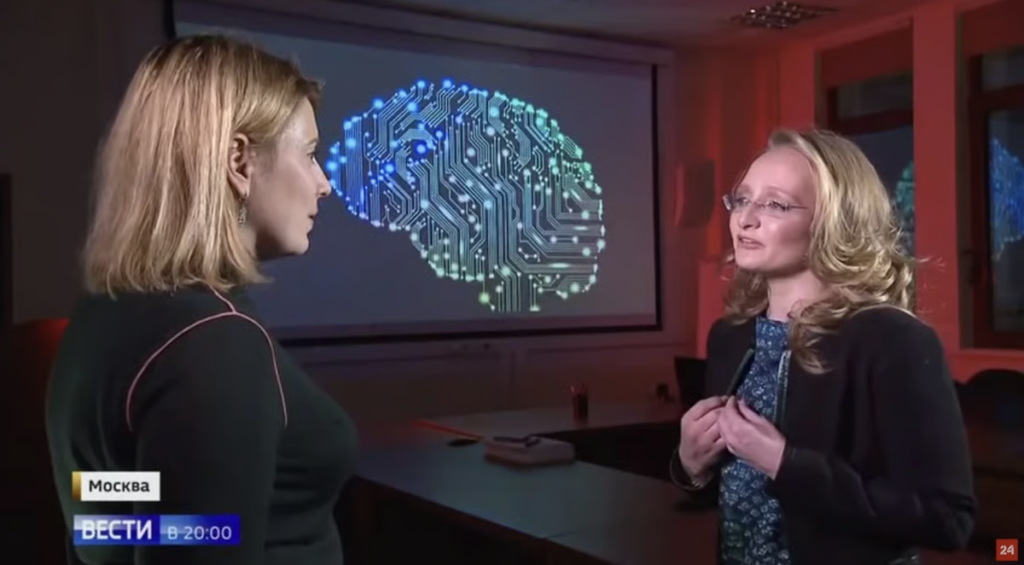
One of the largest suppliers of drones to educational institutions is the St. Petersburg–based company “Geoscan.” Before 2022, it focused on aerial photography, mapping, and educational drones. After the start of the war and the launch of the national project “Unmanned Aerial Systems” in 2024, the company became a major government contractor. In 2023, the Innopraktika foundation—headed by Katerina Tikhonova, daughter of Vladimir Putin—acquired a stake in Geoscan. In 2024, the company’s revenue grew 3.6 times to 4.74 billion rubles, while its profit increased sixfold. Geoscan signed a contract with the Moscow government through 2030 worth 1.7 billion rubles, committing to invest at least 150 million in drone production in the capital. The company also received more than 400 million rubles through 52 contracts with state educational institutions.
How it was integrated into the school curriculum
In 2024, topics related to drones were included in the school subject “Labor (Technology).” In grades 7–9, 15 hours are allocated to drones.
Students are expected to learn how to assemble drones, program them, and operate them, including using FPV goggles. Formally, purchasing drones for schools is not mandatory: practical lessons can be replaced with simulators. In 2023, the Ministry of Education stated plans to equip nearly 5,000 schools and about 400 colleges with UAVs. By comparison, there are around 40,000 schools in Russia in total.
In school textbooks, military applications of UAVs are barely described. They focus instead on cargo delivery, aerial photography, agriculture, drone shows, and—briefly—use in law enforcement. But in practice, a military component has already been embedded into education.
Teachers who are meant to introduce students to drones are trained at the “Voin” military-sports training center. Its leadership has openly stated that a significant share of instructors are participants in the war against Ukraine.
Students are expected to learn about the military use of drones within a mandatory subject—OBZhR, which stands for “Fundamentals of Security and Homeland Defense.” In 10th grade, UAVs are given a separate lesson described as an “effective means of armed struggle.”
Defense policy expert Pavel Luzin believes that the practical impact of such programs will be limited despite their scale and cost. In his view, it is impossible in real school conditions to train sufficiently skilled operators in just a few hours, so much of this activity resembles bureaucratic imitation rather than a functioning system for training personnel.
What is happening in kindergartens
Kindergartens stand out as a separate case. Novaya Gazeta Europe identified drone-related purchases by preschool institutions in the Tyumen region, near Perm, and in Yuzhno-Sakhalinsk. It is not always clear what exactly these drones are used for there. One of such kindergartens, “Mosaic” in Perm Krai, reports on its social media about robotics clubs where children control drones in simulators and observe the flight of small devices.
At the same time, children are also introduced to a military logic: as part of a game called “Zarnichka,” they were given a task involving an “enemy drone,” which they had to knock down using sandbags. While in 2020 the kindergarten still posted content with the hashtag “PeaceOnEarth,” it now reposts calls from the Perm military recruitment office encouraging contract service enlistment.
This seems to reflect the broader underlying logic: drones in the Russian education system are becoming not only part of technical training, but also a tool for the early militarization of children and young people.
exchange