The fifth year of Russia–Ukraine War — forecasts and scenarios for 2026






War in Ukraine: forecasts and scenarios
Material by Donbas News
The full-scale invasion of Ukraine by Russia began four years ago — on February 24, 2022. Fighting has not subsided, peace negotiations remain unsuccessful, and what is happening is increasingly described as a war of attrition. Possible scenarios for how events may unfold, as well as the timeline for the war’s end, remain subjects of debate among both politicians and military experts.
Negotiations without a breakthrough: disagreements between the U.S. and Europe over ending the war
The trilateral talks between Russia, Ukraine, and the United States in Geneva on February 17–18, 2026 did not produce a breakthrough: discussions focused mainly on technical issues, while key disagreements over territories and security guarantees remained unresolved. This time, European representatives joined the negotiations, which is seen as a positive signal.
“The United States believes that these hostilities can be ended on terms that are commercially beneficial. And this is one of the key criteria. For Europeans, this is a matter of security. Ukraine is currently the main European military force that can stand up to Russia and can also teach Europeans themselves how to resist a Russian attack,” noted Oleksii Izhak, an expert on international security.
According to him, this is where the key divergence between the positions of the U.S. and the EU lies. Heads of intelligence services in European countries openly state that the conflict will not end in 2026—neither on the battlefield nor through political means. The negotiation process is seen more as a tool of pressure by Moscow to ease sanctions than as a real path to peace.
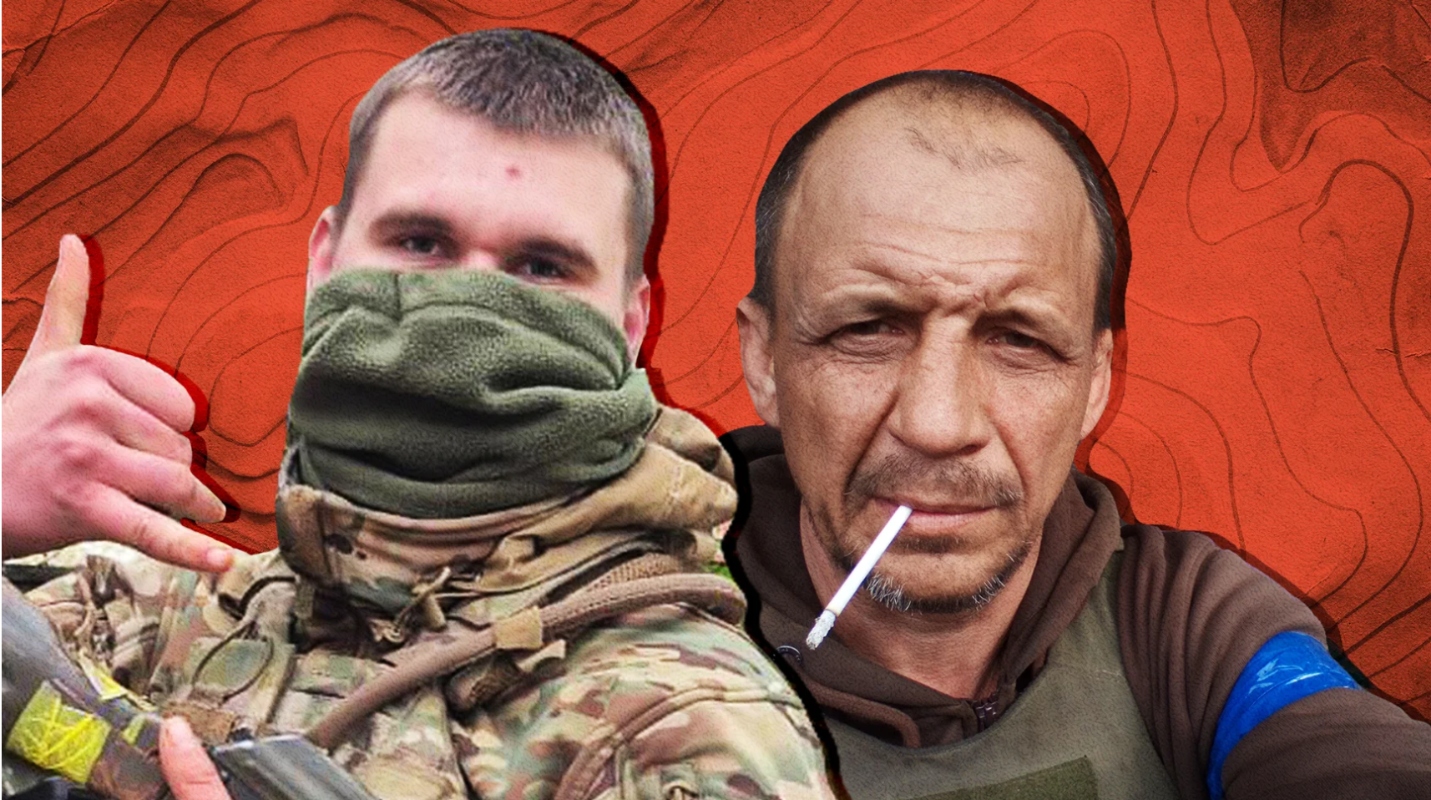
“Unfortunately, we understand that in this situation, without a decision by Russia, without agreements with Russia, we will not get anywhere. And at the moment, the actions we see from Russia—both directly on the battlefield and in its economy, domestic politics, and on the international negotiation track, where they are effectively dragging out and sabotaging the negotiation process—allow us to conclude that in the near future Russians are not going to end the hostilities in Ukraine on compromise, reasonable terms,” said Andrii Tkachuk, an officer of the Armed Forces of Ukraine, military expert, and volunteer political scientist.
Meanwhile, a number of countries are expanding sanctions pressure. New Zealand has introduced a new package of restrictions against Russia, adding individuals and companies to sanctions lists, as well as lowering the price cap on Russian export goods. International pressure is increasing as it becomes clear that the war has been going on not for four, but for twelve years—since the annexation of Crimea and the start of Russia’s hybrid aggression against Ukraine in Donbas.
“Therefore, it is quite obvious that we should not expect the war to end in the near future for one clear reason: the adversary has not achieved any of the objectives it set for itself, starting from the very hybrid aggression in 2014 and the full-scale aggression in 2022. Thus, it is evident that the war will continue until the complete exhaustion of one of the sides’ capabilities,” emphasized Vladyslav Seleznev, a colonel of the Armed Forces of Ukraine and spokesperson for the General Staff of the Armed Forces of Ukraine from 2014 to 2017.
European allies continue to adhere to a strategy of supporting Ukraine. Arms supplies are financed with European funds, and European Union countries are urging Washington to maintain military aid to Kyiv.
“Arms supplies to Ukraine were halted both under Joe Biden and Donald Trump, and there were differing views. Now these supplies are funded with European money, so Europeans are not standing aside. They are helping Ukraine—very actively, in every way they can—and are persuading the United States to support Ukraine as well,” explained Oleksii Izhak.
At the same time, the United States still hopes for a political outcome.
“The U.S. simply wants a political success and seeks to bring the end of hostilities as close as possible. And this is still seen in the United States as achievable through concessions by Ukraine rather than Russia, because it seems easier to put pressure on Ukraine. Europeans believe it is easier and more appropriate to put pressure on Russia. That is more likely to lead to the end of the war,” the expert noted.
Front and exhaustion: why 2026 will not be the final year
On the battlefield, as of mid-February, an increase in activity is being recorded on both sides. According to Western OSINT analysts, the Armed Forces of Ukraine recaptured more than 200 square kilometers of territory during the week from February 11 to 15.
“Of the directions where there are results, it is clear that this is Kupiansk, where the clearing of enemy units is being completed. There are good successful actions by our Defence Forces this year and a cautiously optimistic mood regarding counteractions in the south. We should not draw premature conclusions so as not to hinder our Defence Forces from implementing the plan to effectively disrupt the offensive capabilities of the Russians in the Zaporizhzhia and Dnipropetrovsk regions,” said Andrii Tkachuk.
Experts link the successes of the Armed Forces of Ukraine in part to problems in the Russian army’s communications following restrictions on access to the Starlink system.
“Despite significant military-technical support from the Islamic Republic of Iran, North Korea, and partially the People’s Republic of China, the Russians do not have sufficient resources. This repeatedly contributes to the effective actions of the Ukrainian army. Already now, the death toll of Russian losses has exceeded 1,300,000 killed and wounded Russian servicemen,” said Vladyslav Seleznev.
At the same time, Russia retains the ability to make territorial advances. According to monitoring centers, from February 2025 to February 2026, the occupiers captured about 5,442 square kilometers of Ukrainian territory.
“The enemy is pressing and tightening its grip on Myrnohrad. They have already taken dominant heights there for a long time and brought in armored vehicles. Therefore, the situation in the Pokrovsk–Myrnohrad agglomeration is difficult, and it is probably the most challenging at the moment,” noted Andrii Tkachuk.
Russia continues attacks on energy infrastructure, leading to electricity outages and heating problems. In the occupied territories of Donetsk, Luhansk, Kherson, and Zaporizhzhia regions, disruptions to basic services persist, and repression against pro-Ukrainian populations is intensifying.
“This does not mean that the war will continue at the same intensity throughout the year. Most likely, the front will freeze, and for a long time there will be a situation similar to World War I, when front lines did not move and attrition took place, or like the Korean War,” believes Oleksii Izhak.
“Vladimir Putin is unlikely to make concessions on his geopolitical plans and ambitions until he realizes that the cost of aggression against Ukraine will be much higher than the potential benefits of fully occupying the entire territory of Ukraine. Therefore, at least 2026 will take place under the flag of active hostilities,” said Vladyslav Seleznev.
“At a significant advantage to itself, China is assisting Russia in exchange for Russian money and Russian oil, which is being traded at a large discount. Therefore, Russia is closer to exhaustion. But this does not mean we are talking about a month or two. No one knows when a critical turning point in the Russian economy will occur,” explained Oleksii Izhak.
Donetsk direction and prospects for 2027–2030: is a freeze or a new escalation possible
Experts suggest that active hostilities in the Donetsk region may continue at least until 2027.
“Even the Pokrovsk–Myrnohrad operation, which they planned to complete by autumn, has dragged on almost until spring thanks to the effective work of the 7th Air Assault Corps and the organization of defense,” noted Andrii Tkachuk.
“As for the prospects of military operations continuing until 2030, I would not rule out such a scenario. Russia’s offensive capabilities are gradually being exhausted, but this does not mean complete stagnation. The scale and intensity of hostilities may decrease,” said Vladyslav Seleznev.
“The war continues because Vladimir Putin still believes his goals are achievable, which would ultimately lead to the establishment of Russian control over Ukraine. This is what Russia calls ‘security guarantees’ for itself,” noted Oleksii Izhak.
“I think Russia will not immediately move to real negotiations; it will still send Vladimir Medinsky, and he will be telling stories about the Pechenegs for some time. But after the front stabilizes, in a relatively near period, economic events in Russia will occur that will force it to move toward real negotiations, not their imitation,” emphasized Oleksii Izhak.
On the fifth year of the full-scale war, diplomatic, military, and economic factors remain closely interconnected. Ukraine is expanding its defense-industrial complex and increasing the production of its own weapons.
“Our advantage is our wings and our FPV drones, because these are things that are produced here and meet the requirements of this war. Europeans are developing high-precision and expensive weapons, but at the level of FPV drones and mid-strike and deep-strike capabilities, I believe we are in a leading position,” noted Andrii Tkachuk.
Despite terror and pressure, Ukrainian society continues to demonstrate resilience. It is this internal resilience that remains a key factor determining not only the course of the war, but also its outcome.
exchange