‘You cannot build happiness on abortion’: New Georgian patriarch’s first sermon on family and demographics






Georgia’s patriarch on family and demographics
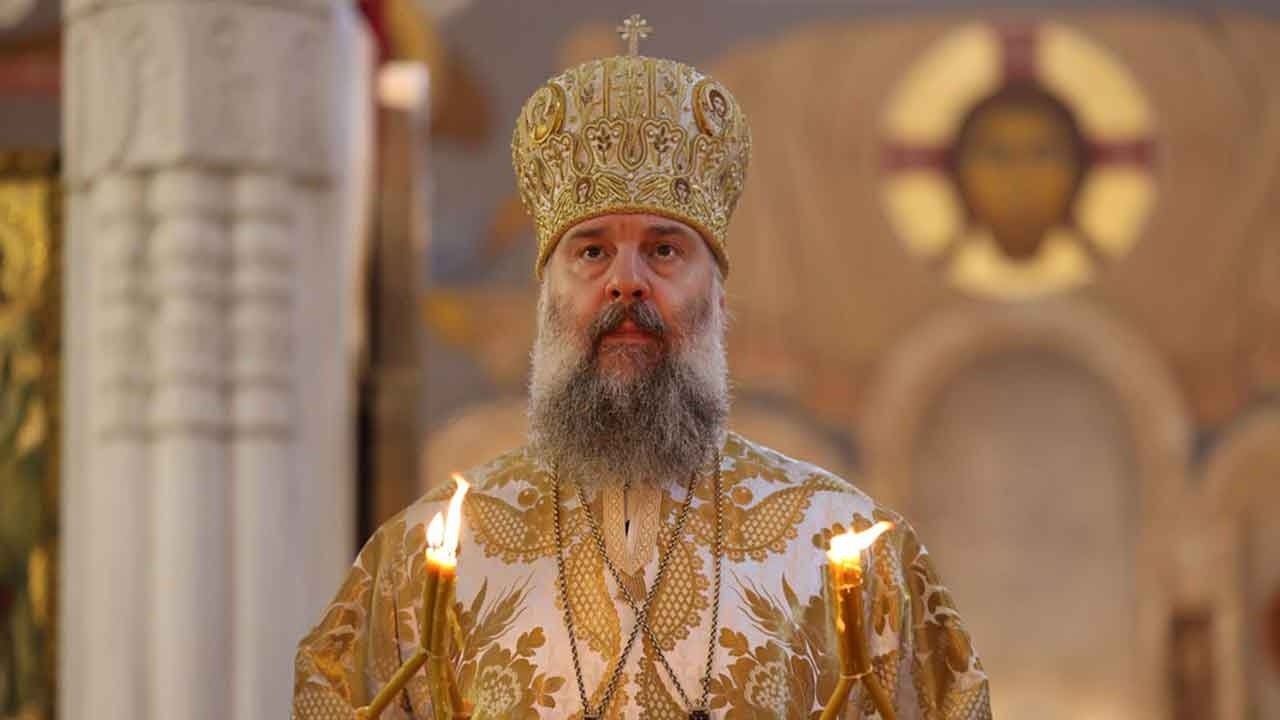
New Catholicos-Patriarch of Georgia Shio III used his first public sermon to call for stronger legislation in response to the demographic crisis, against what he described as “gender ideology”, and in defence of family values.
His remarks focused on both the threat of population decline and issues including abortion and the protection of family values.
“Legislation must be strengthened to protect the family”
According to the Patriarch, the state should strengthen legal mechanisms that would “protect the family from harmful gender theories and ideology”.
He said some voices in society have called for abandoning such legislation. The Church, however, holds the opposite position. According to him, this approach should “grow stronger and become more firmly established”.
Shio III said he sees policies aimed at protecting the family as the foundation of the country’s “survival, reproduction and God’s grace”.
“On the demographic crisis”
In his sermon, the Patriarch paid particular attention to Georgia’s demographic situation. He said that if the country fails to address demographic problems and strengthen families, Georgia faces the risk that “other peoples will settle in the country and outnumber Georgians”.
According to him, other ethnic groups living in Georgia “love children”, “do not get rid of children” and “protect their religion”, which, he argued, allows them to reproduce more successfully.
The Patriarch added that, “God forbid”, such a scenario should happen. However, he said he considers the threat real if current trends continue.

Abortion as a “grave sin”
Shio III also addressed abortion within the family and described it as a “grave sin”.
“If a family commits such a grave sin as abortion, then, of course, no happiness can grow from such a foundation, and that family is doomed.
As we know from the Bible, the blood of those who were killed cries out to God for vengeance. On the other hand, where a child is born every two or three years — that angel sent by God — there is happiness. Because through their existence, they illuminate everything around them,” Shio III said.
Комментарии

Tamta Mikheladze, director of the Social Justice Center:
“I analysed the number of abortions in the country and compared them with birth rates.
The statistics show that both abortion rates and birth rates are declining at the same time. A reduction in abortions has not translated into higher birth rates. Since 2018, reproductive activity in the country has generally declined. This likely relates to migration among people of reproductive age, economic instability, sharply rising housing prices and weak social protection for families.
A closer look shows that abortion rates were especially high between 2011 and 2015 and exceeded 30,000 cases a year. The figure peaked in 2012 at 39,200 cases. Rates also remained very high in 2014 (33,500) and 2015 (33,400). Since 2018, the number of abortions has continuously declined. In 2024, it reached a historic low of 11,800. Compared with the 2012 peak, this marks a decline of around 70%.
Now let’s look at birth rates. Birth rates began rising in 2008. They peaked in 2014 at 60,635 births. Figures also remained high in 2009, 2010, 2015 and 2017. A decline began in 2018. By 2025, the birth rate had fallen to a historic low of 37,867 births. Compared with the historical peak, this marks a decline of around 37%.
Georgia therefore shows one clear trend: abortion rates and birth rates rose together and later declined together. Statistically, there is no clear direct correlation between lower abortion rates and higher birth rates. The data instead suggest a broader decline in reproductive activity. This may relate to migration among people of reproductive age, economic difficulties and, in my view, political depression.
The problem lies elsewhere. However, both the authorities and the Patriarchate look for explanations in another direction because they do not want to discuss the country’s real social and demographic challenges.”

Shota Digmelashvili, executive editor of Forbes Georgia:
“The problem facing Georgian families is not ‘gender theories’. Georgian families face economic problems. These problems break families apart and leave children seeing their parents only through smartphone screens.
Georgia’s problem is not a low birth rate. In most cases, more people are born in the country than die. Yet the population continues to shrink because poverty, inequality and a lack of opportunities drive emigration.
The Church’s duty is, above all, to protect the poor and the oppressed. It should also unite the nation and rebuild broken bridges between people.
Instead, we see the religious pulpit used to strengthen a specific political party and the economic elites linked to it. We see the spread of private political narratives that serve to distract attention from the real problems facing the public.”
Georgia’s patriarch on family and demographics