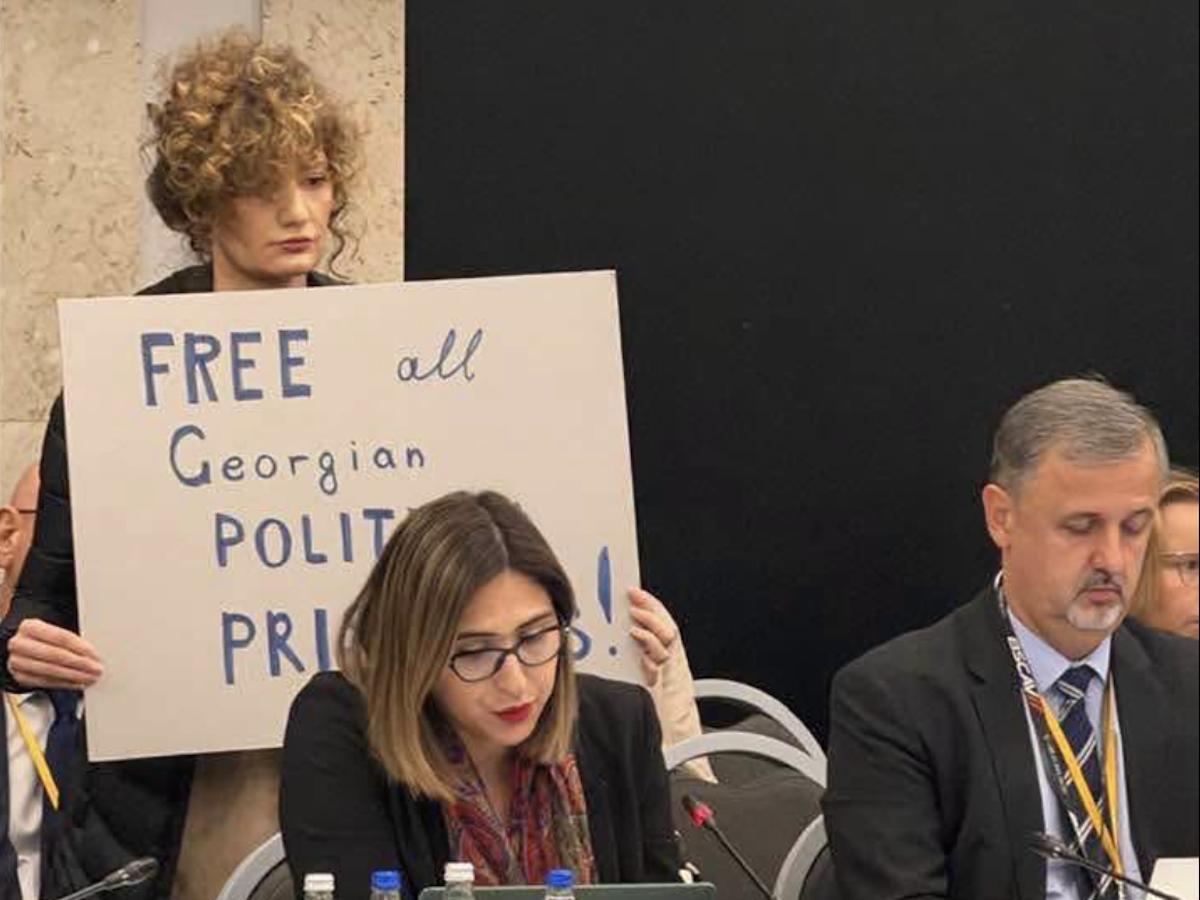
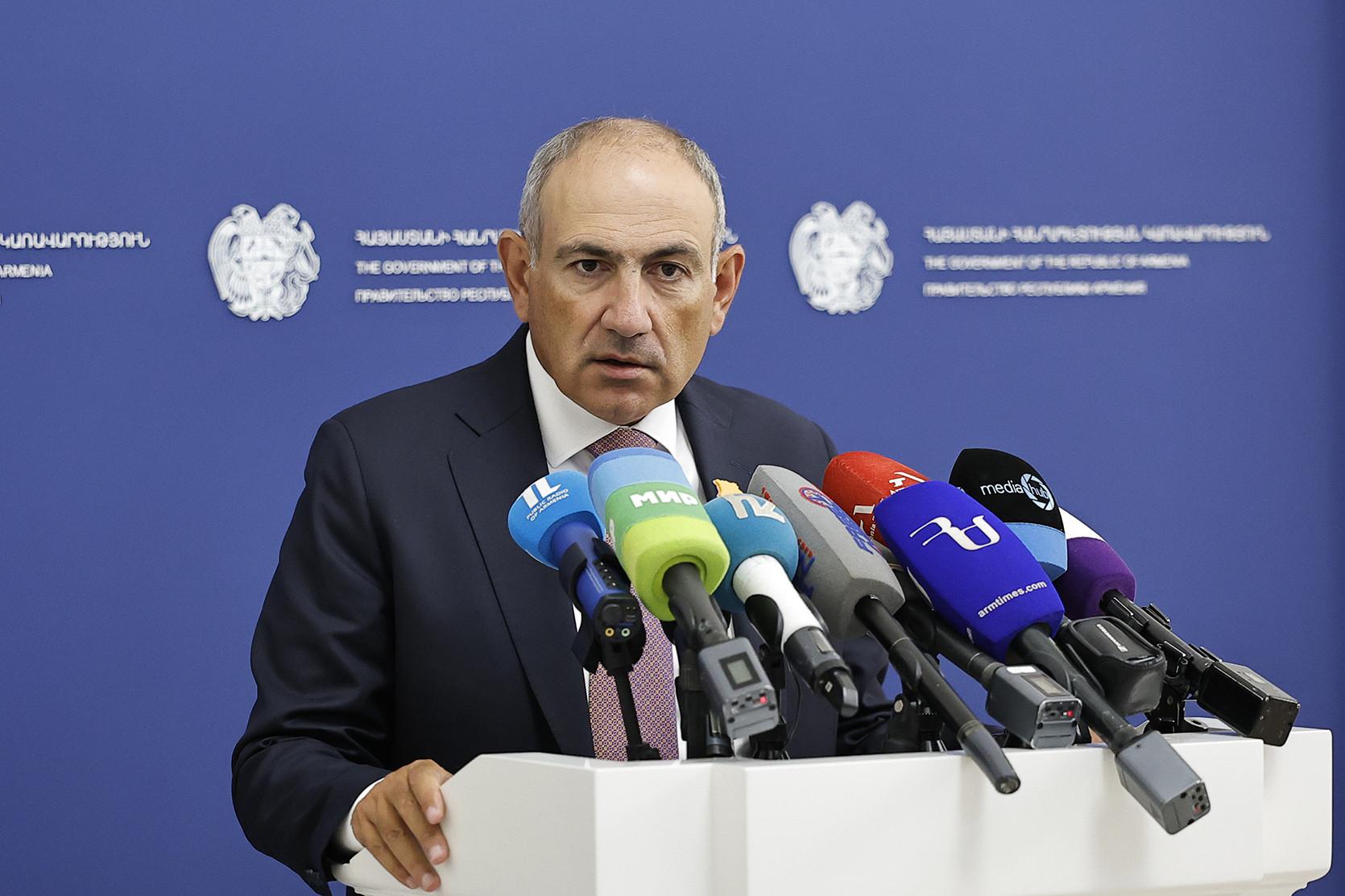
Top stories in Azerbaijan, Armenia, and Georgia from 18-22 May, 2026
 Live
Live




-
Friday, 22 May, Armenia. The first positive report on preparations for visa liberalization between the European Union and Armenia
-
Friday, 22 May, Azerbaijan. The “Azerbaijan–EU Political and Security Dialogue” format has been established
-
Thursday, 21 May, Armenia. Criticism and threats against Armenia are intensifying in Moscow
-
Thursday, 21 May, Georgia. Irakli Kobakhidze: “We want a different kind of European Union”
-
Thursday, 21 May, Azerbaijan. The government of Azerbaijan and UN-Habitat have established a new international urban development prize - the Baku Urban Award
-
Wednesday, 20 May, Georgia. The Patriarchate is creating a working group on providing medication for children with Duchenne muscular dystrophy
-
Wednesday, 20 May, Armenia. Armenia and Lithuania have signed a declaration on strategic partnership and are creating a commission on Armenia’s integration into the EU
-
Wednesday, 20 May, Azerbaijan. The dangerous consequences of the falling water level in the Caspian Sea were discussed at the highest level during WUF13 in Baku
-
Tuesday, 19 May, Azerbaijan. Bilateral agreements on electricity and gas supply and transit were signed with Georgia
-
Tuesday, 19 May, Armenia. The Prime Minister is engaging in a heated dispute with local residents on the streets; videos circulating on social media show threats directed at him
-
Tuesday, 19 May, Georgia. Daily passenger rail service between Tbilisi and Baku will resume on May 26 after a six-year suspension
-
Monday, 18 May, Azerbaijan. The 13th session of the UN World Urban Forum (WUF13) is being held in Baku
-
Monday, 18 May, Armenia. Deputy prime minister: “Citizens of Armenia will decide between the EU and the Russia-led EAEU when the time comes"
-
Monday, 18 May, Georgia. Catholicos Shio III speaks out against “harmful gender legislation” on Family Purity Day
-
Top stories in Azerbaijan, Armenia, and Georgia from 11-15 May, 2026

-
Friday, 22 May, Armenia. The first positive report on preparations for visa liberalization between the European Union and Armenia
● The first European Commission report on the implementation of the EU–Armenia Visa Liberalization Action Plan (VLAP), as well as the recommendations it contains, are being discussed during the visit to Yerevan by European Commission Deputy Director-General for Migration and Home Affairs Johannes Luchner. During talks with Armenia’s leadership, officials reviewed in detail progress on benchmarks in four key areas: document security, integrated border management, public order, and the protection of fundamental human rights in the context of ongoing reforms. European representatives highly praised the progress achieved and stressed the importance of Armenia’s continued commitment to reforms.
● The Investigative Committee has opened a criminal case against Andranik Tevanyan, a parliamentary candidate from the pro-Russian Prosperous Armenia party, on charges of treason and espionage. Authorities say Tevanyan was recruited by foreign intelligence services in 2024, while he was already serving as a member of parliament from the Armenia political bloc. The Investigative Committee claims he conducted espionage on behalf of a representative of foreign intelligence services who headed the Russia–Caucasus geopolitical center. According to investigators, in exchange for an especially large payment of $622,000, he passed on state secrets related to a confidential parliamentary session in April 2024. Officials say this amounted to treason harming Armenia’s sovereignty, territorial integrity, and external security. A day earlier, Prime Minister Nikol Pashinyan publicly accused Tevanyan of treason.
Tevanyan rejects the accusations and calls them “absurd.” In particular, he says he resigned his parliamentary mandate back in 2023 and therefore could not have participated in parliamentary hearings in 2024. “Nikol Pashinyan himself is engaged in treason. He is trying to drag me into a process where he can shout the loudest: ‘Catch the traitor!’” Tevanyan said.
● Nikol Pashinyan said during a meeting with voters that Armenia first received new D-30 howitzers only in 2023, and before that all of the country’s artillery had been produced in the 1950s and 1960s. He accused former President Serzh Sargsyan and others of purchasing “weapons in their final stage, which other countries no longer needed.” “What a real army, weapons, and technology mean — we will show on May 28 in Republic Square in Yerevan,” Pashinyan said.
● Russian Foreign Ministry spokeswoman Maria Zakharova expressed concern about Armenia’s future, saying Moscow had received official notification that Prime Minister Nikol Pashinyan would not personally attend the meeting of leaders of the Russia-led Eurasian Economic Union (EAEU). Armenia will instead be represented by Deputy Prime Minister Mher Grigoryan. Pashinyan earlier explained that he would not be able to attend because he is occupied with campaigning ahead of the country’s important parliamentary elections on June 7. “Nikol Pashinyan’s refusal to participate in EAEU events has become systemic. There is no tragedy for the union in this and it will not affect its work — the question is only for Armenia itself,” Zakharova said.
● Foreign Minister Ararat Mirzoyan responded to sharp criticism from Russian Security Council Secretary Sergei Shoigu. “Armenia is not inclined to create any tension in Armenian–Russian relations. On the contrary, we are committed to continuing our partnership in a normal manner,” Mirzoyan said.
● Ararat Mirzoyan also criticized remarks by Russian Deputy Prime Minister Alexey Overchuk, who suggested discussing whether Armenia should remain a member of the EAEU. “The question of Armenia leaving the EAEU cannot be discussed until Armenia itself submits such a request and expresses such a desire. We have expressed no such desire, so the issue of our withdrawal cannot be discussed. We will discuss it when such a need arises. At the moment I cannot name any timeframe, because this issue is not on our agenda today,” Mirzoyan said.
● Armenia’s finance minister and the head of the World Bank signed a financial agreement for the “Housing Provision and Mortgage Market Development of Armenia” program worth a total of $264.4 million, including $24.4 million in grants.
● “If the country does not begin construction of a nuclear power plant now, it will be left without electricity,” said Gagik Tsarukyan, leader of the Prosperous Armenia party, during a campaign meeting. He said the current nuclear plant would shut down in eight years and that building a new one would also take eight years. Officially, however, the Metsamor nuclear power plant is expected to shut down in 2036, meaning in ten years. Tsarukyan claimed that the U.S. vice president visited Yerevan and proposed building a $9 billion American modular nuclear power plant. “But testing of these reactors in the United States will only begin in 2033. How are the Armenian authorities going to take responsibility for this?” Tsarukyan said.
● “By insulting each other, the problem of lacking a map for border delimitation with Azerbaijan will not be solved,” said Edmon Marukyan, leader of the Bright Armenia party, during the election campaign. He noted that for several days social media users have been discussing changes on Google Maps replacing the Armenian name Tigranashen with an Azerbaijani one. Marukyan said that “Armenia does not have a map by which the country recognizes itself.”
● Georgian Prime Minister Irakli Kobakhidze declared “maximum support for friendly Armenia and the Armenian people.” He made the remark when asked about the difference in Brussels’ approach toward Georgia and Armenia. “Comparison with Armenia is a somewhat uncomfortable topic for us because we are neighbors, we have very friendly relations and a strategic partnership. We will not compare ourselves — that would be wrong,” Kobakhidze said.
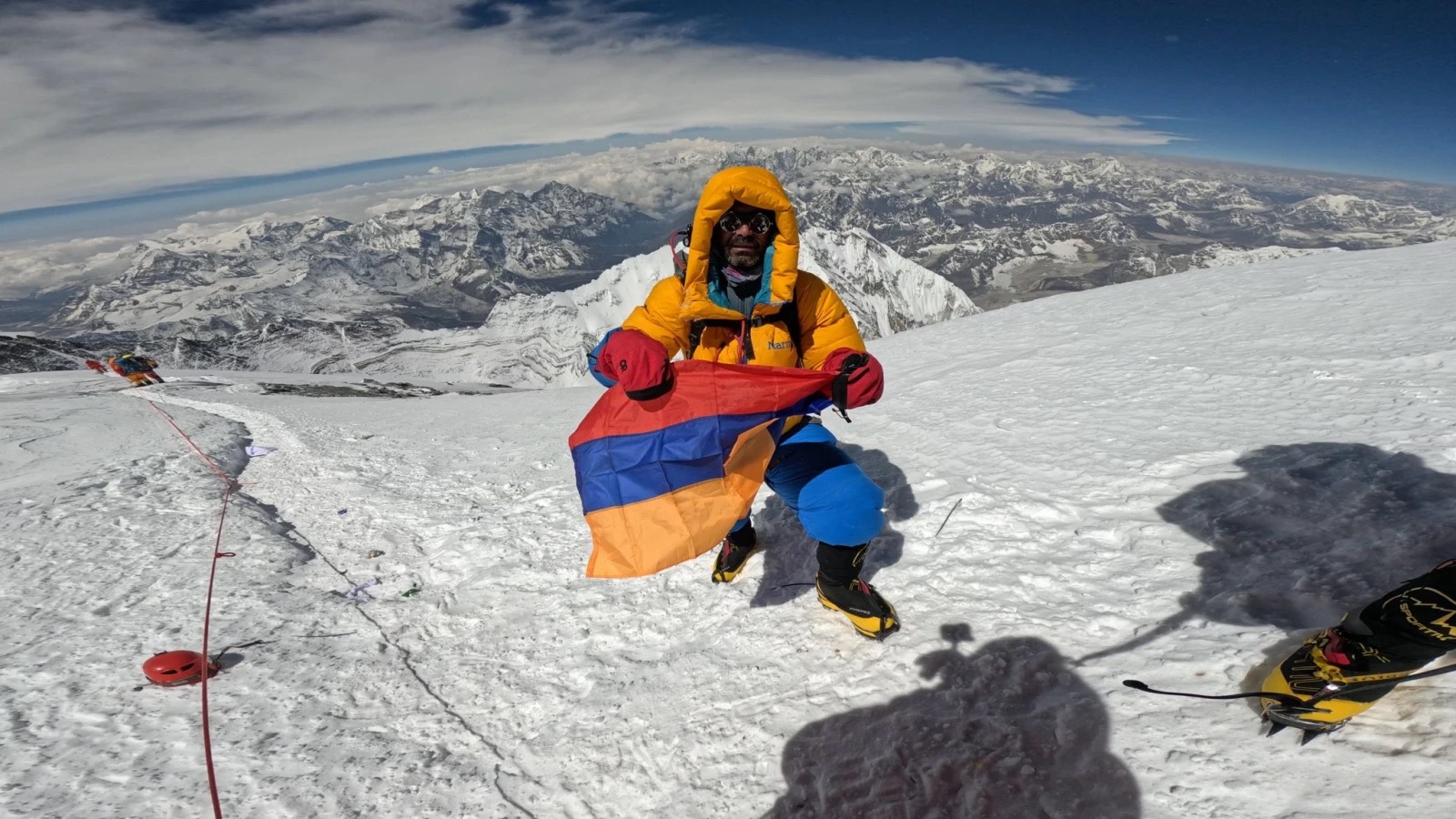
● On the morning of May 20, the Armenian flag was successfully raised on the summit of Mount Everest, Armenian climber Gevorg Gasparyan wrote on Facebook, publishing a photograph. He noted that the first Armenian citizen in history to climb Everest was Igor Khalatyan.
-
Friday, 22 May, Azerbaijan. The “Azerbaijan–EU Political and Security Dialogue” format has been established
● The seventh meeting of the Azerbaijan–EU Security Dialogue was held in Baku under the co-chairmanship of presidential aide Hikmet Hajiyev and Deputy Secretary-General of the European External Action Service for Political Affairs Olof Skoog.
Main topics discussed:
Participants welcomed the intensification of high-level contacts, including visits to Azerbaijan by President of the European Council António Costa and EU High Representative for Foreign Affairs and Security Policy Kaja Kallas, as well as their meetings with Azerbaijani President Ilham Aliyev.
The importance of continuing negotiations on new “Partnership Priorities” and a new bilateral agreement was emphasized.
Azerbaijan’s role as an important partner in terms of regional connectivity and diversification of energy sources was highlighted.
The European Union reaffirmed its support for humanitarian demining efforts in Azerbaijan.
The EU welcomed progress achieved between Azerbaijan and Armenia, including intensified contacts, and called for continued dialogue and practical cooperation.
It was decided to expand the format by renaming it the Azerbaijan–EU Political and Security Dialogue.
● Charles III, King of the United Kingdom, was among world leaders congratulating President Ilham Aliyev on Azerbaijan’s Independence Day, celebrated on May 28. “I highly value the strength of our bilateral ties and reaffirm my commitment to further expanding cooperation in the coming years. As we face shared modern challenges, particularly those related to climate change and environmental protection, I hope our countries will continue working together toward effective and long-term solutions,” the letter said.
● The kings of Belgium, Sweden, Saudi Arabia, and Morocco, along with presidents and prime ministers of dozens of countries, also sent congratulations to Ilham Aliyev on Azerbaijan’s Independence Day.
● On the closing day of the 13th session of the World Urban Forum (WUF13) in Baku, President Ilham Aliyev met with UN Deputy Secretary-General Amina Mohammed. Aliyev thanked the United Nations leadership for supporting the forum and said the Azerbaijani government and UN-Habitat had acted as one team to successfully organize it. He added that Azerbaijan would continue its partnership and actively participate in future sessions of the World Urban Forum.
● “The South Caucasus is a region gaining increasing importance in the current international context, and Azerbaijan is the key state in this region,” Romanian Deputy Foreign Minister Ana Cristina Tinca said at an event in Bucharest dedicated to Azerbaijan’s Independence Day. She expressed hope that an agreement on the Black Sea–Caspian multimodal transport corridor would be signed as soon as possible. Tinca welcomed the initialing of a peace agreement between Azerbaijan and Armenia in 2025 and said its signing would help unlock the region’s full potential. She also said Romania supports deeper cooperation between the EU and Azerbaijan.
● Prime Minister Ali Asadov is visiting Turkmenistan, where he will take part in the next meeting of the CIS Council of Heads of Government.
● The mayor of the Ukrainian city of Irpin thanked Azerbaijan for supporting the city’s reconstruction after 70% of its infrastructure was destroyed during Russia’s military aggression. Thousands of people were left homeless, and more than 3,860 buildings were damaged or destroyed. With Azerbaijani support, a lyceum and a clinic have resumed operations, and new joint reconstruction projects are continuing.
● Employees of state institutions working or serving in territories recaptured from Armenian forces whose registered address is located more than 50 kilometers from their workplace will receive a monthly housing rent payment of 100 manats (around $60). An additional 50 manats per month will also be paid for each family member living with the employee, for up to three family members. The decision will come into force on January 1, 2027.
-
Thursday, 21 May, Armenia. Criticism and threats against Armenia are intensifying in Moscow
● “Moscow does not see that Armenia’s leadership has listened to Russian warnings that the true goal of the West, including the European Union, which is pursuing an openly hostile policy toward Russia, is to use Armenia against Russia,” Russian Deputy Foreign Minister Mikhail Galuzin told journalists after a meeting of a special working group of Russia’s Security Council.
● Russian Security Council Secretary Sergei Shoigu sharply criticized Armenia’s foreign policy and its declared intention to integrate with the European Union. He stressed Armenia’s economic dependence on cooperation with Russia. “It is Russia that supplies Armenia with natural gas, flour, grain, fertilizers, and gasoline at prices three times lower than market rates. Up to 98% of Armenian agricultural exports and 78% of strong alcohol exports also go to the Russian market,” Shoigu said.
● The Prosecutor General’s Office has identified a number of violations in the privatization process of the company AraratCement, which belongs to oligarch Gagik Tsarukyan, who is also the leader of the pro-Russian party Prosperous Armenia. Earlier, Prime Minister Nikol Pashinyan said the enterprise would soon become state property. Pashinyan also recalled that before the 2021 parliamentary elections he had promised to initiate similar processes regarding the Zangezur Copper-Molybdenum Combine, one of the country’s largest enterprises. “The promise was fulfilled,” Pashinyan said.
● Prime Minister Nikol Pashinyan accused Andranik Tevanyan, a parliamentary candidate from the pro-Russian opposition party Prosperous Armenia, of treason. He said the National Security Service would send a request to the Investigative Committee to open a criminal case. “We will completely eradicate this spy network from Armenia,” Pashinyan said, without providing specific evidence. Tevanyan had previously called the prime minister a “traitor” and accused him of “serving Azerbaijani interests.”
● Russian regulator Rosselkhoznadzor will introduce restrictions on flower imports from Armenia starting May 22. Officials said the measures will remain in place until inspections of greenhouse facilities are completed and the results analyzed.
● Deputy Prime Minister Mher Grigoryan was participating online in a meeting of the Eurasian Economic Commission taking place in Russia. The main topic of discussion is customs regulation within the Russia-led Eurasian Economic Union (EAEU).
● “Armenia is moving ever closer to visa liberalization with the EU,” the interior minister said.
● Defense Minister Suren Papikyan addressed Russian billionaire Samvel Karapetyan, who is under arrest in Armenia for calls to overthrow the constitutional order. Karapetyan heads the opposition bloc Strong Armenia, which has a pro-Russian reputation. “Karapetyan recently spoke about preventing the surrender of Lori, defending the region, and achieving a crushing victory in Lori. There are six adult men in your family — why did none of them die or get wounded for the homeland? Which country are you fighting for? If they are all patriots, then during the 44-day war they should have sent their sons to the front. Instead, they kept them abroad in their mansions,” Papikyan said.
● During a campaign meeting with former President Robert Kocharyan, the prime ministerial candidate from the pro-Russian Armenia bloc, a local resident asked him about the events of March 1, 2008, when military weapons were used during the dispersal of protests against the presidential election results and 10 people were killed. Kocharyan was accused in the case of overthrowing the constitutional order. “Why did you shoot at us?” the resident asked. Kocharyan did not understand the question. The resident then asked whether he knew Gor Kloyan, one of the victims of March 1. “No, I don’t,” Kocharyan replied. “Do you know his child grew up an orphan?” the resident asked, to which Kocharyan again replied: “No, I don’t.” The resident then said: “I’m surprised you even come out to face people.”
● In 2027, Armenia will become the honorary country of the Next Step Studio initiative of La Semaine de la Critique at the 80th Cannes Film Festival. Under the program, four Armenian and four foreign directors will collaborate in Armenia to create four short films that will be presented in Cannes. Armenian participants will also have the opportunity to present future feature film projects to representatives of the international film industry. “This is an important step toward increasing the international visibility of Armenian cinema, developing cooperation, and strengthening cultural diplomacy,” the Cannes Film Festival press release said.
● The “Against Everyone” party held a protest outside the government building called “Kicking the Mouse.” Participants kicked a toy mouse into small football-style goals and urged citizens to give all political forces the lowest possible grade. Party representative Ishkhan Gevorgyan told journalists the action symbolized the idleness of the country’s leadership. “The authorities imitate everything, including the peace process and border delimitation with Azerbaijan, while oppressing and mocking the people,” Gevorgyan said.
-
Thursday, 21 May, Georgia. Irakli Kobakhidze: “We want a different kind of European Union”
● Georgia’s fifth president Salome Zourabichvili called on everyone to join a demonstration on Rustaveli Avenue on Georgia’s Independence Day on May 26. “It is important that we come out together and declare that we defend independence and freedom and will always defend them,” Zourabichvili said during a Facebook livestream.
● “I do not see any steps by the Georgian authorities toward European integration — I see steps in the opposite direction. This is causing concern and disappointment within the German government. Georgia has separated itself from Ukraine and Moldova on the shared path toward the European Union. We would like these three countries to move forward together as quickly as possible, but this is not happening,” German Ambassador to Georgia Peter Fischer told TV Pirveli.
● Prime Minister Irakli Kobakhidze of the ruling Georgian Dream party told the pro-government TV channel Imedi: “We want a different kind of European Union. We want to join an EU that returns to the values Georgia included in its constitution when the aspiration for European integration was written into it. The German ambassador is not European in terms of European values, just like EU Ambassador Pavel Herczynski.”
● Parliament Speaker Shalva Papuashvili called on Brussels to “seriously address the human rights situation in the European Union.” Like Prime Minister Kobakhidze earlier in his open letter to EU leaders, he commented on the dispersal of a protest in Copenhagen. “And this is not an exception — the same picture can be seen in Berlin, Paris, and other capitals.” Papuashvili said Denmark has a long history of human rights violations and recalled cases of forced sterilization in Greenland “which have still not been investigated and nobody has been punished.” “We must free ourselves from the complexes imposed on us for many years — that we are a second-rate nation, an underdeveloped nation, and that Denmark or Germany should teach us what the right life is, what true Europeanness means, and how to build a country correctly. We ourselves will teach everyone what Europeanness and human rights mean,” Papuashvili said.
● Education Minister Givi Mikanadze will visit China next week.
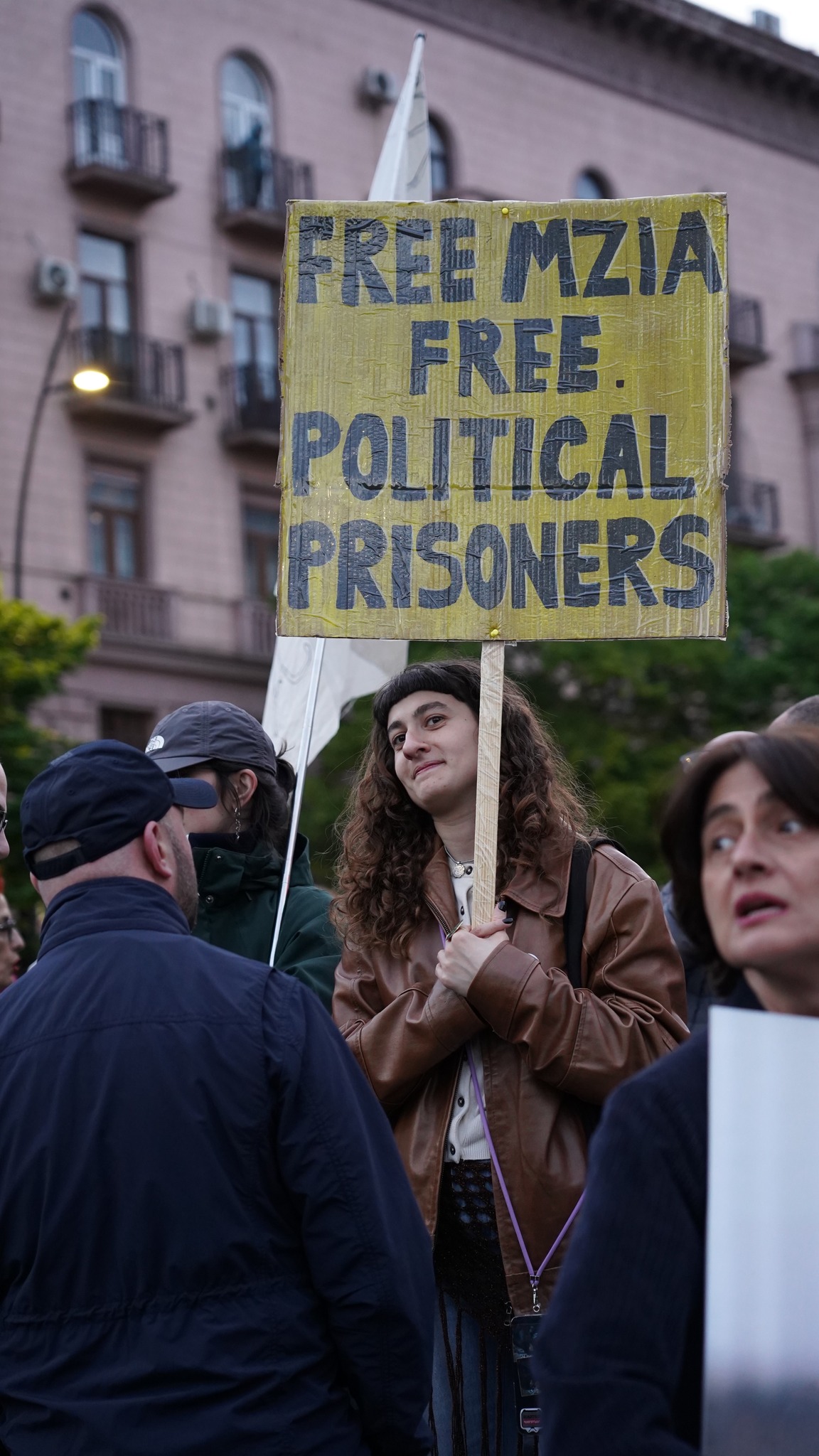
● Parents of children suffering from Duchenne muscular dystrophy issued another statement, saying they will not stop fighting until the government decides to help them obtain life-saving medication. Despite some steps taken by the authorities and the creation of a working group, their main demand remains unmet: the state must ensure timely funding and the import of modern medicines into the country.
● In Tbilisi, a car crashed into the courtyard of the Patriarchate, damaging the fence, destroying the gate, and colliding with a Patriarchate employee’s vehicle. No one was injured. According to witnesses, the driver insulted the church and the Patriarch, threw bottles from the car, and shouted obscenities.
● Georgia’s unemployment rate has declined, but the overall situation on the labor market has not changed, according to first-quarter 2026 data. Figures from Geostat show that the share of officially unemployed people is slightly lower than last year, but both the number of employed people and the number actively seeking work or participating in the labor market have also decreased. Read more here
-
Thursday, 21 May, Azerbaijan. The government of Azerbaijan and UN-Habitat have established a new international urban development prize - the Baku Urban Award
● The government of Azerbaijan and UN-Habitat have established a new international urban development prize in Baku. The Baku Urban Award is aimed at promoting sustainable urban development and affordable housing. The presentation took place during the 13th session of the World Urban Forum (WUF13) in Baku.
● Prospects for cooperation between Azerbaijan and the European Union were discussed at a meeting in Baku between Foreign Minister Jeyhun Bayramov and EU External Action Service Political Director Olof Skoog. The sides also discussed the normalization process between Azerbaijan and Armenia, as well as other regional and international issues. Azerbaijan’s role in ensuring the EU’s energy security was particularly highlighted. Bayramov also spoke about reconstruction work in territories recaptured from Armenian forces and the ongoing mine threat.
● Agreements signed with Azerbaijan are of fundamental importance for Georgia, Georgian Prime Minister Irakli Kobakhidze said. “The current 20-year agreement on gas supply and transit from Azerbaijan has been extended for another 20 years, which is of special importance for Georgia’s energy security. The Baku–Tbilisi–Supsa oil pipeline, which has not operated for the past three years, will also resume operations, preventing Georgia from losing tens of millions in annual revenue. At the end of the month, the Baku–Tbilisi–Kars railway will begin operating, and passenger rail service between Georgia and Azerbaijan will be restored. All these agreements are of fundamental importance for Georgia’s economic strengthening and the further expansion of its transit role in the region,” Kobakhidze said.
● The implementation of new transit projects, including the “Trump Route” (TRIPP), will create a circular railway network across the South Caucasus and increase Azerbaijan’s annual cargo transit capacity by around 15 million tons. At the same time, a large-scale renewable energy base is being developed, much of it in territories recaptured from Armenian forces during the Second Karabakh War in autumn 2020. This was stated by presidential representative Vahid Hajiyev for the Jabrayil, Gubadli, and Zangilan districts. He noted in particular that:
- • A 240 MW solar power plant is under construction in Jabrayil, along with another 100 MW project.
- • Five hydroelectric power plants with a combined capacity of around 45 MW are already operating.
- • Solar panels are being widely installed on rooftops due to the region’s high solar potential.
- • The development of alternative energy is creating not only domestic supply opportunities, but also export potential.
● The defense minister, chief of the general staff, and air force commander are in Turkey together with a delegation participating in the “Distinguished Observer Day” of the multinational EFES-2026 military exercises. During the visit, official meetings were held and cooperation in military, military-technical, and military-education spheres was discussed. A total of 10,300 military personnel from 50 countries are taking part in the EFES-2026 exercises.
● A delegation of the Azerbaijani parliament led by Speaker Sahiba Gafarova is visiting Russia to participate in a session of the Interparliamentary Assembly of CIS member states.
● International delegations participating in WUF13 are making short visits to different regions of Azerbaijan. A Polish delegation visited Lankaran, where members toured tea plantations and historical and natural landmarks. Bulgarian Vice President Iliana Yotova visited the Sumgayit Chemical Industrial Park, where she was introduced to its modern infrastructure and preferential business and investment environment.
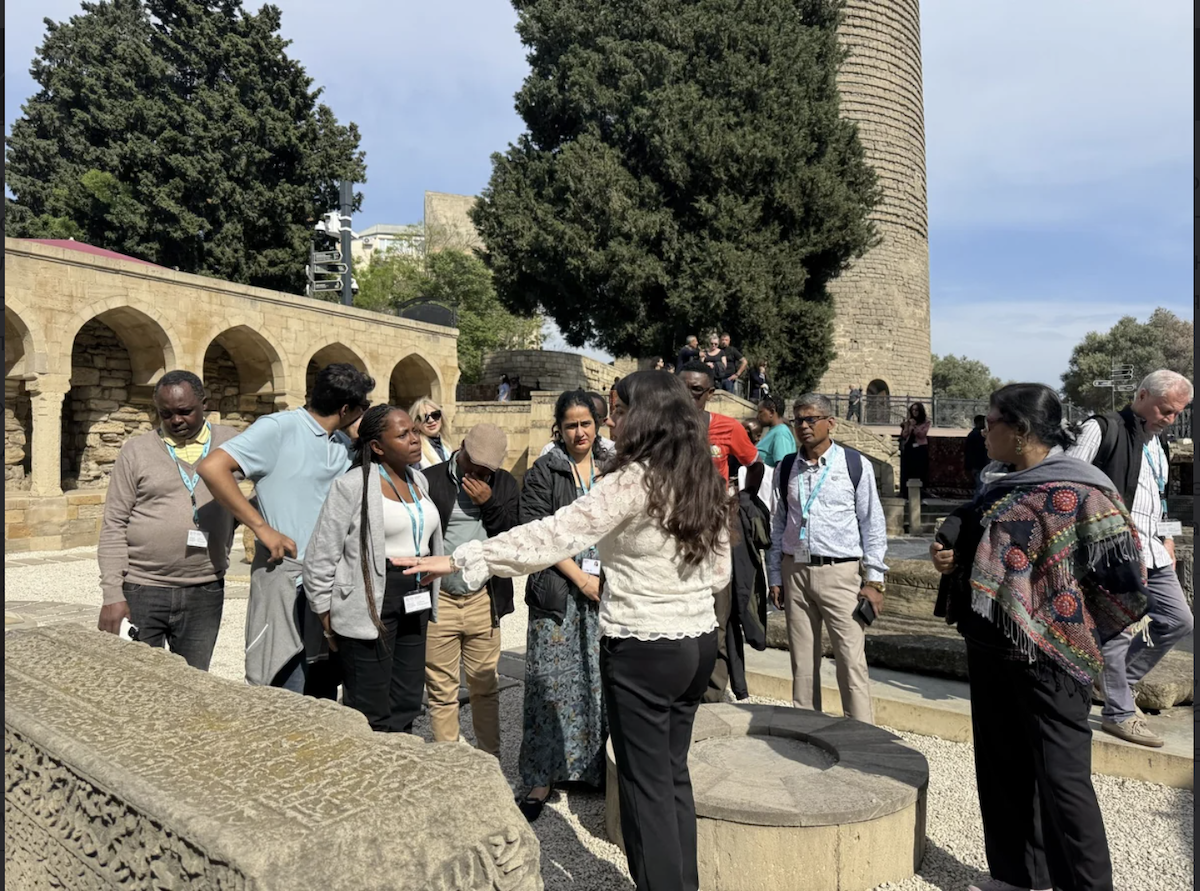
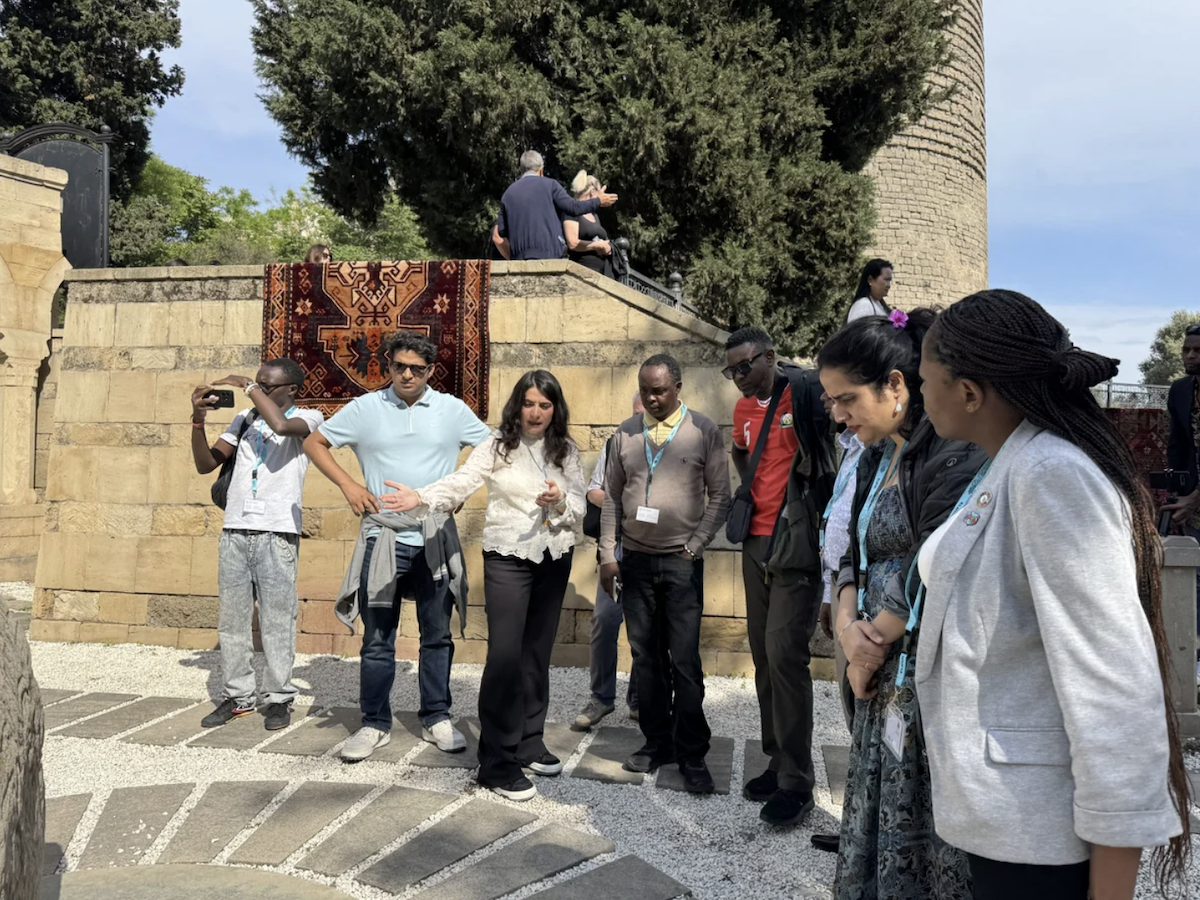
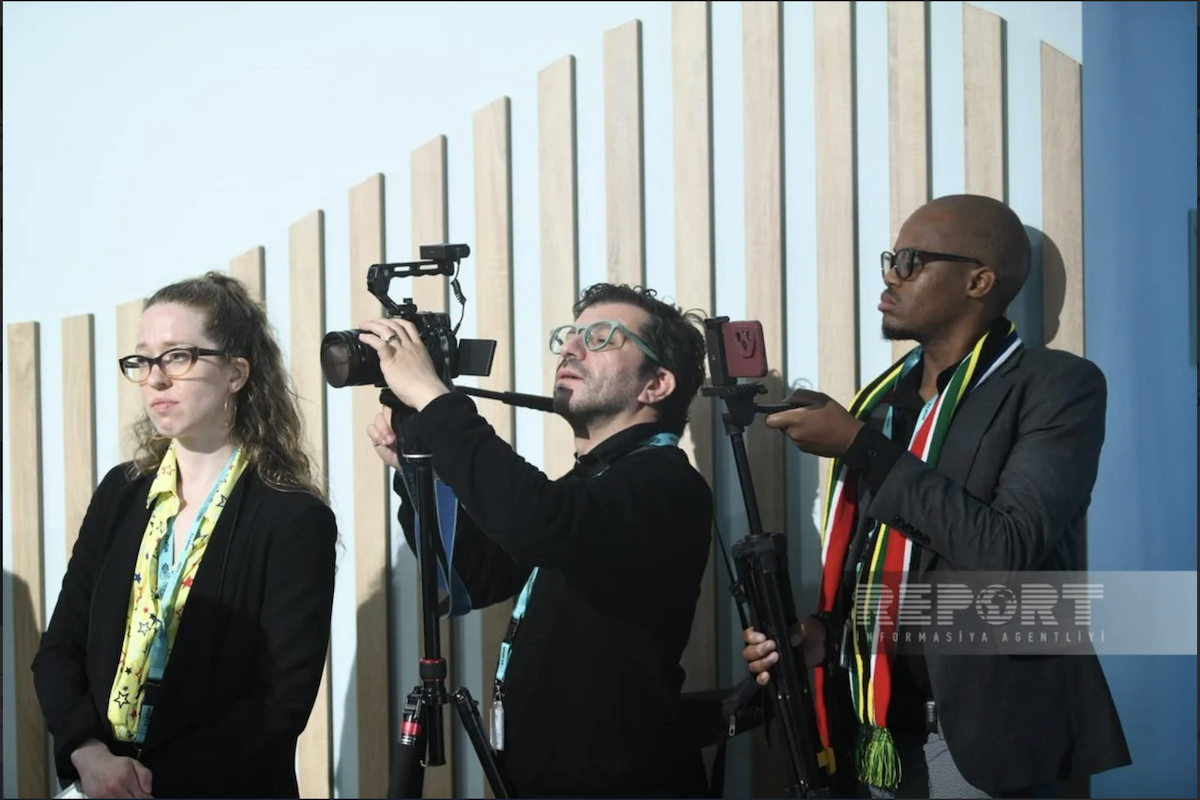
Photos: a media tour of cultural and historical sites in Baku for journalists attending the WUF13 session. Reporters from around the world visited White City, the Heydar Aliyev Center, and walked through the entire Old City of Icherisheher.
-
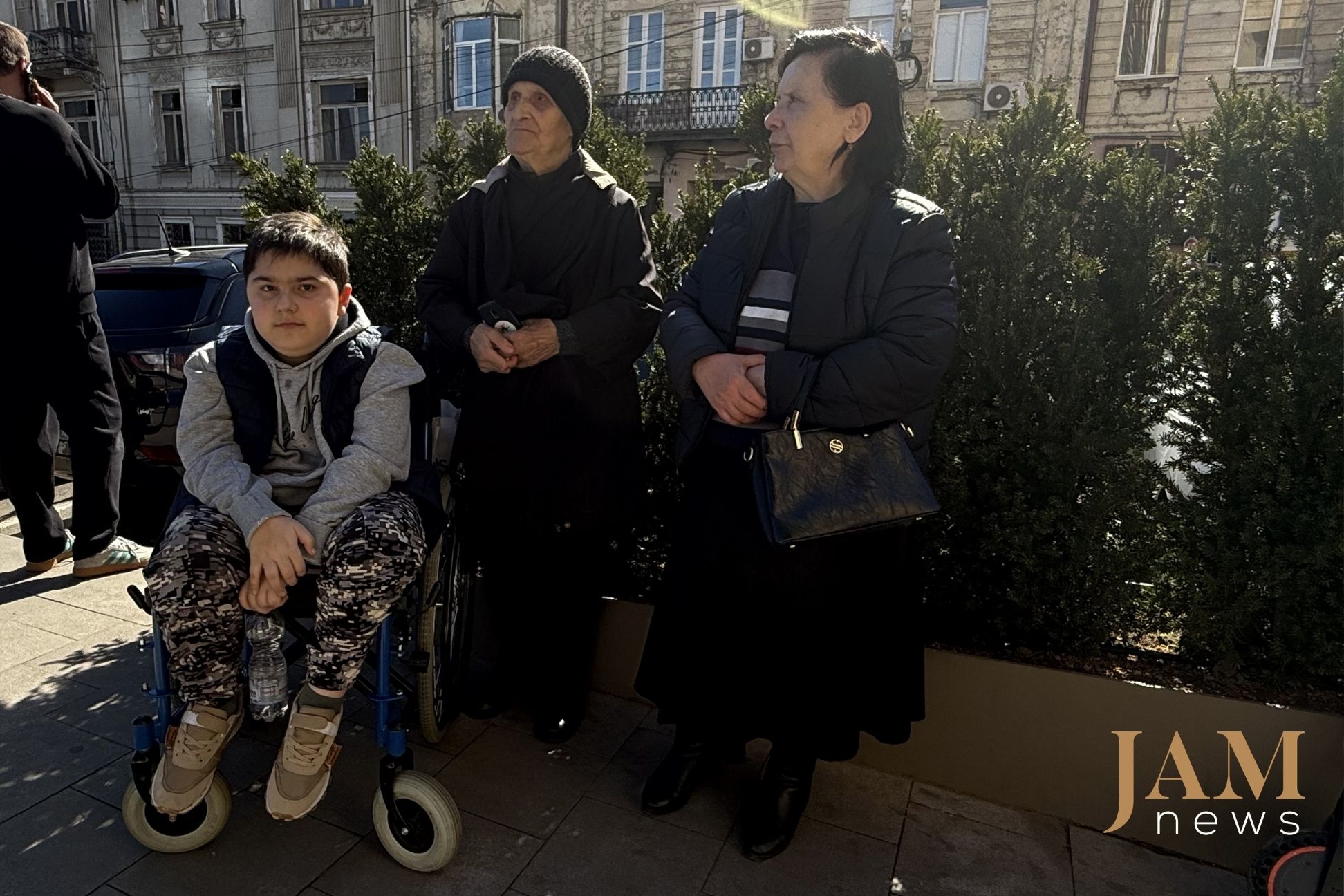
Wednesday, 20 May, Georgia. The Patriarchate is creating a working group on providing medication for children with Duchenne muscular dystrophy
● Ten years have passed since the brutal killing of Georgian citizen Giga Otkhozoria at the dividing line with Abkhazia in the Zugdidi district. On May 19, 2016, 30-year-old Giga Otkhozoria was killed at the Khurcha-Nabakevi checkpoint near the occupation line. Abkhaz border guard Rashid Kandzhi-ogly shot him several times in the legs and stomach on territory controlled by the Georgian authorities, and then finished him off with a shot to the head. Despite the killing being captured on surveillance cameras, the perpetrator remained unpunished. The military prosecutor’s office in Sokhumi stated that it saw no signs of a crime in the incident. In Georgia, Kandzhi-ogly was sentenced in absentia to 14 years in prison. In December 2023, the European Court of Human Rights found Russia responsible for Otkhozoria’s killing and ordered it to pay €130,000 to his family. The case was brought to Strasbourg by the Georgian Young Lawyers’ Association (GYLA) on behalf of his mother, wife, and two children.
● Prime Minister Irakli Kobakhidze addressed an open letter to EU leaders Ursula von der Leyen, António Costa, and Roberta Metsola, expressing outrage over events in Copenhagen, Denmark. Kobakhidze wrote that local police used force, including batons and dogs, to disperse a peaceful demonstration, and that this “raises serious questions about the democratic standards proclaimed by the European Union.” Read more here
● Kobakhidze also commented to journalists on why the authorities are not responding to desperate pleas for help from families with children suffering from Duchenne muscular dystrophy seeking funding for medication. He said that the medicines requested by parents “are most likely ineffective and only contribute to enriching the pharmaceutical mafia.” Read more here for a detailed analysis of the issue and personal stories.
● Catholicos-Patriarch Shio III met with parents of children suffering from Duchenne muscular dystrophy. After the meeting, it was announced that a working group would be created within the Patriarchate involving parents, specialists, and representatives of the Patriarchate. Parents said the Patriarchate promised to communicate directly with the authorities to help achieve understanding.
● The Patriarchate’s public relations service said that the first stage would involve meetings in a working format with the participation of specialists.
● Health Minister Mikheil Sarjveladze said that “no one in the world has real answers regarding the treatment of Duchenne muscular dystrophy.” He added that he would participate in an assembly organized by the World Health Organization, where he would have an opportunity to discuss the issue with representatives of healthcare systems from developed countries.
● Ukrainian President Volodymyr Zelenskyy wrote on social media about active communication between the foreign ministers of Ukraine and Georgia. “We are trying to normalize relations and cooperation on the basis of mutual respect and understanding, and we are ready to take steps in this direction,” Zelenskyy said.
● The German city of Saarbrücken announced the termination of its 51-year partnership with Tbilisi, citing democratic backsliding in Georgia. Tbilisi Mayor Kakha Kaladze responded with a lengthy social media post accusing German officials of serving the interests of the “deep state” and saying that the historic friendship had become “a subject of political speculation.” Read more here
● Nanuka Zhorzholiani, founder of the “Nanuka” foundation, TV host, and activist in the pro-European movement, has been sentenced to three days in jail “for participating in a protest on a sidewalk” in December 2025.
● The European Court of Human Rights found no violations in the case of Georgian civic activist Irakli Meladze. He had been fined 500 lari (around $180) in Georgia over a TikTok video insulting representatives of the ruling Georgian Dream party. Meladze sought recognition of a violation of his right to freedom of expression, but the court agreed with the Georgian court’s conclusion that public insults cannot be considered part of freedom of expression.
● Opposition politician Aleko Elisashvili, who is under arrest after allegedly attempting to set fire to the court building in Tbilisi, expressed outrage that he was not allowed to make a statement at another court hearing. As he was being escorted out of the courtroom, he asked those present to pass a message to ruling party representative Mdinaradze, currently state minister for law enforcement coordination. Elisashvili said he regretted that he “did not hit him harder on the ear.” He also denied accusations that he had attempted to use a weapon when detained during the alleged arson attempt.
● The State Security Service reported a special operation in the Pankisi Gorge. Three Georgian citizens were arrested on charges of joining the terrorist organization Islamic State and supporting terrorist activities.
● A confirmed case of rabies has been reported on a farm near the village of Chalaubani in the Gurjaani district, and quarantine has been declared in the affected area. The National Food Agency announced mandatory animal vaccination, disinfection measures, and restrictions on animal movement.
-
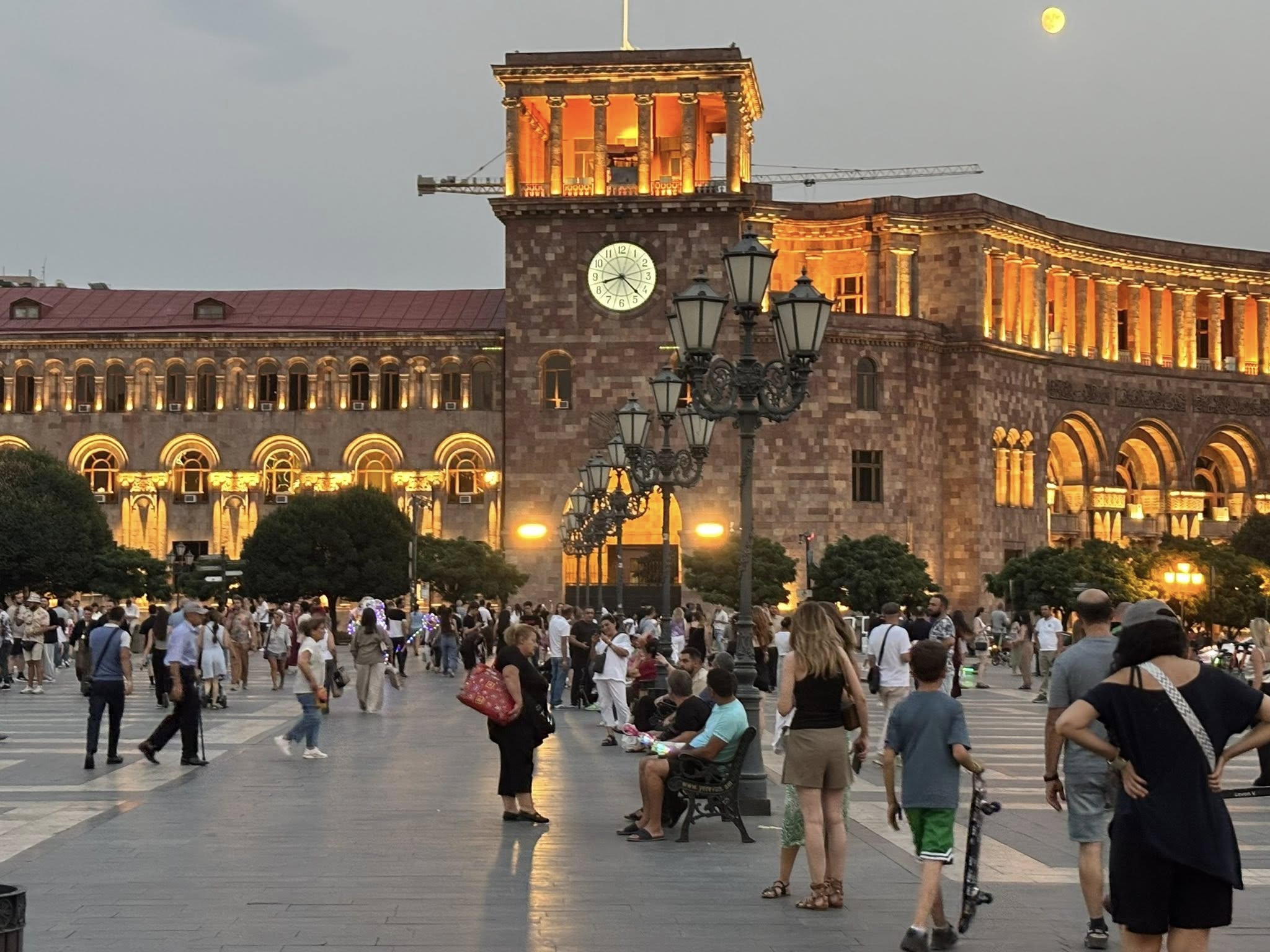
Wednesday, 20 May, Armenia. Armenia and Lithuania have signed a declaration on strategic partnership and are creating a commission on Armenia’s integration into the EU
● Leaders of the EAEU (the Russia-led economic union) will discuss Armenia’s status at the May 29 meeting in Astana, Russian Deputy Prime Minister Alexey Overchuk said. “The issue is very complicated. We do not want Armenia to leave the EAEU, we want Armenia to continue prospering. But we see the problems that arise in the event of Armenia joining or moving closer to the EU,” Overchuk said.
● Armenian Foreign Minister Ararat Mirzoyan said: “We are not going to formalize a political ‘divorce’ with any of our partners, including Russia. However, everyone must respect the right of a sovereign state to make independent decisions.”
● Mirzoyan described the first Armenia–EU summit held in early May as “extremely productive” and recalled that the meeting resulted in the adoption of a large-scale joint document consisting of 35 points clearly outlining directions and specific integration programs.
● Lithuanian Foreign Minister Kęstutis Budrys, who is visiting Yerevan, said at a press conference: “The European Union is not an empire, but an international organization based on shared values, the rule of law, and the principles of peace. We are absolutely open to nations ready for sincere partnership.” Budrys recalled that Lithuania was the first country in the world to recognize Armenia’s independence in 1991 and said that “today bilateral political and diplomatic ties are stronger than ever.”
● The foreign ministers of Armenia and Lithuania signed a joint declaration in Yerevan “On Strategic Partnership.” The ministers emphasized the importance of deepening Armenia’s partnership with the EU and announced plans to transform the existing Armenian-Lithuanian intergovernmental commission into an Armenian-Lithuanian commission on EU integration issues.
● Armenian Security Council Secretary Armen Grigoryan and Lithuanian Foreign Minister Kęstutis Budrys discussed the ongoing Armenia–EU visa liberalization dialogue.
● National Assembly Speaker Alen Simonyan published a document on his Telegram channel accompanied by a note in Armenian and Russian: “Is Narek Karapetyan a Russian citizen?” Karapetyan, who heads the candidate list of the opposition “Strong Armenia” alliance, denied the claim, saying: “I have never had any citizenship other than Armenian.”
● A journalist from Radio Free Europe/Radio Liberty’s Armenian service Azatutyun asked Artak Matosyan, deputy head of the Spitak community administration, why he was attending the ruling party’s election campaign during working hours. Matosyan became angry, struck the video camera, and said: “I am at work, because the country’s prime minister came here.” The “Akanates” (“Eyewitness”) observation mission filed a police complaint over obstruction of a journalist’s lawful professional activities.
● Armenia’s Public Television refused to broadcast an election campaign video by the Armenia Alliance bloc, which has a pro-Russian reputation. The reason given was that the video distorts historical realities and cultural heritage and that viewing it could negatively affect the health and upbringing of minors, according to bloc MP Aghnessa Khamoyan. The video was generated using artificial intelligence, which is indicated in a disclaimer. It depicts a scenario in which Azerbaijan would fully control Armenia’s political and public life if Prime Minister Nikol Pashinyan’s team wins the June 7 parliamentary elections.
● The International Commission of Jurists published a critical report on problems within Azerbaijan’s judicial system, including an analysis of the trials in Baku of former officials of the former unrecognized Nagorno-Karabakh Republic. The report states that “these trials do not meet international human rights standards.”
● “The border between Turkey and Armenia will open after Armenia’s June 7 parliamentary elections and after amendments are made to the country’s constitution eliminating territorial claims against Azerbaijan,” Azerbaijani Ambassador to Ankara Rashad Mammadov said. He noted that Baku remains in constant contact with Ankara and that the Armenian-Turkish normalization process is proceeding in parallel with Armenian-Azerbaijani normalization.
● Criminal police together with the Investigative Committee are carrying out a large-scale series of searches in Yerevan. Operations at at least 15 addresses have been confirmed, though the reasons have not yet been disclosed.
-
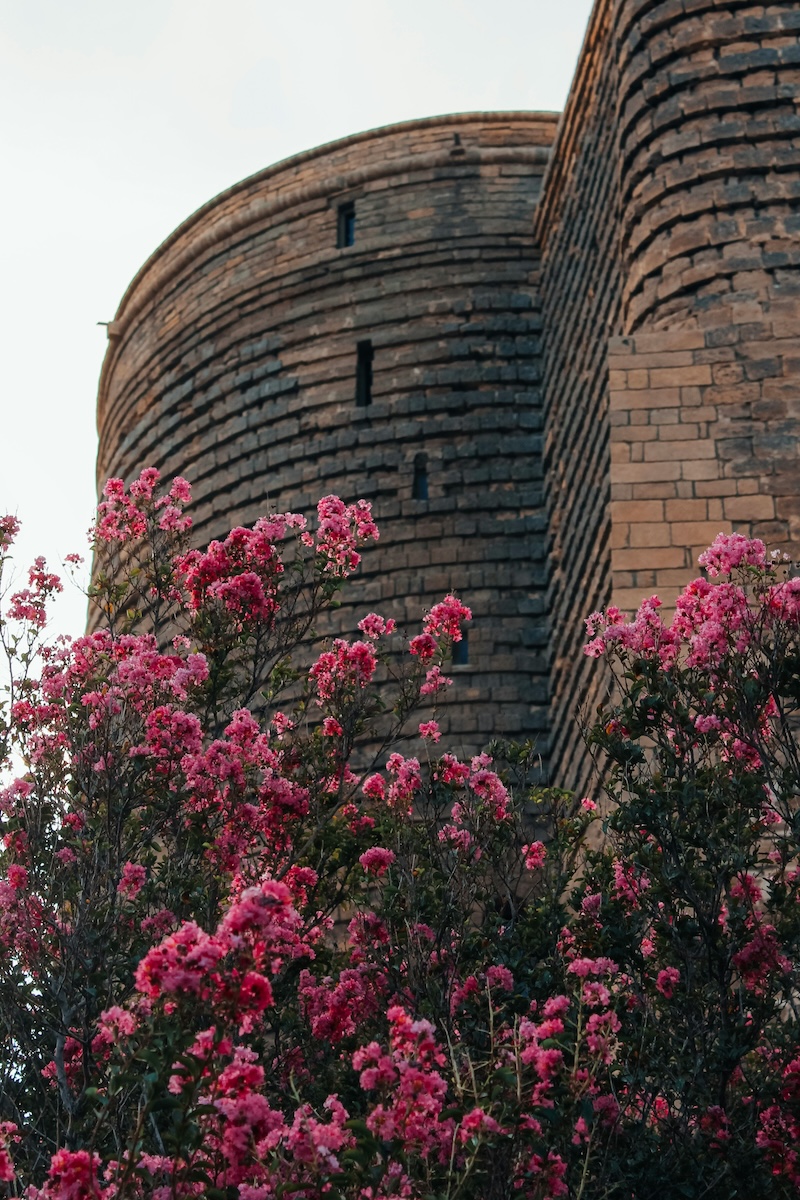
Wednesday, 20 May, Azerbaijan. The dangerous consequences of the falling water level in the Caspian Sea were discussed at the highest level during WUF13 in Baku
● A high-level dialogue on “Climate-Resilient Cities and Communities in the Caspian Region” took place in Baku during the WUF13 World Urban Forum. The discussion brought together senior representatives of governments, the UN, and international financial institutions, including Executive Director of the UN Human Settlements Programme (UN-Habitat) Anacláudia Rossbach. Participants noted that the falling water level of the Caspian Sea has become a serious problem affecting the lives of millions of people and the ecosystem as a whole. The dialogue focused on opportunities for climate financing and innovation to address the growing crisis.
● The water level of the Caspian Sea is declining by 6 cm every year, UN Assistant Secretary-General Elizabeth Maruma Mrema said at the meeting. According to her, the reasons include not only climate change, but also intensive urban development, which is contributing to a water crisis that is slowing economic development across the region.
● An international forum of non-governmental organizations was held for the first time as part of WUF13 in Baku. The initiative was organized by Azerbaijan’s state agency for NGOs and the “Global South NGO Platform,” which unites organizations from 116 countries. Around 800 representatives of local and foreign NGOs took part. UN-Habitat Executive Director Anacláudia Rossbach addressed the session, calling it a historic event and emphasizing the important role of civil society in decision-making on urban development issues.
● A delegation from the European External Action Service (EEAS) visited the cities of Aghdam and Fuzuli, which were retaken from Armenian forces during the Second Karabakh War in autumn 2020. The delegation was briefed on reconstruction efforts and demining operations.
● The strategic role of Azerbaijan and Georgia in the development of the Middle Corridor — the transport route between Europe and Asia bypassing Russia — makes the South Caucasus a key element of European logistics, and the EU must clearly understand its policy toward these states. This was stated by Romanian Member of the European Parliament Cristian Terheș during discussions on the EU’s strategy for addressing the Middle East crisis. “If the EU does not engage with Georgia, and Azerbaijan recently отказался from further cooperation with the European Parliament, how are we going to transport cargo from Central Asia to Europe?” he asked.
EU foreign policy chief Kaja Kallas did not comment specifically on Georgia and Azerbaijan, but said the EU is preparing another ministerial meeting on Central Asia and transport corridor diversification.
● Azerbaijan’s Ministry of Digital Development and Transport has announced the goal of turning Baku into a city without heavy traffic congestion, where any destination can be reached by public transport within 20 minutes. According to the ministry, the share of trips made by cars and taxis in the capital has already been reduced to 40% of all trips, with plans to lower it to 30% by the end of 2030. By that time, the number of buses in Baku is expected to reach 3,000. Currently, 2,350 buses are operating in the city, with ownership split roughly equally between the state and private companies. The ministry also noted that road fatalities in the country have fallen from 9 to 7 per 100,000 residents since 2023.
● Belarus and Azerbaijan are planning joint projects worth around $1 billion, Chairman of the Belarusian National Assembly Igor Sergeyenko said at a press conference in Baku alongside Speaker of Azerbaijan’s Milli Majlis Sahiba Gafarova. Sergeyenko said Belarus also intends to participate in projects in Azerbaijan’s retaken territories.
● A project to create a “Shusha” park in the Bulgarian city of Veliko Tarnovo has been approved.
● President Ilham Aliyev has been awarded an honorary doctorate by the Kyiv National University of Construction and Architecture “for contributions to the development of modern education, science, and urban planning in Azerbaijan, as well as for efforts to strengthen Ukrainian-Azerbaijani relations.”
● Starting May 26, daily passenger trains on the Baku–Tbilisi–Baku route will resume operations. The train will depart from Baku every day at 23:10 and arrive in Tbilisi at 08:41 the following morning. It will depart from Tbilisi at 21:00 and arrive in Baku at 06:24 the next day.
-
Tuesday, 19 May, Azerbaijan. Bilateral agreements on electricity and gas supply and transit were signed with Georgia
● The opening ceremony of the 13th session of the World Urban Forum (WUF13) was held in Baku on May 18. Guests were welcomed by Azerbaijani President Ilham Aliyev, First Lady Mehriban Aliyeva, and Executive Director of the United Nations Human Settlements Programme (UN-Habitat) Anacláudia Rossbach. More than 45,000 participants from 182 countries registered for the forum.
● Speaking at the opening of WUF13, Aliyev devoted special attention to the “Great Return” program. “The program is dedicated to the reconstruction of Karabakh and Eastern Zangezur — territories that were under Armenian occupation for nearly 30 years and were completely devastated and destroyed. International observers called Aghdam the ‘Hiroshima of the Caucasus’ because the city simply no longer existed. It was completely razed to the ground, and unlike Hiroshima, this did not happen in one day because of an atomic bomb explosion, but over thirty years of occupation, during which all buildings, including historical monuments, were entirely destroyed. […]
In five years, 70 kilometers of tunnels have been completed, 435 bridges built, and power plants, reservoirs, schools, hospitals, three international airports, and railways have been put into operation. […] More than 85,000 Azerbaijanis already live in the formerly occupied territories today. […] Before building private homes, schools, and hospitals for them, we first had to clear the territories of mines. Now we must think about employment.”
● Aliyev also stated: “Baku was the first city in the world where oil production began in 1846, and insufficient attention was paid to the environment. As a result, Baku became heavily polluted. If you have the opportunity to look at videos or photographs of how the city looked 20 years ago — and how it looks today — you will see what has been done to create an environmentally clean urban space in Baku. Instead of the Black City, which was heavily polluted — that is why it was called the Black City — today we have the White City, which is a model of urban development. It is a city within a city. Another example of urban development is the resort town of Sea Breeze.”
● “Leaders’ Session” took place in Baku on Monday as part of WUF13. The event was held for the first time on Azerbaijan’s initiative. The three-hour meeting focused on strengthening collective efforts to shape more sustainable urban future.
● President Ilham Aliyev met in Baku with Georgian Prime Minister Irakli Kobakhidze. Aliyev recalled with satisfaction his state visit to Georgia in April this year and emphasized its contribution to strengthening bilateral relations. Following meeting attended by both leaders, bilateral documents were signed:
• Agreement on natural gas supplies to Georgia
• Agreement on electricity supplies to Georgia and electricity transit through Georgian territory
• Protocol of 41st meeting of coordination council on rehabilitation, reconstruction, and construction of railway section from Marabda to Turkish border within framework of new Baku–Tbilisi–Kars railway project
● During signing ceremony, launch of joint venture BTKI Railways was announced. The company was established by subsidiaries of Azerbaijan Railways and Marabda-Kartsakhi Railway Company to ensure efficient management of railway line.
It was reported that in 2024 Azerbaijan Railways modernized 184-kilometer section of Baku–Tbilisi–Kars railway on Georgian territory to increase route capacity. Modernization included 13 railway stations, 55 bridges, 8 traction substations, 320 buildings, and engineering structures such as overpasses and crossings. The project was carried out under difficult geographical and climatic conditions, with some sections located at altitude of 2,400 meters above sea level. As result of modernization, cargo capacity of route increased from 1 million to 5 million tons annually.
“BTK is now no longer simply railway connecting Baku, Tbilisi, and Kars. Modernized line will increase cargo potential of Middle Corridor, accelerate East–West trade flows, strengthen Azerbaijan as regional transit hub, and create new balance in Eurasian logistics system,” statement said.
● Georgian Foreign Minister Maka Botchorishvili said Georgia considers cooperation with Azerbaijan within the framework of the Middle Corridor to be of particular strategic importance. One of Georgia’s priorities remains the full realization of the country’s transit potential, and in this context, the new agreements signed in Baku on May 18 are “truly important,” she said.
● Georgian Prime Minister Kobakhidze also wrote on social media about the importance of the bilateral agreements signed in Baku in the fields of electricity imports and transit. He particularly highlighted the significance of the Baku–Tbilisi–Supsa oil pipeline agreement, which allows Georgia to receive tens of millions of dollars annually from the transit of Azerbaijani oil.
● “The restoration of the Baku–Supsa pipeline, which had not operated in recent years, is important both for regional energy cooperation and for strengthening Georgia’s transit role. The Georgian government has agreed with Azerbaijan’s state oil company SOCAR to resume operations. The relevant agreement was signed in Baku,” said Georgian Economy Minister Mariam Kvrivishvili.
Baku–Supsa is an export route designed to transport oil produced from the Azeri–Chirag–Gunashli fields through Georgian territory. The route was commissioned in April 1999. It is 837 kilometers long and has a capacity of more than 7 million tons of oil per year (145,000 barrels per day). Pumping through the route was halted in spring 2022, and currently all Azerbaijani oil exports are transported via the Baku–Tbilisi–Ceyhan pipeline.
● Ukraine and Azerbaijan are holding talks on cooperation in rebuilding Ukrainian territories damaged during the war following Russia’s invasion, Ukrainian Deputy Prime Minister Oleksii Kuleba told journalists in Baku during WUF13. Kuleba said the restoration of the city of Irpin remains a key area of cooperation.
“We already have joint projects in Irpin. Azerbaijan is helping restore four facilities that have symbolic importance for Ukraine. We are very grateful to Azerbaijan for this support,” he said. Speaking about Ukraine’s participation in WUF13, Kuleba emphasized that Kyiv views reconstruction not only as eliminating the consequences of war, but also as an opportunity to modernize the country.
● Daily passenger rail service between Tbilisi and Baku will resume on May 26 after six-year suspension. Decision was reached following discussions during visit of Georgian delegation to Baku. Read more here
● Azerbaijan and Ukraine also discussed priority areas of economic cooperation in Baku, including the strategic advantages of the Middle Corridor and its role in strengthening regional connectivity, Azerbaijani Economy Minister Mikayil Jabbarov wrote on X. According to him, the sides also discussed prospects for cooperation between Ukraine and SOCAR.
● Ukraine expects Azerbaijan to participate at a high level in the Ukraine Recovery Conference, which will take place on June 25–26 in the Polish city of Gdańsk, Ukrainian Ambassador to Azerbaijan Yuriy Husyev told journalists.
● “Azerbaijan consistently supports the ‘One China’ policy,” President Ilham Aliyev said during a meeting in Baku with Chinese Vice Premier Zhang Guoqing. Aliyev noted that “Azerbaijan not only did not recognize the illegal elections held in China’s Taiwan region, but also became the only country to issue a statement condemning those elections.”
● UNESCO World Heritage Centre Director Lazare Eloundou Assomo met in Baku with Azerbaijani Deputy Culture Ministers Farid Jafarov and Saadat Yusifova on the sidelines of WUF13. The sides noted that Azerbaijan, particularly in territories recaptured from Armenian occupation, has been widely implementing successful modern urban planning solutions. Prospects for further cooperation between Azerbaijan and the World Heritage Centre were also discussed.
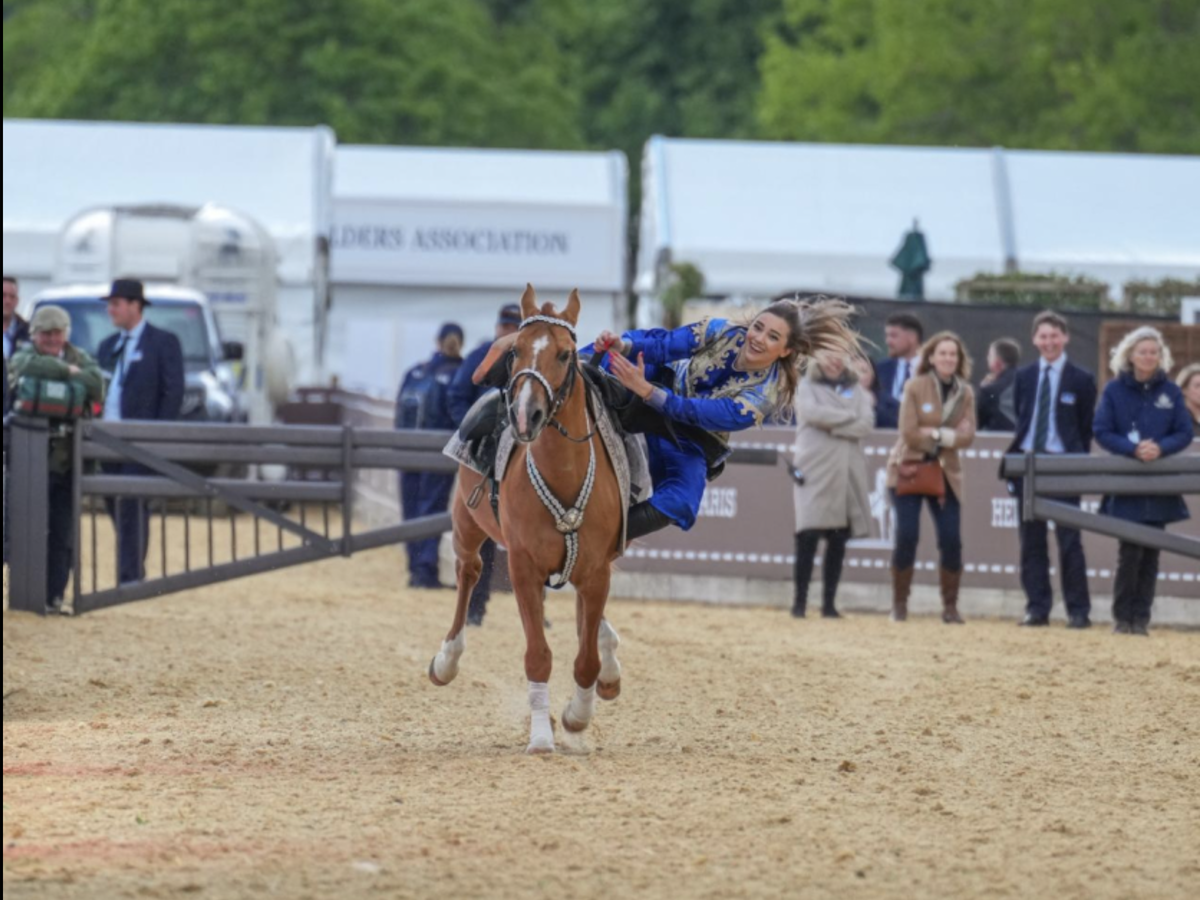
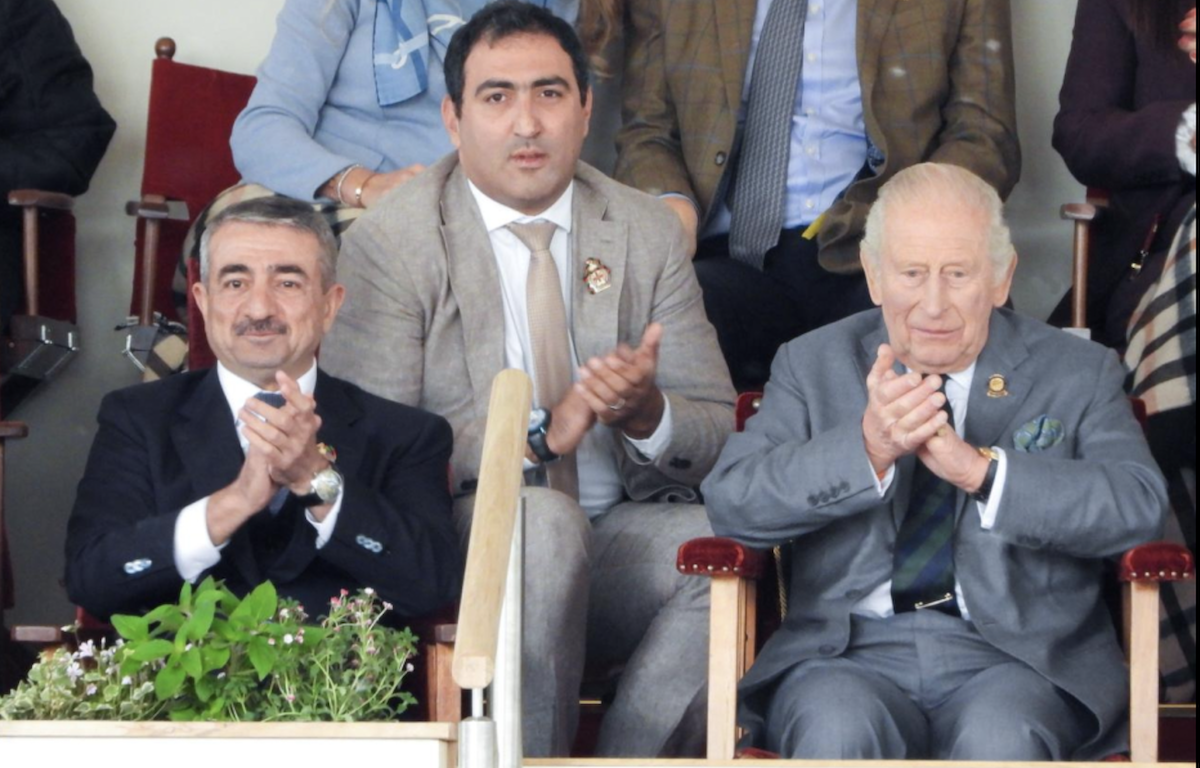
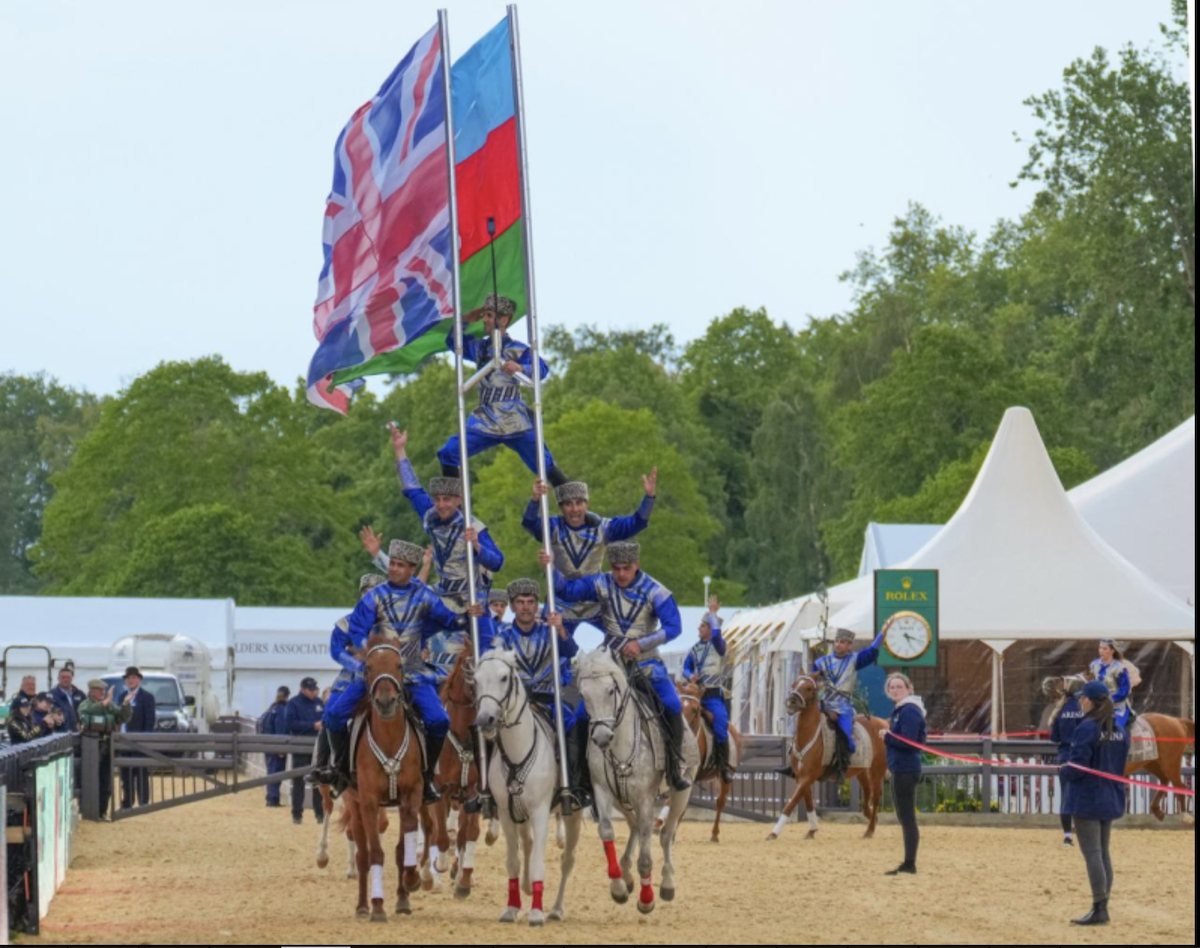
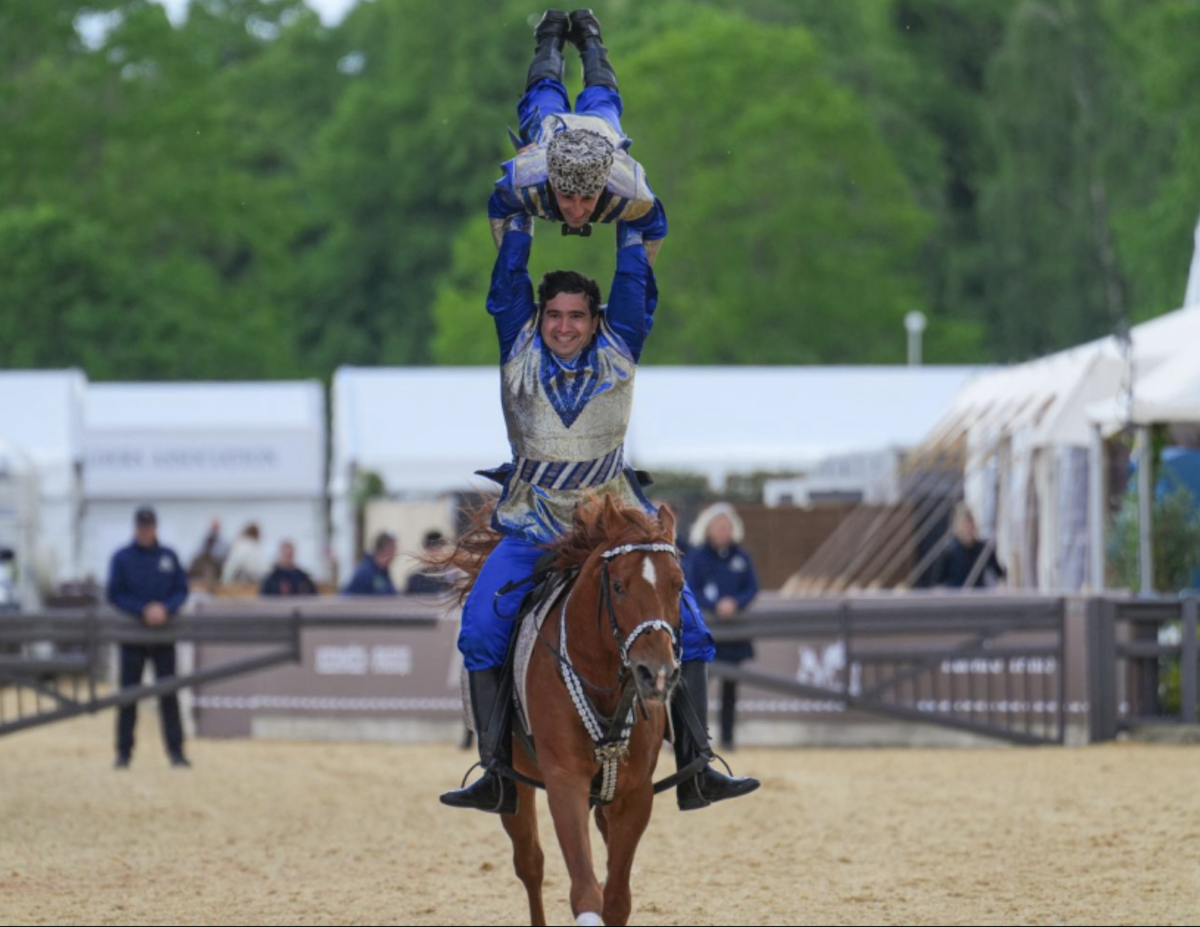
● Azerbaijani horse riders traditionally took part in the annual Royal Windsor Horse Show held in honor of the British royal family. The performance featured a cavalry unit and dance ensemble of Azerbaijan’s State Border Service. At the end of the show, the polo team “Land of Fire – Azerbaijan” defeated the “Guards” team 7–5. The Azerbaijani delegation presented King Charles III with a Shirvan carpet and a sculpture titled “Azerbaijani Warrior on a Dilbaz Horse.” Azerbaijan has participated in the show since 2012. The Azerbaijan Equestrian Federation says it continues its efforts to preserve and promote Karabakh horses internationally.
Photo Azertac
-
Tuesday, 19 May, Armenia. The Prime Minister is engaging in a heated dispute with local residents on the streets; videos circulating on social media show threats directed at him
● The Ministry of Internal Affairs reported the arrest of Arthur Osipyan, an internally displaced person from Karabakh, on suspicion of hooliganism. Osipyan had a public argument with Nikol Pashinyan, which took place on the street. Osipyan claimed that Azerbaijan is demanding the return of hundreds of thousands of Azerbaijanis to Armenia. The Prime Minister responded that no such demand exists, but Osipyan continued accusing him of spreading Azerbaijani narratives. In response, Pashinyan said: “These Karabakh pseudo-elites should get out of here. What are you fugitives even doing here, who are you? Go and die instead of our children. You are thieves, you have taken the people of Karabakh hostage. Why are you alive, and talking about 5,000 victims?”
● This was not the only incident during Nikol Pashinyan’s walk on the street. He also entered into an argument with a local woman whose brother, a high-ranking officer, is listed among those missing after the Second Karabakh War in the autumn of 2020. She told the Prime Minister that he had “stolen her homeland.” In response, Pashinyan raised his voice and said that he would “bring to their knees” former presidents of Armenia and other opposition rivals in the upcoming parliamentary elections on June 7. The opposition in Armenia is generally considered to have a pro-Russian reputation.
● Russian Foreign Ministry spokesperson Maria Zakharova commented on these incidents. She wrote on social media: “Macron’s and Zelensky’s visit to Yerevan did not go without consequences — there you can see ‘European values’ clearly. Or on the face.”
● A criminal case has been opened after a video spread on social media showing several masked individuals speaking in the Karabakh dialect and threatening the Prime Minister. One of them said: “We know where you walk, which streets you go through. We will [kill] you, Nikol.” The others are reportedly holding weapons.
● The Ombudsman, Anahit Manasyan, described the rhetoric in public discourse during the election campaign as extremely concerning and dangerous. The Human Rights Defender emphasized that freedom of expression cannot be used to humiliate others, spread hatred, discrimination, intolerance, or promote violence.
● The head of the OSCE Parliamentary Assembly election observation delegation will arrive in Armenia on May 22.
● The CIS will send a total of 120 observers to the parliamentary elections in Armenia, the Central Electoral Commission reported.
● Today, Lithuania’s Foreign Minister Kęstutis Budrys will arrive in Armenia on an official visit.
● Nikol Pashinyan stated that the authorities have taken a loan for army reform and the development of the security system. “Why did we take a loan? Because a large amount of money was needed immediately,” the Prime Minister said. He noted that “Armenia’s state debt continues to remain at an acceptable level by international standards.”
● It was also announced that weapons produced in Armenia have been exported abroad for the first time, worth millions of dollars. According to Minister of High-Tech Industry Mkhitar Hayrapetyan, three Armenian companies exported arms to two countries in May.
-
Tuesday, 19 May, Georgia. Daily passenger rail service between Tbilisi and Baku will resume on May 26 after a six-year suspension
● Following the meeting in Baku between Prime Minister Irakli Kobakhidze and President Ilham Aliyev, the following bilateral documents were signed:
• An agreement on the supply of natural gas to Georgia,
• An agreement on the supply of electricity to Georgia and the transit of electricity through the territory of Georgia,
• The protocol of the 41st meeting of the Coordination Council on the rehabilitation, reconstruction, and construction of the railway section from Marabda to the border with Turkey, within the framework of the Baku–Tbilisi–Kars new railway line project.
● Daily passenger rail service between Tbilisi and Baku will resume on May 26 after a six-year suspension. According to the government, this decision became possible following high-level meetings and agreements reached in Baku. Read more here
● The government plans to create a new department within the Ministry of Internal Affairs that will be responsible for monitoring and legally responding to hate speech, insulting campaigns, and aggressive statements in public spaces. An exact definition of what precisely falls under such actions has not yet been provided. Read more here
● “Information that the Russian cruise ship Astoria Grande is allegedly set to arrive again at the port of Batumi is not true and represents an attempt to mislead the public,” the Maritime Transport Agency said. In 2023–2024, the ship’s appearance in Batumi triggered strong protests from local residents, after which it removed Georgian destinations from its routes.
● The ruling party “Georgian Dream” presented amendments to the Law on Broadcasting at a parliamentary bureau session. The amendments concern the article prohibiting broadcasters from receiving direct or indirect funding from foreign sources. Under the new draft, the ban will not apply to broadcasters that air only sports, educational, informational, or entertainment programs.
● Two Georgian citizens, who were illegally detained by Russian forces near the village of Tsitelubani in the Gori region in the Georgian–Ossetian conflict zone, have been released and are now in territory controlled by the central government, the State Security Service reported.
● The opposition party “Strong Georgia – Lelo” has proposed that the authorities carry out a fair and large-scale amnesty, which it says would be an important step toward societal reconciliation and reducing political tension.
● The director of the Rustaveli Theatre, Gia Tavadze, told Pirveli TV that the theatre hall was rented out to students from the Russian Institute of Theatre Arts, who held a concert there dedicated to the 81st anniversary of victory in World War II. Tavadze said this is commercial activity and that the hall will be rented out again in the future if necessary.
-
Monday, 18 May, Azerbaijan. The 13th session of the UN World Urban Forum (WUF13) is being held in Baku
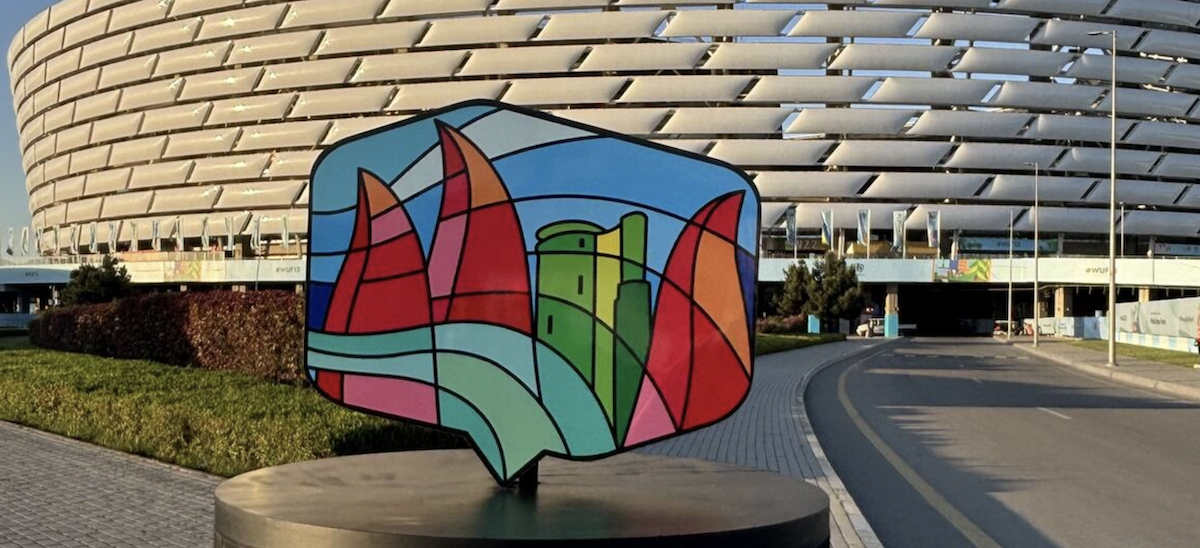
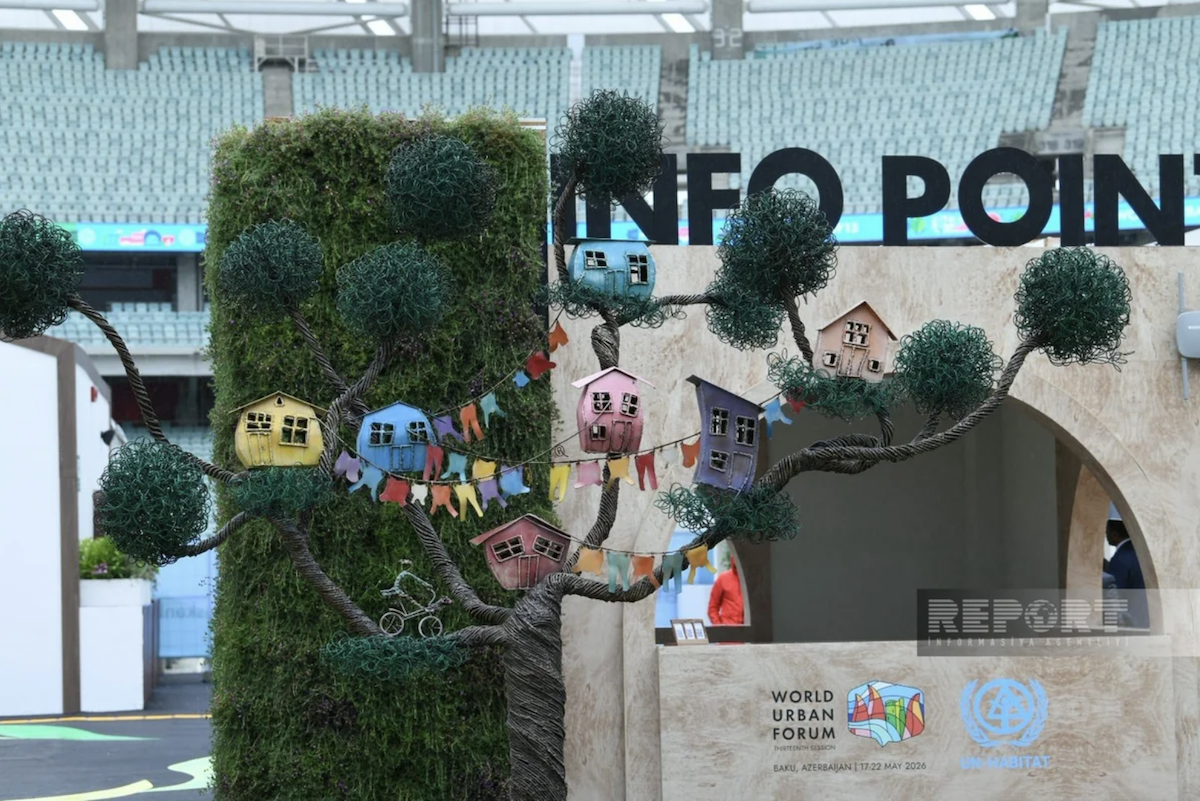
● The 13th session of the UN World Urban Forum (WUF13) is being held in Baku from 17 to 22 May. The forum is jointly organized by the United Nations Human Settlements Programme (UN-Habitat) and the government of Azerbaijan. On the UN website, the forum’s theme is described as: “Call to Action: Housing for All: Safe and Sustainable Cities and Communities.” Head of UN-Habitat Anacláudia Rossbach described the situation as a “global housing crisis.” According to the UN, nearly 2.8 billion people today live in inadequate housing conditions, while more than 300 million people are homeless. By 2050, around 70% of the world’s population is expected to live in cities, significantly worsening the crisis.
● “For Azerbaijan, this forum is not only an urban development summit. The country intends to share with the world the experience it has gained in implementing reconstruction projects in territories liberated from occupation by Armenian forces, as well as in building settlements based on the concepts of ‘smart villages’ and ‘green energy,’” local media reported.
● The European Union expects positive outcomes from the WUF13 session, EU Ambassador to Azerbaijan Marijana Kujundžić said. She highlighted the global housing crisis as a problem requiring joint international efforts. According to her, the European Union has already begun taking steps in this direction, including institutional reforms. “For the first time, the EU now has a commissioner for energy and housing policy. A plan for open and effective housing provision has also been developed,” the ambassador said.
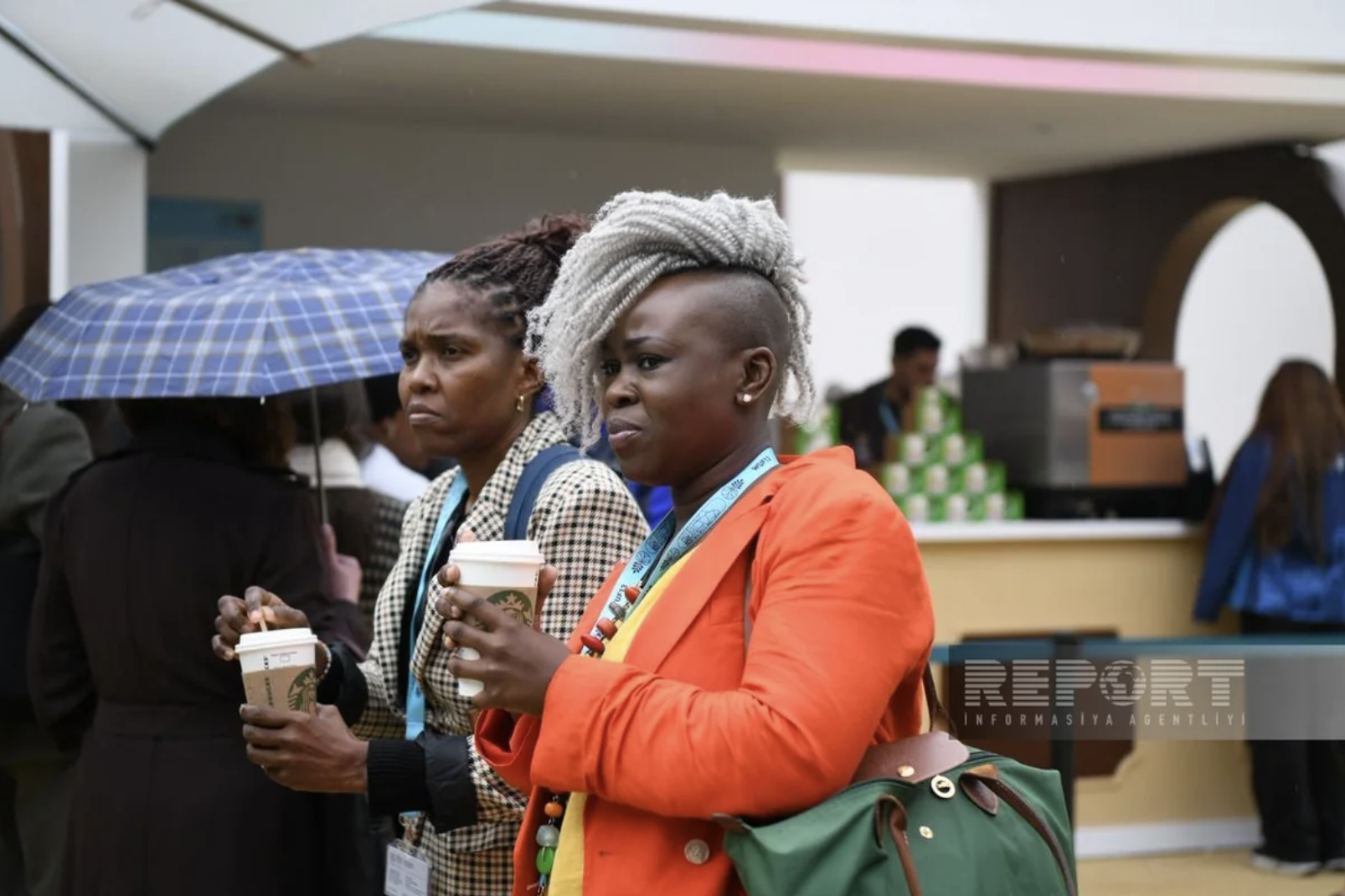
● More than 40,000 participants from 182 countries have registered to attend WUF13 in Baku. Presidents of Serbia, Bulgaria, Kyrgyzstan, Uzbekistan and Mauritius, along with senior officials from other countries, have arrived in Azerbaijan. Secretaries-general of the Gulf Cooperation Council, the Organization of Turkic States and the Developing Eight Organization for Economic Cooperation (D-8) are also taking part.
● Ukrainian Deputy Prime Minister Oleksii Kuleba arrived in Baku to participate in the WUF13 forum.
● Georgian Prime Minister Irakli Kobakhidze is expected to arrive in Baku today to attend the WUF13 forum.
● On the first day of the WUF13 forum on Sunday, a ministerial meeting, a ministerial roundtable and minister-level panel discussions were held.
● President Ilham Aliyev held bilateral meetings with the presidents of Serbia, Bulgaria and Kenya, as well as with the UAE minister of energy and infrastructure.
● Aleksandar Vučić published a post on X calling Ilham Aliyev “a great friend of Serbia.” “We discussed further strengthening the strategic partnership between Serbia and Azerbaijan. I am confident new areas of cooperation will open up for us in the near future,” Vučić wrote.
● Natural gas exports from Azerbaijan to Serbia and construction of a joint gas-fired power plant in the city of Niš demonstrate that energy cooperation between the two countries is already producing practical results, participants said during a business meeting with entrepreneurs attended by Aleksandar Vučić. “There is an opportunity to increase trade turnover between Serbia and Azerbaijan fivefold,” the Serbian president said during the meeting. It was announced that representatives of a group of Azerbaijani companies would travel to Serbia on a business mission to identify new opportunities for joint projects.
● “The European Parliament comes and begs Azerbaijan whenever it needs oil and gas. I expected Azerbaijan to stop cooperating with the European Parliament. Members of the European Parliament often behave arrogantly and lecture those who are more successful than they are themselves,” Serbian President Aleksandar Vučić told journalists while commenting on his meeting with President Ilham Aliyev.
● Slovakia is proposing to join efforts with Azerbaijan to jointly address climate challenges, Slovak Deputy Prime Minister Tomáš Taraba told journalists on the sidelines of the World Urban Forum in Baku.
● Tomáš Taraba said Slovakia intends to sign a gas supply contract with Azerbaijan for at least 10 years. “We are currently discussing which pipelines can be used and in what volumes. We are also grateful that during the supply crisis, for example from Ukraine several months ago, Azerbaijan was very active in ensuring deliveries to Slovakia,” Taraba said.
● Azerbaijan’s national team finished second at the European U17 Wrestling Championships.
● Baku and the Absheron Peninsula recorded a long-term rainfall record in May. By today, precipitation levels had already reached 355–523% of the monthly norm. The previous record was set in May 1963, when rainfall exceeded the long-term average by 5.4 times.
-
Monday, 18 May, Armenia. Deputy prime minister: “Citizens of Armenia will decide between the EU and the Russia-led EAEU when the time comes"
● Deputy Prime Minister Mher Grigoryan responded to statements by several senior Russian officials that Armenia cannot simultaneously be part of both the European Union and the Russia-led Eurasian Economic Union (EAEU). “We understand this perfectly well, and it is obvious that in the future we will need to make an appropriate decision. That decision will, of course, be made by the citizens of Armenia. At the moment, however, there is no such necessity,” Grigoryan said.
● Mutual insults are increasingly accompanying political slogans during Armenia’s campaign ahead of parliamentary elections scheduled for 7 June. Former President Robert Kocharyan described current Prime Minister Nikol Pashinyan as an “ambal” — a derogatory Russian slang term referring to someone with physical strength but primitive intellect. Pashinyan, during meetings with voters, has also begun using the same term in reference to Kocharyan.
● Artur Khachatryan, a member of opposition alliance Armenia Alliance, which is known for its pro-Russian reputation, accused Armenia’s Foreign Ministry of not knowing how 12 million euros provided by the European Union to counter hybrid threats during the pre-election period had been spent. Khachatryan said the ministry responded to his inquiry by saying “we do not know.” He quoted from a letter stating that the funds had been distributed, among others, to the Central Election Commission, NGOs and independent journalists. “It turns out the government is not interested in who received EU funds, how much they received, or for what purposes,” Khachatryan said.
● Armen Hovhannisyan, who had mental health problems, died by suicide in a psychiatric hospital in Nubarashen. He had previously been detained for tearing down an election campaign poster, after which Armenia’s Investigative Committee launched an inquiry into the incident.
● Prime Minister Nikol Pashinyan held a phone conversation with Kassym-Jomart Tokayev, congratulating him on his birthday. The two sides also discussed aspects of bilateral relations.
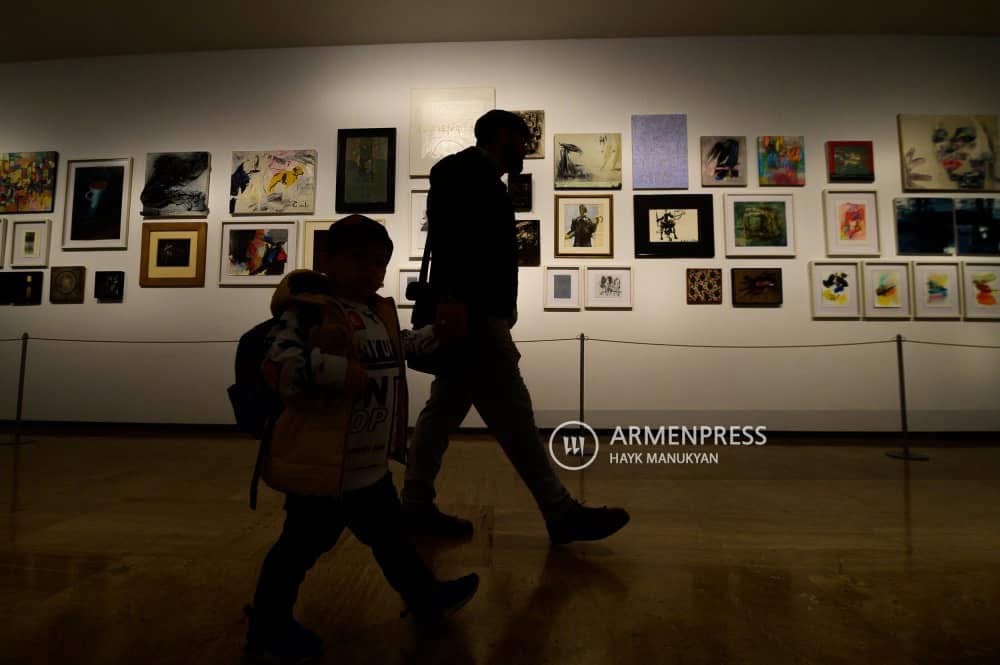
● Yerevan hosted its traditional “Night of Museums” on the night of 18 May. On this day, visitors can enter any museum in Armenia free of charge and remain there until midnight. Exhibition halls across the country are traditionally crowded during the annual event, and this year was no exception. May 18 marks International Museum Day, which this year was held under the slogan “Museums Unite a Divided World.”
-
Monday, 18 May, Georgia. Catholicos Shio III speaks out against “harmful gender legislation” on Family Purity Day
● Catholicos-Patriarch Shio III spoke about what he described as a dangerous demographic situation and a “threat to the Georgian ethnos” in an address delivered on 17 May. The date is officially observed in Georgia as Family Purity Day. “There is a real danger that other peoples will settle in the country and that their numbers will exceed those of Georgians,” the Catholicos said. He called for “preserving the family, protecting family values, and adopting legislation that will defend the family and our people from harmful gender theories and harmful ideology.” “We must not abandon such legislation, as some are urging us to do. On the contrary, we must strengthen and consolidate this direction of protecting and preserving the family. This is the foundation for the survival and prosperity of our country,” Shio III said.
● “We are obliged to pass on to the next generation not only an economically strong country, but also a spiritually strong Georgia,” Parliament Speaker Shalva Papuashvili said while speaking at Tbilisi’s Holy Trinity Cathedral during a gathering marking Family Purity Day.
● May 17 is observed internationally as the International Day Against Homophobia. In connection with the date, activist group Tbilisi Pride issued a statement saying the ruling party Georgian Dream is attempting to exclude members of the LGBTQ+ community from public spaces and public life, while hatred, censorship and persecution have intensified.
● “May 17 is the International Day Against Homophobia, Transphobia and Biphobia. However, after the mass violence and traumatic events of May 17, 2013, the queer community in Georgia can no longer mark this day,” the Georgian Social Justice Center said in a statement.
● The Georgian Young Lawyers’ Association (GYLA) also issued a statement about repression against LGBTQI people. “These people had already been living in Georgia under conditions of systemic inequality and discrimination, to which the state also contributed. But since 2024, the government has actively begun creating an image of the LGBTQI community as an enemy through discriminatory draft laws and legislation, as well as hate-filled rhetoric,” the statement said.
● Ruling party lawmaker Gia Volski told pro-government television channel Imedi TV that he is convinced nobody in Georgia is violating the rights of LGBTQ people.
● GYLA presented an amicus curiae position regarding a lawsuit filed by the ruling party with the Constitutional Court seeking to ban four opposition political groups. GYLA compared international standards with Georgia’s national legal framework and described the initiative to ban political associations as an extreme restriction on freedom of association.
● Father Anton said in an interview with independent television channel TV Pirveli: “As soon as the first synod with the participation of the new Catholicos Shio III takes place, we will raise all important issues. These include, above all, state assistance with medicines for children and pardons for prisoners.”
-
Top stories in Azerbaijan, Armenia, and Georgia from 11-15 May, 2026