'We are not on our knees, we are fighting for justice': David Babayan's message from Baku prison






David Babayan’s message from a Baku prison
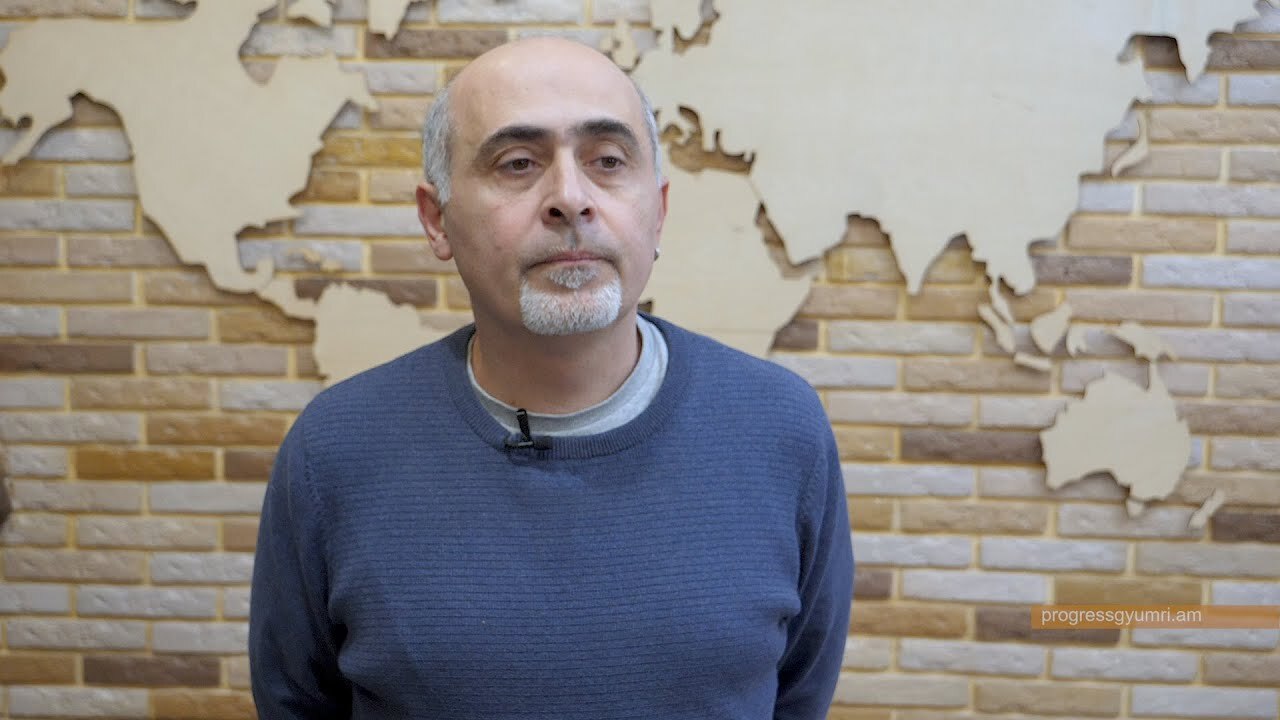
“What kind of trial was it? It was a theatrical performance, with the script written in advance,” David Babayan, the former foreign minister of the former unrecognised Nagorno-Karabakh Republic, said in a message from a Baku prison.
Babayan’s family gave the audio recording of his message to an Armenian media outlet. In his message, he discusses the trial of the former NKR’s military and political leadership. Two weeks ago, the Court of Appeal upheld the verdicts handed down by the Baku Military Court. In February 2026, David Babayan received a life sentence. He described the Court of Appeal’s ruling as a “formal stage” that had to be completed before the case could be taken to an international court.
“One interesting development was that one of the defence lawyers here [at the Baku court] said they did not want the case to reach an international court because more than 95% of the charges were fabricated and there was no evidence. That is exactly what happened,” Babayan said.
He also said that he and other prisoners were facing serious health problems. He stressed that despite their difficult situation, they were fighting for justice, freedom and human rights.
“It is one thing to fight and stand up for justice, and another to sit in prison for it. But know this: although we are imprisoned, we are not on our knees,” Babayan concluded.
On 5 February 2026, the Baku Military Court sentenced former president Arayik Harutyunyan, Defence Army commander Levon Mnatsakanyan, deputy commander Davit Manukyan, parliament speaker Davit Ishkhanyan and foreign minister David Babayan to life imprisonment. The court sentenced former presidents Arkady Ghukasyan and Bako Sahakyan to 20 years in prison.
Baku brought serious charges against all the defendants, ranging from terrorism to genocide. The two former presidents received shorter sentences because of their age. Under Azerbaijani law, courts cannot sentence people over 65 to life imprisonment.
The case of former state minister Ruben Vardanyan was heard separately. On 17 February, a Baku court sentenced him to 20 years in prison.
- EU annual report: ‘serious problems’ in Azerbaijan and ‘serious restrictions’ on fundamental freedoms
- ‘Regional stability is main achievement’: assessing Washington peace summit one year on
- Opinion: ‘ECHR ruling is indisputable historical fact’
Falsifications instead of evidence
“Remarkably, instead of evidence, they use substitutes here: lies, falsifications, toasts, various political approaches, slogans and so on.
We pointed out that the legal system and the courts cannot operate like the food or chemical industries, where people use substitutes.
Nothing can replace facts and evidence.
But that is how things work in this court. And that is their general approach to us.
Moreover, these falsifications and lies remain in their archives. At times, we tried to see how they recorded all this in their documents. We found that they had not included our statements at all or, at best, had included heavily shortened or distorted versions. This is nothing other than legal apartheid.”
On the old and new charges against him
“What is happening here is simply unimaginable. For example, they automatically attribute a crime committed by one person to everyone.
They added two life-sentence charges to my case that had never appeared before and had never been mentioned throughout the entire first-instance trial. I noticed this when they gave us a brief summary a week after the trial ended. This is unacceptable.
I asked them to review our statements — both my final statement at the first-instance trial and the main statements we made during this trial — and provide them in video format to Azerbaijan’s human rights ombudsman. But they refused.
They say the trial is open, but refuse to provide all the information even to their own human rights ombudsman.
One interesting phenomenon was that five or six defence lawyers changed during this period. One of them changed at the very beginning of the appeal proceedings. I tried to find out why. They told me it was because of health problems. During the hearing, I said: ‘Contact him by video. I want to ask him about his health personally.’ Of course, they became uncomfortable and did not put us in contact. They said his life was not in danger.
They sentenced me to life imprisonment under an article alleging that I had tried to seize power here [in Azerbaijan] and overthrow the constitutional order.
I asked whether there was any evidence that I had taken part in a struggle for power while I was here. If that were the case, I would have had supporters across your country and cells belonging to some organisation. Of course, I received no answer.
The court accepted 100% of our complaints in favour of the prosecution. At the first-instance trial, 99.4% of them went in favour of the prosecution.
I thanked them for mistakes of such quality and quantity because they are very important for us. They will help justice prevail because we will present all of this to an international court.”
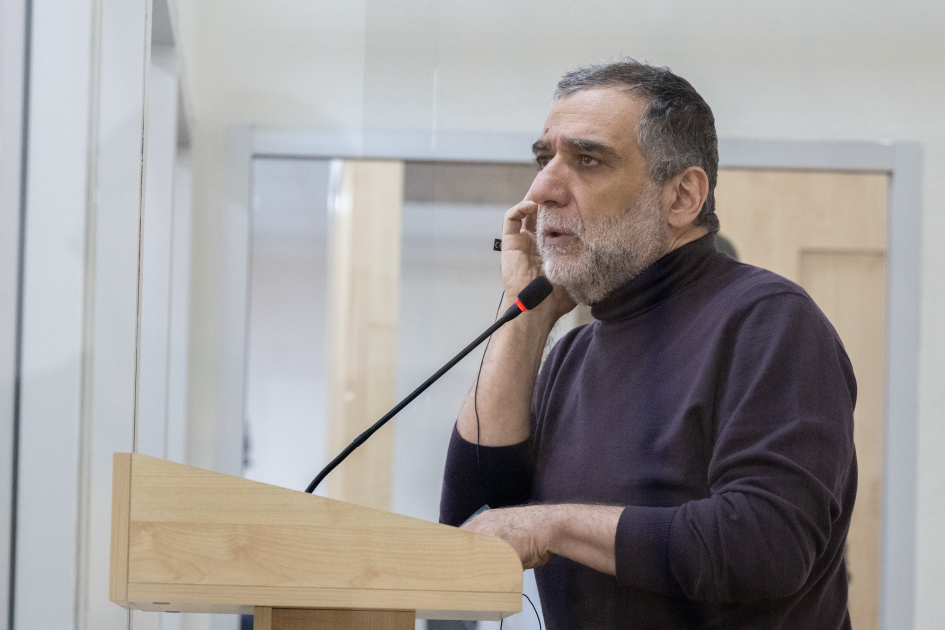
Selected groups of people were brought to the hearings on special buses
“There were no Azerbaijani citizens at the Court of Appeal hearings, whereas the first-instance trial always had around 200-300 people in attendance.
Of course, they selected all of them specifically and brought them in on special buses. We saw this.
According to some reports, they were also paid well. But no one attended this trial.
One reason is that these people saw the abuses that took place there. They saw the weak position of their own side, our independent defence, our persistence and the quality of our self-defence. Naturally, whether they wanted it or not, all this information reached their society. That is why they banned these people from attending.”
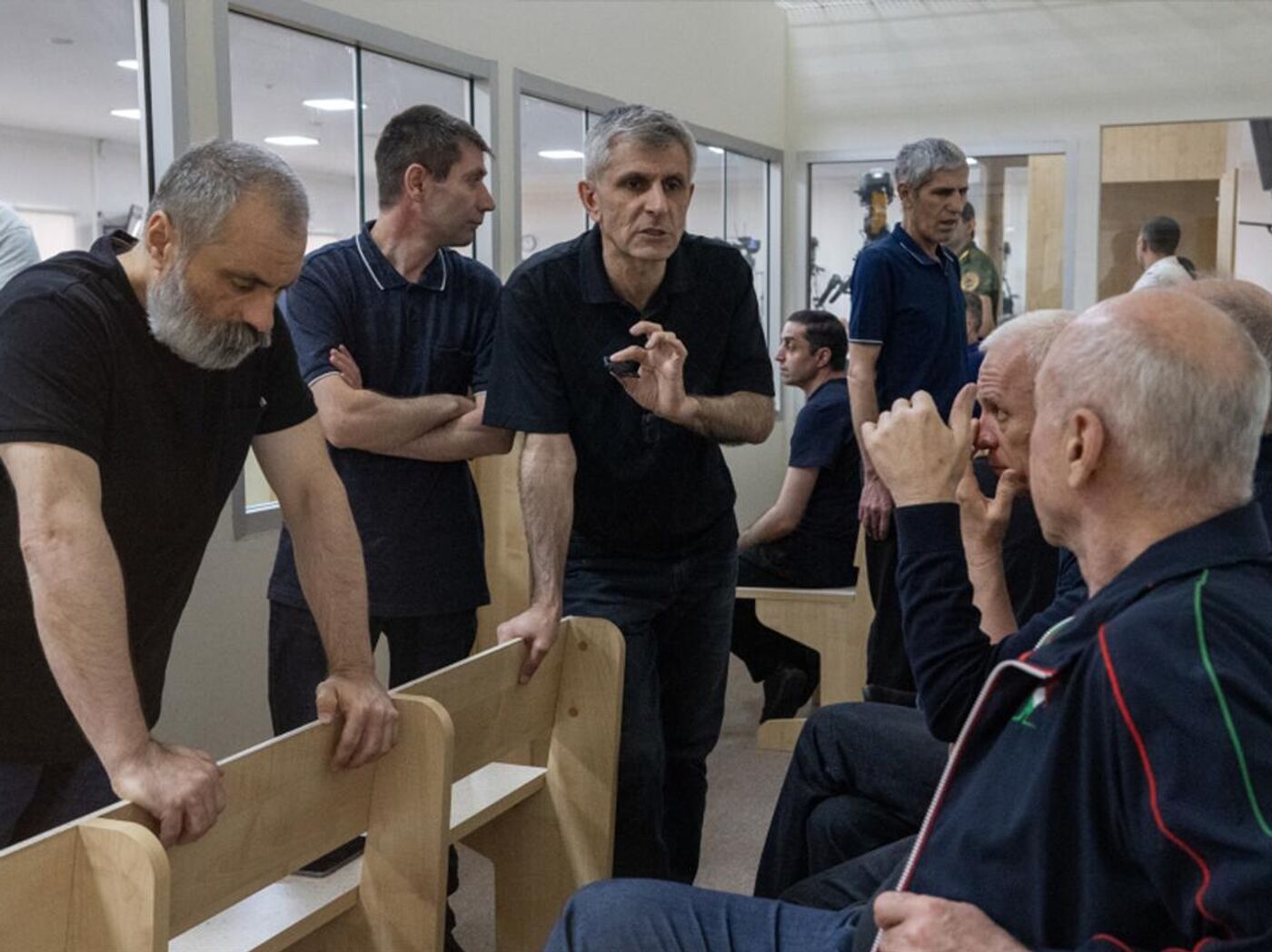
David Babayan’s message from a Baku prison