Divorce rates are rising in Armenia: divorced women and experts explain why




Divorce in Armenia: women share their stories
For some, divorce means a painful separation; for others, it is a happy “liberation” from each other. Either way, former spouses remain part of each other’s lives, albeit in a different capacity.
For some, divorce marks the beginning of a new life. For others, it leads to a prolonged struggle, with endless disputes over issues such as property division and access to their children. Mutual accusations often accompany the process.
In Armenia, divorce can also spark heated public debate. This can be a real ordeal, particularly for women.
Women who have divorced told JAMnews why they decided to end their relationships. Experts offered their explanations for the rise in divorce rates in recent years.

- Why are Armenian women marrying foreigners more often? Stories of three families
- Demand for surrogacy on the rise in Armenia
- More Armenian women embrace entrepreneurship: Which industries are they entering?
“When you realise nothing can be saved”
Juliette Babayan is 38. She separated from her husband after 15 years together and has been raising their two sons on her own for the past two years. She says divorce had always seemed like a last resort:
“When I got married, I could never have imagined that one day I would have to make such a decision. But when a relationship reaches a dead end, there is no other way out. My children were no longer very young at the time. When we divorced, one was 12 and the other 14. They had seen our arguments and the tension between us. Then one day I realised it was better for them to see us apart, living separately but happy, rather than together and miserable.”
She felt that people around her did not understand how difficult it was to decide to divorce:
“But that is not how it works. You do not decide to separate in a minute. You think about it for a long time and give each other another chance. But when you realise there is no other way out and nothing left to save, you eventually reach that decision. Everything good has a beginning and an end. Once you come to terms with that, separation becomes easier to bear.”
She explains that women face both practical and psychological challenges after divorce. She notes that many women in Armenia face hostility from their former husbands and their families, who accuse them of “breaking up the family”.
She is happy with her relationship with her ex-husband. He provides financial support, pays child maintenance and often spends time with their children.
“I believe both parents have equal rights, both during a relationship and after it ends. I respect my children’s father and stay in touch with him. It is very important to me that the children feel both parents are present in their lives and take part in them. I want to make sure they never feel they have no mother or no father, even if we no longer live together,” Juliette says.
“I got married for life”
Araksi Poghosyan is 40. She married at 23 and separated from her husband after 11 years of marriage. She says it is impossible to explain in a few words why they divorced. But after thinking for a moment, she adds: “We no longer loved each other.”
She insists that they tried to save their marriage and decided to divorce only when they realised there was no other way:
“People talk about divorce more than ever now, especially on social media. Many think it is easy to make such a decision. But it isn’t. I belong to a generation that married believing it was ‘for life, until death do us part’. It was very difficult for me to accept that reality had turned out differently and that I needed to get divorced. It took me around three years to reach that decision. I worked with a psychologist and tried to get back on my feet financially because I was leaving with my son, who was seven at the time. I had no idea what would happen next or how I would manage.”

Statistics and reasons
According to official statistics, the number of marriages in Armenia has fallen in recent years, while the number of divorces has risen:
- 2022 – 16,795 marriages and 4,525 divorces (26.9%)
- 2023 – 16,330 marriages and 4,525 divorces (27.5%)
- 2024 – 15,324 marriages and 4,689 divorces (30.5%)
- 2025 – 13,821 marriages and 4,881 divorces (35.3%)
Domestic violence, infidelity, financial difficulties and everyday problems are commonly cited as reasons for divorce.
“In the past, couples who had been married for many years tended to divorce. Now, even those who have been married for just three or four years are splitting up. The main reasons for divorce are arguments, accounting for 50%; incompatibility, 14%; and going abroad for work, 8%,” says Tsovinar Harutyunyan, a development and demography expert who has held senior positions at the United Nations Population Fund (UNFPA).
However, some psychologists say these factors have taken a back seat in recent years.
Family psychologist Naira Kharatyan says most of her female clients cite their husbands’ indifference as the reason for seeking a divorce. She believes women marry for love, but men become less attentive as the years go by:
“Women mostly say they feel neglected and that their partners have become indifferent towards them. Marriage is not just about everyday life and money; it is also about emotions and psychological connection. Women want to feel heard and understood.
“The second reason I would highlight is unmet expectations. Women have certain expectations of marriage, and when these are not fulfilled, they become disappointed. Another factor is unspoken competition within the couple. When a woman earns more or holds a higher position, a man may feel jealous. As a result, they stop acting as a couple and become unspoken rivals, each waiting to see who will win.”
Arus, 37 (not her real name, at her request), says that nowadays women “do not marry for money”.
In her words, “women marry for love and divorce because it is no longer there”. This is what happened to her. Arus left her husband after 13 years of marriage, taking their two children with her.
“My husband subjected me to psychological abuse. He put pressure on me and humiliated me. In the last few years, he did not earn any money. I was the only one working. But he told me I was worthless and that nobody wanted me. He told the children I was a bad mother. He said I could not even cook a decent meal. He did not feel like a proper man and wanted to crush me and humiliate me too. When I stood up to him, he threatened to beat me and take the children away,” she says.
While preparing this article, we spoke to many women who had experienced physical and psychological abuse. But all of them, like Arus, refused to speak on camera. They explained that they feared their former husbands might start harassing them.
“It took everything I had to get away from my husband. I am finally living in peace. Now, if he sees me on screen talking about him, he will turn up again and demand answers,” Arus says.
She adds that her former husband provides no support. She does not need financial help from him and wants no further contact with him.
“On my way home from work, I would pick up the children from nursery and school, get home and make dinner. He would come home in the evening, throw his lunch in the bin or spit into it. He would say it was inedible and that I had never learned how to run a household,” Arus says through tears.

The mother-in-law factor
Psychologist Naira Kharatyan argues that mothers can also contribute to the breakdown of their sons’ marriages:
“When sons remain overly attached to their mothers from childhood, they struggle to build strong families of their own. They have wives, but they listen to their mothers and follow their advice. Mothers encourage this dynamic without realising that they are creating a problem. As a result, the woman and the man never truly become a couple. A mother should tell her son: you are married now, and you must make decisions together with your wife. But in many cases, we see men whose wives were chosen for them, whose marriages their families arranged, and whose mothers then interfered in raising their children. The man never grew up.”
She says the “mother-son-daughter-in-law triangle can lead to tragic consequences”. Even when young couples do not live with their parents, the bond can remain so strong that the man still struggles to establish an independent family life.
Psychologist Mariam Manukyan also believes that marriage is more than a union between two people. She notes that the institution of marriage has acquired new dimensions and meanings over the centuries:
“It is a relationship in which two different people’s habits and ideas about life come together. When people enter a relationship, they begin to go through different stages. At the first stage, for example, a couple learns to share everyday responsibilities. At the second stage, after the birth of a child, they become parents and learn how to raise a child. This can also trigger a crisis and become a challenge for young couples. Relationships go through many such stages and crises. When couples fail to resolve them and the problems deepen, they separate because divorce becomes the only possible solution.”
At the same time, divorce brings new problems for many people. Couples struggle to agree on the terms of separation, while disputes arise over child custody, maintenance payments and the division of property.
“I divorced four years ago, and in all that time I have probably spent just four hours having proper conversations with my children. After the divorce, their father decided that they should stay with him. He wanted to punish me, and he succeeded. The court awarded him custody. We spent four years fighting in court. Eventually, the guardianship authority, which decides which parent the children should live with, concluded that staying with their father was in their best interests.
“My former husband’s close relatives work on that council, and its head is one of his friends. They knew what kind of mother I was and how attentive I had always been to my children, but… For four years, I collected documents to prove that I was a good mother so that my children could live with me. But no one cared about the children’s interests. They cared about my former husband’s interests,” says Susanna (not her real name, at her request).
All the women we interviewed on this subject agree on one thing: divorce does not always end on the day two people decide to stop living together. They also say that society often judges divorced women without considering what led them to make that decision.
“It is easier to talk about the importance of keeping a family together than to consider what it takes to achieve that. A family is not simply people living under one roof. It is also an environment where a child learns what love means, how people treat each other, what women and men deserve, and whether it is possible to live without fear,” one divorced woman says.
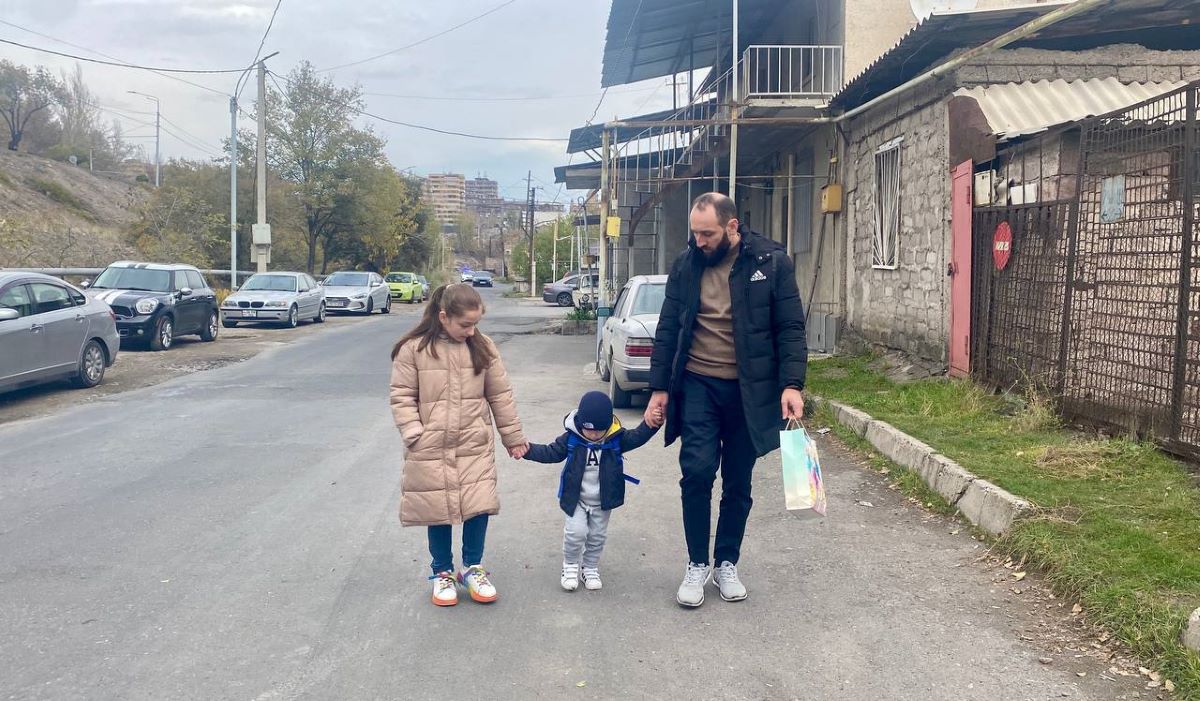
Divorce in Armenia: women share their stories