Nakhchivan's Baku office closed: What remains of autonomy?


Nakhchivan’s representative office in Baku closed
On 5 November, Prime Minister of the Nakhchivan Autonomous Republic Jabbar Musayev abolished the autonomous republic’s Permanent Representative Office in Baku. It had been established in February 1992, when Heydar Aliyev headed Nakhchivan’s Supreme Assembly.
The office maintained regular communication between the Supreme Assembly and state authorities in Baku. In September, its head, Bakhtiyar Asgarov, was dismissed. The authorities have not explained the reasons for abolishing the office. A liquidation commission is to be established within five working days, although it remains unclear which body will take over the office’s functions.
However, this is not simply the closure of a single institution. Over the past four years, control over Nakhchivan’s administration has gradually shifted to Baku. We reported on the new governance model in February.
The president says Nakhchivan’s autonomous status will be preserved. But what remains of its autonomy in practice?
What has changed?
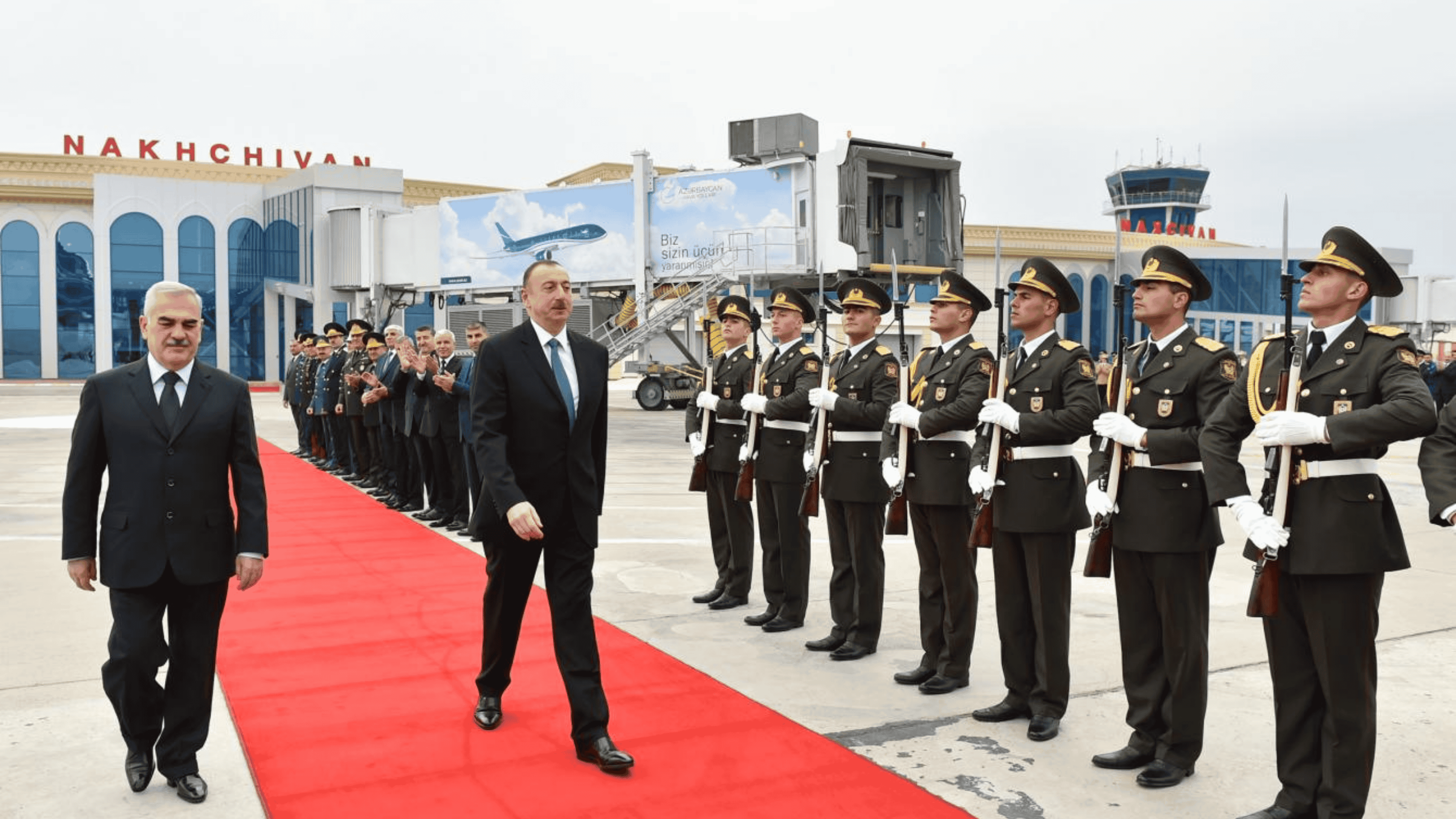
Vasif Talibov led Nakhchivan from 1995 until December 2022. Following his resignation, President Ilham Aliyevestablished the post of presidential plenipotentiary representative in the autonomous republic. The new body was given the authority to oversee the activities of local executive officials and issue instructions to them.
Subsequently, investigations were launched against several local officials on charges of embezzling public funds and other offences. The representative office was initially headed by Fuad Najafli. Since November 2025, the position has been held by former Nakhchivan Prime Minister Jeyhun Jalilov.
However, the most significant changes took place this year. On 2 February, the Milli Majlis (Azerbaijan’s parliament) adopted a constitutional law, and on 10 March, the president signed a decree on its implementation. The law changed Nakhchivan’s system of governance:
- The provision establishing the autonomous republic’s highest-ranking official was abolished.
- The presidential representative office was enshrined in Nakhchivan’s Constitution as an executive authority.
- The Cabinet of Ministers is no longer subordinate to the Supreme Assembly and is now only required to report on its activities to it. The government’s operating procedures must be agreed with the president, while central executive bodies can only be established or abolished with his consent.
- The president sets the dates for elections to the Supreme Assembly. He can also dissolve the parliament if it is unable to perform its functions.
- Heads of local executive authorities are appointed by the president on the recommendation of the chairman of the Supreme Assembly.
- The requirement for the chairman of the Supreme Assembly to be a permanent resident of Nakhchivan was abolished.
- Future amendments to Nakhchivan’s Constitution will be made through ordinary legislation rather than constitutional law.
Under the same decree, the president gave the government three months to bring existing legislation into line with the new provisions.
The local branches of the State Security Service and the State Customs Committee in Nakhchivan already report directly to the central authorities in Baku.
Meanwhile, the position of chairman of the Supreme Assembly remains vacant. No new parliamentary leader has been elected since Talibov’s resignation. At the first session of the newly elected assembly, the proposed candidate failed to secure sufficient support.
Sessions during the autumn parliamentary term were also chaired by First Deputy Chairman Bakhtiyar Mammadov.
What remains of Nakhchivan’s autonomy?
Formally, Nakhchivan retains considerable powers. The autonomous republic still has its own Constitution, an elected Supreme Assembly, a Cabinet of Ministers and a Supreme Court. The Supreme Assembly passes laws and approves the autonomous republic’s separate budget. Under the revised Constitution, the chairman of the Supreme Assembly represents Nakhchivan in relations with foreign states and international organisations.
However, the key change concerns whom these authorities are accountable to. The activities of the executive branch, the appointment of local officials, the timing of elections and the fate of the parliament now depend, to varying degrees, on decisions made by the president of Azerbaijan. The parliament remains in place, but the government is no longer subordinate to it. The position of chairman of the Supreme Assembly also still exists, although it has remained vacant for almost four years.
Why were references to the Treaty of Kars removed?
The same law removed references to the 1921 Treaties of Moscow and Kars from Nakhchivan’s Constitution. They were replaced by documents relating to Azerbaijan’s independence in 1991 and the country’s 1995 Constitution as the legal basis for Nakhchivan’s status. The preamble also now states that Nakhchivan is an “integral part” of Azerbaijan.
Article V of the Treaty of Kars, to which Turkey was among the signatories, recognises Nakhchivan as an autonomous territory under Azerbaijan’s protection. In this context, Bakı-Xəbər newspaper editor-in-chief Aydin Guliyev described Turkey as “one of the guarantors of autonomy”.
Russian political analyst Sergei Markedonov, meanwhile, argues that it makes little sense to speak of the termination of guarantees by Russia and Turkey. In his view, the treaty’s main provision is that Azerbaijan cannot transfer its right of protection over Nakhchivan to a third state. Baku has taken no such steps.
Lawyer Yalchin Hajizade also points out that Nakhchivan’s status is determined by Azerbaijan’s Constitution:
“Amendments to the autonomous republic’s own Constitution cannot change this legal reality.”
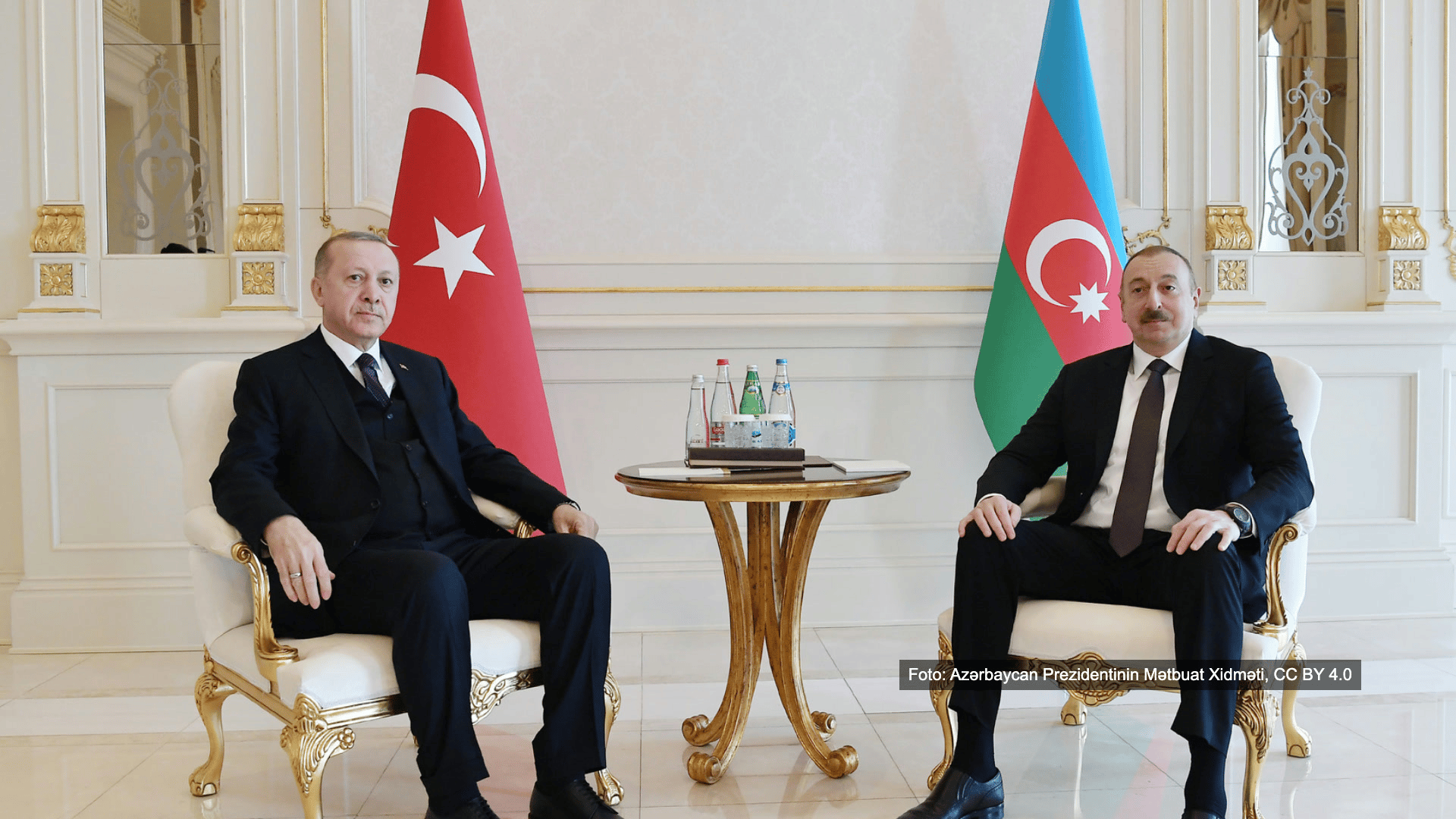
Neither Ankara nor Moscow has officially commented on the changes. Turkish President Recep Tayyip Erdogan also made no mention of Nakhchivan in his speech in Shusha on 8 November.
What are officials in Baku saying?
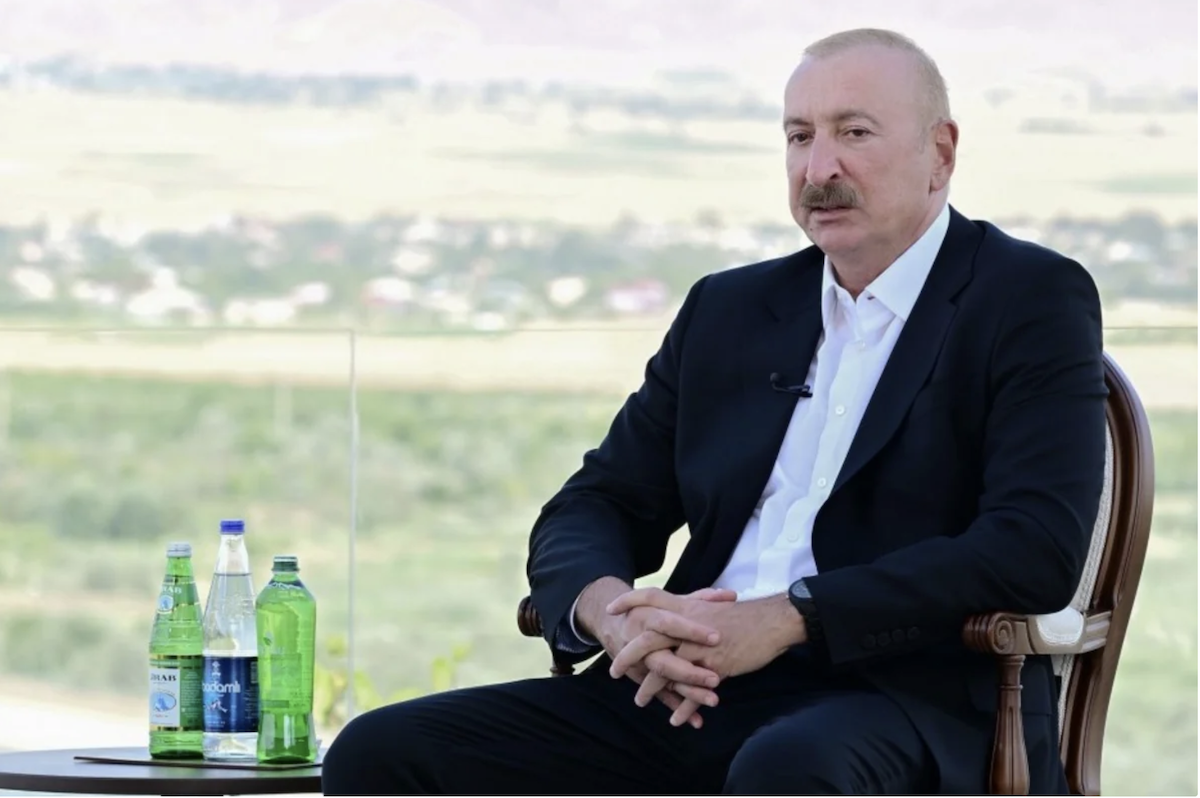
In August, Ilham Aliyev commented on the debate surrounding Nakhchivan’s autonomous status in an interview with AzTV conducted in Nakhchivan:
“The status of the Nakhchivan Autonomous Republic must be preserved, but its system of governance needs to be improved.”
He said the governance model based on special presidential representative offices, already in place in Karabakh and East Zangezur, had also been introduced in Nakhchivan:
“In this way, we are effectively integrating these three regions from an administrative perspective as well.”
The issue was also discussed in parliament in June 2025. MP Hikmet Babaoglu said:
“The need for changes is dictated by current realities.”
MP Mazahir Efendiyev described the new governance model as a step towards strengthening coordination with the central authorities. MP Elman Nasirov stressed that the issue of Nakhchivan’s autonomous status was not covered by the draft law.
Deputy Speaker of Parliament Ziyafet Asgarov opposed abolishing the autonomy, while MP Gudrat Hasanguliyev called for a broader discussion of its status.
Figures close to the authorities have presented the changes as an end to the “dual power” system that existed under Talibov.
As early as 2022, historian Kamran Ismayilov had called for reforms to Nakhchivan’s governance system:
“An excessively bloated bureaucracy creates fertile ground for corruption.”
What do critics say?
Human rights defender Yalchin Imanov told OC Media that the changes effectively reduced Nakhchivan’s autonomy to zero and reflected the concentration of power in the hands of one person.
In July, political analyst Nasimi Mammadli told Radio Liberty:
“After the establishment of the presidential representative office, Nakhchivan’s autonomous status began to become largely symbolic.”
According to him, the Supreme Assembly has “largely lost its political influence”.
Where are these changes leading?
Mammadli does not rule out the possibility of a constitutional referendum in the future that could lead to a revision of Nakhchivan’s status.
Political analyst Zaur Mammadov also suggested in 2025 that the designation “autonomous republic” could be replaced with “region”. In his view, such a change would reduce the powers of the Supreme Assembly and the executive authorities.
Meanwhile, the implementation of the TRIPP project would establish a land connection between Nakhchivan and the rest of Azerbaijan. This raises the question of whether the autonomous republic would still need its special status.
For now, Article 134 of Azerbaijan’s Constitution defines Nakhchivan as an autonomous state within Azerbaijan.