

'Suleyman’s community case': Baku dormitories and courses become subject of legal proceedings






Suleyman community case in Azerbaijan
Unregistered religious instruction allegedly took place at preparatory courses and student dormitories in Baku linked to the “Suleyman community”.
Witnesses in the case say they were provided with accommodation and three meals a day for 150 manats (approximately $88) a month. They also attended lessons on the Quran and Islamic prayer. The trial of Said Mikailov is ongoing.
What is the “Suleyman community”, what does Azerbaijan’s legislation say about religious education, and what questions about the case remain unanswered?

What happened?
Following an operation carried out by the State Security Service, Said Mehman oglu Mikailov was charged with a criminal offence. He reportedly presented himself as the “head of the Baku branch of the Suleyman community”. Authorities also took administrative measures against several other people.
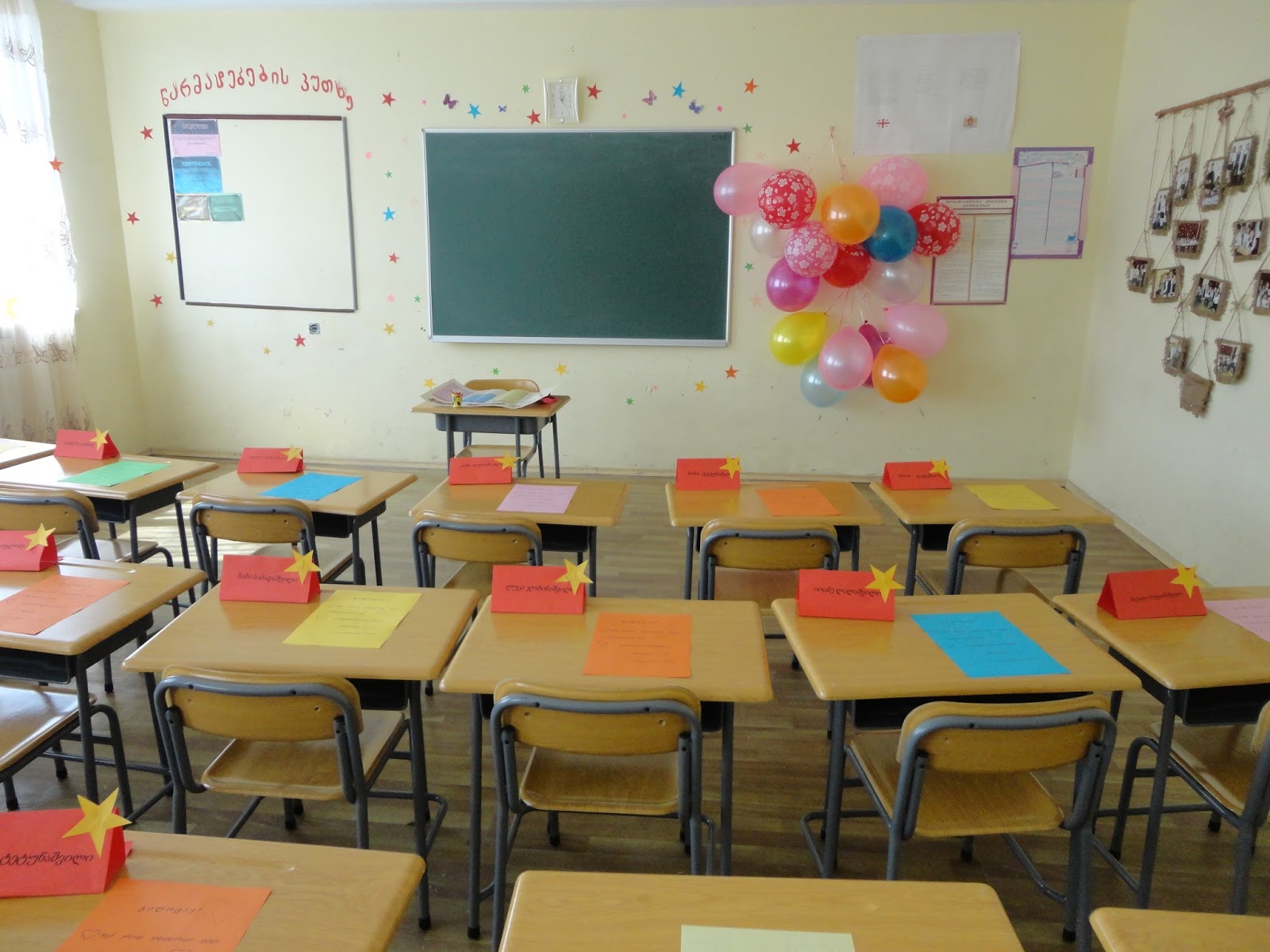
The case is being heard by the Binagadi District Court in Baku. According to a court report by the pro-government APA news agency, investigators believe that religious rituals took place at premises operating in Baku as preparatory courses, a student dormitory and a kindergarten. The activities allegedly took place without approval from the State Committee for Work with Religious Organisations, and some involved minors.
Media reports do not specify which article of the Criminal Code Mikailov faces charges under, whether he is in custody or what position his defence has taken.
The next court hearing is reportedly scheduled for 30 September.
What do the witnesses say?
The testimony of three witnesses questioned in court suggests that similar arrangements operated at different addresses. They offered low-cost accommodation and meals, general education classes, and parallel lessons on the Quran, the Arabic alphabet and the rules of Islamic prayer.
Ibrahim Teymurov, a former head of the Nasimi student dormitory, said he returned to Azerbaijan after receiving religious education at courses run by the “Suleyman community” in Turkey. He said he initially worked at the dormitory as a supervisor and security guard. He later taught Quran classes two or three times a week and was eventually appointed head of the dormitory, replacing Said Mikailov.
According to Teymurov, each student paid 150 manats a month in cash in exchange for accommodation and three meals a day. He said the services were used mainly by children from low-income families who had come from the regions. The witness stated that the religious books in use were commercially available, but acknowledged that no government body had registered the religious instruction.
Another witness, Ismayil Serverli, said he managed an educational centre in the Bakikhanov settlement. According to him, five students lived at the centre, where they also studied literature, mathematics and English. Most teachers worked without employment contracts. Serverli attributed this to their unwillingness to pay taxes. He also said that income was insufficient to cover expenses, so the centre placed a donation box at the entrance.
Elton Abdullayev, a former head of another dormitory in Binagadi, said around 17–18 students lived there, each paying 150 manats a month. According to him, teachers with religious training who lacked permission to teach religion instructed students in the Arabic alphabet and the Quran. They also performed Islamic prayers together with the dormitory residents. The report says that this dormitory also installed a donation box to help cover expenses.
What is the “Suleyman community”?
The “Suleymanists”, or the “Suleyman community”, is the name of a religious community that brings together students and followers of Turkish religious figure Suleyman Hilmi Tunahan. Tunahan received religious education during the final years of the Ottoman Empire. In the first decades of the Turkish Republic, he taught the Quran and religious subjects.
According to a biography published in the Turkish Religious Foundation’s “Encyclopaedia of Islam”, as well as a 2024 academic study, the movement’s main activities included Quran courses and student education. After Tunahan died in 1959, his students continued this work by organising courses and dormitories, and later various educational and social institutions.
The model described during the trial in Baku — combining education with accommodation in dormitories — therefore resembles the organisational structure the movement has historically used in Turkey. However, this similarity alone does not prove that individuals in Azerbaijan received direct instructions or funding from the movement’s leadership in Turkey. The published trial materials contain no documents or information about financial transactions confirming such a connection.
What does Azerbaijani law say?
Article 48 of the Constitution of Azerbaijan guarantees everyone freedom of conscience, the right to determine their own attitude towards religion, and the right to perform religious rites individually or jointly with others. However, exercising this right must not violate public order or conflict with public morality. Article 18 of the Constitution separates religion from the state and establishes the secular nature of the state education system.
Article 6 of the Law on Freedom of Religious Belief allows citizens to study religion and receive religious education individually or jointly with others. However, establishing a religious educational institution or organising courses on sacred texts through religious organisations is subject to a separate procedure. A religious educational institution may be established by a religious centre with the approval of the relevant state body. Courses on sacred texts must follow the religious organisation’s charter, receive approval from the religious centre to which it is subordinate, and be reported to the authorised state body.
Under Article 6-1 of the law, mass religious rites generally take place in houses of worship and pilgrimage sites. Holding them outside such locations requires the consent of a state body. At the same time, Article 21 allows religious rites to take place in dormitories at the request of their residents.

The key legal question in this case, therefore, is not simply whether people read the Quran together. The court will have to establish whether the activity constituted individual and voluntary religious practice or systematic religious instruction organised without the required authorisation. The assessment may also take into account the participation of minors, the official designation of the premises, and the mechanisms used to manage and finance the activities.
Parents have the right to raise their children in accordance with their religious beliefs. However, the law prohibits forcing a child to practise a religion and requires religious upbringing not to harm their physical or mental health. Open sources do not specify how many minors are involved in the case, how old they are, whether their parents gave consent, or which religious rites they took part in.
Receiving religious education abroad is not, in itself, a violation of the law. In 2024, the State Committee for Work with Religious Organisations reported that Azerbaijani citizens who had received religious education abroad could attend an interview and receive official appointments as religious figures. At the time, the committee said that 19 people with foreign religious education had received such appointments.
Parallel investigation in Turkey
Several months after the trial began in Azerbaijan, Turkey also launched a major investigation into the community’s leadership. Ankara’s Chief Public Prosecutor’s Office describes the case as an investigation into the activities of a “criminal organisation led by Alihan Kuriş and established for the purpose of financial gain”. Authorities detained 38 suspects. On 16 August 2026, a court remanded 32 of them, including Alihan Kuriş, in custody. It placed the other six under house arrest as a judicial-control measure.
Turkish media report that the investigation concerns alleged fraud, tax evasion and the laundering of criminal proceeds. According to Anadolu Agency, investigators also found 200 kilograms of gold bars during one of the searches. Their origin remains unknown.
At present, open sources contain no information about a direct procedural link or evidence connecting the Baku case with the investigation in Ankara. The two proceedings can be viewed as parallel investigations into the activities of the same religious network. However, there is currently no basis for treating them as part of a single case.
Suleyman community case in Azerbaijan