48th pro-European Saturday march in Tbilisi, protesters’ stories. Video podcast "Protests in Georgia"


Pro-European protests in Georgia, video
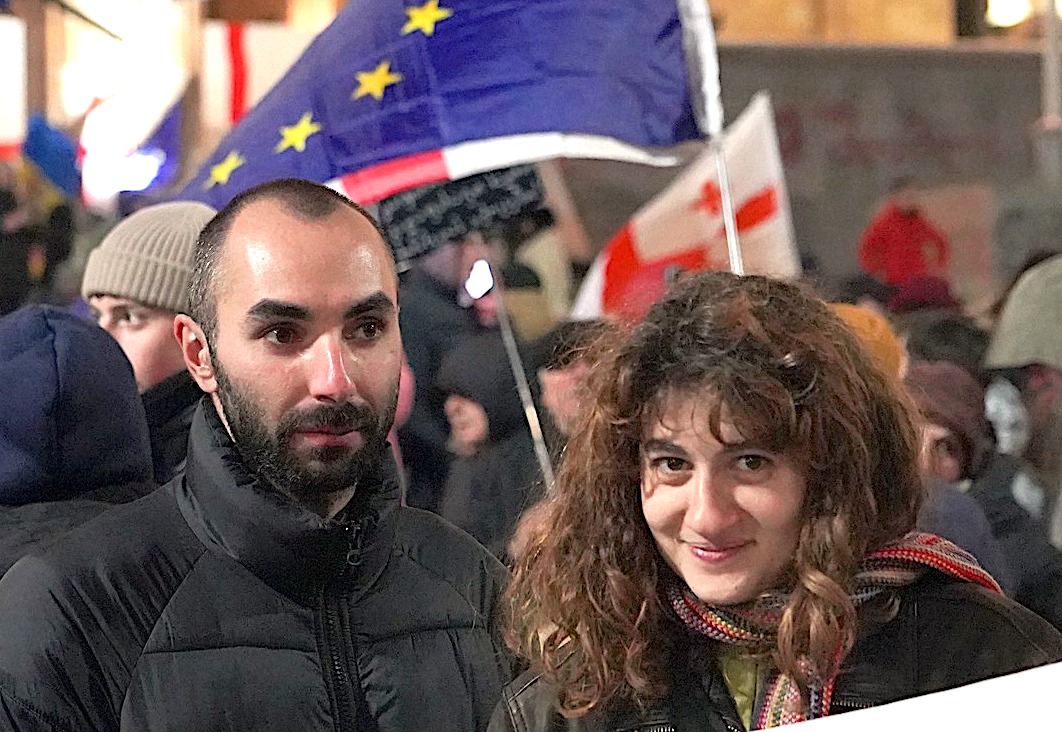
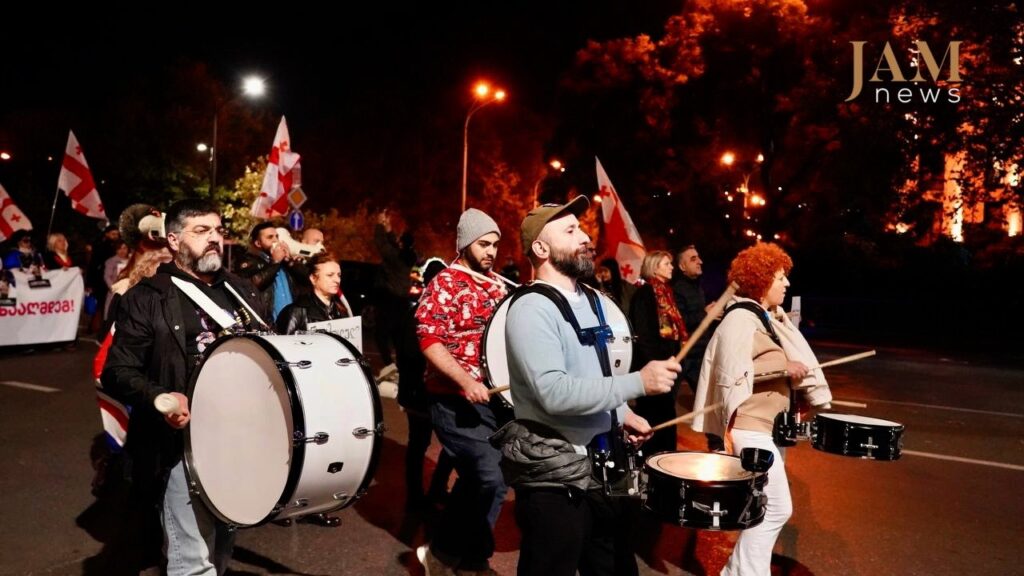
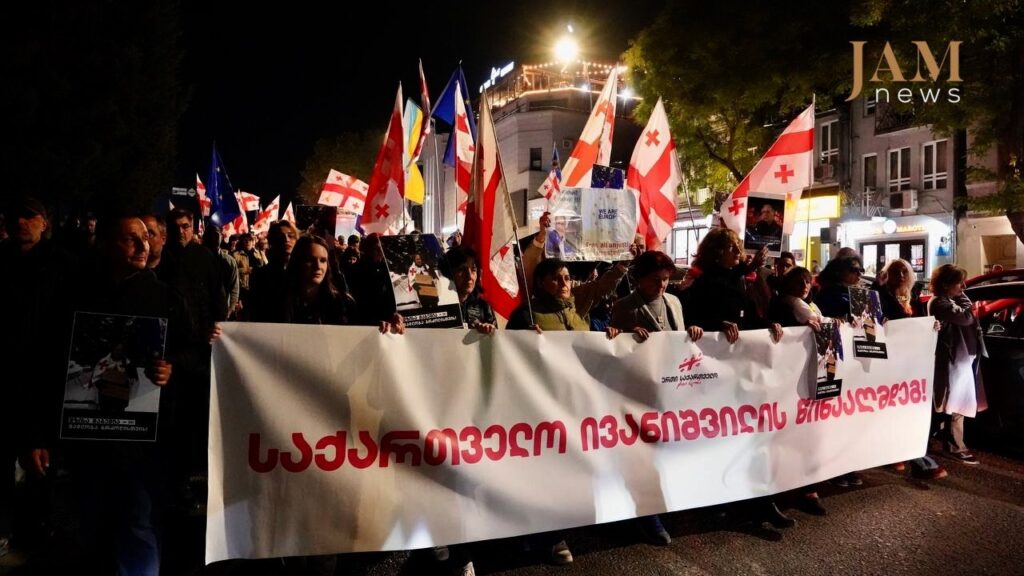
The 48th consecutive Saturday march took place in Tbilisi on 14 November. Thousands of people continue to demand that Georgia return to the path of European integration, as protests have now continued for more than two years.
November is a particularly painful month in this context. On 28 November, it will be two years since Prime Minister Irakli Kobakhidze announced that Georgia, then an EU candidate country, was suspending its EU integration process.
In recent weeks, the Saturday march has been held under the same main slogan: “Georgia against Ivanishvili”, referring to billionaire Bidzina Ivanishvili, founder and honorary chairman of ruling Georgian Dream party.
A large-scale march is planned for 28 November. Organisers are urging people across the country to take part and show their support for Georgia’s European integration.
“Mzisa Gabeshia – thank you for your fight,” reads the banner held by a Saturday march participant in the photo below.
On 14 November, 75-year-old Mzisa Gabeshia was buried in the town of Martvili. For months, she had held solo protests in support of Georgia’s European integration and the demonstrations in Tbilisi.
News of her health problems emerged recently. She had been battling a serious illness. Activists from Tbilisi travelled to Martvili to attend her funeral and pay their respects.
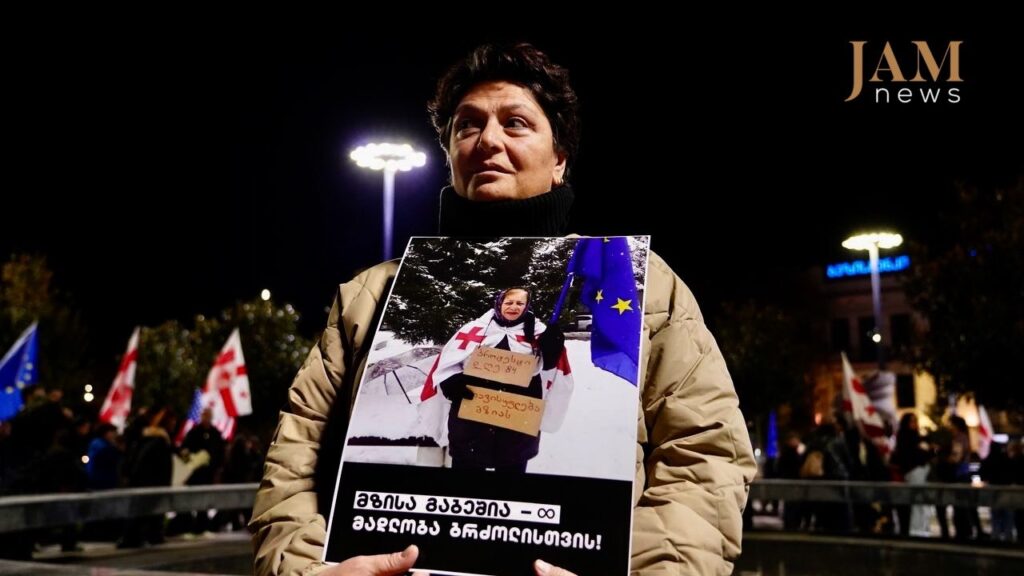
“Mzisa Gabeshia – thank you for your fight,” reads a banner held by one of the march participants
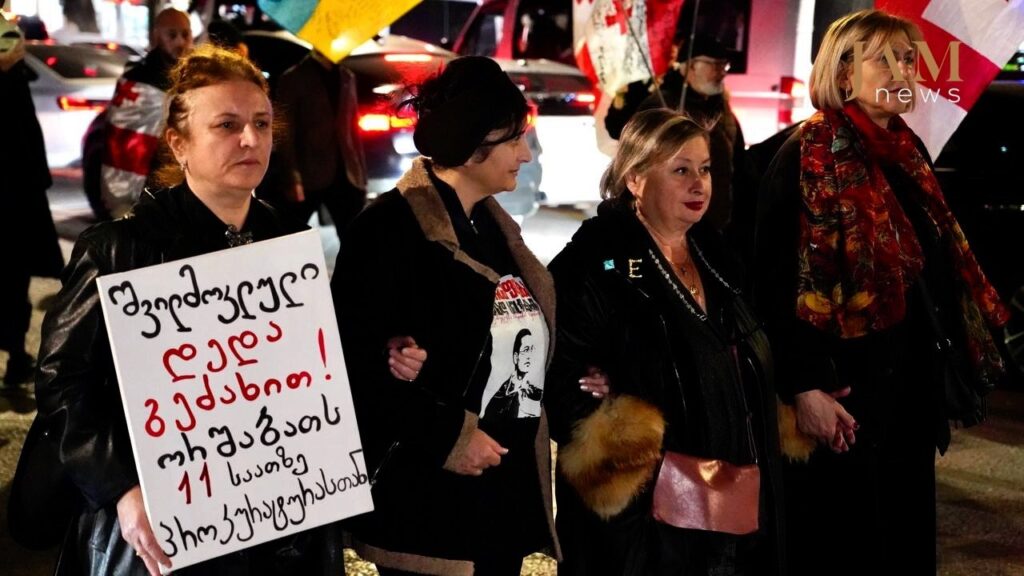
The photo below shows Teona Tamazashvili, mother of young programmer Tamar Bachaliashvili, who was found dead in her car in May 2023 under suspicious circumstances. Investigators classified her death as suicide, but her family rejects this conclusion.
Tamazashvili regularly joins the Saturday marches, calling for the investigation to be reopened. She urges fellow citizens to support her weekly protest outside the prosecutor’s office every Monday.
“The mother of a murdered child is calling you,” reads the banner she is holding.
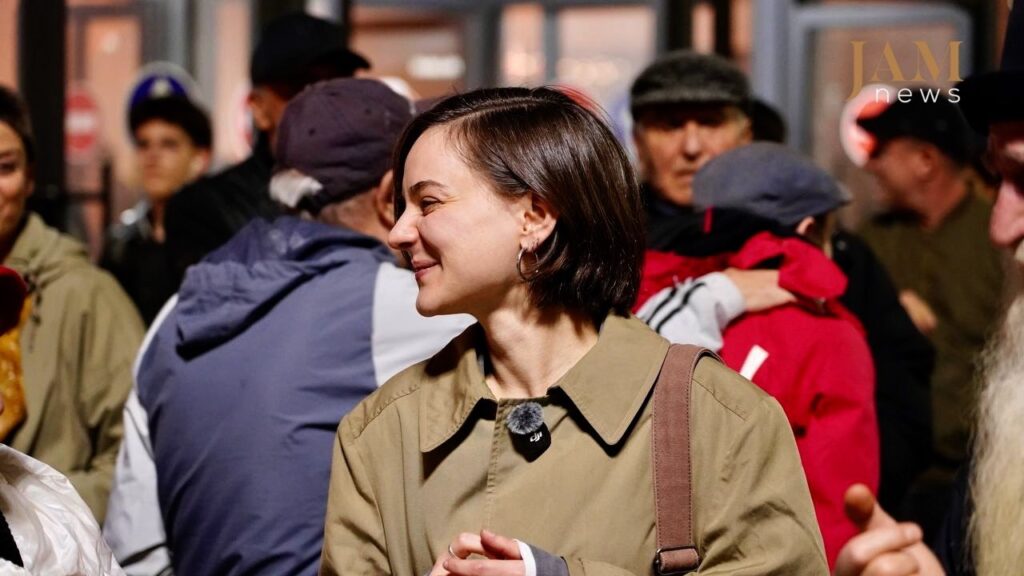
Young singer Sofo Batilashvili, pictured below, is a regular participant in pro-European protests in Tbilisi. Last week, a court fined her 3,000 lari (about $1,150) for posting a video on social media of herself performing “Ole Ola”, a song containing profanities directed at the ruling party.
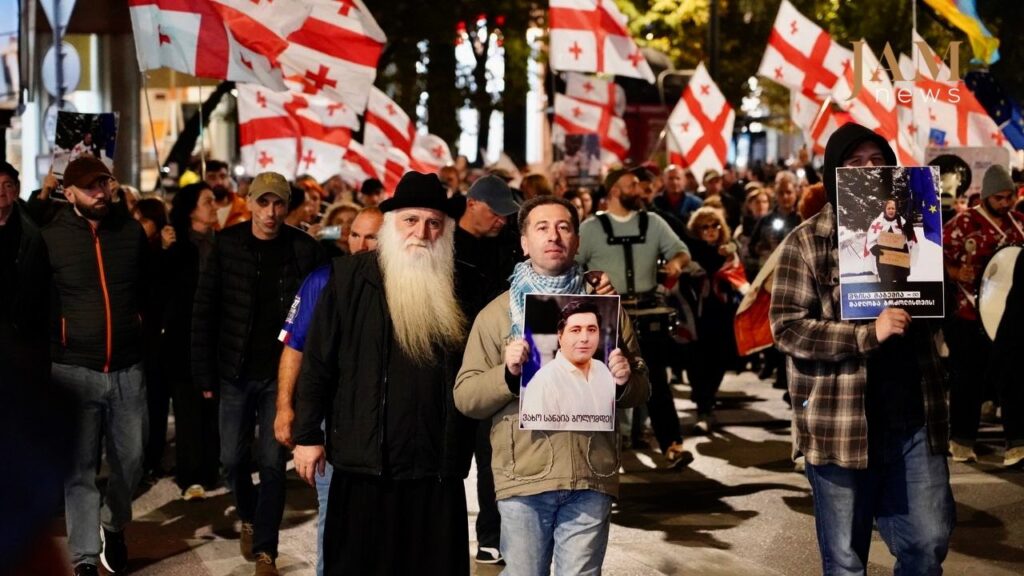
“Vakho Sanaia, all the way!” reads a banner held by a participant in the Saturday march (pictured below).
In October, prominent TV presenter and Formula journalist Vakho Sanaia was sentenced to 30 days of administrative detention over Facebook posts and videos that a court deemed insulting to parliament speaker Shalva Papuashvili and other members of the ruling party.
Context
The “Saturday marches” are part of an ongoing protest movement that has continued in Georgia for more than two years.
Protesters are demanding that Georgia return to the path of European integration and that all political prisoners be released. They are also calling for the repeal of all anti-democratic laws passed by the ruling Georgian Dream party over the past two years.
Protesters and opposition parties point out that part of Georgian society still does not recognise the results of the parliamentary election held in autumn 2024. They are calling for early parliamentary elections.
Over the course of nearly two years of protests, dozens of people have been arrested. Many have been charged with criminal offences and sentenced to prison.
For the first time in independent Georgia’s history, the country has around 150 prisoners of conscience, including women. Among them is Mzia Amaglobeli, founder of the independent media outlets Batumelebi and Netgazeti. She was sentenced to two years in prison for slapping a police officer.
The protests continue despite an intensifying crackdown on civil society and the media.
News in Georgia