

Sovereignty, occupation, peace and economic ambitions: Georgian PM addresses UN






Speaking at the 81st session of the UN General Assembly, Georgian Prime Minister Irakli Kobakhidze outlined the country’s international role, sovereignty, occupied territories, prospects for peace in the South Caucasus and economic ambitions.
His key messages brought together several themes: Georgia sees its future as based on sovereign choice, links cooperation with international partners to dialogue and mutual respect, and views itself as an important link in the Middle Corridor and the South Caucasus for regional stability and economic development.
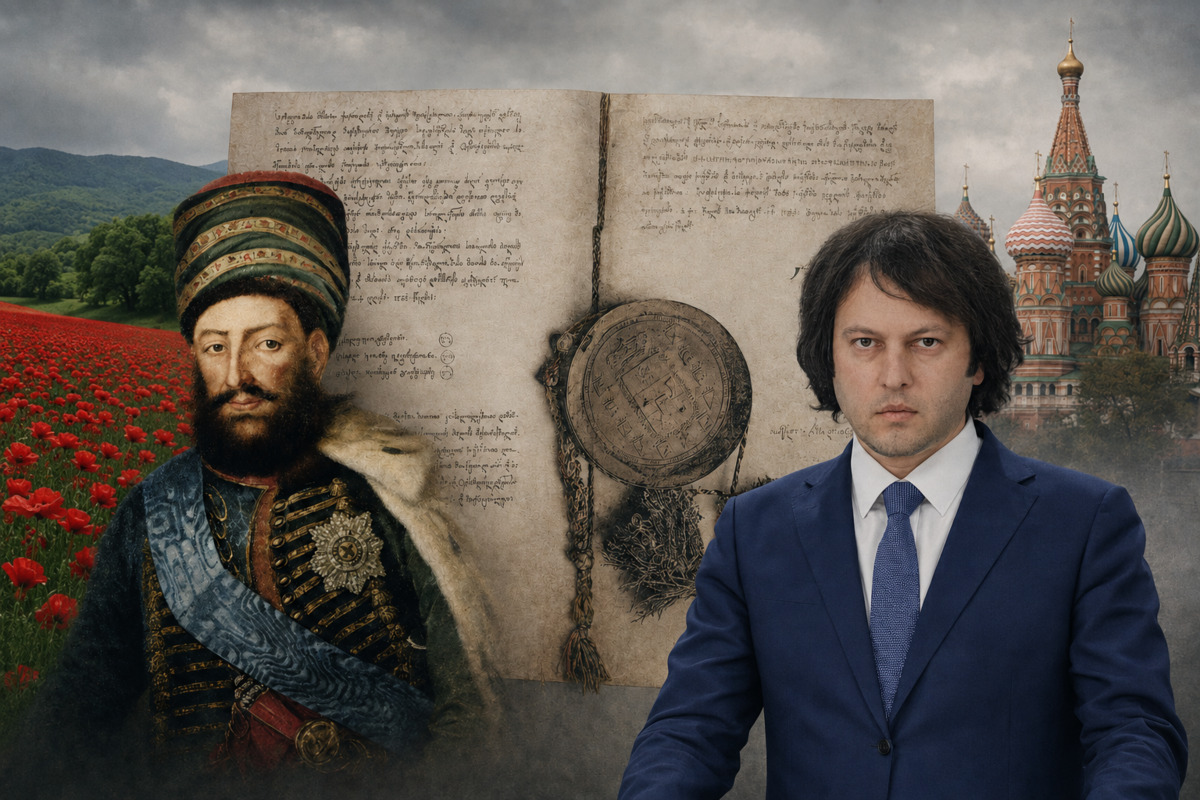
Our own path’: sovereignty shaped by Georgia’s historical experience
From the UN podium, Irakli Kobakhidze linked Georgia’s historical experience to the issue of sovereignty. He said that for centuries Georgia had stood at the crossroads of civilisations, embracing different cultures and ideas while seeking to preserve its own identity.
“For centuries, we have stood at the crossroads of civilisations, opening our doors to different cultures, people and ideas, while firmly protecting our unique identity and distinctiveness,” the prime minister said.
He argued that Georgian statehood had repeatedly faced challenges, but that this experience had strengthened the country’s determination to chart its own course.
Kobakhidze placed particular emphasis on one of the key principles of the international order — the equal application of the same rules to all states.
“Historical experience has also taught us that we must always remember the price of sovereignty, that stability needs to be protected, and that the strength of the international order ultimately depends on the extent to which the same principles are applied equally to all states,” he said.
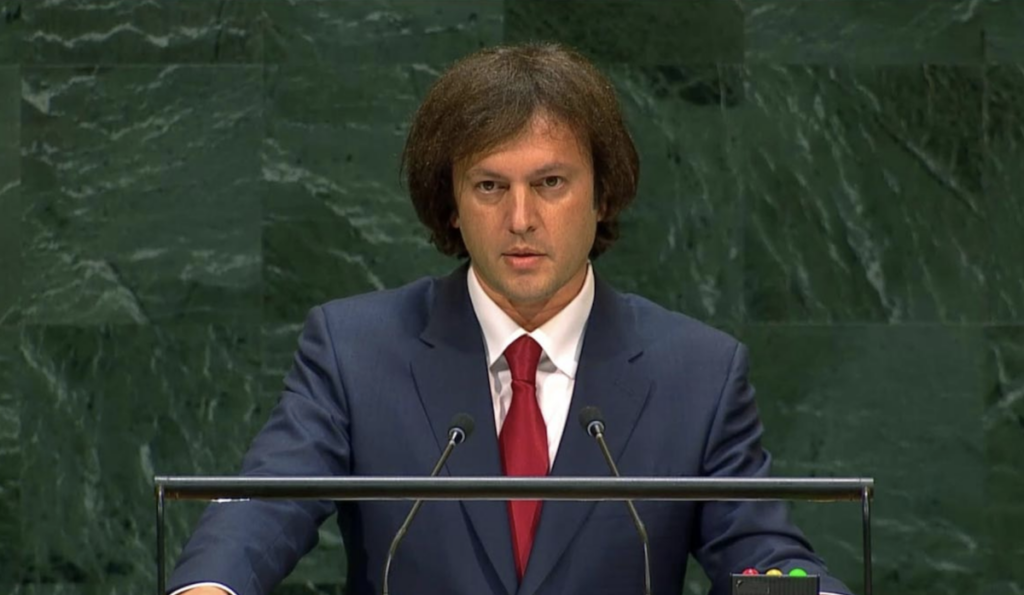
‘Long-term partnerships can only be achieved through dialogue’
Speaking about relations with international partners, the Georgian prime minister said Tbilisi was ready to continue cooperation with all countries that sought relations based on mutual respect and sovereign equality.
He said international cooperation was essential for Georgia but should be free from pressure and coercion.
“The progress we want to achieve in our own country is inconceivable without developing cooperation with other countries. Georgia once again expresses its readiness to continue relations with all international partners that are prepared to work with us on the basis of mutual respect and sovereign equality,” he said.
According to the prime minister, long-term partnerships are built through dialogue rather than coercion.
In the same context, he spoke about the role of the UN, saying that amid growing global uncertainty, the organisation remained an important international forum for dialogue and joint action.
Kobakhidze also voiced support for UN reform. He said the UN80 initiative offered an opportunity to improve the organisation’s effectiveness, transparency and accountability.
Occupation and appeal to Abkhaz and Ossetian communities
Georgia’s territorial conflicts featured prominently in the prime minister’s speech.
Kobakhidze said 20% of Georgia’s territory remained occupied by the Russian Federation and hundreds of thousands of people were still unable to return to their homes.
He then directly addressed the Abkhaz and Ossetian communities:
“Twenty per cent of our country’s territory remains occupied by the Russian Federation, while hundreds of thousands of our citizens remain internally displaced and are unable to return to their homes. One of the main themes of this year’s session is rebuilding trust, and it is against this backdrop that I would like to address our Abkhaz and Ossetian brothers and sisters.
“For centuries, we shared one homeland and were bound by a common history. The dividing lines drawn today can neither erase that history nor determine the future of our children. We believe that the benefits brought by peace and Georgia’s economic development should not be limited by artificially drawn dividing lines. People living in our occupied historic regions should also be able to enjoy these benefits — those who have been and will always remain an integral part of our shared future.”
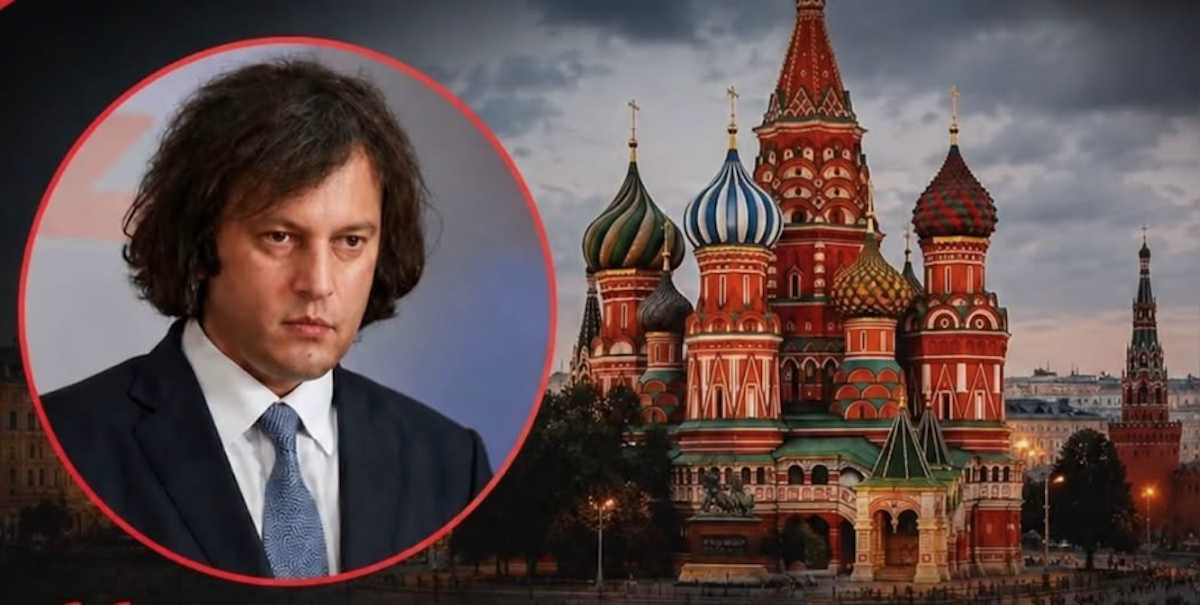
South Caucasus: opportunity for ‘fresh start’
Regional security also featured prominently in the Georgian prime minister’s speech.
Kobakhidze said the challenges facing Georgia could not be considered without taking into account the broader regional context.
He said Tbilisi sought to act as an honest broker in regional initiatives, promoting cooperation and helping to find peaceful solutions.
“Today, we see a real opportunity to make a fresh start in building a more peaceful and interconnected region,”Kobakhidze said.
He added that greater regional cooperation should not be limited to political stability, but should ultimately translate into tangible economic opportunities.
‘Peace cannot be achieved through force’
Against the backdrop of international conflicts, Kobakhidze also addressed the issue of peace, saying that lasting peace could not be achieved through the use of force.
“Lasting peace cannot be established through the use of force; it must be based on dialogue, mutual understanding and mutual respect,” the prime minister said.
He said that amid the challenges facing the world, preserving peace and strengthening international cooperation remained key priorities.
Kobakhidze also said that a coordinated response to global challenges, conflict prevention and achieving the Sustainable Development Goals required stronger international cooperation.
Economic growth: from figures to social outcomes
Another key part of the prime minister’s speech focused on Georgia’s economic performance and its goals for the coming years.
Kobakhidze said strong economic indicators should ultimately be reflected in people’s everyday lives — through higher per capita output and real wages, lower poverty, better jobs and greater economic resilience.
He said Georgia’s poverty rate had fallen from 21.3% in 2020 to 7.1%. The prime minister said one of the government’s main priorities over the next five years would be to reduce the urban-rural divide and expand opportunities in the regions.
“Ensuring that the benefits of economic growth are widely shared and that no one is left behind,” he said, describing one of the key priorities for the period.
Middle Corridor and Georgia as a link between Europe and Central Asia
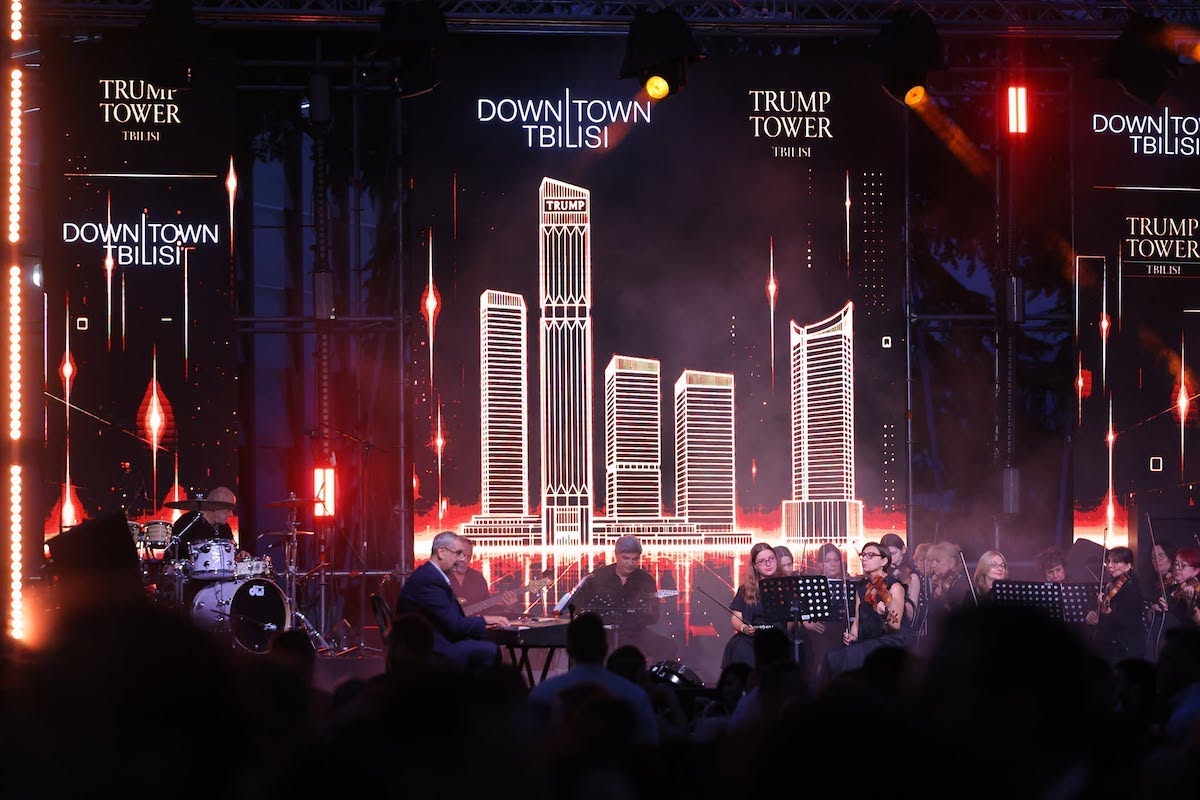
In the economic part of his speech, Kobakhidze placed particular emphasis on Georgia’s geographical location. He said Georgia was an integral part of the South Caucasus and the Middle Corridor, giving the country an important role in connecting Central Asia with Europe.
The prime minister said direct access to the Black Sea offered advantages for trade and investment, while Georgia’s infrastructure could provide landlocked countries with access to global supply chains.
“Through our free trade agreements, we have created a network providing access to a market of approximately 2.3 billion consumers,” Kobakhidze said.
Georgia and UN: ‘The choices we make today’
Kobakhidze concluded his speech by addressing global responsibility. He said the decisions made by the international community today would shape the world in which future generations would live.
“The choices we make today will determine what kind of world we leave to future generations. Let us make sure we leave them a world that is more peaceful, secure and united than the one we have today,” the prime minister concluded.