Why has Georgia's government revived debate over Treaty of Georgievsk?






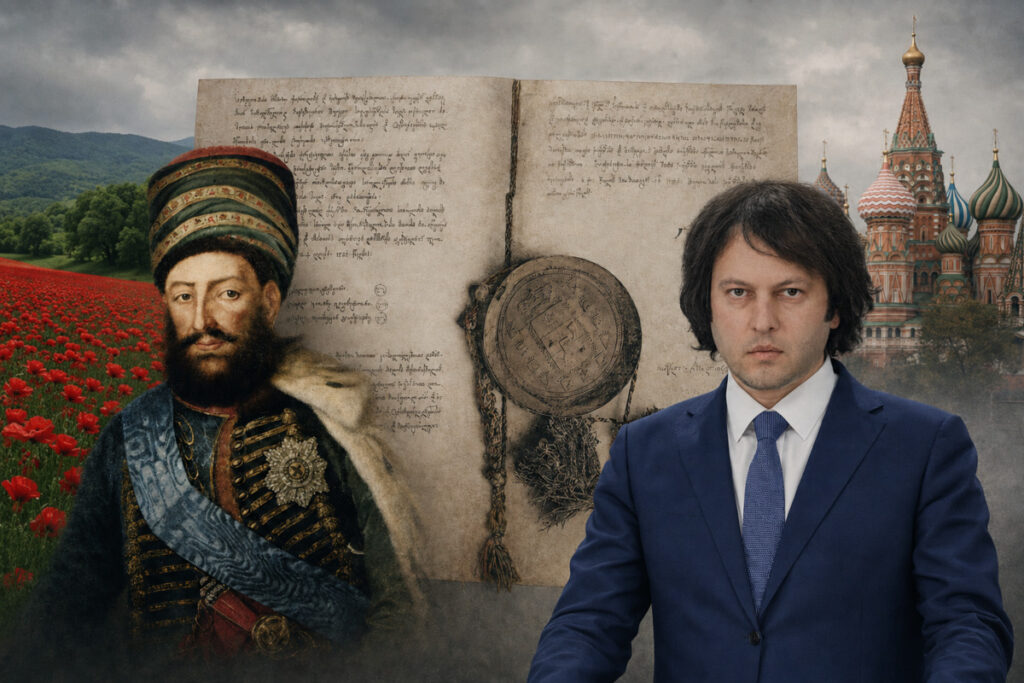
In recent days, Georgian government officials have made a series of similar statements about the 1783 Treaty of Georgievsk.
Prime Minister Irakli Kobakhidze says the agreement with Russia saved Georgia and the Georgian nation. He argues that it laid the foundations for today’s sovereign state and helped preserve its European prospects.
Several days later, other leaders of the ruling Georgian Dream party began speaking about the Treaty of Georgievsk in similar terms. They repeat not only the main conclusion but also the same arguments: Georgia faced the threat of destruction, an agreement with Russia was the only option, and that decision saved the Georgian nation, Christianity and Georgian statehood.
This level of coordination suggests that the discussion has moved beyond a spontaneous debate about history. The positive assessment of the Treaty of Georgievsk sounds more like a unified political message from Georgian Dream.
But what is the purpose of this message?
The Treaty of Georgievsk was an agreement under which eastern Georgia (the Kingdom of Kartli-Kakheti) came under the protection of the Russian Empire. The parties signed the treaty in the summer of 1783 at the fortress of Georgievsk. The treaty protected Georgia from external threats but ultimately led to the complete loss of its independence.
Opposition figures say the government is preparing the public for a possible new agreement with Russia. Former president Mikheil Saakashvili, who is currently in prison, has even referred to specific draft agreements.
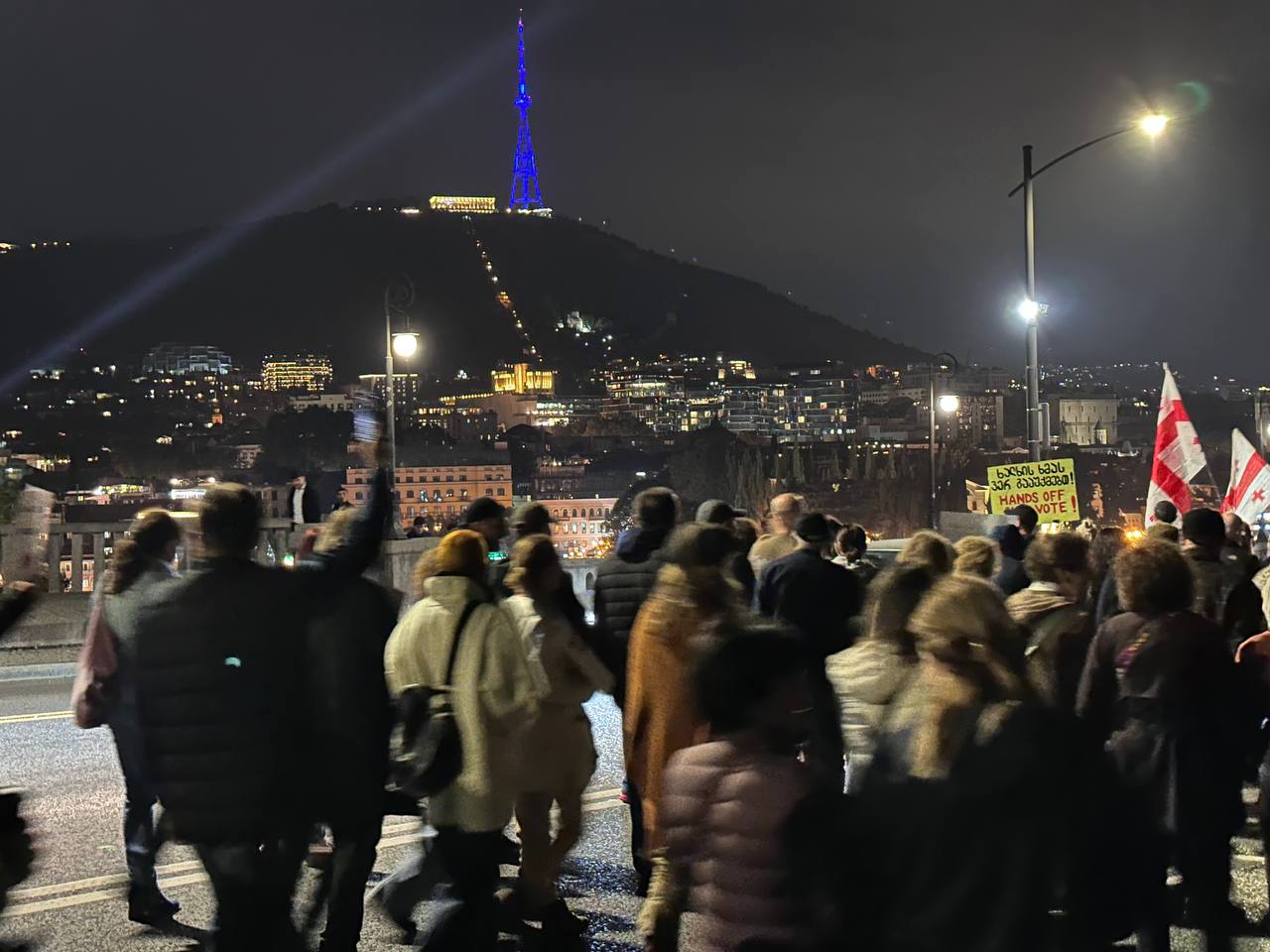
Other political commentators see the renewed focus on the treaty as an attempt to divert attention from important current issues. Against the backdrop of what they describe as the Georgian government’s increasingly pro-Russian course and anti-Western rhetoric, the Treaty of Georgievsk is a particularly sensitive issue for politically active Georgians and can easily provoke a strong reaction.
According to this view, the government deliberately sparked a historical debate to draw attention away from corruption within the administration. At the same time, the authorities have intensified the charges against former prime minister Irakli Garibashvili. His case goes beyond the actions of an individual official and raises questions about the scale of systemic corruption itself.
Russian media have already described Kobakhidze’s remarks as another sign that Tbilisi’s attitude towards Moscow is changing.
So why has a treaty signed 243 years ago suddenly become one of the main topics of Georgia’s current political debate?
What Prime Minister Kobakhidze said
Irakli Kobakhidze has made several statements about the Treaty of Georgievsk. His main argument is that King Erekle II’s decision ultimately ensured the physical and political survival of the Georgian nation.
On 18 August, Kobakhidze described the signing of the treaty as a “civilisational choice”. He said Christian Georgia, surrounded by Muslim states, chose fellow Orthodox Russia.
“The fact that today we are an independent, sovereign state based on traditional European values and traditional European culture is precisely the result of this pragmatic decision taken by Erekle II,” the prime minister said.
Kobakhidze has also argued that Erekle II’s decision was not only justified, but the “only correct and only possible” choice at the time. In his account, Russia honoured the terms of the agreement during Erekle II’s lifetime:
“While Erekle II was alive, he ensured that the agreement was upheld to the end. Almost 20 years passed between the Treaty of Georgievsk and the annexation of Georgia. For two decades, our country was effectively saved.”
Kobakhidze presented Russia’s abolition of the Kingdom of Kartli-Kakheti as a process that became possible only after the Georgian king’s death: “When Erekle II died, unfortunately, events took a different course.”
Georgian Dream leaders have also drawn parallels between this historical episode and modern Georgian-Russian relations.
Kobakhidze compared the Treaty of Georgievsk with the August 2008 war and said that “under Mikheil Saakashvili’s leadership, all the agreements, whether signed or unsigned, were torn up over our heads.”
Other party leaders have expressed similar views. MP David Matikashvili, for example, called the Treaty of Georgievsk a “smart and wise” decision.
“Ultimately, despite the many negative consequences, Georgia and the Georgian people managed to survive physically. The genius of King Erekle is obvious here,” he said.
More about the Treaty of Georgievsk
The Treaty of Georgievsk was signed in 1783 between the Russian Empire and the Kingdom of Kartli-Kakheti. It was not an agreement between a united Georgia and Russia. At the time, the kingdoms and principalities of western Georgia were not parties to the treaty.
Under the agreement, Kartli-Kakheti came under Russian protection. In return, Russia undertook to protect its territorial integrity and the Bagrationi dynasty.
Historian Beka Kobakhidze strongly disputes Kobakhidze’s claim that Russia honoured the treaty during Erekle II’s lifetime. He writes that the period from 1783 until Erekle’s death was instead one of the most difficult periods of his reign.
In 1785, an army led by Avar ruler Omar Khan invaded Kartli-Kakheti. Beka Kobakhidze says Erekle had warned Russia about the planned attack and requested the assistance provided for under the treaty. Russia did not provide it.
Agha Mohammad Khan’s 1795 campaign had even more devastating consequences. After the Battle of Krtsanisi, his forces captured and looted Tbilisi. Thousands of people were killed or taken captive.
Beka Kobakhidze draws on these facts to write:
“Irakli Kobakhidze is falsifying history. The period from 1783 to 1798, from the signing of the Treaty of Georgievsk to Erekle’s death, was the most difficult and destructive period of his reign.”
In 1801, the Russian Empire abolished the Kingdom of Kartli-Kakheti. The Bagrationi royal family lost power, and some of its members were exiled to Russia. The Russian Empire later conquered and annexed the kingdoms and principalities of western Georgia as well.
Was Georgia “on the brink of extinction”?
Another key element of Georgian Dream’s new historical narrative concerns demographic survival. The prime minister says the Georgian nation faced a “real threat of extinction” at the end of the 18th century. MP Matikashvili has also referred to the “physical survival” of the Georgian people.
This view is not new. The Russian imperial narrative, and later the Soviet version of history, often portrayed the annexation of Georgia as a painful but necessary step to save the country.
Historian Giorgi Ugulava wrote in a 2025 article for Radio Free Europe/Radio Liberty that this representation was one of the main products of Russian imperial propaganda. The argument was that Georgia could not survive independently and that Russian protection was the best option available.
Why has Erekle II become a political symbol for Georgian Dream?
Georgian Dream’s political campaign around Erekle II began well before August 2026.
In 2023, literary scholar Levan Berdzenishvili criticised Erekle II over the Treaty of Georgievsk. Georgian Dream leaders responded with fierce criticism of the scholar. That same year, the pro-Russian Conservative Movement disrupted one of Berdzenishvili’s lectures. He was later attacked in the street.
At the time, Georgian Dream chairman Irakli Kobakhidze said violence was unacceptable. At the same time, however, he accused Berdzenishvili of acting against Georgian identity.
In August 2024, Kobakhidze announced plans to erect a new monument to Erekle II in Tbilisi. The monument opened on 24 September 2025. At the ceremony, Kobakhidze described Erekle II as a symbol of “patriotism”, “love of the homeland” and “pragmatism”.
Kobakhidze also claimed that foreign diplomats had criticised Erekle II during meetings with Georgian Dream representatives. He did not name any of the diplomats or specify which countries they represented. However, according to his account, criticism of Erekle II formed part of coordinated actions by Western diplomats and the Georgian opposition.
Erekle II has therefore gradually evolved from a historical figure into a symbol of the current political confrontation. On one side stands the “pragmatic” king who reached an agreement with Russia. On the other are his critics, whom the government portrays as agents of Western interests.
“A new treaty”: what do pro-Russian forces in Georgia want?
While Georgian Dream highlights the positive historical significance of the old Treaty of Georgievsk, openly operating pro-Russian forces in Georgia are already calling directly for a “new treaty”.
One of the main figures in this campaign is Russian-Georgian citizen Mamuka Pipia, leader of the Solidarity for Peace party.
In July 2025, Pipia called for the signing of a “Treaty of Georgievsk 2” and an alliance treaty with Russia. His proposals included restoring diplomatic relations with Russia and removing Article 78 from Georgia’s Constitution. The article requires constitutional bodies to take all measures to ensure Georgia’s full integration into the European Union and NATO.
Pipia said: “Given today’s geopolitical situation, Russia and Georgia need to support each other, and they need to formalise an alliance treaty on equal terms.”
In August 2026, Pipia described Kobakhidze’s statements as a success for his own political agenda.
“I am glad that the country’s leadership now recognises the reality that we have been speaking about openly for the past two years,” he said.
Pipia says his idea of a “new Treaty of Georgievsk” means “a completely new, comprehensive and, most importantly, equal treaty with the Russian Federation”.
“We are working in this direction, and Moscow will make an appropriate statement very soon,” he added.
Georgian Dream denies coordinating with pro-Russian groups. However, Pipia’s political network maintains open contacts with Russian officials. He has appeared in public at various times with Russian State Duma deputies and other senior Russian officials.
In May 2025, former Georgian prosecutor general Otar Partskhaladze, who is under US sanctions, was also in Red Square with Pipia. The US Treasury Department has described Partskhaladze as a Georgian-Russian oligarch and said Russia’s FSB used him to influence Georgian society and politics.
How closely do the two narratives align?
Mamuka Pipia’s and Georgian Dream’s ultimate political demands do not currently coincide. Georgian Dream is not officially calling for an alliance treaty with Russia, a “new treaty” or the repeal of Article 78 of the Constitution. This is a significant difference.
However, the similarities in their rhetoric are clear. In both cases, the main arguments for closer relations with Russia are “pragmatism”, peace, security and national interests. In both narratives, the West is increasingly portrayed not as a security partner but as a source of threats or pressure.
The rhetoric around the “deep state” also overlaps. For years, Pipia has spoken about Western forces allegedly trying to use Georgia against Russia. A similar conspiracy theory has become part of Georgian Dream’s official political messaging in recent years.
Now another important element has entered this shared vocabulary: the interpretation of the Treaty of Georgievsk as an agreement that saved Georgia.
What does the opposition say about a possible new agreement?
Against this backdrop, Georgian opposition figures suspect that the historical debate may serve to prepare public opinion for a more concrete political decision.
Mikheil Saakashvili said that the government was carrying out “ideological preparations for signing a treaty of betrayal”. He claims that Russia has even given ruling-party founder Bidzina Ivanishvili drafts of several agreements.
Saakashvili referred to restoring diplomatic relations with Russia and separate agreements on Abkhazia and the Tskhinvali region. He also claims that Irakli Kobakhidze is expected to travel to Moscow in the coming weeks.
There is currently no independent confirmation of this information. Neither the Georgian nor the Russian authorities have officially announced preparations for such agreements.
Former diplomat Ghia Japaridze also sees the government’s rhetoric as preparation for possible changes in foreign policy. He says the government is using the Treaty of Georgievsk to “justify a change in Georgia’s foreign policy course”.
What is the Russian media saying?
Irakli Kobakhidze’s statements have also attracted attention in Russia.
On 21 August, the Russian publication Vzglyad published an article headlined “Georgia has taken an important step towards normality”.
The article links several issues: the Georgian government’s campaign against so-called “Russophobia”, accusations against the West and the new interpretation of the Treaty of Georgievsk.
The publication places particular emphasis on the “restoration of respect for the Treaty of Georgievsk — an alliance with Russia that saved Georgia”.
In other words, what Georgian officials present in Tbilisi as a historical interpretation and an assessment of Erekle II’s decision is already being read by Russian media as a sign of changing political attitudes towards modern Russia.
A day earlier, even more far-reaching claims circulated in Russian Telegram channels. INSIDER-T, citing unofficial sources, claimed that Tbilisi had offered Moscow a behind-the-scenes deal: “full geopolitical loyalty” from Georgia in exchange for Russia publicly abandoning the annexation of Abkhazia and South Ossetia.
These claims are also not supported by reliable evidence.
What matters, however, is the political expectations now emerging in the Russian information space in response to statements by Georgian officials.
A historical dispute or an ongoing political process?
There is currently no publicly confirmed evidence that the Georgian authorities are preparing to sign a “New Treaty of Georgievsk” or another alliance agreement with Russia.
However, it is difficult to describe what is happening as merely a dispute among historians.
On one side is a government that has sharply worsened relations with Georgia’s main Western partners in recent years and has effectively frozen the country’s EU accession process.
On the other are pro-Russian groups openly calling for a political alliance and security ties with Russia. They see the prime minister’s new rhetoric as a victory for their position.
This is accompanied by the reaction of the Russian information space, where Georgian government statements are increasingly seen as a sign that Tbilisi is turning towards the Kremlin.
Against this backdrop, the significance of the Treaty of Georgievsk is no longer confined to the 18th century. The key question now is why the government needs to convince the public that a historical agreement with Russia, which ultimately led to the annexation of the Kingdom of Kartli-Kakheti, saved Georgia.
And, more importantly, what modern political choice might this version of history be intended to justify?
Debate over the Treaty of Georgievsk in Georgia