Shortage of sign language interpreters leaves deaf Armenians without access to education






Deaf Armenians face major obstacles to education
Armenia is home to around 197,000 people with disabilities, including 3,200 deaf people. Official statistics reflect only those whose disability status has been formally documented. Experts say the actual number of people with hearing impairments is significantly higher, although no precise figures exist.
The Armenian Society of the Deaf has 600 registered members. About 95% of them do not have permanent jobs. The problem extends beyond the labour market and employers’ stereotypes. Many people with hearing impairments also lack access to education.
As a result, most remain outside not only the general education system but also vocational and higher education.
People with hearing impairments describe why they struggle to obtain an education and how they overcome these challenges, while experts offer their assessment of the situation.
- People with disabilities in Armenia will be provided with personal assistants
- ‘We don’t have any rights’ – how people with disabilities struggle in Armenia
- Emergency medical service in Yerevan: stories and video
“I Will Be the Best Student”
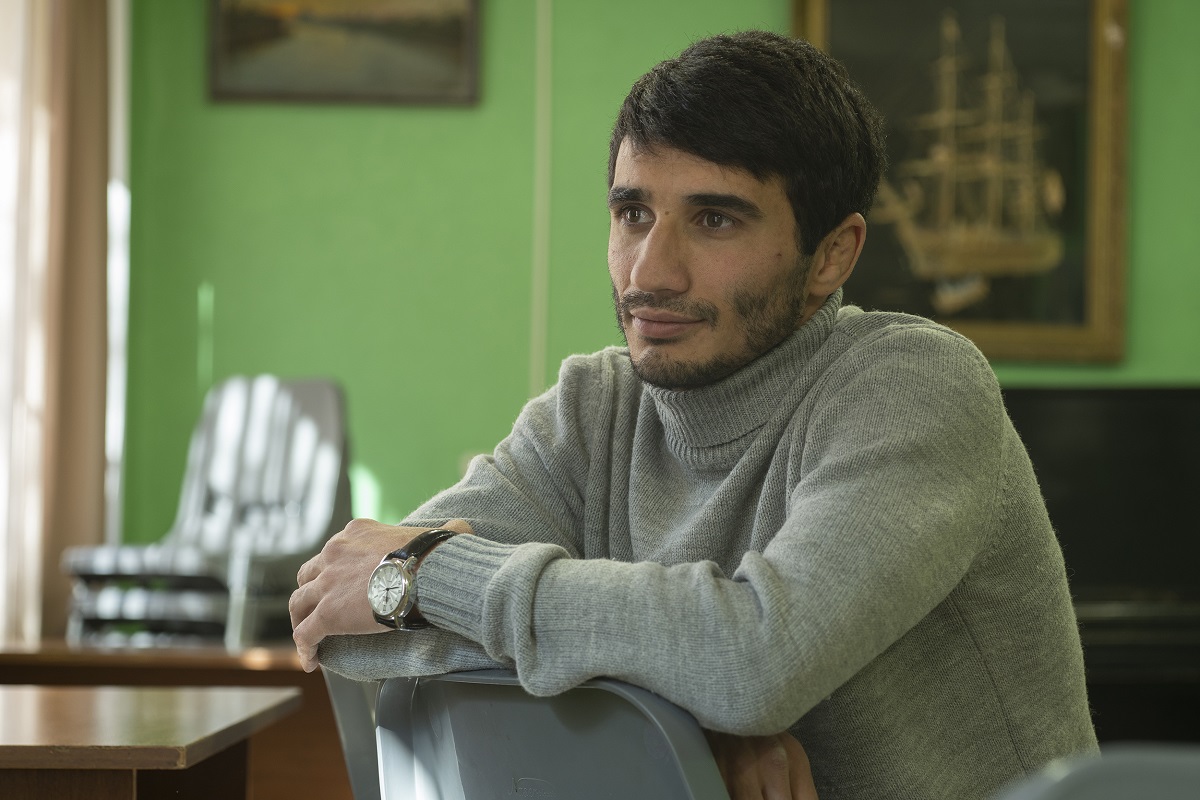
“My dream came true, but not quite in the way I had imagined. I am studying at a college now, but unfortunately not in the department I dreamed of. I really wanted to become an accountant, but I had to enrol in the computer engineering department. It was a unique opportunity that I did not want to miss, because before that no deaf person had ever had such a chance,” says Hovhannes Harutyunyan.
It was indeed a rare opportunity. For about a year, four deaf students at Yerevan State Humanitarian-Technical College attended classes with the support of a sign language interpreter.
Hovhannes says he struggled at first, but the interpreter helped him understand the material. He admits that the experience did not make him fall in love with the profession, but it convinced him that he could study successfully if he had the necessary support.
“Three of us, deaf young men, somehow managed to enrol in the college’s computer engineering department. I say ‘somehow’ because we definitely could not have done it without the help of staff from the Society of the Deaf. Another student, a young woman, enrolled in the records management department. During the months when our interpreter, Zhanna, worked with us, everything was much easier. She managed to help all of us.
When her position was cut, my classmates tried to support me. They recorded lectures so that I could study them later. The girls in particular were very caring. But without an interpreter, studying became very difficult. I lost my motivation to learn,” Hovhannes says.
However, if the college provides a sign language interpreter again next academic year, he plans to transfer to the accounting department and become the best student there.
“My future depends on it, especially now that I have a family,” he says.
An Equation with Too Many Unknowns
Staff from the Armenian Society of the Deaf helped Hovhannes and other applicants gain admission to college. According to the NGO’s coordinator, Arevik Hovhannisyan, she began asking three years ago how many deaf people were studying at vocational colleges and universities across Armenia. She soon discovered that nobody in the country knew the answer.
In response to our written inquiry, Armenia’s Ministry of Education, Science, Culture and Sport said it did not collect such data. At the same time, the ministry noted:
“Under Paragraph 37 of the Admission Procedure for Vocational Education Institutions, around 80 state-funded places are allocated each year from a reserve quota for students with severe and profound functional limitations (people with first- and second-category disabilities, as well as those under 18 with childhood disabilities) who achieve at least the minimum passing score required for admission to a secondary vocational education programme.”
However, the ministry does not know how many of those places students actually fill.
Hovhannisyan says the association launched its own effort to determine how many deaf people study at vocational colleges and universities. So far, it has identified 17 students.
The coordinator recalls that in 2023 the organisation ran a career guidance programme for deaf and hard-of-hearing young people through a grant-funded project. The programme showed that many participants had both the ability and the desire to pursue higher education. The Society of the Deaf then decided to help them apply.
Staff contacted vocational colleges across the country to learn what support they could offer.
“One college director advised us not even to submit an online application because deaf and hard-of-hearing students would not receive the additional support necessary to follow the curriculum. He explained that even if someone gained admission, they could not expect any assistance during their studies. One after another, every institution turned us down,” Hovhannisyan says.
After a long search, they eventually found an institution willing to accept deaf students.
Yerevan State Humanitarian-Technical College welcomed four students, despite having no support mechanisms in place for them at the time.
Hovhannisyan says the organisation simultaneously held talks with the Ministry of Education to secure a sign language interpreter for the four students.
“The ministry promised to fund a dedicated interpreter position at the college. We proposed that, until the paperwork was completed, our interpreter could support the students on a voluntary basis. For four months, sign language interpreter Zhanna Tsakanyan worked at the college without pay, helping our deaf students.
Then, in January, officials informed us that the promised position would not be funded. They said they could not find a suitable specialist. After that, we submitted numerous complaints and appeals to the ministry and the ombudsman’s office.
That coincided with the adoption of the Procedure for Providing Reasonable Accommodation. In March, the Humanitarian-Technical College finally received funding for a sign language interpreter through the end of the academic year. But in September, we may once again have to fight for the rights of every new student,” she says.
No Specialist to Train the Specialists
Mushegh Hovsepyan, head of the NGO Disability Rights Agenda, says vocational education systems have traditionally been less prepared for inclusion than general education. He points to persistent resistance and a lack of understanding about why vocational education must also become inclusive.
“Only in recent years have lawmakers introduced meaningful changes. Armenia adopted the Law on Higher Education and Science and amended the Law on Vocational Education and Training. Thanks to our persistent advocacy, lawmakers included provisions guaranteeing the right to inclusive education at these levels as well. For many years, nobody paid attention to this issue. Authorities did not take even the minimum steps necessary to protect students’ educational rights,” he says.
Hovsepyan stresses that the main obstacle facing deaf and hard-of-hearing students is the shortage of sign language interpreters.
Armenia does not have a formal training programme for sign language interpreters. Most people learn sign language out of necessity, and the process usually remains undocumented. The country has only a handful of interpreters.
The expert says progress began only this year. The Ministry of Education, Science, Culture and Sport has created a working group that is taking steps to establish a professional training programme for sign language interpreters.
“Today our working group is preparing the necessary documents so that Armenia can launch a sign language interpreter training programme no later than September 2026.
At present, only teachers of deaf students have a direct role in the education of deaf and hard-of-hearing people. They receive pedagogical training. What we need, however, are interpreters who can translate the speech of other specialists — teachers, lecturers and instructors — into sign language.
Another key issue involves adapting educational materials. A word-for-word translation and a curriculum that does not reflect students’ needs can seriously undermine the quality of education,” he says.
According to Hovsepyan, another major systemic problem is the lack of comprehensive data on people with disabilities.
As a result, policymakers often make decisions without adequately assessing the needs of people with disabilities or taking their rights fully into account.
“State institutions do not even have data on the number of people with disabilities in vocational education. Yet this is the minimum requirement for developing effective policies, programmes and services.
If the state does not know how many students with disabilities study in the vocational education system, how can it design an effective policy to protect their rights in the labour market?” Mushegh Hovsepyan asks.
When Education Depends on Personal Determination
Astghik Alaverdyan is hard of hearing. She comes from Karabakh and attended school in the village of Chartar. She says she managed to complete her schooling thanks to the support of her parents.
During her early school years, a speech therapist and a specialist teacher for children with hearing impairments worked with her. Her classmates also helped. Some even learned a few words in sign language so they could communicate with Astghik. Despite all that support, she could not independently construct a sentence until the sixth grade.
“Educational opportunities for deaf and hard-of-hearing children are extremely limited. If not for my parents, I still would not be able to form sentences or communicate. Today, however, I have a university degree. It is very sad that deaf people often lack access to education. Education is what opens doors for you,” she says.
While still at school, Astghik decided on her future profession. She graduated from the Armenian State Pedagogical University and became a teacher specialising in the education of children with hearing impairments.
Astghik says the most surprising aspect of her university experience was the absence of a sign language interpreter, even for students training to become specialists in hearing impairment education.
“In September 2020, during the COVID-19 pandemic, I attended classes remotely. That became a serious challenge because lip-reading through a screen is extremely difficult. Some lecturers tried to use presentation slides during classes, which made learning much easier.
“After the 44-day war, I moved to Yerevan. But that did not solve the problem because everyone still wore masks. For people with hearing impairments, that creates a real obstacle.
“My parents told me about transparent masks designed specifically for people like us. I started wearing one because my lecturers often struggled to understand my speech when I wore a regular mask.
“I remember one professor jokingly asking whether I wore a transparent mask to show off my beautiful lips. I can honestly say that I earned my education solely through my own determination and the tremendous support of my fellow students.
“And I am hard of hearing. I can understand spoken language to some extent. What are deaf people supposed to do?”
Astghik believes that equal access to education for deaf people would help resolve many social and psychological challenges.
At present, disability benefits provide the only source of income for many deaf people. She notes that these payments amount to roughly half the value of the minimum consumer basket.
“I am very sorry to say this, but sometimes people resort to actions that fall outside our moral understanding simply to survive — theft, inappropriate social behaviour and similar things.
If they had access to education, they could support themselves and their families through their own work,” Astghik says.
Deaf Armenians face major obstacles to education