'Unresolved issues and conflicting narratives remain' — Pashinyan on relations with Azerbaijan






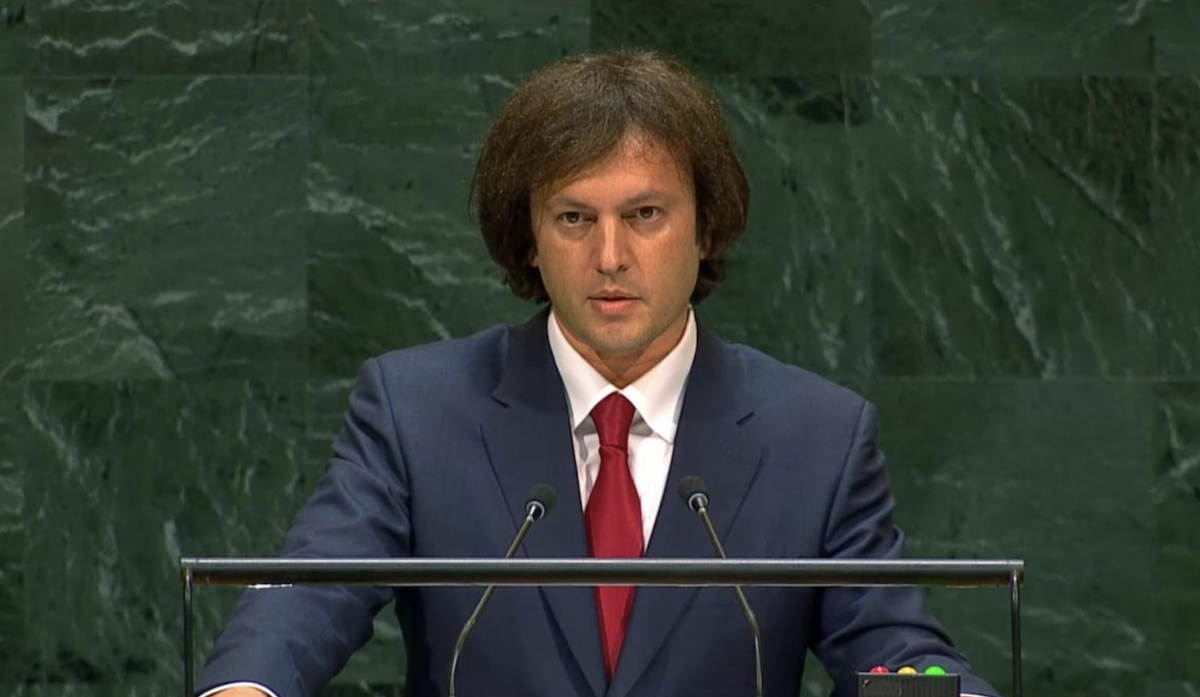
Pashinyan’s UN address
In his address to the 81st session of the UN General Assembly, Armenian Prime Minister Nikol Pashinyan spoke about the peace that Armenia and Azerbaijan have established. At the same time, he addressed outstanding issues that the two countries still need to resolve. These include determining the fate of several thousand missing people, carrying out demining operations and securing the return of Armenians, whom Azerbaijan holds in its prisons.
Pashinyan stressed that, beyond these issues of concern to Armenian society, conflicting narratives and discourses among certain circles in Armenia and Azerbaijan also fuel pessimism. Sometimes, officials themselves voice these views.
“I think that we, meaning Armenia and Azerbaijan, have achieved more than satisfactory results. These should mean more to us than the use of conflicting narratives, whether about history, cultural monuments or anything else,” he said.
In effect, the prime minister was responding to a recent visit by diplomats to Karabakh, which Azerbaijani authorities had organised. During the visit, officials attempted to present the Armenian monasteries of Gandzasar and Dadivank as part of “ancient Albanian Christian heritage”.
The move sparked such public outrage that many politicians called on Armenia’s leadership to issue a strong official response. Tensions between Armenia and Azerbaijan rose against this backdrop. Politicians described the situation as a serious crisis that could hinder further progress in the peace process.
Against this backdrop, Pashinyan stressed that Armenia and Azerbaijan must now focus on “safeguarding peace, strengthening it and developing its institutions”.
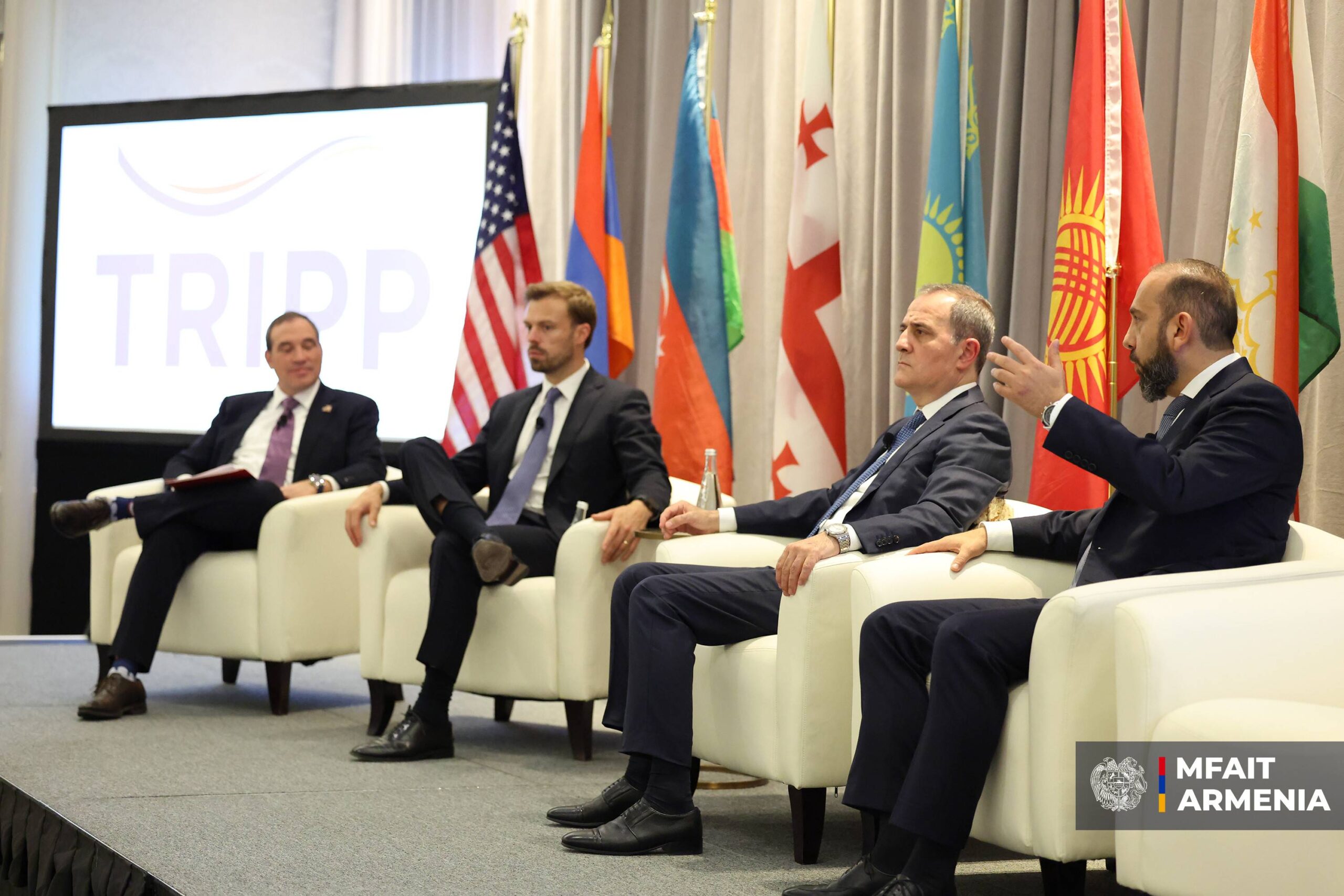
In his address, Pashinyan also touched on other issues of current importance to Armenia, including the implementation of the Armenian-American “Trump Route” project (TRIPP), relations with the European Union and Russia, as well as the normalisation of relations between Armenia and Turkey.
- ‘Poland is ready to support Armenia’s ambitious goal of joining EU’ — Marcin Bosacki
- ‘If Russia decides to withdraw its military base, we will not object’ – Pashinyan
- Rights activist Siranush Sahakyan: ‘Lives of all Armenians held in Baku are in danger’
“The main item on the Yerevan-Baku agenda is signing a peace agreement”
The Armenian prime minister placed particular emphasis on the fact that no one has been killed or injured in border shootings between Armenia and Azerbaijan for the past two and a half years. He described this as “the greatest achievement of cooperation in recent years”.
“Never before have independent Armenia and independent Azerbaijan experienced such a period, despite centuries of peaceful coexistence between Armenians and Azerbaijanis,” Pashinyan said.
In his view, Yerevan and Baku must build relations between the two states on the basis of this shared experience, respecting each other’s territorial integrity, sovereignty and political independence. This is particularly important given that the two countries have already agreed on these principles and even initialled a peace treaty.
“Signing and ratifying this agreement is the next important item on Armenia and Azerbaijan’s joint agenda. We will continue to work consistently towards this goal,”
“The implementation of TRIPP promises major benefits for all countries in the region”
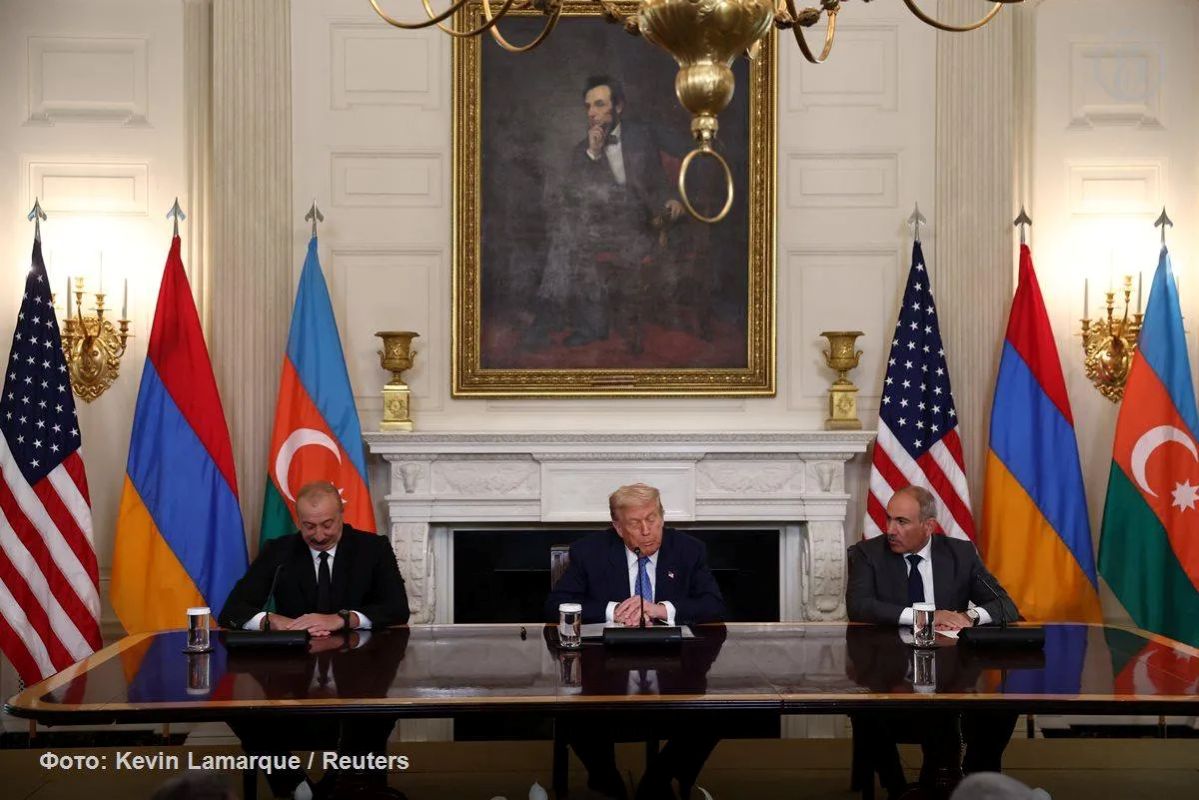
Pashinyan believes that the peace established between Armenia and Azerbaijan has opened up new opportunities for the entire region. He said the Trump Route for International Peace and Prosperity (TRIPP) project would play an important role in this process. He assured his audience that its implementation was “becoming a reality” and would mark a historic milestone for Armenia:
“For the first time since the early 1990s, Armenia will have a railway link with Azerbaijan. This will also connect it to Russia, Central Asia and China.”
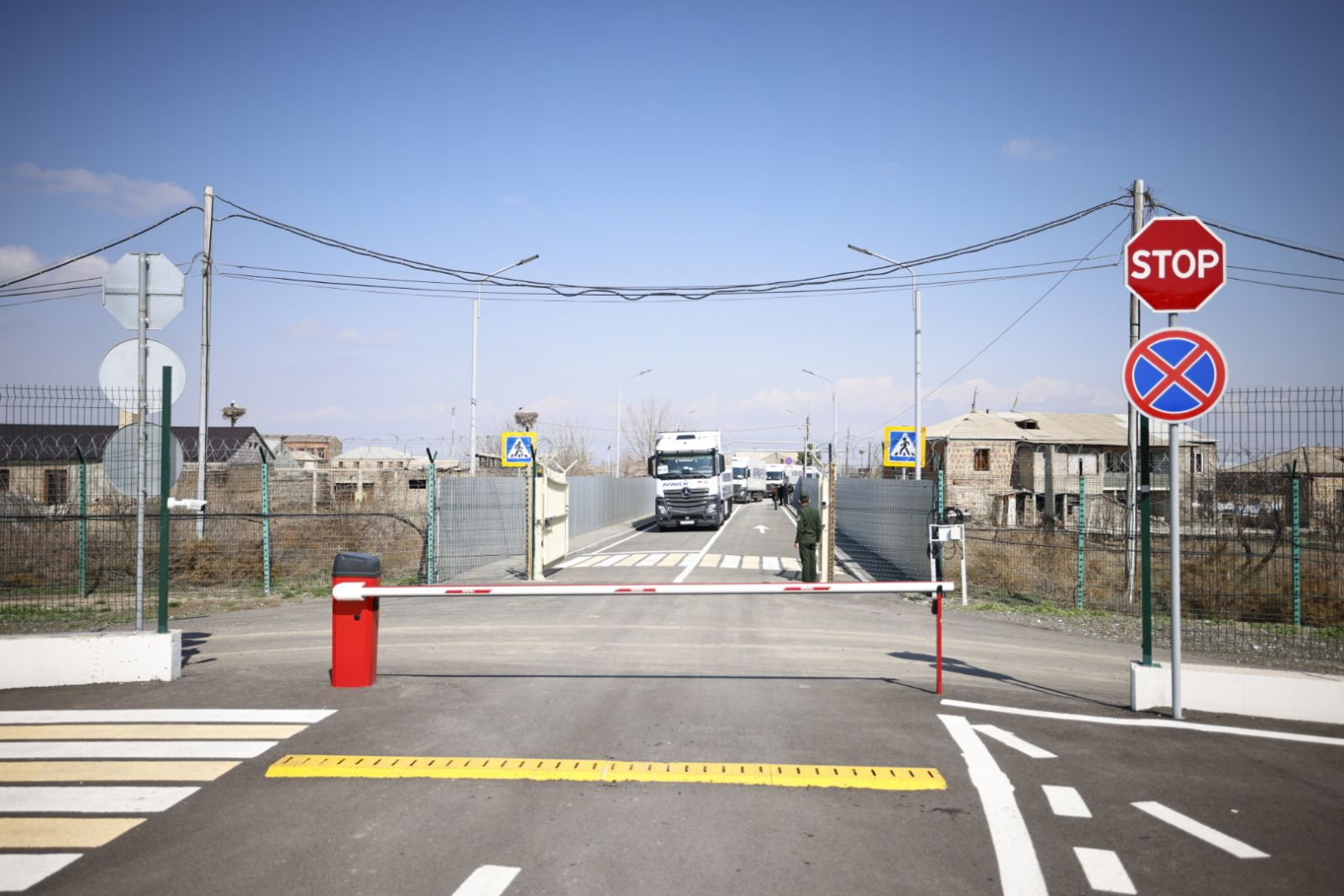
The “Trump Route for International Peace and Prosperity” (TRIPP) is a transport route that will connect Azerbaijan with its exclave of Nakhchivan through Armenian territory.
The prime minister stressed that Azerbaijan had opened transit routes for Armenia and that rail services between Armenia and Azerbaijan had resumed via Georgia. However, he said, the implementation of TRIPP would establish a direct railway link between Armenia and Azerbaijan:
“In the near future, we will restore the railway sections in Meghri and Yeraskh in Armenia, which existed during the Soviet era but were later destroyed. The railway routes I mentioned will then reopen.”
He said Armenia also expected to restore railway links with Turkey. Alongside TRIPP, he described this as a potential milestone in international logistics, one of the most significant developments in decades:
“This will open up a new railway connection between China, Central Asia, Turkey and the European Union.”
Pashinyan says restoring the railway link between Armenia and Azerbaijan (Nakhchivan) will establish a rail connection between the Persian Gulf and the Black Sea:
“This is an important detail because it shows why and how the implementation of TRIPP promises enormous benefits for all countries in the region. These potential benefits could become a cornerstone of long-term stability and peace, particularly between Armenia and Azerbaijan.”
According to Pashinyan, building pipelines, power lines and roads as part of TRIPP would allow not only Armenia but the entire South Caucasus to become a “crossroads of peace”.
“A plan to seize the state was drawn up”: on elections in Armenia
The prime minister also spoke about the circumstances surrounding Armenia’s recent parliamentary elections. For the second time or more, he openly accused foreign actors of interference:
“Several external and internal forces devised and carried out a plan to seize the state. They used mass disinformation, hybrid and other tools, as well as widespread distribution of election bribes.”
He stressed that Armenia’s state institutions had prevented the seizure of power thanks to their resilience. Pashinyan believes this, in turn, reflects the democratic and institutional reforms that the country has carried out in recent years:
“The people of Armenia voted for peace. And we must consistently work to further strengthen and institutionalise peace.”
Ties with the EU deepen as relations with Russia undergo transformation
Pashinyan also spoke about Armenia’s balanced foreign policy. The prime minister noted that in recent years, his government had established strategic relations with Georgia, France, China, the Netherlands, Kazakhstan, Germany, Luxembourg, the United Kingdom, Bulgaria, Croatia, Lithuania, the United States and the European Union.
“The European Commission has approved a decision to introduce autonomous trade measures for Armenia, marking another sign of the new quality of relations between Armenia and the EU,” he stressed.
Relations between Yerevan and Moscow, meanwhile, are undergoing a transformation, according to the prime minister.
In his view, this is a natural process because the Armenian-Azerbaijani conflict had been the main factor shaping Armenia’s relations with Russia throughout the preceding period. The establishment of peace has fundamentally changed the situation.
“We want our relations with Russia to develop on the principles of friendship and mutual respect,” he said.
Relations with neighbouring countries
Nikol Pashinyan noted that normalising and deepening relations with neighbouring countries is crucial for Armenia:
“We have established high-level dialogue with Turkey. I want to reaffirm President Erdoğan’s remarks from this podium a few days ago. We are firmly advancing the process of normalising Armenian-Turkish relations.”
Good-neighbourly relations with Iran and Georgia are also continuing to develop and deepen. Moreover, the prime minister said, these relations are of “exceptional importance” to Yerevan.
Pashinyan’s UN address