'Major cause for concern': expert view on Armenian school students’ low level of knowledge






Low knowledge levels among Armenian school students
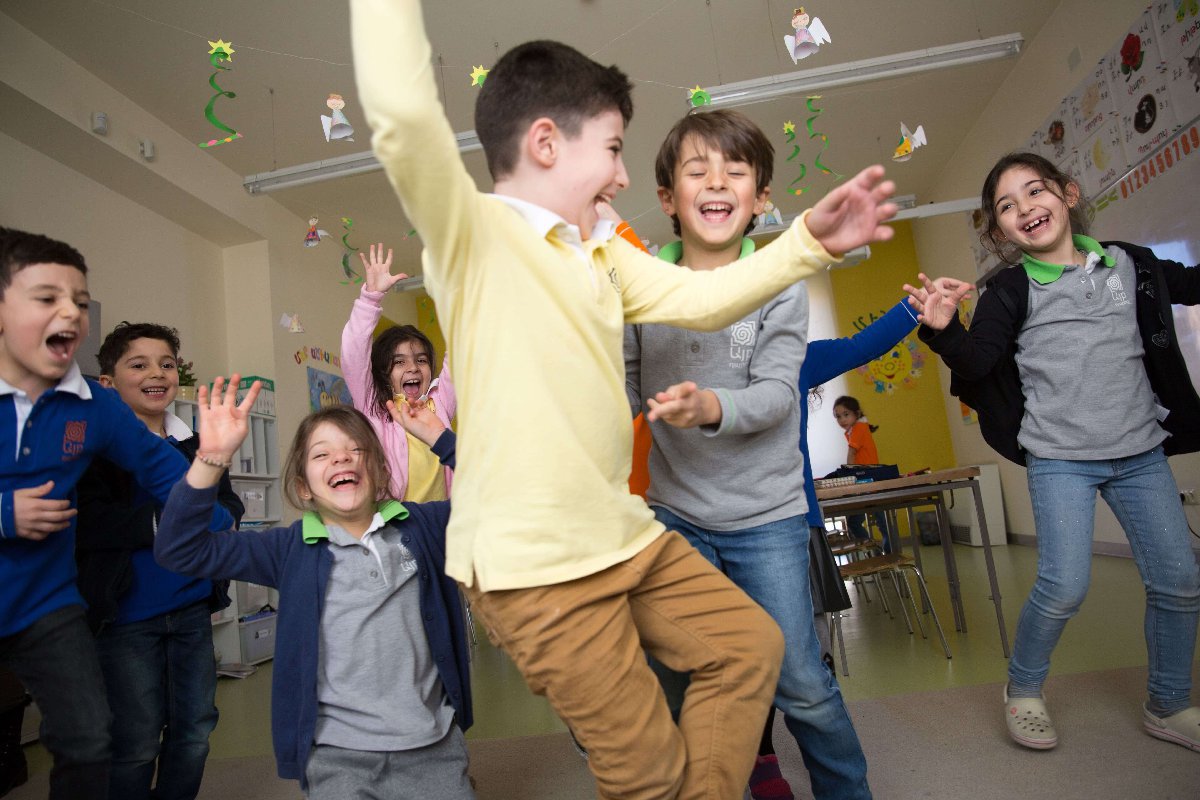
School students in Armenia lag behind their peers in Georgia, Azerbaijan and Turkey in terms of their level of knowledge. The comparison focuses in particular on 15-year-old students.
The Organisation for Economic Co-operation and Development (OECD) conducted its annual study as part of the Programme for International Student Assessment (PISA). Experts assessed students’ knowledge of mathematics and science, as well as their ability to analyse what they read.
The study included 760,000 15-year-old students from 91 countries. The results showed that the overall state of education around the world leaves much to be desired. However, experts in Armenia are particularly concerned about the situation in their own country. The education problems have also alarmed people far beyond the field’s specialist community.
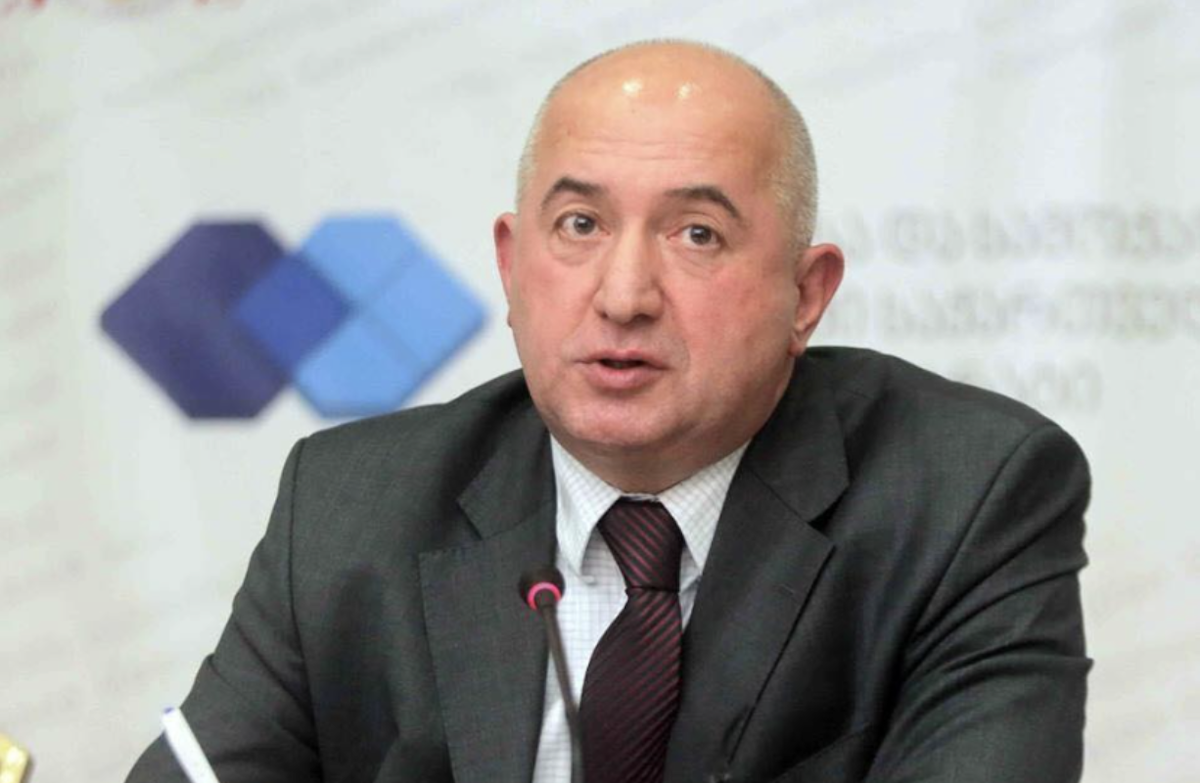
Economist Tigran Jrbashyan sees the study’s results as a major cause for concern.
“This is no longer a problem for the education ministry. It is a question of Armenia’s economic security and long-term competitiveness,” he stressed.
Jrbashyan published several posts on his Facebook page, calling on the government to take immediate action. He proposes introducing a special regime in the education sector over the coming years.
Подробнее о результатах исследования, а также комментарий экономиста Тиграна Джрбашяна.
- Armenia approves new government as Pashinyan promises appointments based on merit
- Armenia begins recruiting and training border guards for Azerbaijan border
- Shortage of sign language interpreters leaves deaf Armenians without access to education
Results for students in Armenia and leading countries
According to the study, some cities in China lead the rankings for educational achievement, followed by Japan, South Korea, Singapore and Taiwan. The UK and Estonia also rank among the top 10.
Armenia’s results lag behind those of every other country in the region. Armenian school students scored below the OECD average in all areas covered by the study.
The average share of Armenian school students reaching the benchmark was
- 28% in science (OECD average — 74%),
- 28% in mathematics (OECD average — 65%),
- 19% in reading and the ability to analyse written text (OECD average — 67%).
Less than 1% of Armenian students achieved the highest level in mathematics, while the figure was even lower in science.
“And virtually none of the students demonstrated reading skills that would indicate an ability to understand lengthy texts, work with abstract or contradictory concepts, and distinguish facts from opinions,” Radio Azatutyun reports.

Comment
According to Tigran Jrbashyan, an economist and head of Ameriabank’s management consulting service, the PISA study assesses not so much what 15-year-olds know as their ability to apply their knowledge in practice: understanding texts, analysing information and solving problems.
“Among our 15-year-olds, 28% reach at least the minimum, Level 2 proficiency in mathematics. The figure is also 28% in science. In reading, however, only 19% reach this level. In other words, four out of five of our 15-year-olds do not even reach the basic level of functional reading literacy,” he said.
Meanwhile, according to the PISA study, 39% of teenagers in Georgia reach the basic level of reading literacy, compared with 36% in Kazakhstan and 35% in Azerbaijan.
The economist argues that no matter how much Armenia talks about its achievements in artificial intelligence and high technology, all its planned initiatives will remain unrealised projects without human capital.
“If Armenia ranks third from the bottom in problem-solving skills among 15-year-olds, our ambitions in AI and high technology cannot be limited to investment, equipment and infrastructure alone,” he explained.
Jrbashyan notes that Armenia has built, renovated and modernised schools in recent years. He considers this an unquestionable investment in the quality of education. At the same time, he says the country needs to change how it assesses the effectiveness of education policy.
In particular, he proposes assessing
- how students’ reading skills and their mathematical and scientific knowledge have changed as a result of these investments;
- whether the share of students who fail to reach the basic level has decreased;
- whether the share of high-performing students has increased.
The analyst insists that, given the current situation, the government needs to
- take immediate action to determine at which stage of the education system, and for what reasons, students lose ground;
- set measurable targets for 2028 and 2031 and consistently work towards achieving them.
“The cost of inaction in the context of PISA is not simply a low ranking. It means lost economic growth and the loss of Armenia’s competitiveness for decades to come,” he stressed.
The expert believes the PISA 2025 results show that the scale of Armenia’s education problem has outgrown the pace of the government’s response. As a result, reforms carried out at the usual pace are no longer enough:
“I would propose declaring education an emergency national priority and introducing a special management regime for three to five years.”
Jrbashyan stresses that an emergency regime should mean not only faster decision-making and more resources, but also much greater accountability for results.
Moreover, he sees a need for national mobilisation on the issue. He believes education policy should not measure its success only through the next PISA study:
“We need to create a national system of regular assessment that will allow us to see every year where we are making progress and where we are not, and adjust policy accordingly.”
Low knowledge levels among Armenian school students