Freedom was not so simple: How a defender of Mariupol is learning to live after captivity






Defenders of Mariupol
This story was originally published by Novosti Donbasa
Freedom turned out to be far more complicated than it had seemed in captivity. After returning home, Anatoliy Vasylchenko, a member of Mariupol’s territorial defense forces, faced a new set of challenges — this time in a civilian life that felt unfamiliar and, in many ways, alien to him.
He had to recover his health, cope with broken relationships, find a sense of himself outside the war, and learn once again how to live without the constant threat of death.
His story shows that coming home does not always mean a happy ending. Sometimes, it is simply the beginning of another struggle.
The best goalkeeper
Anatoliy was born in 1985 in Mariupol’s Livoberezhnyi district. His childhood was filled with the simple pleasures available to a boy growing up in a modest family.
“During the summer, there was one ball for ten of us. In winter, we played on ice rinks near abandoned water stations. And there were unfinished buildings and garages all year round,” Anatoliy recalls.
He was energetic but not particularly studious, preferring to get into mischief rather than sit over books. But he was good at football — more precisely, at playing goalkeeper.
“Perhaps defending something is just in my blood,” the Mariupol resident says with a smile.
As a teenager, he was invited to join Portovyk, a local team, where he received a trophy inscribed “Best Goalkeeper.” Later, he had to give up the sport to earn a living. Anatoliy worked at a car wash and then became a driver for a company that manufactured metal products.
A decision of principle
Anatoliy joined the military in 2017. The country was in the midst of its fourth wave of mobilization, but he volunteered to serve. His decision was shaped in part by the views of his then-wife.
“She was a separatist. When I received a summons simply to have my documents checked at the military enlistment office, she started discussing with her mother how they would divide the apartment. Without shouting or making a scene, I told her to pack her things and filed for divorce. The next day, I went to sign a contract with the 25th Airborne Brigade,” Anatoliy says.
The transition to military life came quickly for Anatoliy. He says the first six months were the hardest. From 2017 to 2020, he took part in Ukraine’s anti-terrorist operation in the Donetsk and Luhansk regions, including fighting around Bakhmut and Kostiantynivka.
In 2020, Anatoliy left the military and took a job as an inspector at Mariupol’s municipal water utility. Returning to civilian life proved difficult.
“It was hard to communicate with people. Mariupol was a city divided into two camps: patriots and supporters of the ‘Russian world.’ Naturally, I lost half of my friends along the way,” he recalls.
“Defend your home” took on a literal meaning
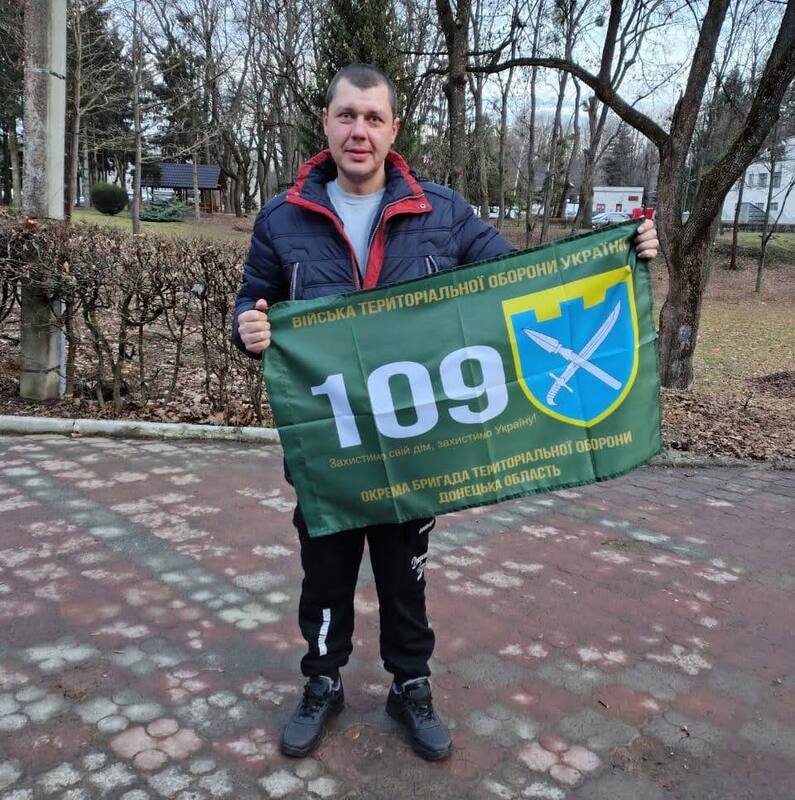
On Feb. 24, 2022, Anatoliy, like most residents of Mariupol, woke to explosions on the outskirts of the city. He immediately decided to return to military service.
“I thought it was just another escalation. I figured we’d deal with them quickly and go back to living as we had before,” he says, his disappointment still evident.
Anatoliy gathered his military gear and headed to Boarding School No. 2, where the territorial defense headquarters had been set up. It was just 20 meters from his home, giving the territorial defense slogan “Defend Your Home” an almost literal meaning.
The unit’s first base was a historic building of Mariupol Humanitarian University. On the first day, civilian drivers transported the soldiers in public buses. The next day, they stopped. Anatoliy took over the task, driving his fellow soldiers to positions along the Volodarska highway and training them, as he was one of the few in the unit with combat experience.
“When we came under attack from the rear, from the PortCity area, and the airstrikes began, I realized this was going to be hard,” Anatoliy says.
The defenders of Mariupol were particularly struck by men of retirement age who had chosen to defend their children and grandchildren.
“They shattered the stereotypes spread by Russian propaganda. They were decent, clear-headed people who remembered what the Soviet Union was really like — and that there was nothing good about it… When we were ordered to retreat, they would say, ‘We’re staying to hold the enemy back,’” he recalls.
Mariupol was encircled. From the Prymorskyi district, Ukrainian forces withdrew toward the Livoberezhnyi district along Nakhimova Avenue. Anatoliy’s group became trapped near Warriors-Liberators Square.
“Being a soldier was interesting” and a “Z” on his back
To save the soldiers, their commander ordered them to change into civilian clothes and try to pass through Russian checkpoints. The ruse failed. On May 4, 2022, Russian forces captured Anatoliy. They spotted a parachute tattoo on his shoulder, bound his hands, put a bag over his head and took him to the commandant’s office.
After interrogation, he was transferred to Donetsk and, on June 20, to a prison colony in Olenivka. The prisoners of war were held in barracks without beds.
“We slept on pallets and drank water from a lake that was brought in by a fire truck. Everyone had diarrhea,” says the Mariupol defender.
A day before the explosion at the Olenivka prison that Russian authorities tried to portray as a Ukrainian strike, Anatoliy was transferred to a correctional colony in Horlivka.
“At the intake in Horlivka, we were beaten more brutally than anywhere else. They kicked us during searches. Then they took us to the bathhouse and beat us again. Naked and wrapped only in sheets, we ran back to the barracks,” he recalls.
Any violation of the prison regime could land a prisoner at an internal checkpoint. There, guards abused them, forced them to sing the Russian national anthem and beat the letter “Z” into their backs with batons. After Russian special forces arrived, conditions became even worse.
“They made us move in what they called the ‘swallow’ position — our hands behind our backs and our heads at waist level. Before we entered the dining hall and inside it, they beat us with stun guns and batons and sprayed us with gas,” Anatoliy says.
Prisoners in Barracks No. 8, where most of the inmates were Azov fighters, were treated with particular brutality. Anatoliy also recalls prisoners who collaborated with the prison administration. He says the Security Service of Ukraine knows their names.
“They would turn in other prisoners in exchange for cigarettes. They took good shoes and clothes and traded them to the special forces for cigarettes. They drove a civilian pastor who was being held captive to suicide, and pushed an elderly serviceman to a stroke through excessive physical exercise,” Anatoliy says.
On June 20, 2024, all the prisoners were transferred out of the Horlivka colony after Ukrainian forces broke through the front lines, raising the possibility that the inmates could be liberated.
His airborne past
Anatoliy was transferred to a prison colony in Kirovsk, where the regime was less harsh. Like the others, he was beaten upon arrival. Other daily punishments included squats and push-ups.
His past in the airborne forces unexpectedly worked in his favor. One of the guards’ shift supervisors turned out to be a former serviceman from the 25th Airborne Brigade who had defected to Russia.
“We spoke almost as equals. After that, he would turn a blind eye to my minor violations of the rules,” Anatoliy says.
As long as he was allowed to, Anatoliy worked. He found physical labor rewarding, and it made the days pass faster: wake-up, breakfast, work, lunch, more work, dinner, a shower and sleep.
Freedom. What does it feel like?
For Anatoliy, the prisoner exchange began on Dec. 28, 2024, after two years and eight months in captivity.
“Once, in the colony, I had a chance to speak with a Russian prisoner who was about to be released. I asked him, ‘What does it feel like to know that tomorrow you’ll be free?’ He looked at me and said, ‘Hell if I know. I haven’t been free for 10 years.’ I feel much the same way. I can’t explain what I felt or what was going through my mind at the time,” Anatoliy says.
When officials at the colony’s headquarters began asking whether he was really certain he did not want to return to Mariupol, Anatoliy realized they were talking about a prisoner exchange.
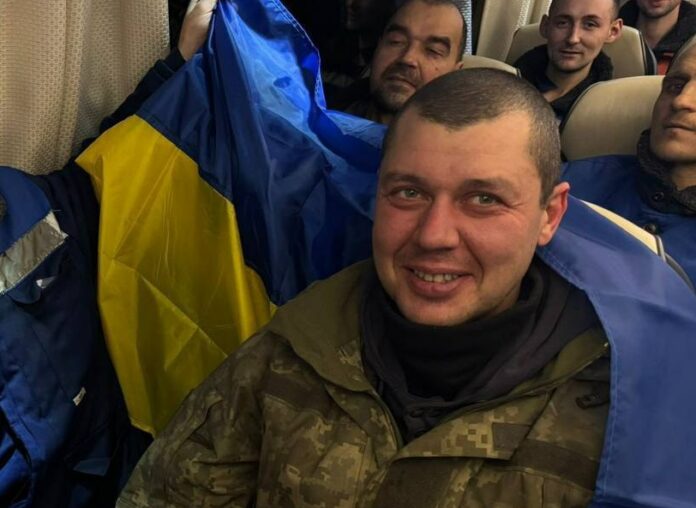
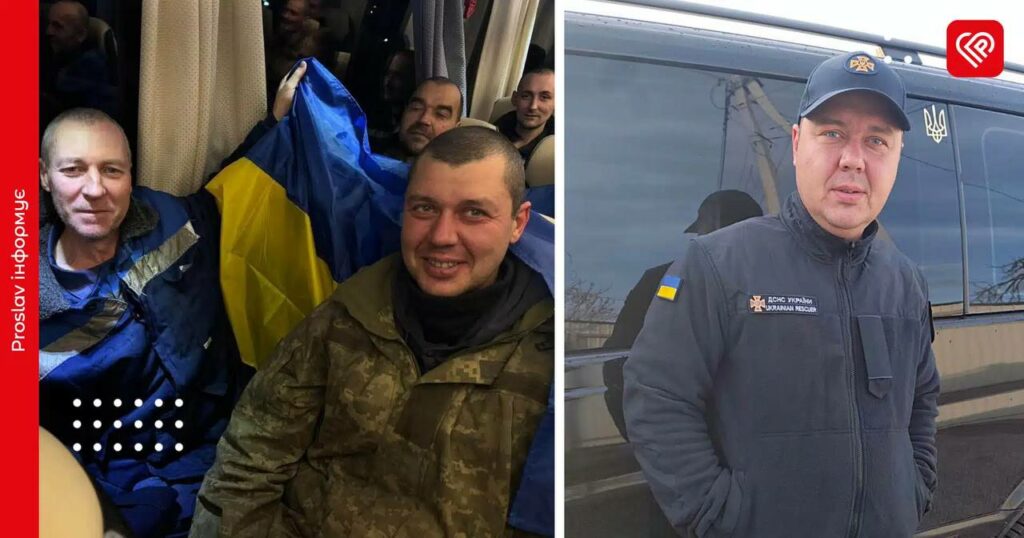
The next morning, after breakfast, he and several other defenders were dressed in Ukrainian pixel-patterned uniforms. Then came a flight from Rostov, blindfolds, a freezing aircraft and the soft seats of a bus. They crossed the border, a blue-and-yellow bracelet was placed on his wrist, and he was taken to a hospital in Chernihiv.
On Dec. 30, Anatoliy was back in Ukraine — but it took him some time to fully realize it.
The trials of freedom and the search for meaning
Four days after the exchange, the woman he loved told him she was no longer waiting for him. She was living in Denmark and did not see a future they could share.
“It was a blow. I grieved for a whole week and had to get used to being alone,” he says.
In Ukrainian-controlled territory, Anatoliy had neither close relatives still living nor a home to return to. He continued his rehabilitation at health resorts in the Vinnytsia region and later in Kyiv. Alongside his health problems came the difficulties of adjusting to life after captivity.
“It felt strange not to have a ‘routine.’ No one was rushing you or humiliating you. You didn’t even have to clean your room at the sanatorium. The staff kept telling me I just needed to rest. I felt awkward,” the former prisoner recalls.
His military unit paid him the money he was owed, but his housing situation remained unresolved. Volunteers from the Women of Territorial Defense organization offered him free accommodation in Boryspil.
Support came from a woman whose husband is listed as missing in action. She would call Anatoliy, ask how he was doing and try to be there for him.
Anatoliy acknowledges that he went through a difficult period of alcohol dependence. For six months, he drank every day.
“I would wake up and run out to get beer. Then I’d think, ‘Why not have a hundred grams?’ I was sad, and I didn’t care about anything. Eventually, I had to choose between finding meaningful work and dying,” Anatoliy says.
He chose life and began looking for work that interested him. Today, Anatoliy works as an ambulance driver for Ukraine’s State Emergency Service.
“I started out in a civilian position, and later I was given a uniform and rank. It’s a wonderful, supportive team, and the schedule works well for me,” he says.
At first, some colleagues who knew about his past were wary of him. Anatoliy decided to explain directly what he wanted.
“I stood up and spoke to everyone. I told them, yes, I had fought and I had been held captive. But that doesn’t mean I need to be treated differently. I want to return to an ordinary life, so I want people to treat me like an ordinary person,” he says.
After many years, he saw his son again. He learned that his former wife had moved to Poland, while the boy had spent some time in an orphanage in Samara. Later, with the help of volunteers, the woman was able to bring him across the border.
The trauma Anatoliy endured has made it difficult for him to make long-term plans. For now, he is content with his life. He dreams of having a home of his own and making it to retirement.
“I’m 40. Life goes by quickly. I’d still like to return to my native Mariupol. To see some people there, including my half-brother… Staying there and continuing to cooperate with inhuman people — that’s disgusting,” Anatoliy says.
By Alexander Gudilin
Exchange