'Message to Turkey and Armenian diaspora': Opinion from Yerevan on Israel's recognition of Armenian Genocide






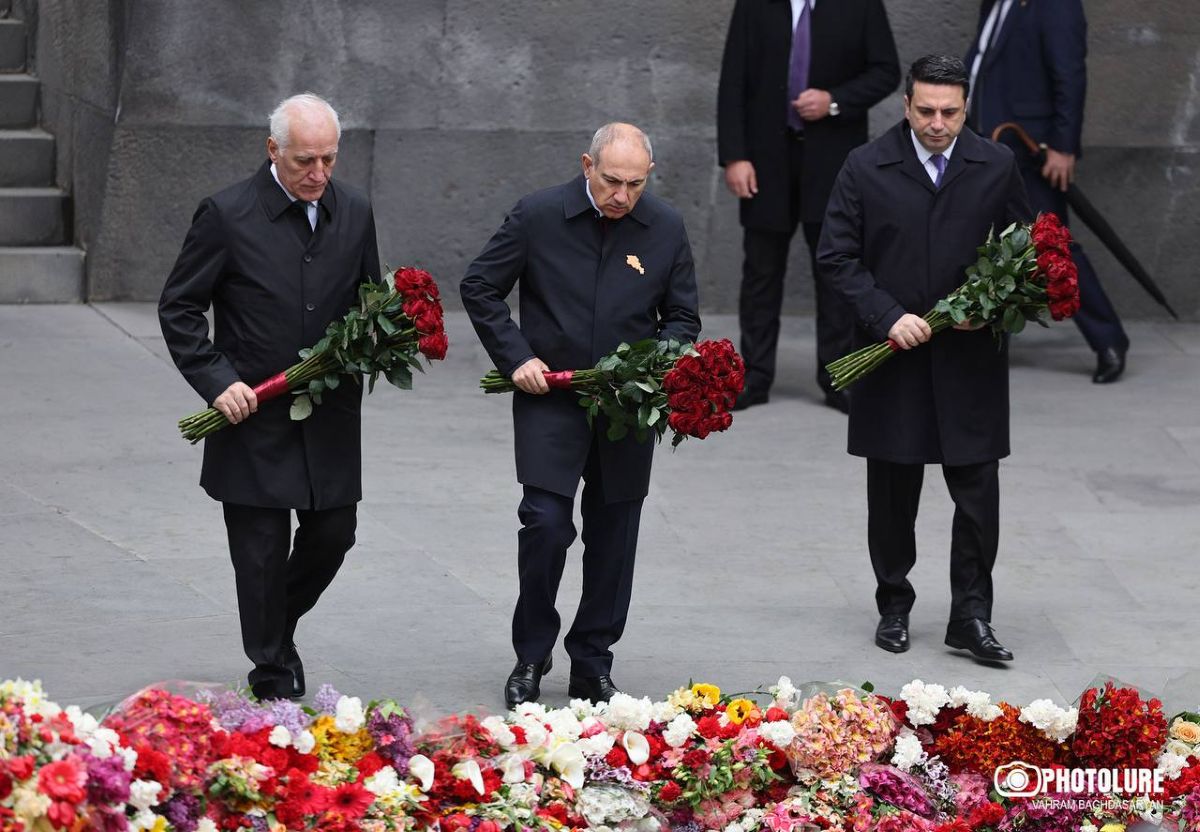
Israel recognises the Armenian Genocide
The Israeli government has unanimously decided to recognise the Armenian Genocide. Foreign Minister Gideon Saar put forward the proposal. During the cabinet discussion, he said: “It is never too late to do the right thing.”
However, the Israeli parliament must also approve the decision. The Knesset has not yet announced when it will hold the debate.
The Armenian Genocide refers to the mass killings of Armenians in the Ottoman Empire in 1915. About 2.5 million Armenians lived in the Ottoman Empire before the events. More than half died as a result of mass killings and deportations. Armenia, a number of Western countries and international organisations recognise the events as genocide. Turkey firmly rejects that characterisation.
The Armenian government has not yet commented on the Israeli cabinet’s decision. However, neighbouring Turkey and Azerbaijan have already criticised the move.
Turkey’s Foreign Ministry said Israel was trying to divert international attention from “its own crimes” and what it described as the genocide of Palestinians in the Gaza Strip.
Azerbaijan’s Foreign Ministry called on Israel to reconsider its decision. The ministry said the move “does not contribute to reconciliation and mutual understanding, but deepens divisions and hinders the establishment of lasting peace in the region”.
Political analyst Ruben Mehrabyan said the Israeli government’s unanimous decision made it likely that the Knesset would also approve the measure. However, he did not rule out “debate” in parliament.
In his view, the decision to recognise the Armenian Genocide primarily sends a message to Turkey:
“And the message to Turkey is this: your position in no way constrains our calculations. And yes, we stand on the right side of history. Do not try to tell us what to do. Just take a look at yourselves.”
Asked whether the decision could affect the ongoing normalisation of relations with Ankara and Baku, Mehrabyan said:
“In essence, Israel’s decision cannot affect Armenian-Azerbaijani or Armenian-Turkish relations. Armenia will not deviate from its policy of normalising relations with its neighbours, because, despite everything, that policy reflects its existential interests.”
- Scandal in Armenia: museum director dismissed for gifting book to US vice-president
- 110th anniversary of the Armenian Genocide: ‘International recognition is not among government’s priorities’
- International Forum in Yerevan: risk factors and genocide prevention
Commentary
Political analyst Ruben Mehrabyan notes that Israel is a state founded by and home to Holocaust survivors. He also points out that Jewish scholars played a central role in establishing genocide as a concept in international law. He refers in particular to lawyer Raphael Lemkin, who coined the term “genocide”, and to Franz Werfel, whose novel The Forty Days of Musa Dagh is based on the real-life 53-day defence of Armenian villagers on Musa Dagh during the 1915 genocide.
Mehrabyan argues that the Israeli government’s decision reflects a combination of the country’s moral and political interests, both long-term and short-term.
“This is Israel’s internal decision. Israel, as a state, has made a decision that it could not make before because of its existential interests. Now the country has concluded that it is influential enough to take this step.”
According to Mehrabyan, Israel found itself surrounded by hostile states when it was established.
He says Israeli national security policy has rested on the so-called Periphery Doctrine since the time of the country’s first prime minister, David Ben-Gurion.
The doctrine sought, among other things, to build positive relations with non-Arab Muslim countries in order to avoid political isolation.
“That is how Israel established relations with Kemalist Turkey and the Shah’s Iran. But today, neither that Turkey nor that Iran exists. Israel also has virtually no rivals left in the Arab world. And nothing remains of its relationship with Turkey,” he said.
Mehrabyan also notes that Israel has developed strategic partnerships with India, the United Arab Emirates, Greece and Cyprus, which he describes as “friendly countries for Armenia”, while relations with Armenia itself “have reached a dead end”.
“Israel has now decided to fulfil its moral duty and open up a broader field for manoeuvre, taking into account new arrangements both in its own region and in neighbouring ones, including our region.”
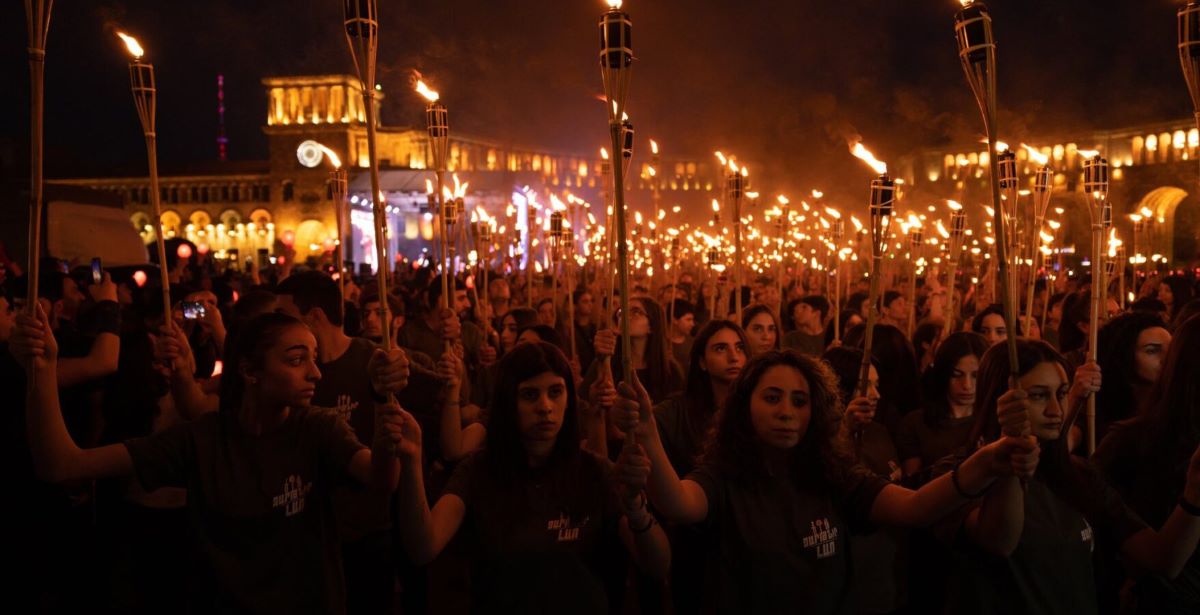
According to Mehrabyan, Jerusalem’s decision could provide a major boost to closer ties between the Armenian and Jewish diasporas.
“During the Cold War, and because of Israel’s existential interests, the United States, Israel and the Jewish diaspora shared a common position of not putting Turkey in an awkward position. They did not view Armenia as an independent state, but as a Russian outpost. Now the situation has changed,” he said.
Mehrabyan rejects the view that Armenian-Israeli relations face insurmountable tensions.
Supporters of that view often point to Azerbaijan’s use of Israeli-made offensive weapons during the 2020 44-day war. Israel continued supplying arms throughout the conflict. Media reports also claimed that either Israel or Ukraine had supplied Azerbaijan with white phosphorus munitions allegedly used in Nagorno-Karabakh. However, no official evidence has confirmed those claims.
“The Russians supplied the phosphorus. They also approved its use. Russian weapons and Russian political support played the decisive role in the war, as did Russia’s sabotage of Armenia’s entire defence system and subversive actions through its proxies,” he argued.
The analyst also dismisses suggestions that Armenia’s recognition of the State of Palestine in 2024 poses a problem for relations with Israel.
“There is no tension. More than 100 countries have recognised Palestine, and Israel maintains very good relations with many of them.”
He believes nothing now prevents Israel from building even a strategic partnership with Armenia.
“In our region, Israel is diversifying its relationships. It is also, to some extent, aligning them with the US strategy for the South Caucasus, Central Asia and the Middle Corridor.”
Asked whether Azerbaijan could obstruct closer Armenian-Israeli relations, Mehrabyan replied:
“If something reflects the common interests of Armenia and Israel, then no third country, whether Azerbaijan or any other state, will be able to prevent it. Israel has assessed the risks to its highly valuable relationship with Azerbaijan. It has concluded that, even if such a risk exists, it is justified and this step should be taken.”
Mehrabyan says Yerevan and Jerusalem could cooperate in a wide range of areas, from agriculture and water management to high technology. In his view, the two countries should build a strategic partnership gradually, beginning with official reciprocal visits. He stresses that cooperation between Armenia and Israel would not target any third party.
Israel recognises the Armenian Genocide