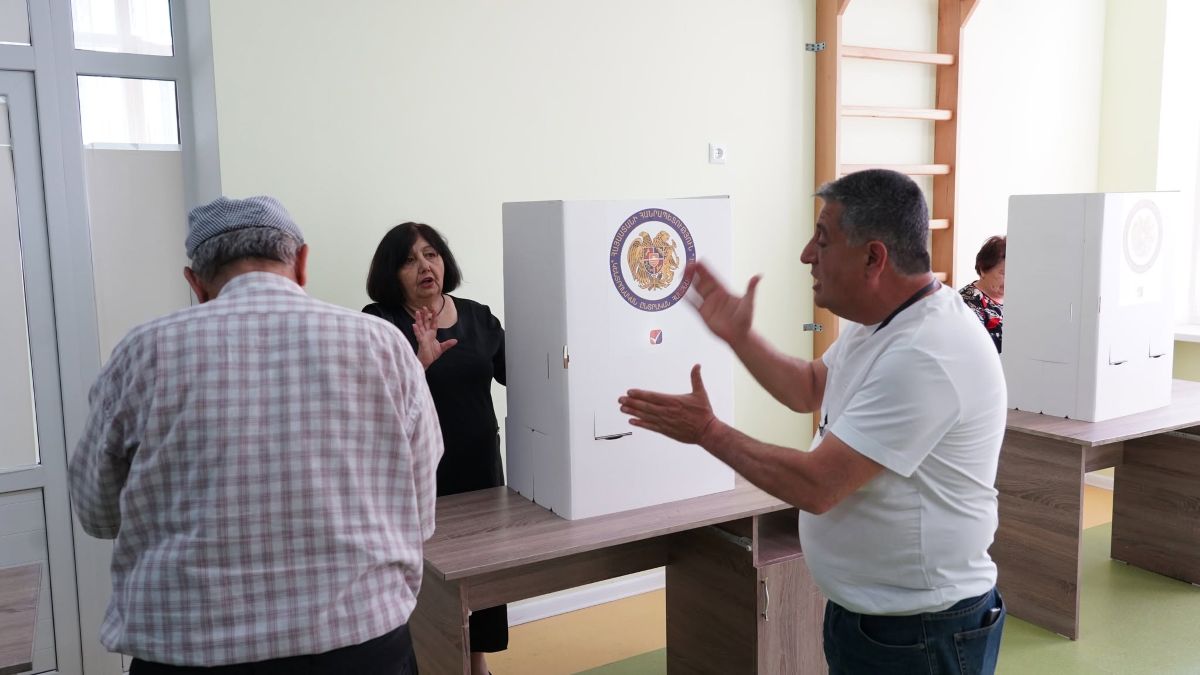
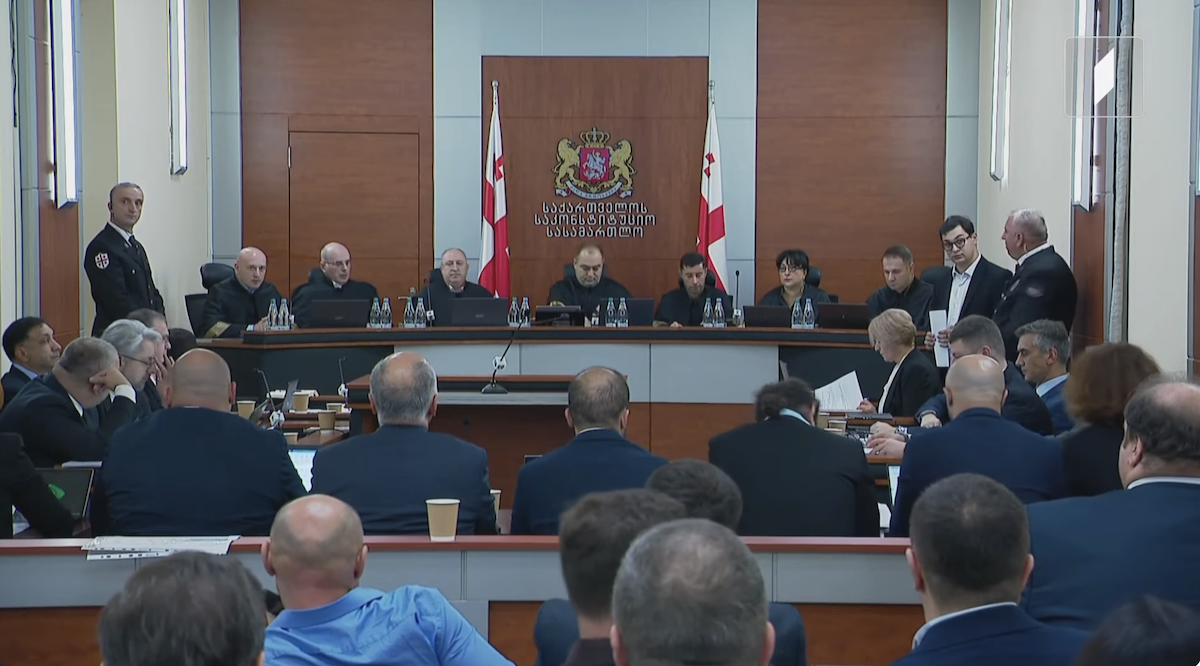
Armenia's Constitutional Court begins hearings on challenges to election results






Constitutional Court hearings on Armenia election
Armenia‘s Constitutional Court has begun hearing a case concerning the results of the parliamentary elections held on 7 June. The results are being challenged by seven political groups. Despite some differences in the content of the appeals, the court decided to consolidate them into a single case.
The hearings are being held in oral proceedings. The ruling Civil Contract party is participating in the case as a third party, while the Prosecutor-General’s Office, the Interior Ministry and the Anti-Corruption Committee are named as respondents.
Under Armenian law, the Constitutional Court must examine the case and deliver its ruling within 15 days of receiving the applications. This means the court is expected to announce its verdict on 4 July.
Opposition groups argue that the Constitutional Court “suffers from a serious lack of independence, neutrality and impartiality”. At the same time, they have refrained from predicting the outcome of the case.
Yuriy Avagyan, executive director of the Restart Foundation, said that Armenia had not experienced an acute political crisis following the elections, but argued that the country was facing a crisis of legitimacy. He attributed this primarily to the numerous cases of alleged vote-buying by opposition groups identified by the Anti-Corruption Committee.
“Regardless of what decision the Constitutional Court reaches, these problems will remain. They will continue to affect us in both domestic and foreign policy,” Avagyan said.
- Georgian experts weigh impact of Armenian election on region
- Opinion from Yerevan: Why Putin hasn’t rushed to congratulate Pashinyan on his election victory
- ‘Russia’s Plan B has been activated’: analysis of Armenia’s preliminary election results
Demands of political groups appealing to Constitutional Court
The following political groups have appealed to the Constitutional Court:
- the Strong Armenia alliance;
- the Wings of Unity party;
- the Democracy, Law and Discipline party;
- the Prosperous Armenia party;
- the For the Republic – Alliance of Defenders of Democracy party;
- the Armenia alliance;
- the New Force reformist party.
Of these, only two won seats in parliament: the Strong Armenia and Armenia alliances. Strong Armenia is seeking to have the election results declared invalid and for a second round of voting to be held. The Armenia alliance is seeking only to have the results invalidated.
Arman Babajanyan, leader of the For the Republic party, stressed that his party’s appeal had nothing in common with the others.
He said the basis of their appeal was the question of whether the state could confidently claim that the election results reflected the free will of the people when state institutions themselves had documented evidence of organised, large-scale, repeated and interconnected electoral offences during the campaign. He was referring to the Anti-Corruption Committee’s findings on alleged vote-buying by some opposition groups.
“We are not asking the Constitutional Court to replace the criminal courts. We are not asking it to determine which individual committed which crime. That is a matter for the criminal justice system. We are asking the Constitutional Court to do what only the Constitutional Court can do: assess the constitutionality of the elections,” Babajanyan said.
Possible scenarios: what ruling can the Constitutional Court deliver?
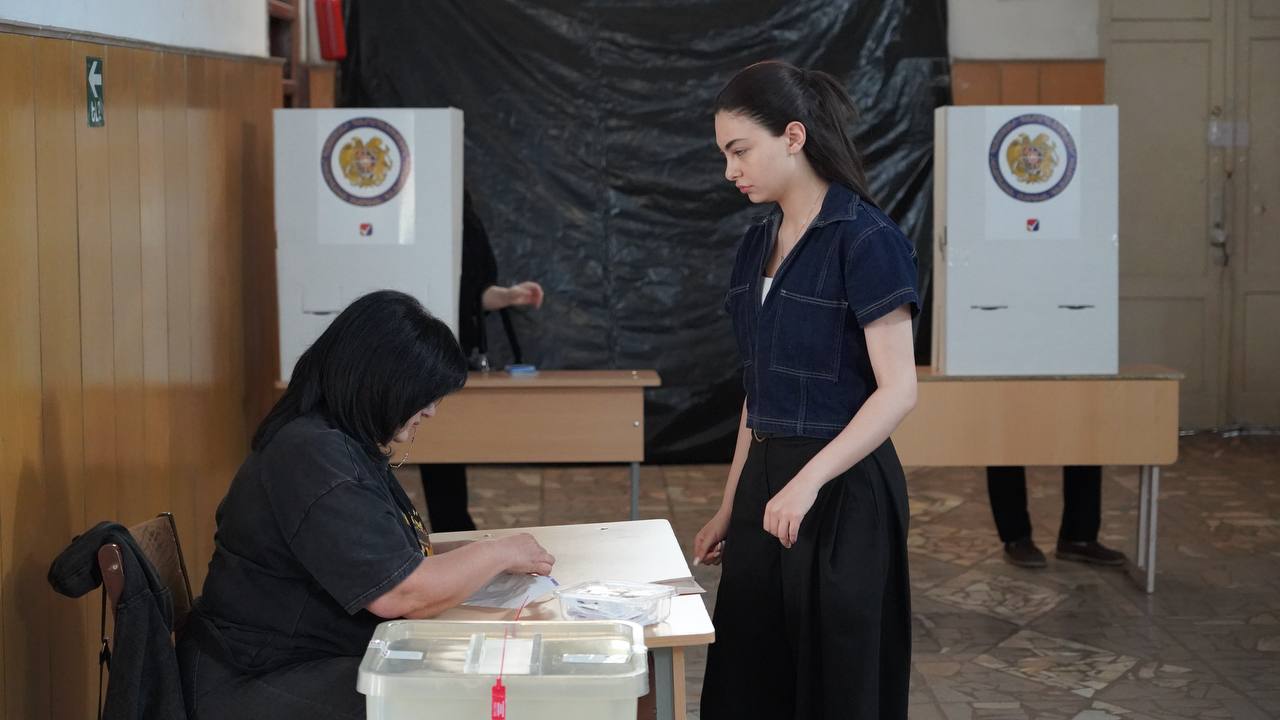
Under Armenian law, the Constitutional Court may issue any of the following rulings:
- Uphold the election results.
- Uphold the election results and
- declare the election results invalid;
- declare the election results invalid and determine a new allocation of parliamentary mandates;
- order a second round of voting.
The Constitutional Court is empowered to invalidate the election results if it finds violations of electoral rights guaranteed by the Constitution.
Article 7 of the Constitution states that elections to the National Assembly and community councils of elders, as well as referendums, must be held on the basis of universal, equal, free and direct suffrage by secret ballot.
Under Armenia’s Electoral Code, a repeat vote involving the same parties may be held no earlier than 15 days and no later than 30 days after the court’s decision invalidating the election results enters into force.
Article 101 of the Electoral Code provides that if the results of the repeat vote are also declared invalid, fresh parliamentary elections must be held no later than 70 days after the court’s decision enters into force.
Expert commentary
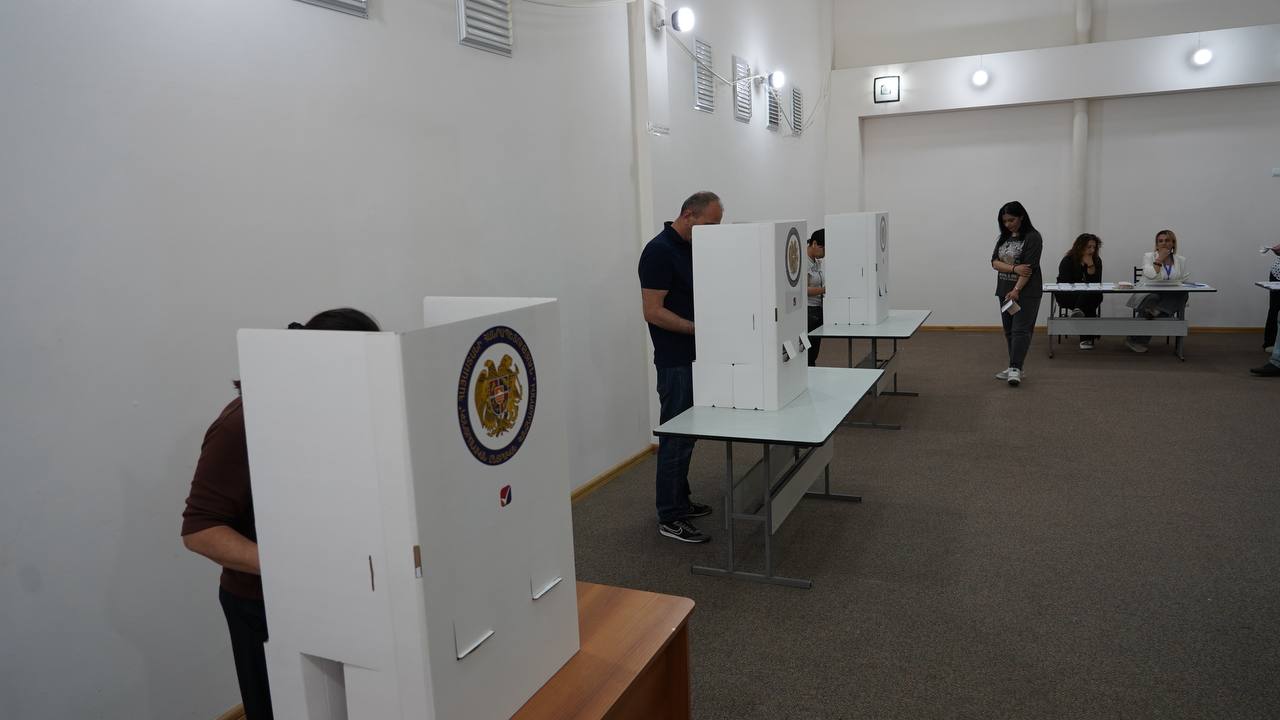
According to Yuriy Avagyan, executive director of the Restart Research and Educational Foundation, the post-election period has been marked by an unusually low level of political activity. He argued that if there had been widespread disagreement with the election results, there would have been public statements and mass protests.
Avagyan said such a scenario had not materialised because the two opposition alliances that won seats in parliament – Strong Armenia and Armenia – were ultimately expected to accept the election results and take up their mandates.
He said Armenia had not experienced a political crisis since the 7 June elections, arguing that the outcome had been largely predictable for society. At the same time, he said the country was facing “a certain crisis of legitimacy”, which he attributed to two factors:
- the Anti-Corruption Committee’s investigations into alleged vote-buying;
- the fact that votes cast at three of Armenia’s 2,005 polling stations were not counted after the Central Electoral Commission (CEC) decided not to hold repeat voting there.
“There is a discussion, including from a democratic perspective: yes, Civil Contract won a majority, but is that three-fifths majority legitimate? On the other hand, if even a single mandate was obtained through vote-buying, that also creates a crisis of legitimacy,” he said.
The CEC declared the results at three polling stations invalid but decided against holding repeat voting, arguing that this would create a risk of tactical voting.
According to the CEC, “voters’ choices could then be shaped not by their original political preferences and free expression of will, but by calculations based on already known election results”. It therefore concluded that “a repeat vote would not guarantee a fair election outcome”.
The opposition Prosperous Armenia party, however, argued that the more than 200 votes it had received at those three polling stations would have been enough for it to enter parliament. It also claimed that, in such a scenario, the ruling Civil Contract party would have lost its three-fifths majority.

Avagyan argued that, regardless of the Constitutional Court’s ruling, Armenia was likely to face challenges in both its domestic politics and foreign relations.
On the domestic front, he predicted that parliament would be dominated by two competing narratives. According to him, the ruling party would portray the opposition as having entered parliament through vote-buying, while the opposition would continue accusing the authorities of “surrendering Artsakh”. As a result, he argued, the country’s most pressing challenges would be pushed off the parliamentary agenda.
Avagyan also warned that the CEC’s decision not to hold repeat voting at three polling stations could complicate Armenia’s relations with the West.
“This purely democratic issue could be used against Armenia as a club,” he said.
He suggested that the issue could be exploited both by pro-Russian groups within Armenia and by Russian influence networks operating in Eastern Europe.
As an example, he cited Armenia’s dialogue with the EU on visa liberalisation.
“When the time comes for EU member states to vote, many countries that are not favourably disposed towards us may use the situation surrounding those polling stations to create artificial obstacles for the Armenian government – in other words, to derail our plans for closer integration with the EU,” he said.
The head of the Restart Foundation argued that the legitimacy crisis could be overcome if courts delivered rulings in the vote-buying cases and new elections were subsequently held.
“New elections do not necessarily have to take place in two months. They could be held in six months or a year – however long the courts need to issue their rulings,” he said.
According to Avagyan, in order to conduct a swift but effective investigation, the courts could seek support from civil society and the international community. He also suggested asking the EU to share its “toolkit” with the relevant Armenian authorities.