‘No grounds for referendum yet’: Yerevan responds to calls to choose between EU and EAEU






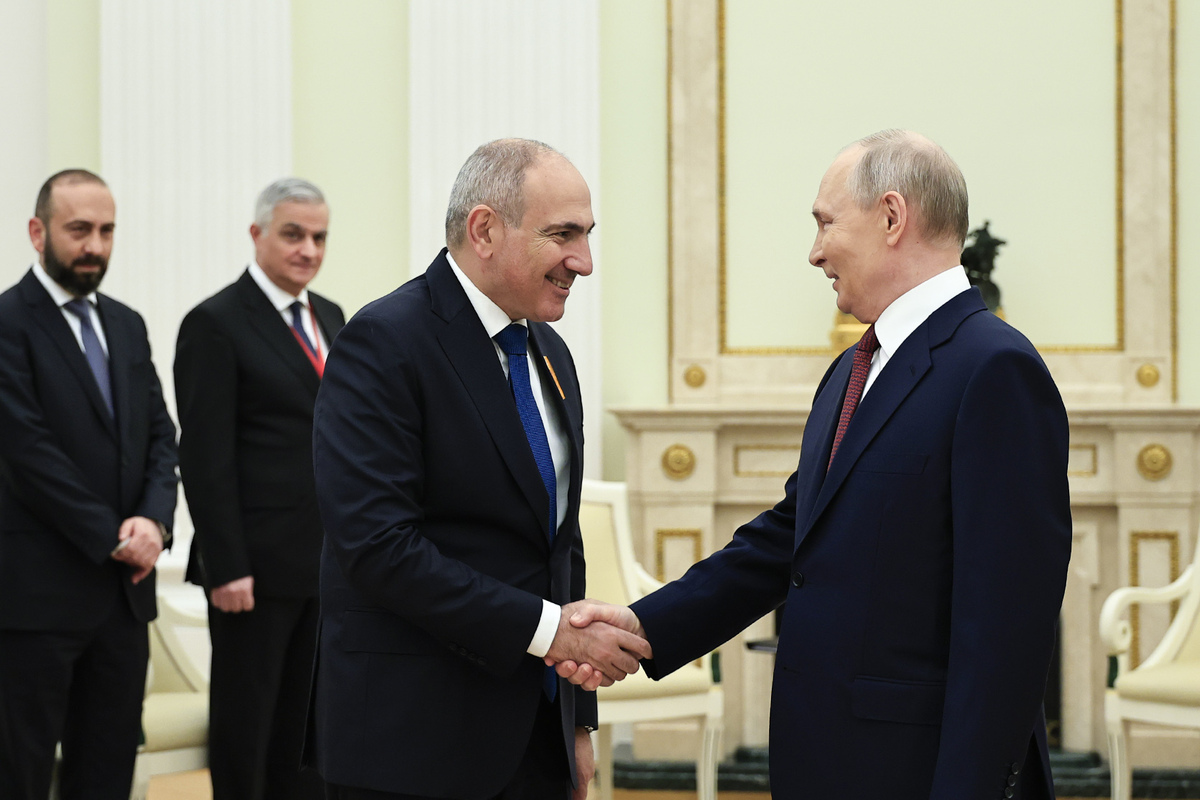
Pashinyan on an EU-EAEU referendum
“Armenia remains a member of the Eurasian Economic Union and will continue to be one until a choice between the European Union and the EAEU becomes unavoidable,” Armenian Prime Minister Nikol Pashinyan said.
He stressed that the Armenian people would make that decision through a referendum. However, the prime minister said he currently sees no grounds for holding such a vote.
Meanwhile, four member states of the Eurasian Economic Union, including Russia, the bloc’s largest member, have urged Armenia to hold a referendum as soon as possible and choose between the EAEU and the European Union.
Similar calls have come repeatedly from Moscow in recent days. Russia has also backed up its rhetoric with economic measures.
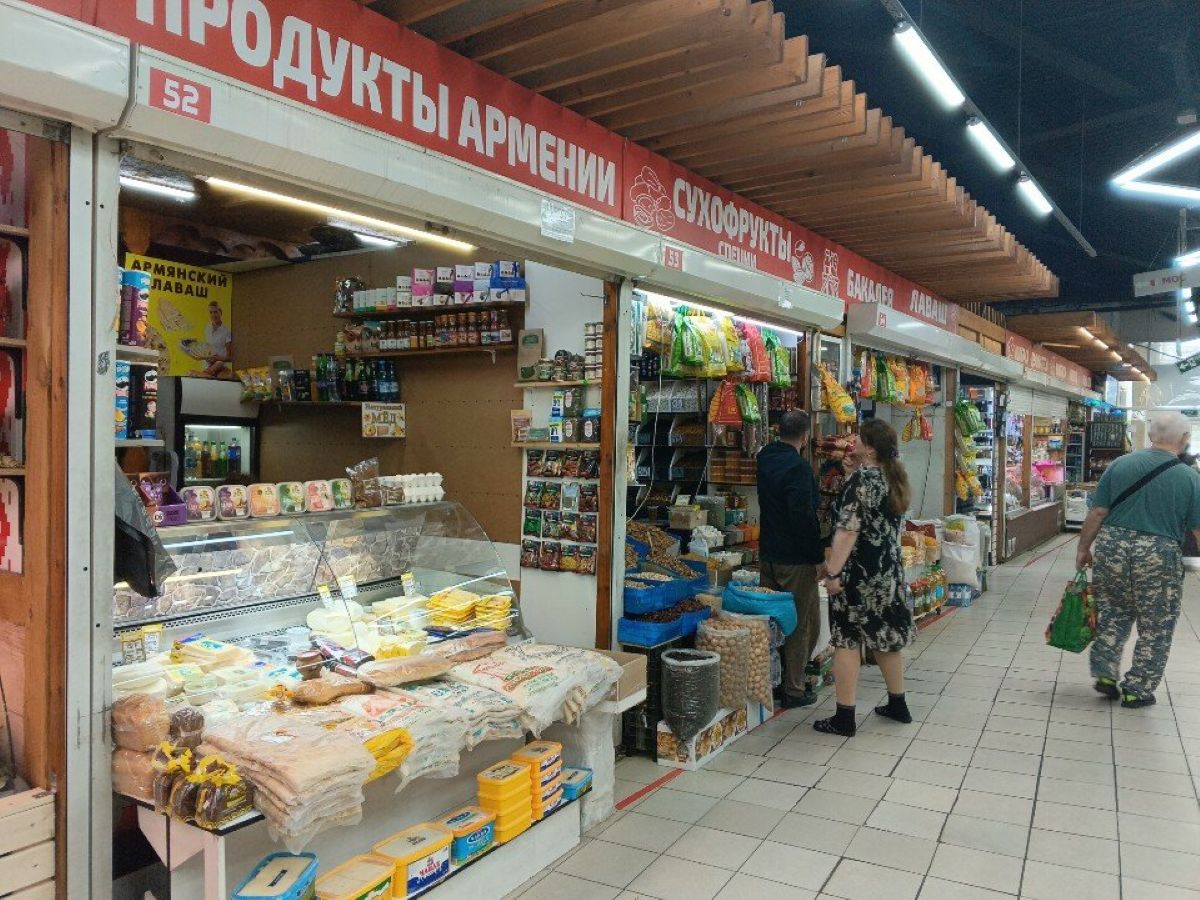
The restrictions target Jermuk mineral water and certain alcoholic beverages. In addition, Russia has banned imports of Armenian agricultural products, including tomatoes, cucumbers, peppers, herbs and strawberries, as well as flowers and ornamental plants since 30 May.
Economy Minister Gevorg Papoyan said he had reason to believe that Armenia’s opposition had played a role in these developments.
He referred to three political forces taking part in the election campaign: Strong Armenia, Prosperous Armenia and the Armenia Alliance bloc. These groups are the main rivals of the ruling Civil Contract party in the race for seats in the next parliament.
“I believe they have been lobbying certain officials and decision-makers to impose restrictions on Armenian producers. Their goal is to influence public opinion ahead of the election,” he said.
Papoyan believes some of these issues could be resolved soon after the parliamentary elections on 7 June.
He said Armenia could then discuss the matter calmly with Russian counterparts and seek practical solutions.
The minister also argued that Armenian products fully meet EU standards and could find a niche in European markets.
According to Papoyan, the government could help exporters by subsidising transportation costs, which remain their biggest challenge at this stage.
On 1 June, Vladimir Putin called Armenian Prime Minister Nikol Pashinyan to wish him a happy birthday. According to official statements, the two leaders exchanged views on bilateral and multilateral issues and agreed to continue their discussions at a future meeting.
“The Prime Minister of Armenia thanked the President of Russia for his balanced position, constructive tone and support on a number of issues that had given rise to differences,” Pashinyan’s office said.
- Russian intelligence operatives sent to ‘target Pashinyan’: The Insider investigation
- Leak reveals secret documents on Russia’s hybrid attacks against Armenia
- What’s behind Russia’s hostile response to Armenia’s deepening ties with EU?
EAEU calls for a referendum
At a meeting of the Supreme Eurasian Economic Council in Astana on 29 May, the presidents of four member states of the Eurasian Economic Union — Russia, Kazakhstan, Belarus and Kyrgyzstan — adopted a statement concerning Armenia.
“We share the view that the Republic of Armenia should hold a nationwide referendum as soon as possible on either joining the European Union or remaining a member of the Eurasian Economic Union,” the statement said.
The signatories said their position reflects steps Armenia has taken towards EU membership.
The document specifically cites:
- the Armenian parliament’s adoption in 2025 of the law “On Launching the Process of Armenia’s Accession to the European Union”;
- the European Union’s endorsement of Armenia’s European aspirations in the joint declaration issued after the first Armenia–EU summit on 5 May 2026.
The leaders of the EAEU member states said Armenia’s preparations for possible EU accession create “significant risks to the economic security of the EAEU member states”.
The statement also says that Belarus, Kazakhstan, Kyrgyzstan and Russia have decided to prepare a report on suspending the application of the EAEU Treaty to Armenia. They plan to present the report in December 2026.
Pashinyan says there are no grounds for a referendum yet
According to Armenian Prime Minister Nikol Pashinyan, there is currently no basis for holding a referendum on a choice between the European Union and the Eurasian Economic Union.
In a video published on his Facebook page, Pashinyan said Armenia’s European integration process has not yet reached a stage where citizens can make such a decision.
“Until Armenia formally applies for EU membership or comes close to obtaining candidate status, it makes no sense to hold any referendum on the issue.”
The prime minister argued that the choice remains theoretical for now.
“Putting a theoretical choice to a referendum is, of course, neither particularly reasonable nor justified.”
Pashinyan also stressed that Armenia will continue to work constructively within the framework of the Eurasian Economic Union.
“We will continue working within the EAEU calmly, without tension and without disputes. I am convinced that we still have untapped potential in this area.”
‘We cannot trade state interests for tomatoes’ – economy minister
Economy Minister Gevorg Papoyan reiterated Armenia’s intention to develop its economy and bring it into line with European standards. He said that once the country completes that process, the Armenian people will decide whether to remain in the Eurasian Economic Union or move towards the European Union.
“Theoretically, that question can always arise. At the moment, we are a member of the EAEU. We are not planning to leave the EAEU, and we will use all the mechanisms available within the union for Armenia’s benefit,” Papoyan said.
The minister agreed that the government must manage the risks associated with that course. However, he argued that those risks have limits.
“There are red lines: the country’s independence, sovereignty and territorial integrity. When weighing the interests of the state, we cannot trade them for tomatoes.”
Papoyan also referred to Chechnya and Belarus as examples of entities that enjoy unrestricted trade relations with Russia, before asking:
“Are you suggesting that we should bring our status closer to theirs?”
According to Papoyan, Armenian officials once justified joining the EAEU by arguing that local products lacked the quality needed to compete elsewhere and could only find buyers on the Russian market.
He argued that the situation has now changed.
The minister insisted that most goods exported from Armenia “meet the highest standards and match the strictest European quality requirements”.
He said that much of Armenia’s exports, including agricultural products,
- “carry GlobalG.A.P. certification, which many producers across the EAEU do not have, and which many farmers in European countries also lack.
- They come from greenhouses equipped with cutting-edge technology that is not available everywhere in Europe.”
Papoyan argued that Armenian products are “fully capable of meeting the standards of the European market”.
However, Armenia remains a member of the Eurasian Economic Union. As a result, customs duties and other costs could increase the price of Armenian goods and make them less competitive in EU markets.
To address that issue, the government is considering subsidies for transportation costs and customs-related expenses.
Officials have already produced preliminary estimates. According to Papoyan, if Armenia began subsidising flower exports to the EU immediately, the programme would cost between $5 million and $5.5 million by the end of the year. Subsidies for tomato exports would require around $3.4 million, while pepper exports would need about $3.5 million.
Papoyan stressed that these figures represent a “worst-case scenario” in which Armenia redirects all exports currently destined for Russia to European Union markets.
“I do not think such a situation will arise. But even so, these costs are entirely manageable. In any case, I expect the current issues to be resolved without such measures, because Armenia remains a member of the EAEU,” the minister concluded.
Pashinyan on an EU-EAEU referendum