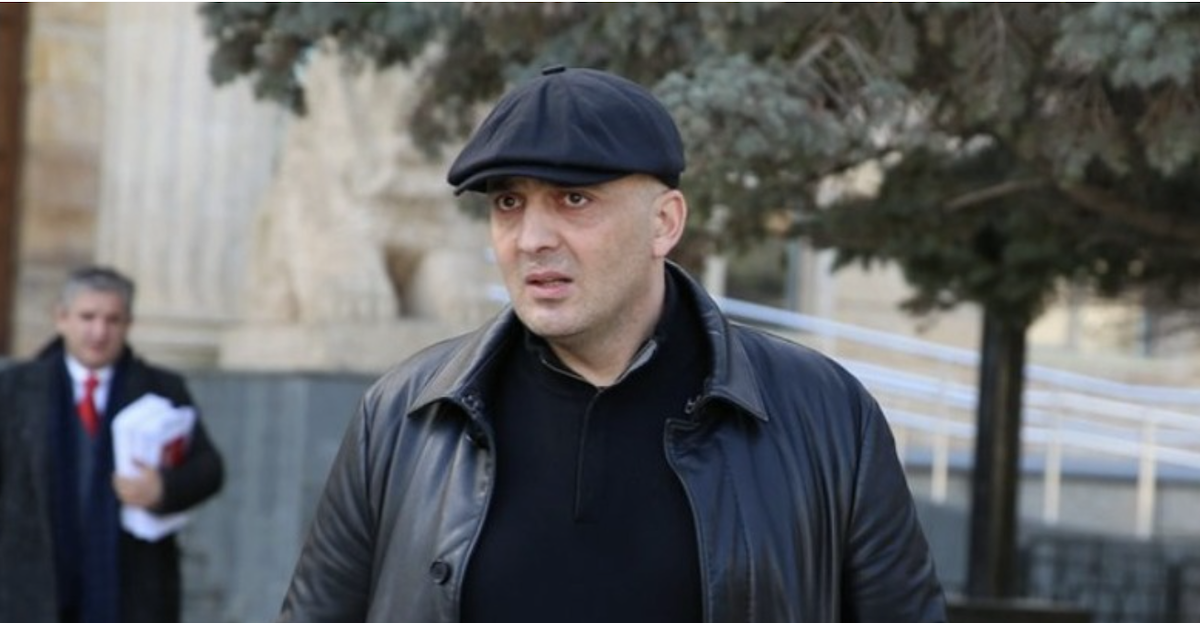
‘If I were a criminal, I wouldn’t use state bank,’ activist tells Azerbaijani court






Activists arrested in Azerbaijan over grants
Asef Ahmadov, head of the Ganja Regional Public Centre, who was arrested in April 2025 in connection with a case against non-governmental organisations, has sent JAMnews his written response to the charges against him. The statement was originally submitted to the Ganja Court for Serious Crimes.
In the document, Ahmadov strongly denies all accusations against him.
The “NGO case” in Azerbaijan includes more than a dozen criminal proceedings against civil society activists and leaders of local and international organisations. They are accused of crimes related to international funding and fraud. Some have already been sentenced to lengthy prison terms, while others are still on trial. None of those arrested admits guilt, and all say the charges are politically motivated.
Asef Ahmadov rejects accusations that he tried to disguise a grant agreement with a donor organisation as a service contract. He said Azerbaijani law gave him the right to choose the type of contract, and that investigators had no authority to make that decision for him.
Ahmadov also noted that dozens of people carry out similar work under service contracts, yet only he has faced criminal prosecution. He described this as “selective prosecution”.
He also dismissed as absurd accusations that he was part of a “criminal group”. Ahmadov said his financial difficulties alone undermined the claim, pointing out that he had pawned his wedding rings and was struggling with loan and mortgage debts.
The activist accused investigators of bias. He said that although the authorities had thoroughly examined his family’s bank accounts, the indictment failed to mention his financial problems.
Ahmadov said he considered the prosecution of his civic activities unlawful and told the court he was seeking not mercy, but justice.
Who is Asef Ahmadov?
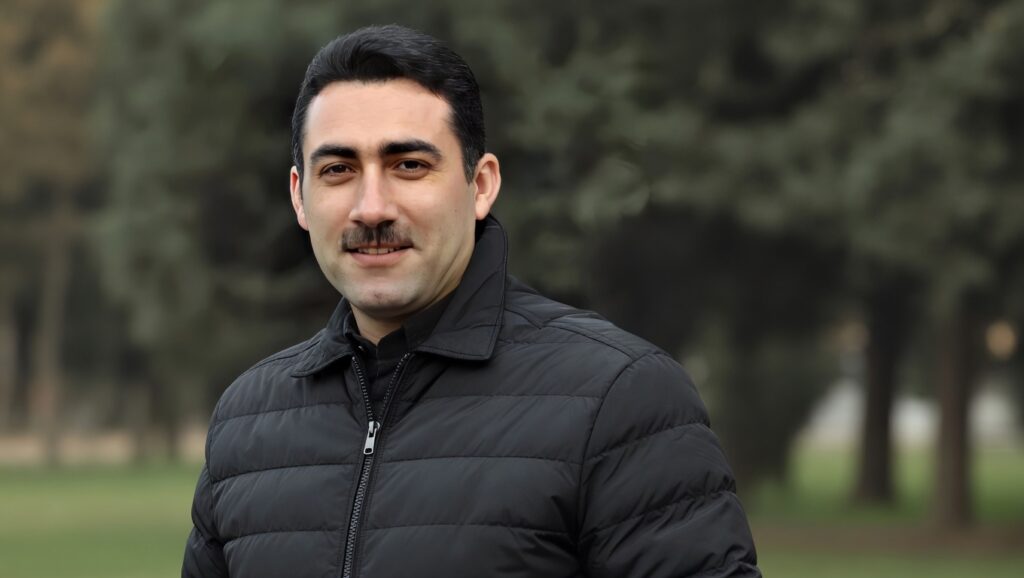
In April 2025, Asef Ahmadov was detained in Azerbaijan as part of a new wave of arrests linked to the large-scale criminal investigation known as the “NGO case”.
A court in Baku’s Binagadi district ordered that he, along with social worker and human rights activist Zamin Zaki and several others, be held in pre-trial detention for three months. The detention period was later extended several times. The investigation was completed in October 2025, after which the case was sent to court.
Ahmadov has spent many years involved in civic activism in the Ganja region. He heads the Ganja Regional Public Centre. In 2011, he became known as co-ordinator of the Ganja branch of the Election Monitoring and Democracy Studies Centre. At the time, he spoke to Radio Liberty about the eviction of NGO offices allegedly ordered by the authorities.
He also served as acting headmaster of a secondary school in the Samukh district. Ahmadov is known locally for his involvement in community initiatives, social projects and human rights work.
There is little publicly available information about him. While he is not a nationally known public figure, he is recognised at the regional level. Before his arrest, he mainly worked on community development and social issues through NGO projects.
Why was he arrested? What are the official charges?
As part of the “NGO case”, investigators from the Prosecutor General’s Office charged several NGO leaders and activists with large-scale money laundering, abuse of office causing serious consequences, and forgery.
According to investigators, Ahmadov handled at least 105,423 manats (about $62,000) in grant funding received between 2022 and 2024 from the German Marshall Fund of the United States and Family Health International through service contracts rather than registering the grants in accordance with the law.
Prosecutors allege that similar schemes were used to process around 700,000 manats (about $412,000).
The case centres on allegations that several NGOs and individuals received grants from international donor organisations — including USAID, Transparency International, East-West Management Institute and Mercy Corps — without registering them as required by Azerbaijani law.
Prosecutors describe this as illegal donor activity and money laundering. Ahmadov denies the charges.
Broader context of the “NGO case”
The criminal case is linked to a broader investigation launched in previous years and later intensified, particularly following decisions related to USAID.
Others named in the case include Mammad Alpay, Bashir Suleymanli, Galib Bayramov, Nargiz Mukhtarova, Aytaj Agazade — who has been declared wanted — and Subkhan Hasanov, who is also wanted by the authorities.
Some have been arrested, while others remain under house arrest or police supervision. Independent media outlets and human rights groups describe the case as part of systematic pressure on NGOs receiving foreign funding.
Below is Asef Ahmadov’s courtroom statement, published without edits:
“The law gives me the right to decide what type of contract to sign with another party. I chose a service contract rather than a grant agreement. This is my constitutional right, and no investigator has the authority to make that decision for me. After reading the indictment, I was left wondering whether investigators had simply ignored the principle of freedom of contract set out in Article 390 of the Civil Code.
“I want to ask the prosecution: why, out of 25 people working under the same contract and under identical conditions, has only Asef Ahmadov been prosecuted and arrested? What is the legal basis for such selective prosecution? Why am I being portrayed as a member of a criminal group, while co-operation with others is not considered a crime?
“If investigators do not even know who I was allegedly connected to within this group, how did they conclude that these individuals acted together with me with criminal intent? A ‘conspiracy’ involving unidentified persons is not a legal argument — it is fiction.
“Crimes committed by organised groups are usually motivated by large profits. You claim that, together with unidentified individuals, I laundered hundreds of thousands of manats. If such an organised group and such large sums of money really existed, why did I have to pawn my wedding rings to pay for my child’s education? What member of a criminal group pawns gold and takes out loans with interest? This fact alone undermines your entire narrative about an organised criminal group.
“For money laundering to occur, those involved must know that the money comes from criminal activity. If my intention had been to break the law, why would I have used an official bank account directly monitored by the state and paid 13,200 manats (about $7,800) in taxes? No criminal uses bank accounts under direct state monitoring.
“Once again, I stress that civic activism, community development initiatives, efforts to encourage public participation, educational work and legal assistance to citizens cannot be considered criminal activity.”
“The unlawful criminalisation of the work of a public association and a civil society activist violates both Azerbaijani law and the international obligations accepted by Azerbaijan. Under these standards, public associations have the right to operate regardless of whether they are formally registered. They may organise events, run projects, and seek, receive and use funding to support their activities.
“The indictment shows that investigators unfairly and without justification criminalised my co-operation with an international organisation by portraying it as a criminal act. In effect, they have prepared accusations that could damage Azerbaijan’s international reputation.
“The investigator sent numerous requests to examine bank accounts opened in my name and in the names of all my family members. The case materials show that investigators scrutinised even my child’s monthly state scholarship of 85 manats (about $50), received while studying for a bachelor’s degree, and added those records to the case file.
“Yet the same investigator completely ignored — and deliberately excluded from the indictment — official bank documents showing that my home is mortgaged, that I have outstanding loans, and that our wedding rings had been pawned.
“I believe the indictment against me was deliberately distorted. I do not admit guilt under any article of the Criminal Code. As a teacher, I have always tried to contribute positively to society. I helped educate a new generation of people who respect human rights and freedoms, understand their rights and know how to defend them.
“I ask you not for mercy, but for justice. Law and justice must be the foundation of the state. Without them, no state can stand on solid ground. Public trust in the state depends on faith in law, justice and truth. It is in your hands, judges, to strengthen that trust or destroy it. No citizen can truly feel secure without an independent judiciary.”
Activists arrested in Azerbaijan over grants