

Forty Years After the Disaster: Five Books That Help Make Sense of Chernobyl






Books on the Chernobyl Disaster
April 26 marked 40 years since the accident at the Chernobyl Nuclear Power Plant — the worst man-made disaster in the history of civilian nuclear energy. Those who took part in the cleanup and survived are now elderly; those who experienced it as children are no longer young.
For many, the scale of this half-forgotten tragedy — its causes and consequences — came into focus only in 2019, with the release of Chernobyl by HBO. Yet over the past four decades, the disaster has been revisited time and again in popular culture — across a wide range of genres and far beyond Russia.
Long before HBO’s Chernobyl, there was the understated and often overlooked Ukrainian miniseries Moths; Innocent Saturday, Alexander Mindadze’s austere arthouse meditation on the disaster; the BBC docudrama Surviving Disaster: Chernobyl Nuclear Disaster; and Renny Bartlett’s dramatized series The Truth About the Chernobyl Nuclear Disaster, which incorporated real interviews with cleanup workers.
YouTube, meanwhile, is filled with Chernobyl footage — from raw film shot in 1986 atop the roof of the destroyed reactor to full-length documentaries revisiting the catastrophe from historical, scientific and human perspectives.
Chernobyl — reimagined as a mythic “exclusion zone” where radioactive mutants are said to roam — has also become fertile ground for video games. The most famous is S.T.A.L.K.E.R.. Versions of Chernobyl appear as well in Call of Duty and Minecraft — in the latter, a kind of second-order myth shaped by the universe of S.T.A.L.K.E.R. But the earliest and most essential accounts of Chernobyl were written, not imagined: testimonies by eyewitnesses and journalists who recorded what they saw. Many of those records became the foundation for books.
The publication Novaya Gazeta Europe selected five works worth reading.
1. Svetlana Alexievich, Chernobyl Prayer
First published in 1997
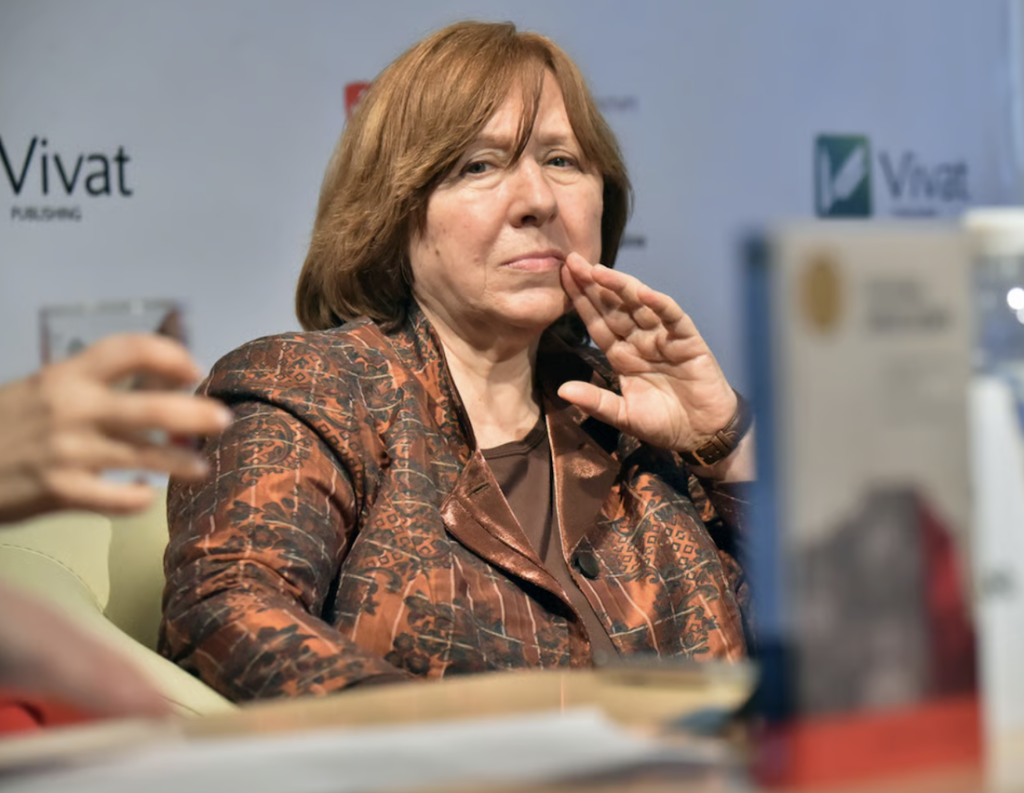
Svetlana Alexievich has long described herself first as a journalist, and only then as a writer. Chernobyl Prayer, like her other works — Zinky Boys on the war in Afghanistan, Secondhand Time on the 1990s, and The Unwomanly Face of War on women in World War II — is built as a chorus of voices.
In the decade after the Chernobyl Nuclear Power Plant disaster, Svetlana Alexievich conducted hundreds of interviews with those who lived through it: cleanup workers, relatives of those who died in the accident, and residents of the “Chernobyl zone” forced to abandon their homes forever.
In the book itself, the author is almost absent — aside from a preface and an epilogue. In between are only the monologues of direct witnesses. Their voices, unfiltered and insistent, land with a force that is often more piercing than any authorial narration could achieve.
In 2015, Svetlana Alexievich was awarded the Nobel Prize in Literature. It was the first time in history that the prize had been given not for novels or poetry, but for documentary literature.
Chernobyl Prayer became one of the key sources for the script of Chernobyl. Several narrative threads — including those about firefighter Vasily Ignatenko and his wife Lyudmila, as well as the killing of stray animals in the exclusion zone — were drawn directly from her accounts.
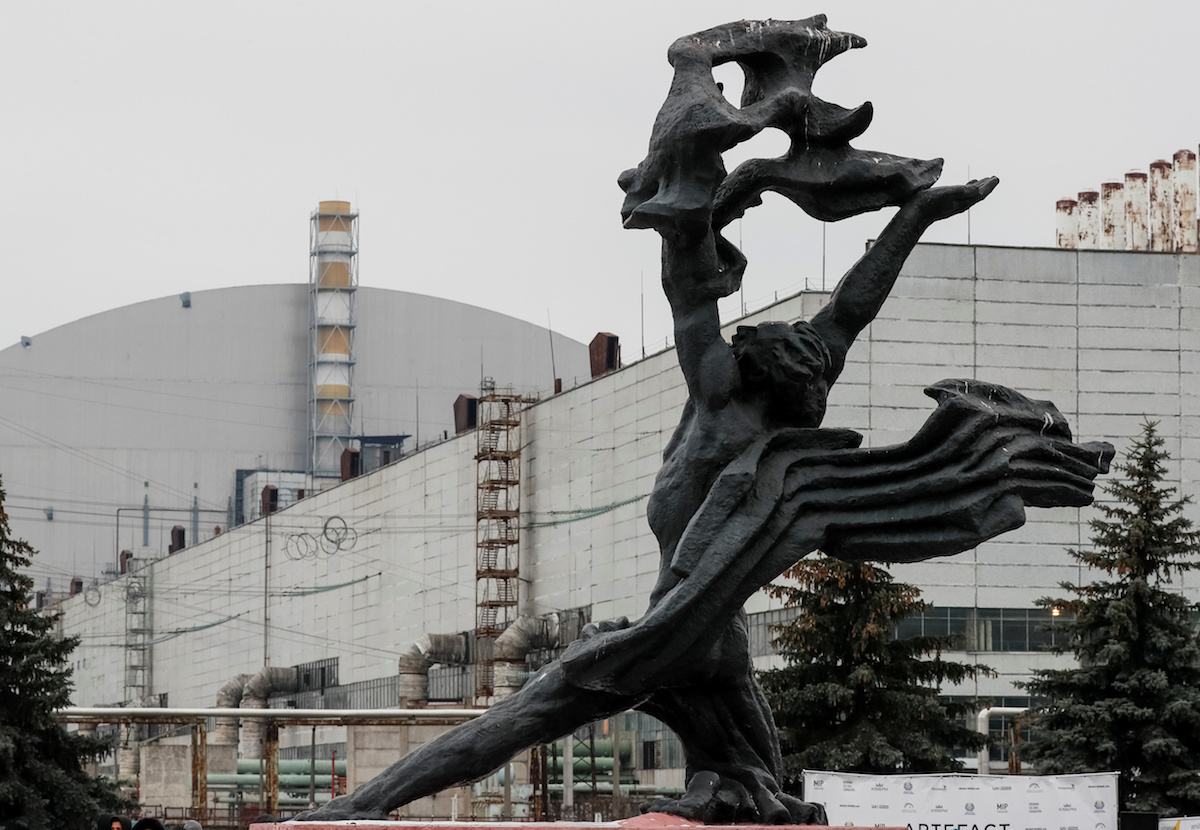
“Here’s how it was… They announced on the radio: no cats allowed. My daughter burst into tears — she was so afraid of losing her cat that she started stuttering. Put the cat in a suitcase! But the cat didn’t want to go in, it fought back. Scratched everyone.
You’re not allowed to take belongings! I won’t take everything — I’ll take one thing, just one! I have to take the apartment door with me. And I’ll board up the entrance with planks.
Our door — it’s our talisman, a family relic. My father once lay on that door. My mother told me that when someone dies, they are placed on the door from their own home until the coffin arrives. I sat by my father all night; he lay on that door.
And on that same door there are notches all the way up — marks of how I grew. First grade, second. Seventh. Before the army. And next to them — how my son grew… my daughter… Our whole life is written on that door. How could I leave it behind?
So I took the door out. At night, on a motorcycle, through the forest — two years later, when our apartment had already been looted. The police were chasing me: ‘We will shoot!’ Of course, they thought I was a looter. I was carrying the door from my own home — as if I had stolen it…”
2. Ales Adamovich, The Name of This Star Is Chernobyl
First published in 2006 (Belarus), 2021 (Russia)
The patriarch of Belarusian literature, Ales Adamovich, was on holiday when the Chernobyl Nuclear Power Plant accident occurred. By the time he returned, he encountered a landscape of quiet panic and land scorched by radiation. Although the plant was located in the Ukrainian Soviet Socialist Republic, much of the radioactive fallout settled in neighboring Belarus.
Adamovich struggled to comprehend how Soviet authorities, in the name of preserving the state’s image, could have sacrificed the safety of their own citizens living in contaminated areas. He moved between shock and outrage at official inaction and deception, writing urgent appeals to Mikhail Gorbachev.
The book is composed of his fragmented letters to friends written in the first days after the disaster, disjointed diary entries filled with abbreviations and crossed-out lines, and furious attempts to understand who was responsible.
“I remember 1941 — war is already roaring, and those who are supposed to make decisions bow their heads, trying to hear instructions: should we call it a war or not?
They learned that the reactor had exploded, that the cloud was moving toward Belarus, once again a land of suffering — but the officials had only one thought: what will they say about us later? Die if you must, but we must preserve ourselves. Die if you must, but politics comes first.
Those 18-year-old girls now in hospitals in Minsk are from the Gomel region. They would not have received 1,000 roentgens if they had not been standing by the windows, washing them — they would have closed them instead. And how many more like them? We do not know. Time will reveal it, and it is terrifying to think about.
One could imagine even a nuclear war — and they would still calculate: will politics suffer? Let everything perish, as long as politics is preserved.”
3. Valery Legasov: Chernobyl Revealed
First published in 2020
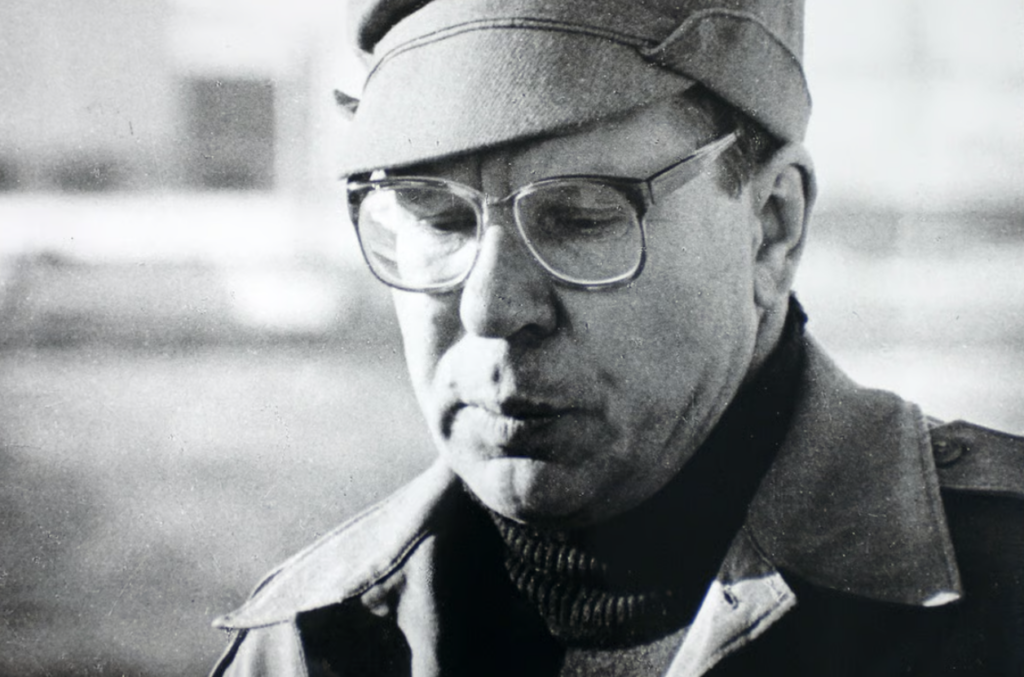
In this case, “Valery Legasov” is not the author’s name but part of the book’s title. The volume was compiled posthumously by journalists Sergey Solovyov, Nikolai Kudryakov, and Dmitry Subbotin.
Valery Legasov led the response to the Chernobyl Nuclear Power Plant disaster. In 1986, he delivered a five-hour presentation at the International Atomic Energy Agency conference in Vienna, outlining possible causes of the accident, including structural flaws in the reactor design.
Afterward, he fell out of official favor in the Soviet system and was effectively pushed aside from his work. In 1988, he died by suicide.
He left behind written reflections and a series of recorded cassette tapes describing the disaster, which became the foundation for the book.
In his recollections, Legasov reconstructs from memory the sequence of events, explains the physical and chemical mechanisms of the disaster, and names those involved. In the restrained language of a scientist, he records both the self-sacrifice of the cleanup workers and the helplessness of officials. He does not dwell on emotion: “The measurements were not entirely accurate… Supplies were not fully sufficient.”
The emotions, he seems to suggest, were kept inside. They consumed him from within — and, over time, consumed him.
“On the second or third day, I proposed creating an information group within the government commission, bringing in two or three experienced journalists who would receive technical, radiological and medical information from specialists, and issue daily or even several-times-a-day press releases. These could be transmitted to TASS, newspapers and television, so that the situation would be clear — what was happening and how the population should act.
The proposal was not rejected, but no press group was ever created.”
4. Serhii Plokhy, Chernobyl: History of a Nuclear Catastrophe
First published in 2018 (Ukraine), 2021 (Russia)
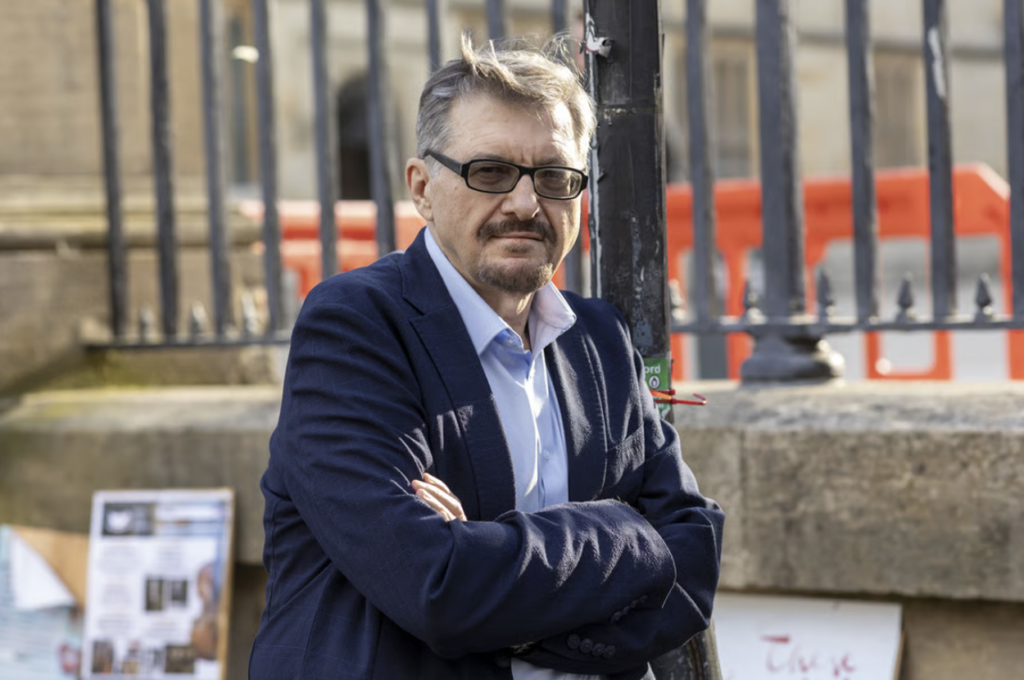
Serhii Plokhy is a historian and professor at Harvard University. He draws on a vast body of archival material, particularly documents declassified after 2014 by Ukrainian authorities, which opened parts of former KGB files.
Plokhy is less concerned with the technical unfolding of the accident itself — though he reconstructs it in minute detail — than with its political and social consequences, long left outside public discussion.
He examines how the Soviet Union presented the disaster on the international stage, how it intensified ethnic tensions within the USSR, and how it fueled the rise of national movements in Ukraine. He also traces its role in the emergence of environmental activism and argues that it became one of the factors accelerating the collapse of the Soviet system. His critical stance toward the Soviet state is explicit throughout the book.
Despite its density of scientific and historical detail, the book is written in a fluid, almost novelistic style and reads with the pace of narrative nonfiction.
“The first people to see the disaster from the outside were fishermen. That warm April night, there were many of them gathered by the cooling pond of the Chernobyl Nuclear Power Plant. The pond had long been turned into a fish farm. Two fishermen were about 250 meters from the turbine hall.
Suddenly, in the silence of the night, there was a dull explosion, then another. The ground trembled beneath them, flames lit up the surroundings. But even if the guards noticed the fishermen, no one came for them. The fire above the reactor building grew higher, while they kept sitting on the shore with their fishing rods.
They had no idea: a nuclear star named Wormwood had fallen to Earth, poisoning soil, water, their catch, and the fishermen themselves. They watched, but did not see. These two men became the first in a long line of those blinded by what was happening — seeing without understanding, looking without perceiving.”
5. Olga Kuchinskaya, The Politics of Invisibility
First published in 2014 (United States); not translated into Russian
Olga Kuchinskaya, a professor at the University of Pittsburgh, titled her study in full “The Politics of Invisibility Public Knowledge about Radiation Health Effects after Chernobyl”
In the book, she examines how information about the disaster was communicated to Soviet citizens — above all residents of Ukraine and Belarus, whose health and futures depended on what they were told. Radiation itself, she notes, is invisible and imperceptible; everything about it can only be known through information.
Kuchinskaya analyzes official Soviet strategies that prioritized concealment and the avoidance of panic, as well as informal channels through which knowledge spread among the population — often by word of mouth, and frequently distorted into rumor and speculation.
For Olga Kuchinskaya, the Chernobyl Nuclear Power Plant disaster serves primarily as a closely studied case of what she calls the “politics of invisibility” — a framework in which information blockades surrounding a catastrophe replace unsettling facts with a reassuring sense of safety.
In her analysis, she extends the same logic beyond Chernobyl, examining more recent crises such as the Fukushima nuclear accident in Japan, as well as broader environmental harms ranging from pollution to climate change.
“The Soviet authorities simply did not want people to discuss radiation among themselves — its permissible levels or related illnesses,” she writes. “The renewed interest in the history of Chernobyl is also connected to the fact that many countries today struggle with how to talk about climate change.”
exchange