

Council of Europe experts urge Georgia to repeal repressive laws






On repressive laws in Georgia
Council of Europe experts have urged the Georgian authorities to repeal legislative changes adopted in early March 2026, warning they pose a serious threat to the country’s democratic foundations and civil society
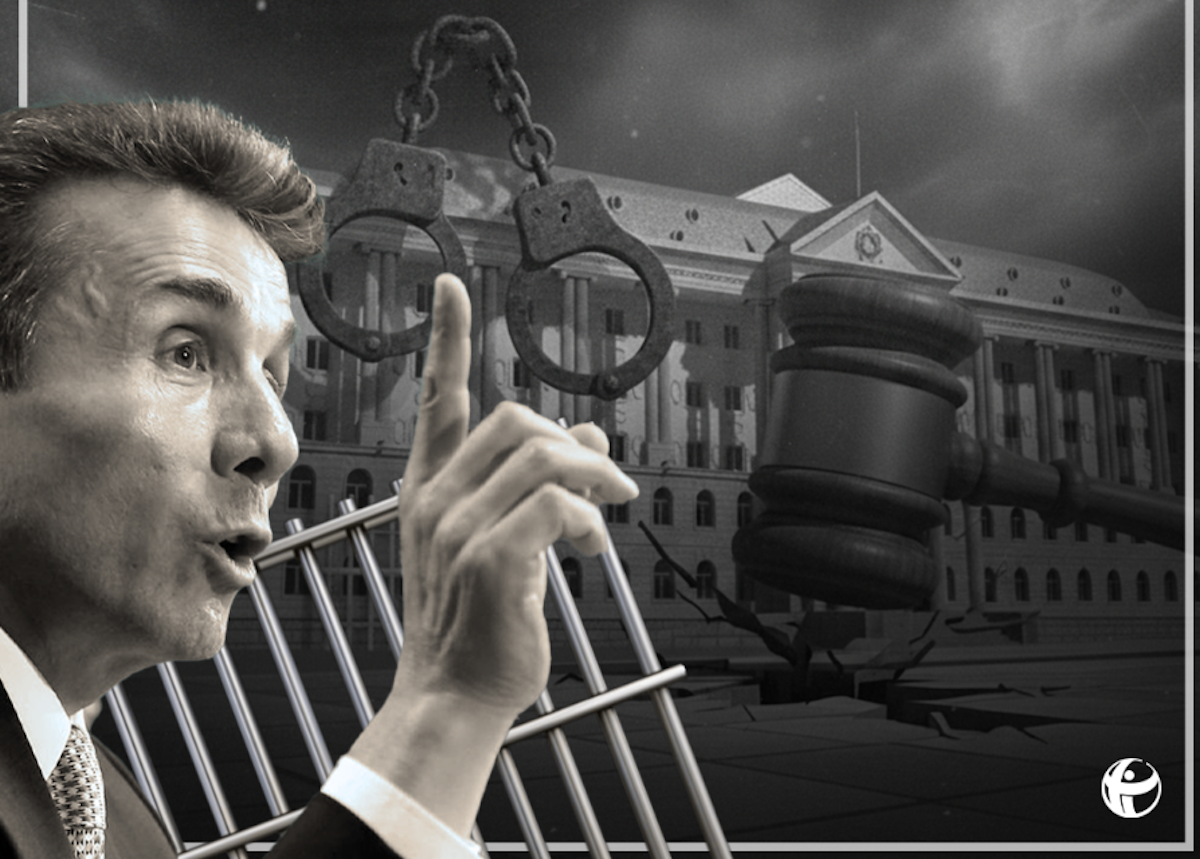
In a conclusion published on 1 April 2026, the Council of Europe’s expert body said the package of “repressive laws” significantly restricts freedom of association and expression, and undermines fundamental rights to privacy and participation in elections.
The expert body of the Conference of International Non-Governmental Organisations of the Council of Europe reviewed amendments adopted on 4 March 2026, which affected the law on grants, the law on political associations of citizens, the Criminal Code and other pieces of legislation.

According to the opinion, a significant portion of the amendments fails to meet the requirement of legality and raises serious doubts about whether they pursue a legitimate aim. Experts note that, given the scale of the restrictions and their impact, almost none of the provisions — with the exception of the criminalisation of foreign funding of political parties — can be regarded as necessary in a democratic society.
The expert council warns that, under current conditions, the enforcement of these laws would further aggravate the damage already inflicted on Georgia’s civil sector.
The document also stresses that the changes contradict the obligations Georgia has undertaken as a member of the Council of Europe, describing their adoption as “entirely unacceptable”.
On this basis, the experts call on the authorities not only to repeal the new laws, but also to suspend the implementation of provisions addressed in recommendations issued in 2024 and 2025.

Context
The legislative package approved on 4 March 2026 significantly broadens the definition of a “grant”, extending it to both financial and non-financial support if it can be used to influence the country’s domestic or foreign policy, including activities linked to the interests of a foreign state or political force.
The law also strengthens oversight by the State Audit Service over the issuing and receipt of grants. Funding provided to a branch operating in Georgia by a foreign legal entity without government approval may lead to sanctions, including fines amounting to twice the value of the grant.
In addition, violations of the grant law may entail criminal liability, with penalties ranging from fines and community service to imprisonment for up to six years.
The changes also affect the political sphere: individuals primarily working in organisations funded from abroad are barred from joining political parties for eight years. Restrictions imposed on political parties are also extended to entities that are not formally parties but are engaged in political activity.
The legislative package further tightens administrative liability for private companies if they become involved in public political activity.
One of the most controversial elements concerns amendments to the Criminal Code expanding the definition of “extremism”. Under the new provisions, public calls for actions against the constitutional order — including calls for disobedience to authorities or the creation of alternative structures — may be punishable.
Moreover, committing a crime motivated by non-recognition of constitutional authorities is treated as an aggravating circumstance, increasing the minimum sentence by at least one year.
According to the expert council, such wording allows for broad interpretation and raises the risk that the law could be used against dissent and critical voices.
On repressive laws in Georgia