'Will police now disperse protests on sidewalks too?' Video blog from protests in Georgia






Protests in Georgia — video
On the 381st day of continuous pro-European protests, demonstrators gathered as usual outside the parliament building in Tbilisi. The march began at the Philharmonic Hall and, due to the large number of participants, blocked traffic.
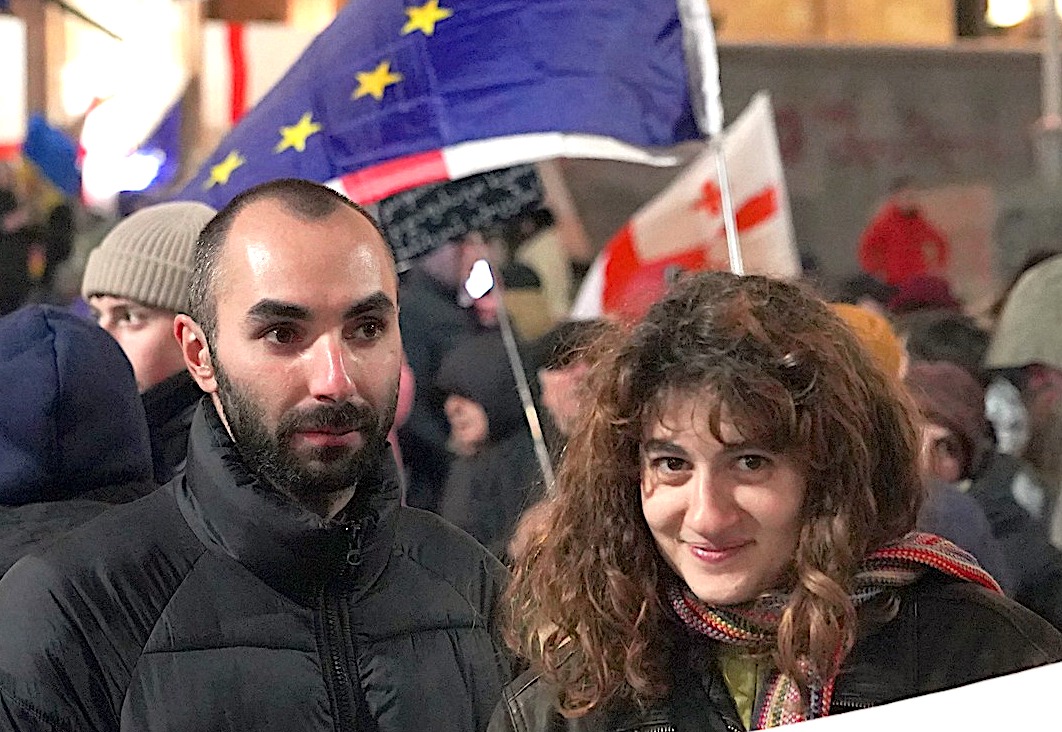
This is the first protest since the ruling Georgian Dream party banned gatherings on sidewalks. Under the legislative changes, organisers must notify the Interior Ministry five days in advance of any assembly or demonstration, even if it does not obstruct traffic. The ministry can propose a different time or location for the protest.
Protesters have added a new demand to their usual list. They now want answers about what chemicals were used in water cannons to disperse demonstrations. Demonstrators do not trust the state investigation and are calling for international involvement to establish the truth.
Earlier, the BBC published a detailed report claiming that, based on evidence gathered by its journalists, Georgian authorities used a chemical agent dating back to the First World War to disperse anti-government protests in 2025.
For more than a year – since November 2024 — continuous protests have been taking place in Georgia, with demonstrators demanding that the country return to the path of European integration. Every evening thousands, and often tens of thousands, gather in Tbilisi and several other cities. Over this time dozens of participants have been detained, many have faced criminal charges, and some have been sentenced to prison terms.
For the first time in the history of independent Georgia, the country has up to 150 prisoners of conscience, including women. Among them is Mzia Amaglobeli, founder of the popular outlets Batumelebi and Netgazeti. In 2025 she was sentenced to two years in prison for slapping a police officer.
Protesters demand the release of all political prisoners, new parliamentary elections – as they do not recognize the results of the 2024 vote – and the repeal of all anti-democratic laws adopted over the past two years.
To suppress the protests, the ruling Georgian Dream party has increasingly tightened repression against civil society and the media. However, protests in various forms continue.
Protests in Georgia — video