What is Azerbaijan’s new media and broadcasting council?






Azerbaijan’s Media and Broadcasting Council
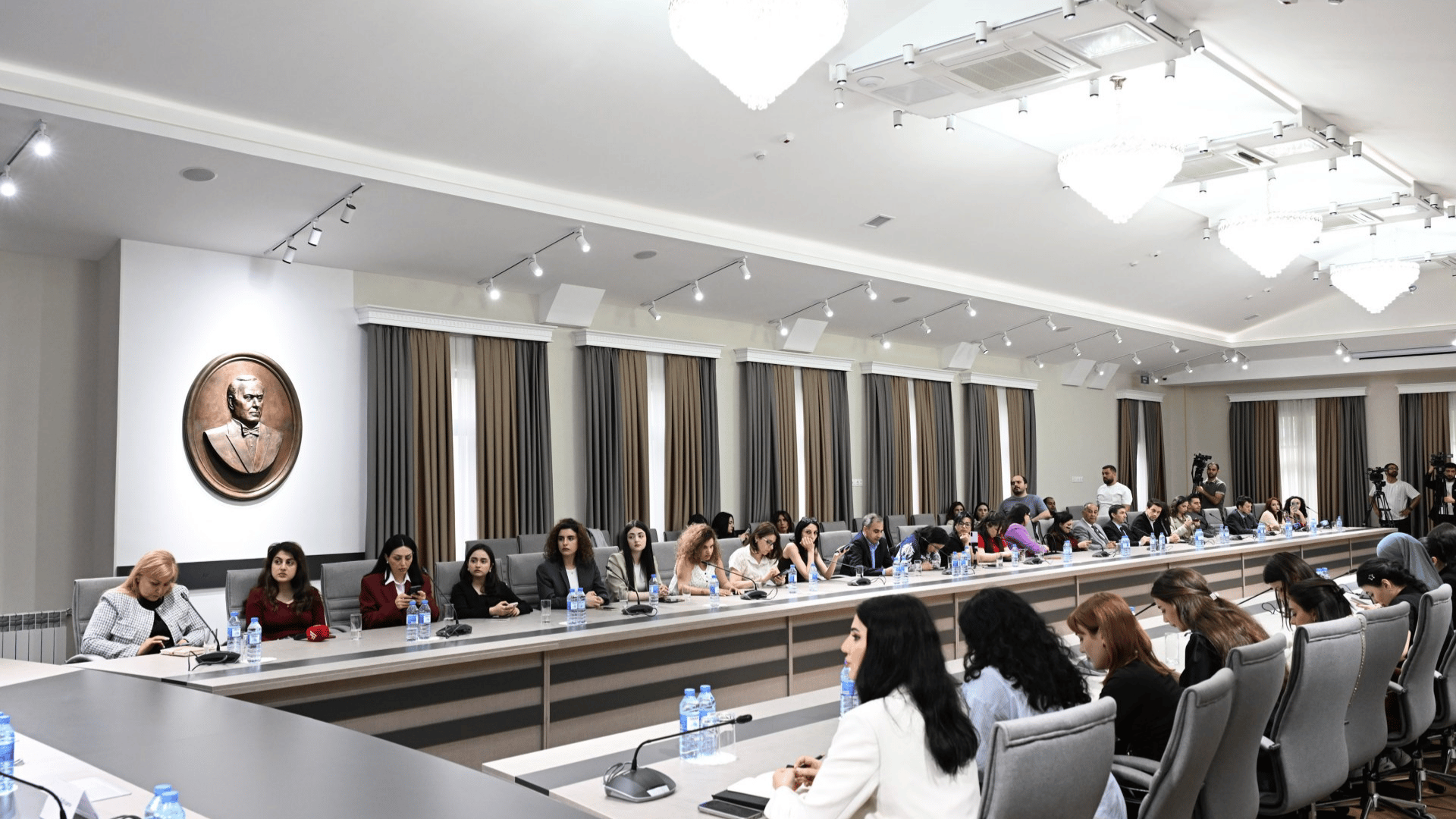
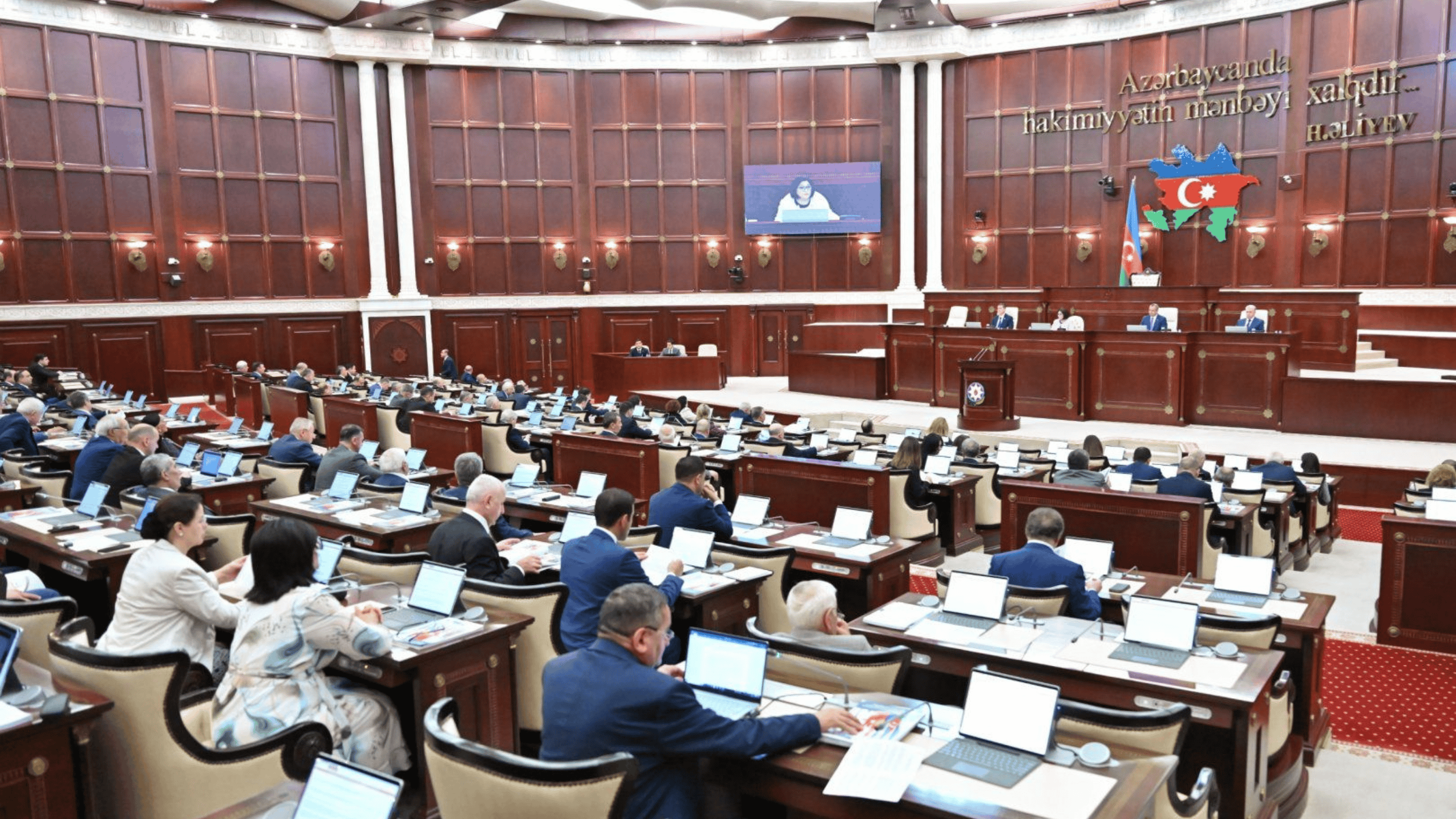
The package of amendments under discussion in the Human Rights Committee of Azerbaijan’s parliament affects the laws on media and the civil service. The most notable proposal would create a new Media and Broadcasting Council by merging the Media Development Agency and the Audiovisual Council.
According to information released during the committee discussion, the new body would become the state’s authorised regulator for the media and broadcasting sectors. It would assume the powers of the two existing institutions while also taking on additional responsibilities.
The initiative goes beyond a simple merger of two agencies. It would concentrate a wide range of functions within a single state body, including media development, maintenance of the media register, licensing, regulatory oversight, countering disinformation and analysing digital content across print, online and audiovisual media.
However, an important question remains: will this step simplify governance, or will it further centralise what is already a strong system of state control?
Publicly available information remains largely limited to news reports about the committee meeting, the current legal framework and materials published on the official websites of state institutions. As the full text of the draft law has not yet been made public, the analysis below is based on details disclosed during the committee discussion and the existing legal framework.
How does the current system work and what will change?
The current model dates back to 2021. On 12 January 2021, President Ilham Aliyev established the Media Development Agency (MEDIA) by presidential decree. The document justified the move as a way to support media development, continue institutional reforms and encourage the adoption of new information and communication technologies.
The decree placed overall oversight of the agency in the hands of a Supervisory Board consisting of a chairperson and six members appointed by the president. An executive director, also appointed by the president, oversees the agency’s day-to-day operations. During the same period, the 2021 Media Law brought Azerbaijan’s media sector under a single legal framework. The law separately defines audiovisual media, print media, online media and news agencies. In other words, the legal system has treated different types of media under a unified law since 2021.
This suggests that the current initiative reflects less a new concept than an administrative merger within an already unified legal framework. At the same time, audiovisual media remained subject to a separate regulatory structure. According to information published by the Audiovisual Council, the Media Law designates the council as the regulator of the audiovisual media sector.
The council operates with organisational and functional independence. It consists of seven members, including a chairperson. The relevant executive authority appoints its members. The council participates in drafting audiovisual media regulations, issues licences, conducts inspections and adopts legally binding decisions.
According to information on the MEDIA agency’s official website, the agency currently supports media development, organises professional training and continuing education programmes, assists journalists and media workers, promotes the introduction of new technologies, maintains the Media Register and places programmes and public service videos commissioned by the state. As a result, MEDIA has primarily handled development and support functions, while the Audiovisual Council has overseen licensing and broadcasting regulation.
What powers will the new council have?
According to details released after the committee discussion, the Media and Broadcasting Council will become Azerbaijan’s authorised state body for the media and broadcasting sectors. The new institution will assume the powers of both the MEDIA agency and the Audiovisual Council.
The executive branch will appoint the chairperson and council members. The members will then elect two deputy chairpersons from among themselves by a simple majority vote.
The key issue concerns the scope of the council’s powers. According to summaries published after the committee meeting, the new body will be able to take measures to strengthen the economic independence of media organisations, expand cooperation between the state and the media, organise training sessions and seminars for journalists, commission educational programmes and content, act as a state customer for audiovisual productions, take measures to prevent the spread of disinformation, analyse public opinion and the information environment, maintain the Media Register and issue journalist accreditation cards.
The council will also gain powers to analyse digital content in both media outlets and social networks. It will be able to refer suspected legal violations to relevant state authorities.
These powers extend well beyond the traditional role of an audiovisual regulator. Under the proposed model, a single institution would simultaneously function as a support body, an operator of financial instruments and state contracts, a body shaping expectations regarding ethics and balance, and a mechanism for oversight and intervention.
The legal text does not explicitly identify this as a problem. However, from an institutional perspective, the arrangement creates an obvious risk: for media organisations, the same body would become a source of support, a centre of official recognition and a potential source of sanctions.
Under the current law, journalist accreditation cards and the Media Register already function as state-controlled instruments. Article 70 of the Media Law states that authorities issue journalist accreditation cards only to journalists included in the Media Register.
Article 73 defines the register as a state electronic information resource that systematises information about media organisations and journalists. Article 74 sets out detailed and relatively strict criteria for inclusion. The new council would not only retain these instruments but also combine them with broader regulatory and analytical powers within a single institution.

Official rationale and potential advantages
The core argument put forward by officials and pro-government commentators is that digital transformation has blurred the boundaries between different types of media, making the previous system of separate regulation outdated.
The 2021 presidential decree also emphasised the need for “qualitative changes” in the media sector. It highlighted the importance of the global information environment, the widespread use of advanced technologies and modernisation. From this perspective, the 2026 initiative appears to represent the next institutional stage in the state’s media policy, which has been taking shape since 2021.
The new council would create a unified platform, effectively removing distinctions between television, radio, online media and the broader digital environment. It draws on consolidated international models such as OFCOM and ARCOM, strengthens the principle of a “single window” and could establish a mechanism for “unified crisis management” in the field of national information security.
This forms the core of the official narrative and the interpretation promoted by supportive media outlets.
These arguments have a certain practical logic. The MEDIA agency already oversees the media register, innovation initiatives, professional training and state-commissioned programmes, while the Audiovisual Council handles licensing and broadcasting oversight.
As a result, placing registry data, platform status, licensing functions and content-response mechanisms under one roof could speed up decision-making, reduce bureaucratic duplication and lower the risk of different state institutions responding inconsistently to the same issue across different media platforms.
However, these benefits can materialise only under one condition: the system must include clear procedures, transparent decision-making criteria, effective complaint and appeals mechanisms, public accountability and transparency.
Otherwise, a “unified approach” could easily evolve into “unified control”. Ultimately, that distinction will depend not only on the structure itself but also on how the institution operates in practice.
Key risks and criticism
A number of independent experts have expressed scepticism about whether the proposed changes will contribute to societal development. In their view, the initiative weakens mechanisms of public oversight and self-regulation, while many of its provisions represent a step backwards.
Critics focus particular attention on two broad new powers: the authority to analyse digital content across social media and media platforms, and the power to refer alleged legal violations to state bodies for possible sanctions.
These functions have heightened concerns among critics because they extend state oversight beyond the traditional broadcasting sector and apply it more systematically to the digital public sphere.
A second major concern centres on the operation of the Media Register. Media law expert Khalid Aghaliyev argued during the adoption of the Media Law that authorities apply the register selectively. He also said the requirement for “continuous activity” functions as a restrictive condition that limits media freedom.
Article 74.2 of the current law requires journalists seeking inclusion in the Media Register to hold a university degree, have at least three years of professional experience, possess no criminal record, work for a media organisation that is itself registered in the register and comply with ethical standards.
Critics therefore argue that the issue extends beyond the creation of a new council. In their view, the new institution would enforce an already controversial mechanism within a broader and more powerful institutional framework.
International legal standards also play an important role in the debate. In a 2022 legal opinion, the OSCE Representative on Freedom of the Media stated that several provisions of Azerbaijan’s Media Law impose serious restrictions on freedom of expression and media freedom.
The opinion also argued that safeguards for the independence of the audiovisual regulator remain insufficient and that state authorities hold excessively broad powers to restrict, suspend or terminate media services.
The Council of Europe, for its part, has emphasised that independent audiovisual regulators help create an environment conducive to freedom of expression. Recommendation Rec(2000)23 stresses that legislation should clearly define the powers of regulatory bodies, their accountability, appointment procedures and funding mechanisms.
The OSCE has likewise advocated the development of independent self-regulatory mechanisms.
For critics, the central question is therefore not simply whether a new institution will emerge. Rather, it is how independent that institution will be and where the boundary between state regulation and media freedom will ultimately lie.
Azerbaijan’s Media and Broadcasting Council