'We mutually closed page of enmity': Armenian Parliament Speaker on relations with Turkey






Armenian Speaker on Relations with Turkey and Azerbaijan
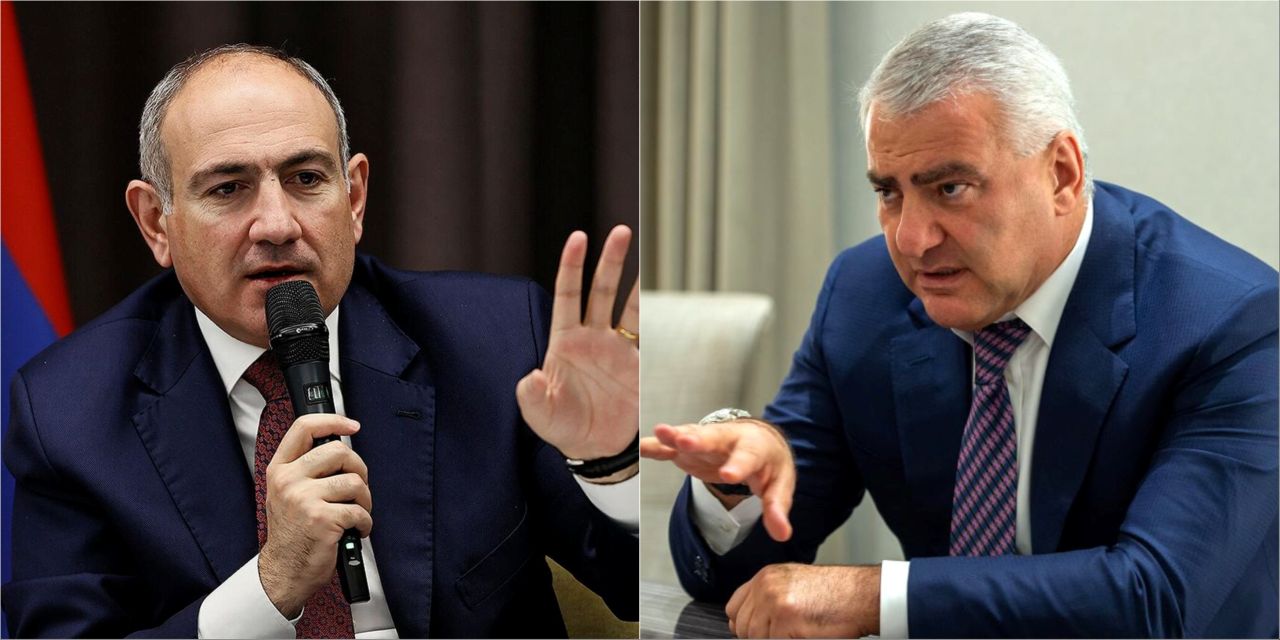
“I express my gratitude to the Turkish Foreign Minister and all our regional partners who support the position of the majority of Armenian society, calling for peace, trade, and the development of this trade within the framework of the TRIPP [Armenian-American transit project],” said Alen Simonyan, Speaker of the National Assembly of Armenia, during a briefing.
The day before, Turkish Foreign Minister Hakan Fidan spoke about the political will of the leadership of Armenia, Azerbaijan, and Turkey to resolve regional issues. He also mentioned the upcoming parliamentary elections in Armenia.
“Parliamentary elections will be held in Armenia in early June. This will be an important stage. At present, we see that, according to polls, Mr. Pashinyan is leading. We genuinely support his constructive role in addressing regional issues. It is essential that this political line and will continue,” Fidan said.
The Armenian Parliament Speaker emphasized that Fidan’s comments should not be seen as an “attempt at external interference” in Armenia’s affairs, as some local media and experts have suggested. He welcomed Fidan’s statement.
“Peace in the region has become a reality. We have mutually closed the page of enmity, and we must strengthen this peace,” Simonyan said.
During the briefing, Alen Simonyan also addressed the upcoming summer elections, the “Trump Route,” and the narrative regarding “Western Azerbaijan.”
Key points from the Armenian Parliament Speaker’s briefing below.
- Is normalization of Armenian-Turkish relations possible without Baku?
- Pashinyan says Armenia’s normalisation with Turkey is nearing
- Ararat to be removed from Armenia’s border stamps – bowing to Turkey?
“We will win a majority in the upcoming elections”
The Speaker of the National Assembly confirmed that the ruling Civil Contract party has approved its candidate list for the upcoming elections. He noted that selecting candidates was a challenging process, with each session lasting six to eight hours.
The final list includes both well-known figures and newcomers.
“Almost 400 people applied to be included on the Civil Contract party list. This shows that people understand the party will win a majority in the upcoming elections. There is no need to give anyone bonuses for that,” he said, responding to accusations that pre-New Year bonuses for MPs and government members were a form of “pre-election maneuvering.
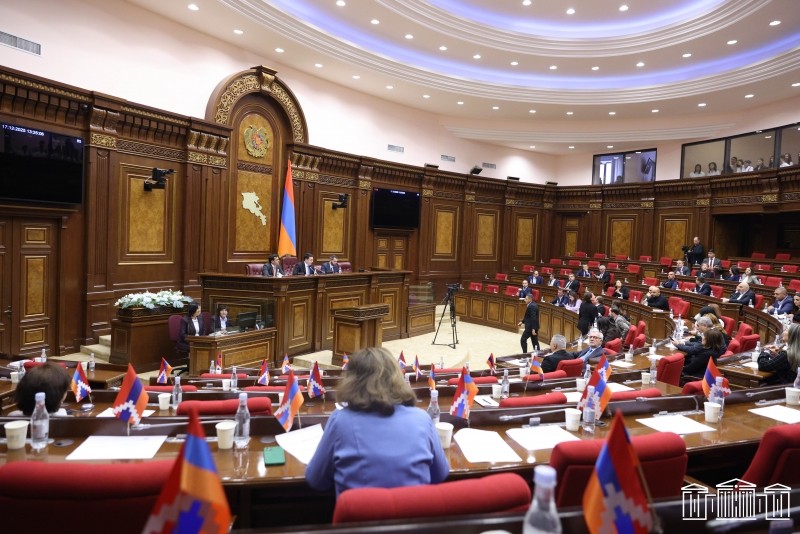
“The U.S. will ensure security for 49 years” — on the TRIPP project
Speaking about the “Trump Route” project (TRIPP), Speaker Alen Simonyan emphasized that the agreement has been signed for at least 49 years. This means that “for at least 49 years, the United States will, to a considerable extent, help ensure the security of Armenia’s borders and territory.”
TRIPP (Trump Route for International Peace and Prosperity) is a road that will connect Azerbaijan with its Nakhchivan exclave through Armenian territory.
For several years, Yerevan and Baku could not reach an agreement on this issue. Azerbaijan demanded the provision of a road it called the “Zangezur corridor.” Armenian authorities responded that they were ready to unblock all roads but did not agree with the term “corridor,” which implies a loss of control and sovereign rights over the territory.
Only on 8 August, in Washington, the parties agreed that the road would remain under Armenia’s sovereign control, with the U.S. acting as a business partner in the unblocking process. The project was subsequently named the “Trump Route” after the mediator.
“TRIPP is a security system not only because we are starting to trade [with Azerbaijan], which strengthens peace. The United States has its own interests here. In addition to other partners — European and Russian, who have economic interests here — the U.S. also has a stake,” Simonyan explained.
The Speaker reminded that Armenia had previously followed a different approach:
“We were friends with a single center. And that center, when it suited them, or when they had other priorities, used us as a bargaining chip.”
Now, he said, Armenia is pursuing a different policy, building relationships with its nearest neighbors and establishing alliances with various countries, including members of the European Union.
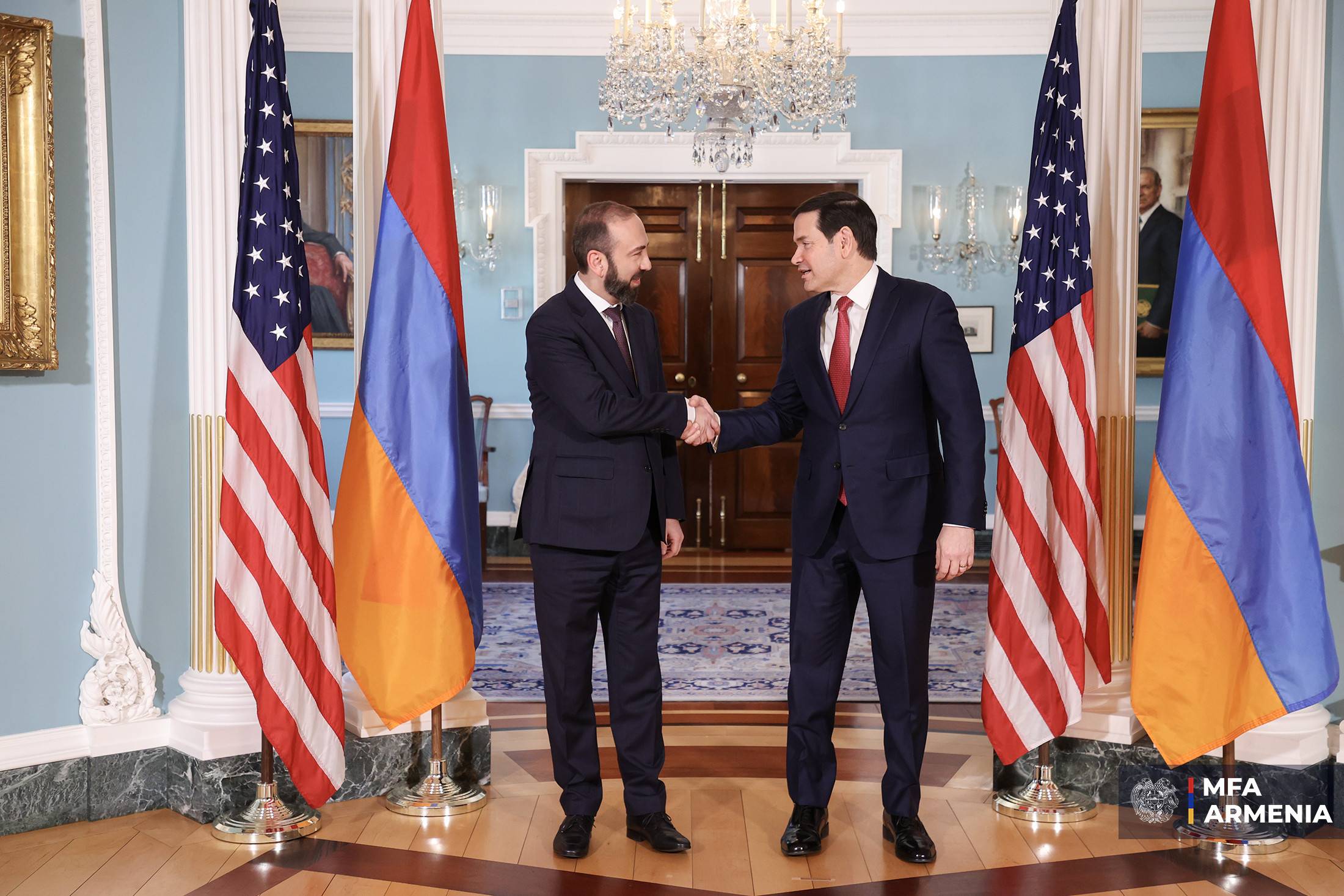
“Don’t you notice the changes?” – on the ‘Western Azerbaijan’ narrative
Journalists expressed concern that Armenian authorities continue to speak of established peace in the region, while the President of Azerbaijan personally funds the promotion of the “Western Azerbaijan” narrative.
Baku began actively promoting the “Western Azerbaijan” narrative in December 2022, which effectively refers to the entire sovereign territory of Armenia. Armenian authorities, including Prime Minister Nikol Pashinyan, have repeatedly stated that there can be no “Western Azerbaijan” on Armenian territory. According to him, the term can only apply to the western part of Azerbaijan itself.
The Speaker of the National Assembly responded that it is naive to assume any political narrative in Azerbaijan could exist without the knowledge of the head of state. He added, however, that he does not have information regarding funding.
Regarding the spread of the “Western Azerbaijan” narrative and claims about returning Azerbaijanis to “the homeland of their ancestors,” Simonyan said the Armenian leadership is aware of these statements and is engaging with the Azerbaijani side:
“These statements are changing. Compare the statements of their president, his aide, and the foreign minister from 3–4 years ago with today. Don’t you notice the changes?”
The Parliament Speaker acknowledged that problems remain, but emphasized that peace has been established and must be preserved:
“Of course, Azerbaijan takes certain negative steps, and we make this clear to them.”
Новости в Армении