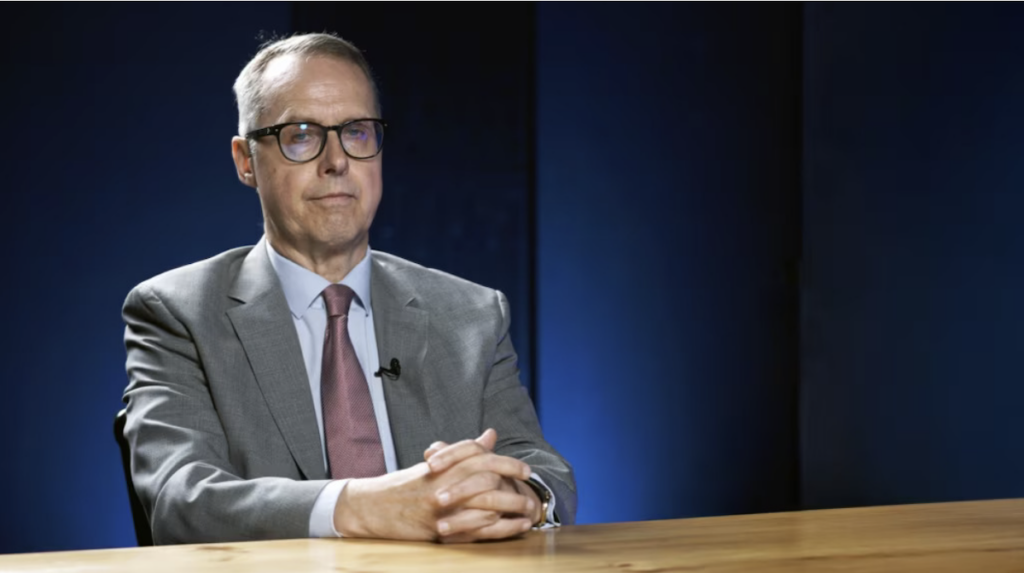
“Turning point came in early 2024': German envoy to Georgia in farewell interview






Peter Fischer is set to conclude his diplomatic mission in Georgia soon. Germany’s ambassador says that in his 40-year career, Georgia has been the only country where he has witnessed what he describes as a “regression” — a country that had been moving towards the European Union but, over the past year and a half, has taken the opposite direction.
Fischer recalls that during the first years of his time in Georgia, he had close and cooperative relations with the authorities. According to him, everything changed in early 2024.
The ambassador spoke about this in a wide-ranging interview with Batumelebi.
“In 2023 we celebrated together — by 2024, everything had changed”
The ambassador says that in December 2023, after Georgia was granted EU candidate status, he stood in Tbilisi’s Freedom Square alongside Georgian officials and took part in the celebrations.
“I remember leaders of the ruling Georgian Dream party patting me on the back and saying: ‘We did it! Candidate status!’” Fischer recalls.
However, he says, within a few months the situation changed dramatically: what he describes as “hostile rhetoric” towards the West, the European Union and Germany emerged, followed by the adoption of laws that, in his view, are incompatible with EU standards.
Fischer says the same period also saw the rise of an “atmosphere of intimidation”, growing pressure on civil society and more frequent human rights violations.
“This is not a personal conflict”
The ambassador rejects claims by representatives of the ruling Georgian Dream party that his position is based on personal views.
“I am a professional diplomat. I represent the position of the government of the Federal Republic of Germany,” he says.
According to Fischer, narratives about a “global war party”, the “deep state” and “liberal fascism” are conspiracy theories that the authorities have created to support their own policies.
“I have worked in the German government for 40 years and have never seen any ‘deep state’,” the ambassador says.
Fischer believes attacks against him also serve as a “warning” to other diplomats. But he adds that what critically minded citizens in Georgia face is far more difficult.
“It is important not to overstate the significance of the Middle Corridor”
“The European Union consists of 27 member states, and I cannot speak on behalf of all of them, but I do not believe they will turn a blind eye to this. Germany certainly will not. Human rights matter significantly. Like Georgia, we are bound by international agreements: the UN human rights conventions and the European Convention. We have a legal obligation to defend human rights around the world.
Germany also carries this responsibility because of its own history — we ourselves were serious violators of human rights, and people fled Germany in search of refuge. So the answer is no. Transit routes and connectivity matter, but not to the extent that we would trade our values for a few kilometres of motorway or the transport of several containers.
It is also important not to exaggerate the significance of the Middle Corridor. Ultimately, our interests are best protected when our values are upheld. We believe freedom and human rights are good for the economy, business and development. German companies do not like investing in authoritarian countries,” the ambassador says.

“My successor will say the same things I am saying”
Fischer says Germany’s next ambassador to Georgia will also represent Berlin’s official position.
“It will be a woman, and she will be just as much of a professional as I am,” the ambassador says.
According to Fischer, Germany remains a friend of Georgia. However, he says Berlin will not avoid public criticism when it comes to violations of EU standards.
Sanctions, Hungary and visa-free travel
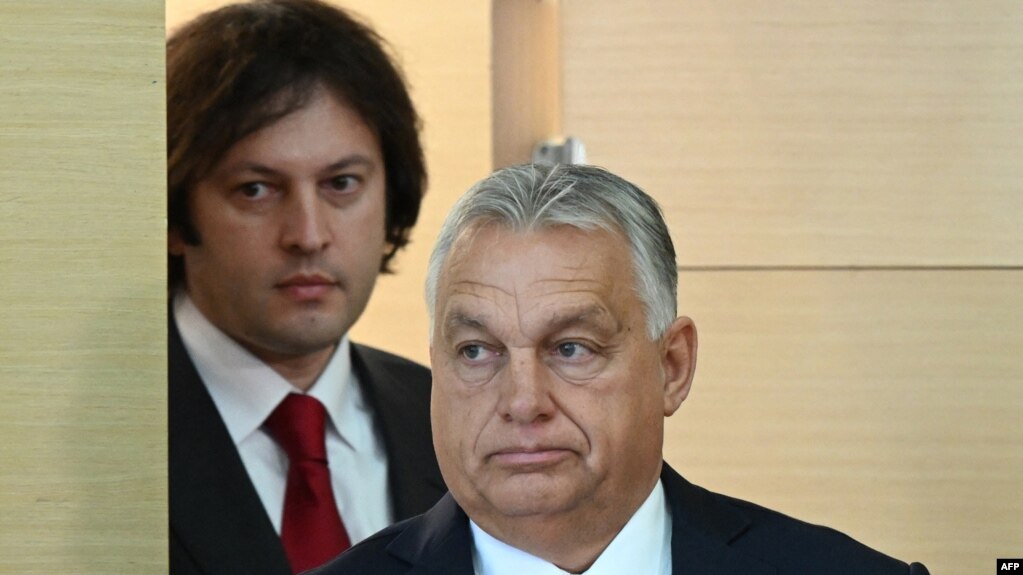
Fischer confirms that Hungary has often blocked sanctions related to Georgia within the European Union. However, he says political changes in the country could also alter that situation.
According to the ambassador, the European Union has three legal mechanisms for imposing sanctions on citizens of foreign states:
- human rights violations;
- support for Russia’s war of aggression;
- foreign information manipulation and interference (FIMI).
The ambassador also addresses the issue of visa-free travel between the EU and Georgia, saying the bloc does not want to suspend it.
But he adds that visa-free travel is an “exceptional privilege”, rather than an unconditional right. As such, its continuation depends on meeting certain obligations.
Pro-government media and propaganda
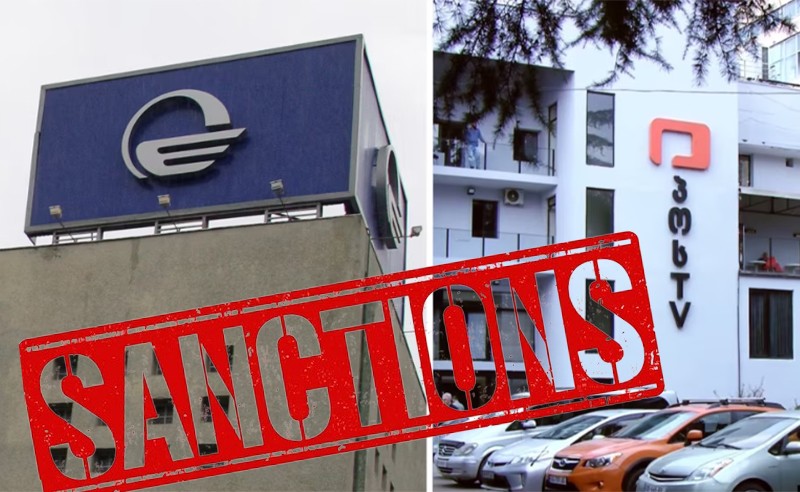
Fischer says some pro-government Georgian media outlets are, in reality, not news organisations but “political combat machines”.
In his view, the messaging promoted by these channels often mirrors Russian narratives — both in content and timing.
“These are anti-liberal, anti-Western, anti-European and anti-German sentiments,” he says.
The ambassador does not rule out the possibility that the European Union could in future use the FIMI mechanism — aimed at countering foreign information manipulation and interference — against such outlets.
“Relying on the AfD is a 100% contradiction”
Fischer strongly criticises attempts by the ruling Georgian Dream party to present the far-right Alternative for Germany (AfD) as a natural partner.
According to him, the AfD opposes EU enlargement, visa liberalisation, common European policies and migration.
“If you ask the AfD, they will tell you they do not want Georgia to join the European Union,” the ambassador says.
In Fischer’s assessment, hoping that the AfD or similar forces could help advance Georgia’s European integration is “a complete contradiction”.
“Germany has spent nearly €2bn on Georgia”
According to the ambassador, Germany’s official development assistance to Georgia amounts to roughly €2bn.
Fischer lists projects supported by Germany, including:
- electricity transmission infrastructure;
- water supply systems;
- national parks;
- vocational education;
- scholarships and exchange programmes.
“Water supply in Batumi is almost entirely Germany’s achievement,” he says.
According to Fischer, this cooperation was built on the belief that Georgia would continue developing along the path of Euro-Atlantic integration.
“Georgia is the only country where I have witnessed regression”
The ambassador says he has worked in China, Singapore, Israel, the United Arab Emirates and the United States. Yet, he says Georgia stands out as the only place where he has personally witnessed democratic backsliding.
“No other country where I have worked has moved from a good situation to a worse one,” Fischer says.
He adds that because Georgia is a candidate country for EU membership, ambassadors representing EU member states have a duty to speak openly about the country’s problems.
Three possible paths for Georgia
Fischer says he sees three scenarios for Georgia’s future.
The first, which he describes as a “golden future”, is membership in the European Union — a path he says would bring peace, prosperity and security.
The second scenario is that Georgia remains independent but becomes an isolated country within the region.
The third, he says, would involve a shift towards an authoritarian system without Western standards or partners.
“If the Georgian people choose Europe, I believe they will eventually get it,” Fischer says.

“Georgia was never just an episode for me”
As his diplomatic career comes to an end, Peter Fischer is returning to Berlin. He says he will leave Georgia with “many friends in my heart”.
“I do not want Georgia to miss its chance,” he says in conclusion.
The ambassador says he remains convinced that Georgia’s European future is still possible — and that the final choice ultimately depends on Georgian society.
Interview with Germany’s ambassador to Georgia