To prison for “insults” — a fine for childfree






How Transnistria is copying Russian laws and what can be done about it.
Based on a publication by NewsMaker.md
The unrecognized Transnistria has existed for more than 30 years, remaining a legal gray zone of Moldova. And while Chișinău is preparing to join the European Union, Tiraspol continues to introduce new repressive laws against the local population. Over the past nine years, arrests and criminal cases for Facebook posts and any opinions inconvenient to the de facto authorities have become common in the region. How Transnistria has all this time been inspired by Russian legislation, and what has so far been achieved—or not achieved—by Chișinău and the international community is examined with lawyers and political scientists in a new NM special project, “According to the Rules.”
From a “gray zone” to a “black zone”?
The Transnistrian region of Moldova has lived by its own rules for more than 30 years. This unrecognized— including by Russia—entity has its own authorities, security forces, and courts. At the same time, Moscow continues to maintain a military presence there and financially support the region, including through gas supplies and pension supplements.
Although Moldovan citizens can move relatively freely between the two banks of the Dniester River, the situation with human rights on the left bank—especially freedom of expression—has been steadily deteriorating in recent years.
For several years now, de facto power in the region has been concentrated in the hands of the Sheriff conglomerate, the largest commercial structure in Transnistria. The company controls a significant share of major business, from supermarket and gas station chains to a football club. Under Sheriff’s control, along with its owner Viktor Gushan, is also the “Renewal” party.

In the 2015 elections, the “Renewal” party won an absolute majority of seats in the local parliament, the Supreme Council. The consolidation of power did not stop there: in 2016, the position of regional leader—the “president of the PMR”—was taken by Vadim Krasnoselsky, also a nominee of “Renewal” and “Sheriff”.
In the elections to the Supreme Council held on November 30, 2025, “Renewal” once again won. Most candidates were elected in their districts without any opponents.
As a result, “Sheriff” and affiliated politicians have controlled the region for nine years. It is during this period that Transnistria has adopted or begun actively enforcing a record number of laws restricting political freedoms and freedom of expression. People are being imprisoned for social media posts.
2018 – … “Foreign agents”
It started with human rights defenders. In 2018, Transnistria adopted a law prohibiting local non-governmental organizations (NGOs) from engaging in “political activity” using foreign funding. It should be noted that for the de facto Transnistrian authorities, funding from Moldova is also considered “foreign.”
The prosecutor’s office was given the right to seek the dissolution of NGOs through the courts in case of violations. Although the law does not explicitly mention “foreign agents,” in practice it operates according to the model of the Russian analogue. The Transnistrian law significantly restricts the activities of human rights defenders and organizations working on the basis of foreign grants.
The law entered into force in May 2018, and already that autumn it had its first victim.
It was the local information and legal center “A priori,” which had been operating in the region since 2008. The center organized public lectures and film screenings, and one of its key missions was legal advocacy. “A priori” monitored and published information on the human rights situation in Transnistria, provided legal assistance in individual cases, and worked to ensure that cases from Transnistria reached the European Court of Human Rights.
Prosecutors came to “A priori” just three months after the law came into force. Years of legal battles followed. Eventually, the center’s work became impossible: in 2024, “A priori” was shut down.
“In order to avoid the profanation of our mission as a civil society organization by ‘working’ under such conditions, we decided to close,” reads a statement by the head of the center, Yevgeny Dunaev, published on the “A priori” website.
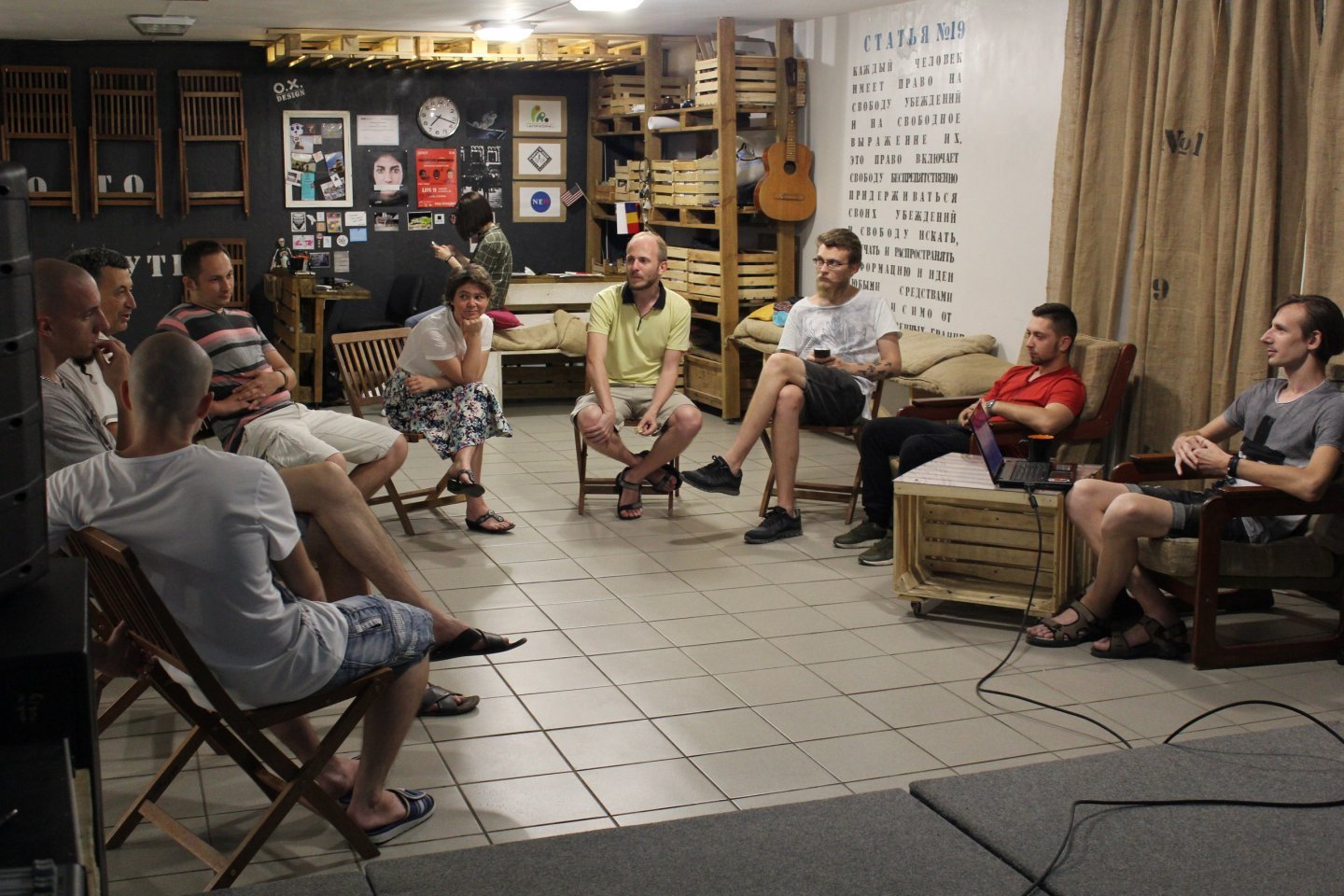
There are no other NGOs in the region providing similar legal support.
“Everything has been completely suppressed. We can no longer speak of either progress or regression [in human rights], because there are no forces left to resist it. The authorities existing in Transnistria have achieved their goal,” said human rights defender Stepan Popovsky in a comment to NM.
2019 – … “Insult offenders”
In Transnistria, there has long been a ban on “denying the positive role of Russian peacekeepers” in the region. Since 2019, new “insult” articles have appeared in the local Criminal Code: criminal liability was introduced for “insulting the president of the PMR” and “insulting representatives of authority.” This category has become one of the most common in terms of arrests and criminal cases.
The basis for accusations can be anything—a social media post or even a phrase spoken in a private conversation that is later reported to the authorities. Most of those known to have been convicted under these articles are pensioners.
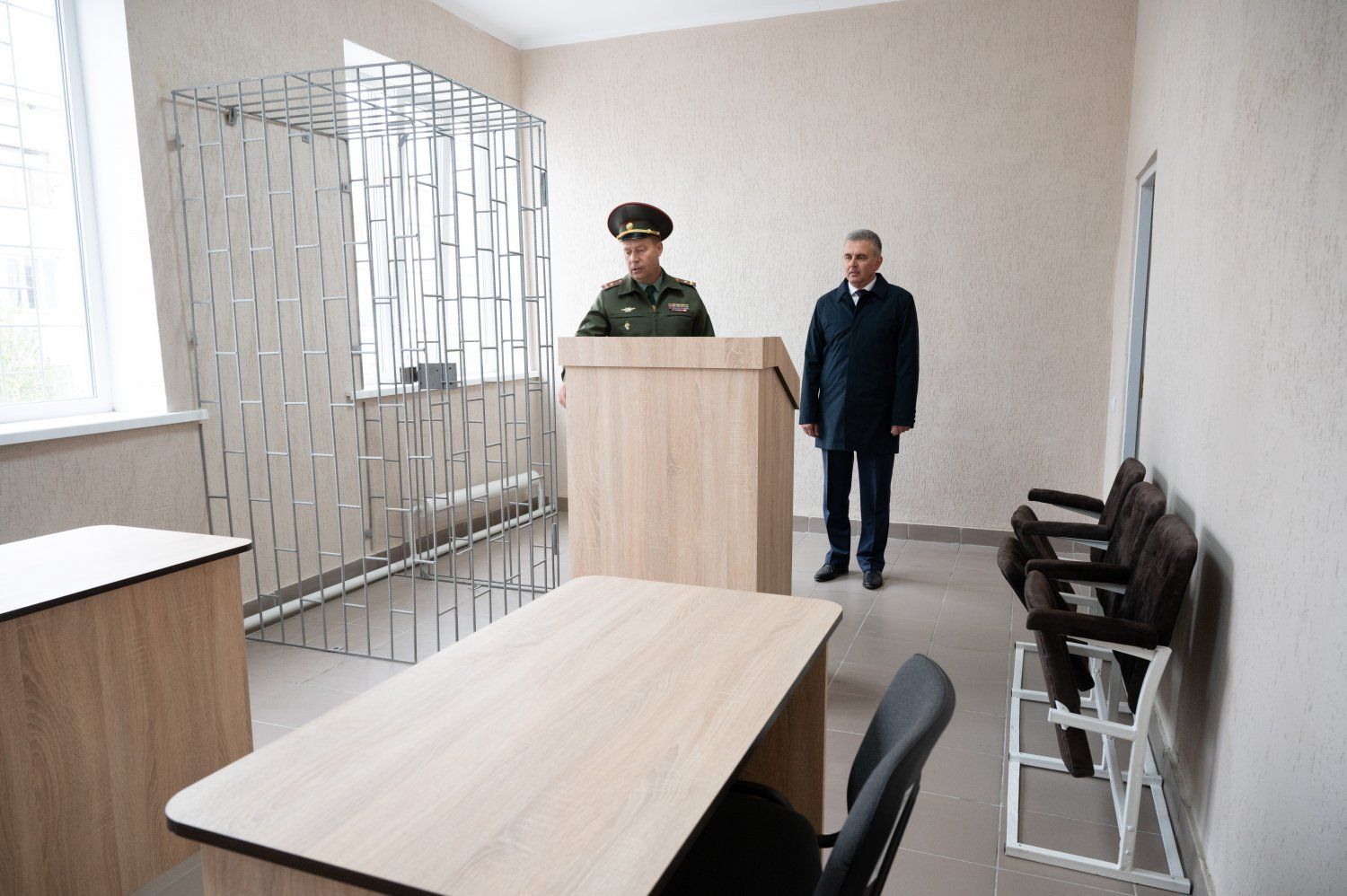
In August 2019, NewsMaker first learned about the arrest of spouses Tatyana Belova and Sergey Mirovich from the Slobodzeya district. They were detained for posts in a Telegram channel that investigators considered public insults against Vadim Krasnoselsky. Both were sentenced to three years in prison: Belova was released after one year following a “plea bargain,” while Mirovich spent two years in prison.
Another well-known case involved pensioner Mikhail Ermuraki. In 2020, he was charged under all three “insult” articles at once. The case was triggered by an article he had written and handed to the director of a school in Tiraspol. According to her testimony, during their conversation Ermuraki “repeatedly insulted the region’s leader.” The conversation itself was recorded on a voice recorder. In 2023, the pensioner was sentenced to three years in prison. He was released in 2025 under pressure from Chișinău at the age of 73.
Under the article on “insulting Russian peacekeepers,” a criminal case was also opened against a janitor, Pavel Dogari from Bender. In November 2022, he was accused of “denying the positive role of Russian peacekeeping forces” because of a Facebook post. The trial was classified, and Dogari was forced to flee Transnistria. He still cannot return home.
These are only isolated examples. Under the “insult” articles in Transnistria, cases have been brought not only against a young comedian, but also against a local opposition politician—a woman over 70 years old.
2019 – … “Extremists
Since the time when the “Sheriff” holding effectively concentrated power in the region, Transnistria has increasingly applied laws related to “extremism.” In particular, several criminal cases were opened on charges of “calls for extremist activity,” including for statements made on the internet and in the media.
For example, in 2020, a criminal case on “extremism” was opened against 22-year-old journalist Larisa Kalik. The reason was a small book containing anonymous interviews with soldiers of the “Transnistrian army,” in which young men described their personal experiences of service. The book contained no military information. Under the threat of criminal prosecution, Kalik was forced to leave the region and still cannot return home.
In the same year, 2020, the unrecognized republic adopted an “Anti-Extremism Strategy,” which expanded the powers of local security structures. At the same time, the definitions of what could be considered “extremism” became even more vague.
One of the most well-known cases in recent years was the prosecution of a resident of Tiraspol, Viktor Pleshkanov. In 2022, after the start of Russia’s full-scale invasion of Ukraine, he openly expressed support for Ukraine on social media. Pleshkanov was later detained after he bought fabric for a Ukrainian flag in Tiraspol and, in a private conversation, said: “And let the MGB (local security service) screw itself.”
Pleshkanov was held in pre-trial detention for a long time and later sentenced to 3 years and 2 months in prison for “public calls to extremism via the internet and media.”
The trial was held behind closed doors. It later emerged that the main basis for the charges was an alleged Facebook post—“Glory to Ukraine. Death to the PMR”—the existence of which was discussed only on the basis of witness statements: investigators did not provide screenshots or any other evidence. In 2024, Viktor Pleshkanov was released under a pardon decree. He spent about two years in detention because of a social media post.
Under the “extremism” articles, other local activists and opposition politicians were also prosecuted. Some managed to leave the region. An activist from Rybnisa, Gennady Chiorba, spent a year in prison for publications related to the COVID-19 pandemic and for protesting against restrictions on leaving Transnistria.
It should be noted that such practice largely mirrors recent trends in Russia, where opposition figures are added to lists of “terrorists and extremists,” and entire organizations are declared threats to security.
2022 – … “Treason”
The Soviet-era article on state treason has also become relevant in Transnistria. Under it, a person in the region can face up to 20 years in prison. It should be noted that penalties for treason exist in many internationally recognized countries. The difference is that in Transnistria there is no access to independent justice, and “treason” is interpreted very broadly.
In 2022, Vadim Pogorletskiy was detained in the region. The pretext was that he had photographed a military unit. For this, he initially received seven years in prison. Later, the charge was changed to state treason, and the case was classified. Ultimately, Pogorletskiy was sentenced to 16 years in prison. From August 2022, he stopped communicating. Human rights defenders, the authorities in Chișinău, and international missions have repeatedly demanded his release.
In November 2025, he was released under pressure from international diplomats and Chișinău. In total, Pogorletskiy spent three years in detention—because of a photograph.
2024 – … “Nazi propagandists”
A year ago, Transnistria expanded the list of articles related to “extremism.” According to new amendments, the use of the name “Transnistria” in reference to the Pridnestrovian Moldavian Republic is equated with an expression of Nazism and is treated as extremism. The law includes a clause stating that if there are no signs of “Nazi propaganda,” the use of this term is permitted. However, it is unclear who and how will determine the context. A violation carries a fine or up to 15 days of arrest.
It should be noted that in Latin script, “Transnistria” is a widely used designation for the region in Romanian, and does not necessarily refer to the World War II-era “Transnistria” administrative unit.
As of publication, there is no information on whether there have already been court decisions under this article.
2025 – … “Propagandists of non-traditional values”
In the summer of 2025, the Supreme Council of Transnistria adopted a new package of draft laws “aimed at banning the promotion of non-traditional values among adults and children.” In Tiraspol, “non-traditional values” are understood to include gender transition, same-sex relationships, and refusal to have children (childfree).
“Promotion of non-traditional values” is now punishable by fines. Individuals will be fined €100. If the offense is committed against minors via media or the internet, or by foreign citizens (including citizens of Moldova) or stateless persons, the fines are higher.
Human rights defender Vadim Vieru from the Chişinău-based Promo-LEX Association said that in 2025 there have been no mass court decisions under the new articles involving real arrests.
“The purpose of these norms is different—intimidation (a chilling effect). Representatives of vulnerable groups and activists are forced to go completely underground. The very existence of such an article gives the ‘MGB’ room to summon people for interrogations and to pressure activists with threats of public outing or administrative arrest,” Vieru explained.
The new Transnistrian laws largely mirror Russia’s policy toward the LGBTQ community and gender-related issues. In Russia, restrictions were introduced gradually: starting with a ban on “LGBT propaganda” for minors in 2013, and continuing in 2024 with the designation of the “LGBT movement” as an “extremist organization.” Since 2024, “childfree propaganda” has also been banned in Russia. In the Transnistrian region, the de facto authorities have banned the entire spectrum of “non-traditional values” at once.
Is the path to Chișinău’s courts “blocked”?
One way for residents of Transnistria to try to defend their rights has traditionally been to apply to Moldovan courts or law enforcement agencies, and then—if necessary—to the European Court of Human Rights (ECHR).
However, since 2022 even this has become more difficult. Articles were added to the Transnistrian Criminal Code on “assistance to foreign states in the criminal prosecution of officials of… Transnistria.” A violation of this article carries a fine or imprisonment of up to five years. If committed by an organized group, the prison sentence for each participant can increase to up to eight years.
Thus, attempts by residents of the region to defend themselves through courts or prosecutors in Chișinău may themselves expose them to the risk of an additional prison sentence.
“This is Tiraspol’s response to the ‘Law on Separatism’ adopted by Chișinău. Amendments were introduced to the local ‘Criminal Code’ expanding the definitions of ‘state treason’ and ‘espionage.’ Any contact by a resident of the region with Moldovan law enforcement authorities (filing a complaint with the police or the prosecutor’s office of the Republic of Moldova regarding the actions of Transnistrian officials) can now be interpreted by Tiraspol as an act threatening the region’s security. This has created an unprecedented barrier. People are afraid to sign documents and to seek help from human rights defenders in Chișinău, fearing that this could be classified as ‘cooperation with foreign intelligence services.’ We are observing a sharp decline in the number of formal complaints due to fear of repression,” explained Vadim Vieru.
However, Tiraspol-based human rights defender Stepan Popovsky notes that this measure is unlikely to be officially enforced for now. The de facto authorities have not yet approved all the documents related to this amendment.
“In the final reading, they added that it is prohibited to apply to institutions included in a list approved by the president. But when this list will be approved is unclear. A large campaign was carried out to inform people about this measure in order to intimidate them, but no one knows about this latest amendment,” the expert explained.
According to Stepan Popovsky, in the case of the Transnistrian region, applying to the European Court of Human Rights is almost a guaranteed success. The human rights defender is convinced that Moldova, under the Convention on Human Rights, is obliged to seek ways to help residents of Transnistria avoid violations of their rights—for example, through political or diplomatic means.
Stepan Popovsky believes that Chișinău is not fully fulfilling these obligations. According to him, high-profile releases are largely the result of the work of international organizations rather than Moldovan authorities. Moreover, he notes that appeals to Moldovan courts are also complicated by the language issue.
“Proceedings in Transnistria are conducted in Russian. In Moldovan courts, information is required in Romanian. There can be a large number of documents, and translation services may take a lot of time and money,” the human rights defender explained.
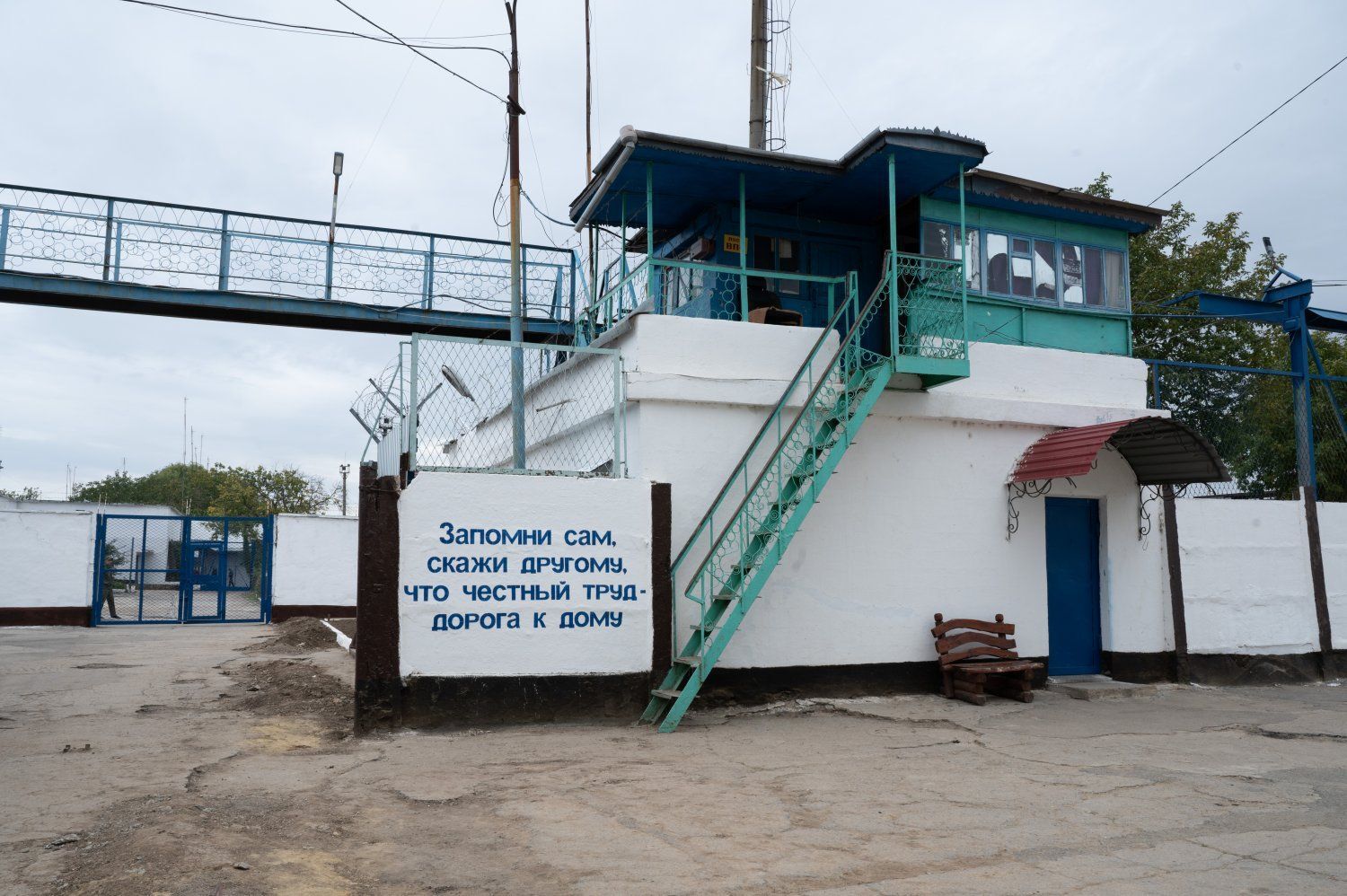
According to human rights defenders, it is currently impossible to reliably obtain assistance in Transnistria: human rights NGOs are effectively banned, local courts operate behind closed doors, and обращения to Moldovan authorities are difficult.
“The outlook for the near future is negative. There are no signals of liberalization. On the contrary, control will only increase. As long as Tiraspol feels economically stable (thanks to exports to the EU) and, most importantly, does not feel the inevitability of punishment from Moldovan justice (the absence of real criminal cases and verdicts against human rights violators), the situation will not change,” concluded Vadim Vieru.
How many victims are there overall?
Many of the cases in recent years have been resolved thanks to the efforts of international diplomats. Several residents of Transnistria remain in hiding and cannot return home due to active criminal cases. However, all the introduced norms remain in force.
“The human rights situation in the Transnistrian region continues to be deplorable. We receive numerous reports of serious violations from victims, their relatives, lawyers, civil society, and the media,” the Moldovan Bureau for Reintegration told NM.
However, no more precise data was provided.
How many political prisoners or people facing pressure for their views there are in Transnistria cannot be stated precisely by human rights defenders—neither from the left nor the right bank. Many victims are afraid to seek help, including because of new restrictions. The Moldovan Prosecutor’s Office currently has 35 cases related to human rights violations in Transnistria, but this figure is approximate. According to Transnistrian human rights defender Stepan Popovsky, full information about political prisoners in the region is classified.
Human rights defender Vadim Vieru from the Chișinău-based Promo-LEX Association told NM that his organization continues to document cases of politically motivated persecution in the Transnistrian region.
“We are talking about dozens of residents of the region whose rights are being seriously violated. As for those currently in detention, at the moment Promo-LEX provides legal assistance to 6 beneficiaries convicted under clearly political charges. It is important to emphasize that we are speaking only about cases within our caseload. The real number of political prisoners is undoubtedly higher. Due to the atmosphere of fear and information isolation, many relatives are afraid to turn to human rights defenders. We simply do not know about all cases of arrests. In addition, statistics do not include those who are prosecuted under ordinary criminal charges fabricated to conceal political motives,” explained Vadim Vieru.
Learning about human rights issues in Transnistria is becoming increasingly difficult for other reasons as well. Since February 2022, journalists who arrive in the Transnistrian region to work without accreditation from the local “foreign ministry” are detained, fined, or deported from the region.
NewsMaker is not aware of any cases in which reporters from Chișinău have been officially allowed to work in Transnistria since 2022, except for attendance at meetings of the Joint Control Commission. The NewsMaker editorial team also submitted accreditation requests in 2024, but they were denied. All local media outlets are controlled by the local authorities and the “Sheriff” holding.
In response to a NewsMaker inquiry, the Moldovan Bureau for Reintegration noted that the issue of denying access to journalists in the Transnistrian region has increasingly been raised at meetings of political representatives in recent years and is being discussed with international partners.
“The position of Chișinău is that journalists should be guaranteed the right to carry out their professional activities under equal conditions throughout the entire territory of the country, without the imposition of unreasonable requirements,” the Bureau stated in its response to NM’s request.
What can be done?
Experts agree that problems with human rights in Transnistria can be addressed at least partially even from Chișinău. Former Moldova’s permanent representative to the UN and the Council of Europe, political analyst Alexei Tulbure, noted in a comment to NM that, from a legal perspective, the international community and Chișinău have the right to intervene in the situation in Transnistria, “because mass human rights violations are taking place there.”
Tulbure cites the “gas deal” in the winter of 2025 as a good example of such intervention. At that time, the Chișinău authorities set a condition for Tiraspol—the release of political prisoners (a corresponding list was drawn up)—in exchange for providing assistance and allowing gas supplies, paid for from a Russian loan, through territory controlled by Moldova’s constitutional authorities. As a result, around 10 people were released, including the previously mentioned Viktor Pleshkanov and Mikhail Ermuraki.
According to Alexei Tulbure, Chișinău still has additional leverage over Tiraspol.
“The MMZ, the Cognac Factory, the Rybnitsa Cement Plant—all of them operate using Moldovan documents and Moldovan seals. It is possible to restrict their exports until democratization in the region takes place. This is my view. Chișinău can and should be interested in solving human rights problems in Transnistria,” the expert explained.
Tulbure also believes that the situation could gradually improve through the appointment of a new deputy prime minister for reintegration—former Moldovan ambassador to Ukraine Valeriu Chiveri.
“He is well known to the entire Ukrainian establishment. And Ukraine is an important factor. There is hope that changes may begin there, but so far I do not see it,” Tulbure added.
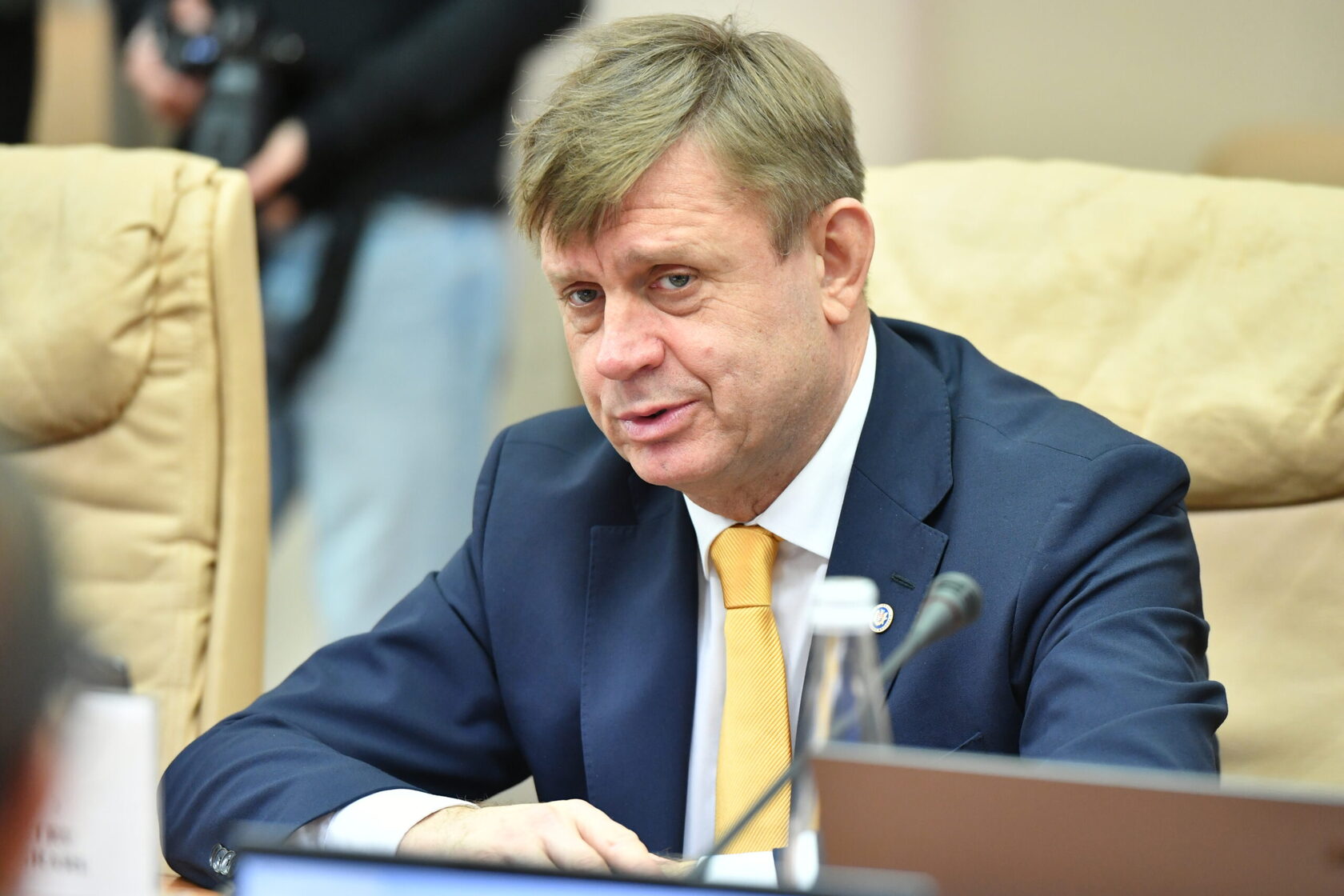
It should be noted that since 2022, the Moldovan-Ukrainian border running along the Transnistrian region has been fully closed. As a result, Transnistria is forced to carry out all commercial activity through territory and customs controlled by Moldovan authorities.
“Until 2014, Ukraine in the 5+2 format always supported Russia. Then their position changed. Some Transnistrian leaders hold Ukrainian citizenship. This is a very serious lever of influence. Ukraine could open criminal cases against these people. Kyiv has communication channels with Tiraspol, and this is very important,” added Alexei Tulbure.
Tulbure believes that the situation in Transnistria will be significantly influenced by a peaceful settlement in Ukraine, regardless of the outcome of the ongoing negotiations.
“If Ukraine is broken and forced into surrender, if peace is not in Ukraine’s favor, this will negatively affect the settlement of the Transnistrian issue as well. If peace is in Ukraine’s favor, then the situation will be different,” the expert said.
Former Moldovan Deputy Prime Minister for Reintegration Alexandru Flenchea believes that the only way to change the human rights situation in Transnistria is the full reintegration of the region into the Moldovan legal framework.
“There are no other options. It is foolish and naive to expect that the oligarchic police regime established in Transnistria, which is holding 300,000 of our citizens hostage, will somehow change its principles and rules. That will never happen,” Flenchea is convinced.
The expert noted that after February 2022, when Russia openly attacked Ukraine, a foreign policy environment emerged that is favorable for reintegration. However, this alone is not sufficient for the country’s reunification. Alexandru Flenchea says the priority task is the economic reintegration of the region.
“It is necessary to legalize gas supplies. This can no longer be tolerated. Gas must be paid for. Consumers must pay for gas. Gas supplies to Transnistria must be carried out on the basis of legal contracts. This must be transparent, under exactly the same conditions as gas purchased by everyone else in Moldova. And when that happens, it will trigger irreversible consequences that will ultimately lead first to economic and fiscal reintegration, and then to political reintegration. It is clear this is not a matter of months, but after 35 years, believe me, it can happen quite quickly,” the expert explained.
exchange