Preferential regime for Armenian exports to EU in response to Russian restrictions






Preferential trade regime with the EU for Armenia
Customs duties on a wide range of goods exported from Armenia to the European Union will be temporarily suspended. The preferential trade regime is expected to remain in place for two years. The European Parliament approved the European Commission’s proposal the previous day.
A total of 583 MEPs supported the application of Autonomous Trade Measures to Armenian goods. Forty-nine voted against, while 39 abstained.
“This step is prompted by the restrictions that Russia has imposed since May 2026 on several key Armenian export goods,” the decision says.
The EU Council must now approve the regulation. It will enter into force afterwards.
The EU initiative aims to support Armenia’s economy and create additional opportunities for local exporters to access the EU market.
The Armenian Centre for Socio-Economic Research (ACSES) analysed the potential implications of the decision. The centre’s experts described the scale of trade liberalisation with the European Union as significant. At the same time, they believe further developments will depend on several key factors:
“Can Armenia overcome entrenched perceptions of dependence and restructure its export profile? Much will depend on the next steps taken by Armenian businesses and the government. Creating new, comprehensive logistics infrastructure is a necessity of the times.”
Armenia’s Ministry of Foreign Affairs and International Trade believes the temporary trade preferences “will help diversify Armenia’s foreign trade, expand Armenian goods’ access to the EU market, and further deepen trade and economic cooperation with the European Union”.
- ‘Poland is ready to support Armenia’s ambitious goal of joining EU’ — Marcin Bosacki
- Armenia begins shift from Russia towards EU – but finish line remains distant
- First Armenia–EU summit in Yerevan adopts 44-point joint declaration
Context
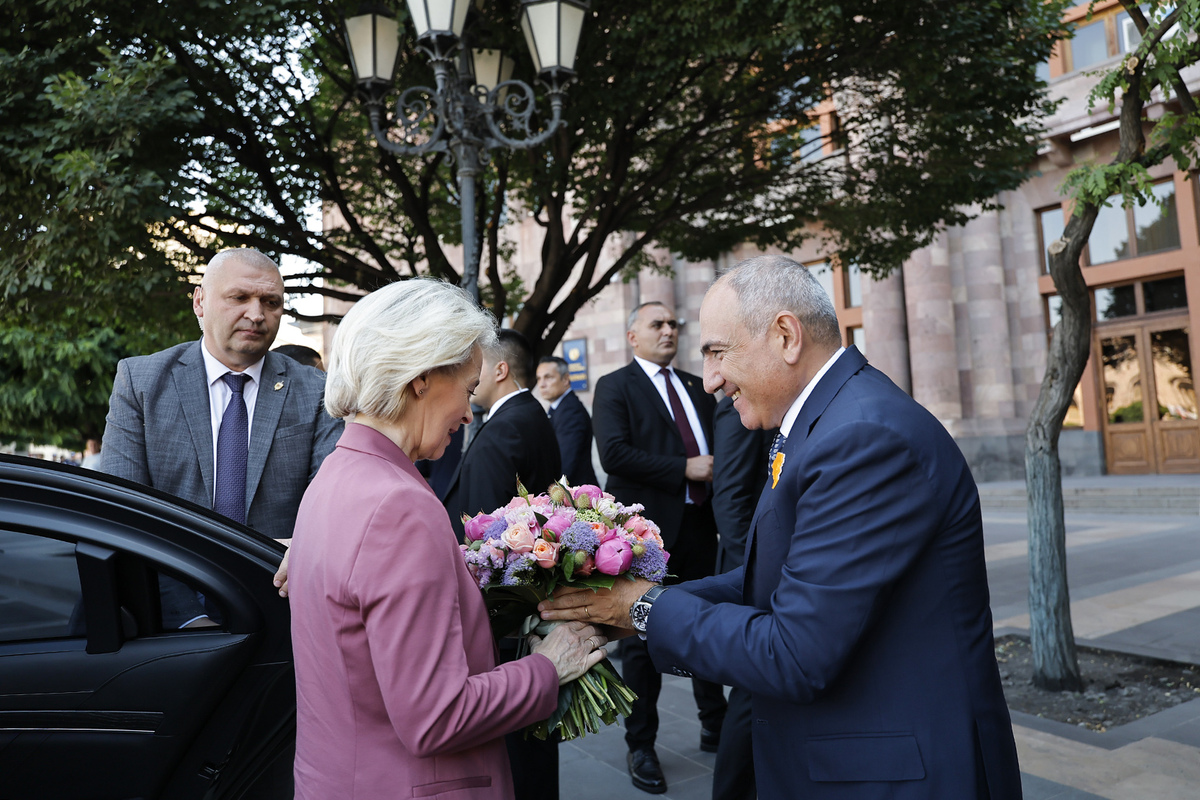
In early July 2026, European Commission President Ursula von der Leyen announced in Yerevan that the EU could introduce autonomous trade measures for Armenia.
“I am here today to state clearly: if Russia closes its market to Armenian products, the EU will open the doors to its consumer market of 450 million people,” she said.
Since May, Russia has banned imports of Armenian fruit, vegetables, fish products, alcohol and many other goods. Russian authorities cited their alleged failure to meet quality standards. Meanwhile, the European Union, which has stricter standards, has decided to help Armenia.
Ursula von der Leyen said the autonomous trade measures would liberalise around 80% of Armenian exports. In other words, that share of goods would become exempt from customs duties.оло 80% армянского экспорта. То есть такой объем товаров будет освобожден от таможенных пошлин.
Details of the European Parliament’s decision
European lawmakers approved a proposal to liberalise exports of goods marked “Made in Armenia”. The decision will cover 324 product categories. According to EU estimates, Armenian businesses will save a total of €5.4 million over two years. This is the amount they would otherwise have had to pay in customs duties.
To benefit from the preferential terms:
- Armenian products must comply with EU regulations on the origin of goods and customs procedures;
- Armenia must cooperate with EU authorities to verify the origin of goods and prevent possible fraud.
In addition, the EU plans to introduce duty-free import quotas for eight types of Armenian agricultural products. The list includes apricots, grapes, plums, peaches, cherries, strawberries, cucumbers and pears.
The European Union believes that Russia’s restrictions have significantly limited Armenian goods’ access to their established market:
“The situation has had a severe impact on small and medium-sized enterprises, including agricultural producers, threatening Armenia’s economic resilience.”
The preferential regime will cover 99% of fresh agricultural exports and 91% of beverage exports.
Against the backdrop of these changes, the EU also intends to introduce safeguards for its own market:
“These mechanisms will allow the European Union to intervene if a rise in imports from Armenia negatively affects European producers.”
The European Commission may fully or partially suspend the regime if an increase in imports from Armenia destabilises the EU market. It may also do so if Yerevan fails to meet the agreed requirements.
Expert opinion
Experts at the Armenian Centre for Socio-Economic Research say the project approved by the European Parliament aims to reduce pressure on Armenia’s economy. According to their calculations, potential export losses in 2026 could reach $260 million.
However, goods that will receive temporary exemptions from customs duties account for a significant share of Armenia’s total exports:
“In 2025, Armenia exported around $3.5 billion worth of goods. More than two-thirds of this amount falls under the proposed preferential regime.”
The experts believe that the EU’s preferential trade regime, combined with business support programmes implemented by the Armenian government, could change the structure of the country’s exports. Exporters that previously supplied goods to Russia may redirect their products to the EU.
However, after analysing the tariff quotas that will apply to agricultural products, economists noted that some quotas are lower than actual export figures:
“For example, the quota for plums amounts to only 13% of actual exports, while the quota for apricots stands at 16%.”
In their view, these low quotas are due less to the EU’s desire to protect its own market than to the methodology used to calculate them.
In particular, the quotas were determined using export data from companies registered in Armenia. The information comes from the UN Comtrade database. However, the calculation did not account for the fact that individuals carry out a significant share of fruit and vegetable exports.
“Perhaps our government should have defended the interests of Armenian exporters of fresh fruit and vegetables more consistently,” the publication says.

Preferential trade regime with the EU for Armenia