Georgian authorities respond to Metropolitan Iov’s scathing sermon


Georgian metropolitan criticises government
Metropolitan Iov (Akiashvili) of Ruisi and Urbnisi has sharply criticised the Georgian government, saying the ruling team has run out of steam and that the country needs better governance. In his sermon, the clergyman also addressed relations between the Church and the state, accusing the authorities of seeking to bring the Church under their control, turning a blind eye to corruption and neglecting national interests.
A sermon delivered on 10 November at Urbnisi Cathedral was published on the diocese’s social media page. Particular attention was drawn to Metropolitan Iov’s remarks, in which he criticised not only the government but also the Church’s senior leadership.
The metropolitan said the Georgian authorities lacked faith and were distant from the Church, warning that growing ties between the Church and the state threatened the independence of the clergy. He noted that, as the state provides funding to the Church, it is becoming increasingly difficult for clergy to speak openly about the government’s failings.
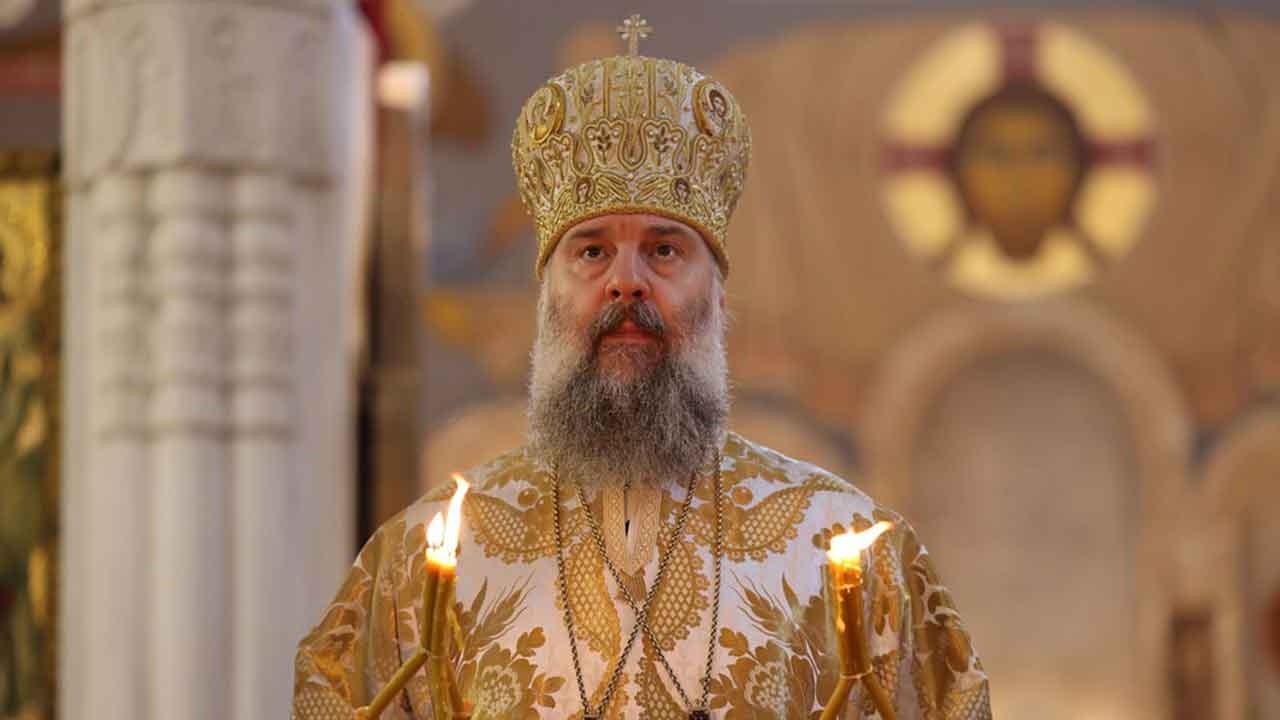
He also addressed the situation within the Church, saying that a significant proportion of the clergy had come to resemble government officials. He pointed out that while priests urge their congregations to endure poverty, help those in need and practise humility, their own behaviour is quite different.
The metropolitan also raised the issue of transparency in state funding for the Church. In his view, parishioners should know how every tetri (the smallest unit of Georgian currency) allocated to the Church is spent.
“Each of you, as parishioners, should know what the money is spent on and where every tetri goes,” he said.
Metropolitan Iov also recalled the reigns of David the Builder and Queen Tamar, noting that during periods of Georgia’s historical greatness, secular rulers worked in harmony with the Church. In his assessment, however, the current government has departed from this historical example.
A significant part of the sermon was also devoted to the so-called State Security Service “dossiers”. According to the metropolitan, the circulation of materials documenting private conversations and the personal lives of members of the clergy was intended to discredit the Church. He also recalled a statement by Bidzina Ivanishvili, in which he suggested that it was legitimate to criticise the Patriarch because he, too, was human and could make mistakes.
The so-called “dossier scandal”, involving the State Security Service (SSS), concerns alleged secret recordings and documents that emerged in the media in September 2021. The materials reportedly contained recordings of private conversations and phone calls, as well as information about the personal lives of senior representatives of the Georgian Orthodox Church, including metropolitans, bishops, priests and monks.
The documents pointed to widespread surveillance and wiretapping of the clergy. They covered internal Church disputes, relationships between members of the clergy, their private lives and political views. The authenticity of the recordings and the precise circumstances in which they were obtained have never been fully established.
The scandal became particularly serious because the State Security Service was named as the alleged source of the leak. The authorities were forced to respond to the allegations and seek to identify those who had made the documents public. However, it remains unclear to much of the public who was behind the collection and dissemination of the material.
Iov questioned why the identities of those who circulated the recordings had still not been established, despite promises from the authorities.
The metropolitan criticised the government over the spread of drug addiction and gambling addiction, the promotion of casinos, corruption and demographic problems. He noted that young people were leaving the country and villages were becoming deserted, while the scale of new construction, against the backdrop of a declining population, raised questions.
Iov also addressed the issue of David Gareji (the subject of a long-standing territorial dispute between Georgia and Azerbaijan over an undemarcated section of their border running through the sixth-century monastery complex – JAMnews), saying that the authorities’ response to the territorial challenges facing Georgia was inadequate.
“We must sound the alarm, because things cannot continue like this. It has become clear that the current government has completely exhausted its potential. Just as changes of government are commonplace around the world, we too should choose a better government in the future,” the metropolitan said.
He added that discussing the need for a change of government did not mean being hostile towards it, and that pointing out the government’s mistakes was a duty of the clergy.
Government and opposition reactions
The metropolitan’s sermon prompted mixed reactions from representatives of the government and the opposition.
Levan Machavariani, a Georgian Dream MP, said Metropolitan Iov’s political assessments were detached from reality and incorrect. He said he regretted that a senior clergyman was using the Church and the pulpit to make political statements.
Machavariani said the authorities were ready to provide comprehensive answers to any questions raised by the clergy. However, he stressed that such issues should be discussed through consultations before being made public.
“The people of Georgia know perfectly well how our government treats the Mother Church. If any problems or questions arise, we are accustomed to discussing them in a constructive manner,” the MP said.
Metropolitan Iov’s remarks were also criticised by Giorgi Gabunia, chairman of the parliamentary Committee on Culture. He described the metropolitan’s accusations as unfounded and said any confrontation between the Church and the state ran counter to the country’s interests. According to Gabunia, attempts are being made both inside and outside the country to provoke a conflict between the Church and the state.

The opposition took a different position from the ruling party. Pikria Chikhradze, a member of the Lelo – Strong Georgia party, described Metropolitan Iov’s sermon as significant and forceful. In her view, the Church’s criticism of the authorities may even have come too late.
Chikhradze drew attention to the so-called State Security Service “dossiers”, noting that the materials contained information about the private lives and correspondence of members of the clergy. In her view, it was virtually impossible to imagine that information on such a scale could have been collected without state involvement.
She also recalled the so-called “cyanide case” (a high-profile criminal scandal in 2017 involving allegations of a plot to murder a senior figure within the Georgian Orthodox Church – JAMnews), which, she said, still left many questions unanswered. Chikhradze argued that both cases were linked to attempts to undermine the Church’s authority.
The opposition politician said that Bidzina Ivanishvili could not tolerate the existence of independent institutions or influential figures capable of shaping public opinion. As an example, Chikhradze cited a plan to establish cannabis plantations, noting that the Church’s firm opposition had played an important role in halting the project. She also pointed out that, despite the Church’s objections to tax breaks for casinos, the authorities had gone ahead and adopted the relevant legislative amendments.
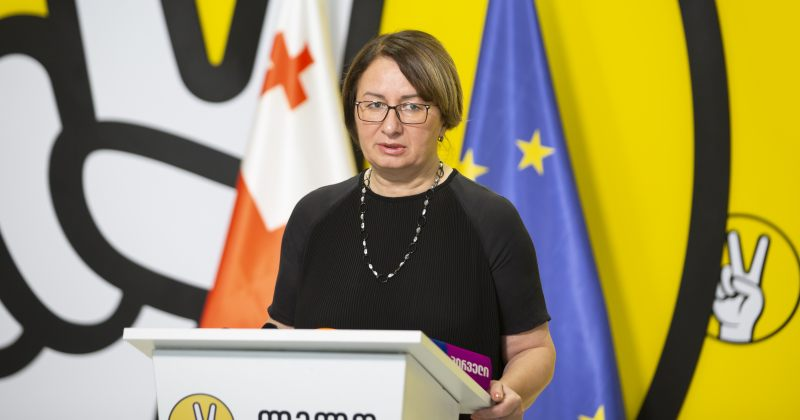
Levan Bezhashvili, one of the leaders of the Unity – National Movement party, welcomed the metropolitan’s remarks. He said that Iov himself often criticises the party and is not a supporter of the National Movement, but that this did not diminish the significance of his latest statement.
“He made a very good statement – well done,” Bezhashvili said.
He added that Metropolitan Iov’s assessment reflected a reality recognised by both society and the Church.
Representatives of People’s Power, a pro-Russian movement that supports the ruling party, also responded to Metropolitan Iov’s criticism.
Tamta Megrelishvili said the metropolitan had used the church pulpit to deliver a political appeal, presenting his partisan position as a religious duty. She argued that accusing the authorities of “lacking faith” and calling for a change of government undermined the Church’s authority.
“In essence, this is an open political call from the church pulpit for a change of government,” Megrelishvili wrote.
Another People’s Power representative, Davit Kartvelishvili, took a much harsher view of Metropolitan Iov’s remarks. He accused the cleric of aligning himself with Saakashvili’s political camp and suggested that his calls for a change of government were driven by personal interests. Kartvelishvili also recalled previous allegations against Iov concerning the situation within his own diocese.
Pro-government commentator Davit Chikhelidze said Metropolitan Iov was accusing the authorities of “turning away from faith”, even though, in Chikhelidze’s view, the metropolitan’s own actions did not reflect the values he claimed to defend. He argued that the sermon harmed the country’s interests and was “playing into the enemy’s hands”.
The Church and Georgian Dream: Why Metropolitan Iov’s Statement Matters
The Georgian Orthodox Church occupies a unique position in the country’s political life. Since the collapse of the Soviet Union, it has established itself not merely as a religious organisation but as one of the most influential institutions in Georgian society. For decades, its authority has far outweighed that of individual political parties or government officials. As a result, maintaining good relations with the Church has been a major source of political legitimacy for virtually every Georgian government.
Georgian Dream, which came to power in 2012, forged particularly close ties with the Church. Bidzina Ivanishvili and members of the ruling team publicly emphasised the unique role of the Orthodox Church, while some influential members of the clergy openly expressed support for the new government. Over time, these ties became a key element of the ruling party’s political and ideological identity.
However, relations between the Church and the authorities have not always been smooth. Clergy members have previously criticised decisions made by the ruling team on a number of issues, including an initiative to legalise cannabis cultivation, as well as gambling and other matters of public concern. Nevertheless, such direct criticism of the government’s overall political course by senior Church figures remains rare.
What makes Metropolitan Iov’s statement particularly noteworthy is that he goes beyond criticising individual government decisions. He questions the established relationship between the state and the Church, raises concerns about the clergy’s financial dependence on the government and internal problems within the Church, and directly tells the authorities that they have exhausted their capacity to govern the country.
The statement carries additional weight given that, following the political changes of 2012, a significant part of the Church was favourably disposed towards Georgian Dream. Metropolitan Iov himself acknowledges that Church representatives supported the government, although he no longer regards that support as unconditional loyalty.
Trust between the Church and the government became a particularly contentious issue in 2021, when media outlets published materials suggesting possible covert surveillance by the State Security Service (SSS). Thousands of documents pointed to possible surveillance of clergy members, politicians, journalists and diplomats. The scandal raised serious questions both within the Church and in Georgian society more broadly, but those responsible have yet to be identified.
It is also worth noting that, according to the Centre for Social Justice, the Orthodox Church received more than 283 million lari (approximately $109,158,525) from central and municipal budgets between 2020 and 2024.
Georgian metropolitan criticises government