Billionaire Ivanishvili won’t testify in Georgia opposition ban case. Constitutional Court, day four


Georgia opposition ban trial
On 26 October, Georgia’s Constitutional Court began substantive hearings on a lawsuit seeking to ban opposition parties.
The lawsuit, signed by 88 MPs from the ruling Georgian Dream party, calls for five opposition parties to be declared unconstitutional and banned: Unity – National Movement, Coalition for Change, Lelo – Strong Georgia, Gakharia for Georgia and the Federalists.
Georgian Dream argues that the parties have violated Article 23 of the constitution, which prohibits political parties whose objectives include overthrowing or forcibly changing the country’s constitutional order. One of the arguments cited in the lawsuit is the parties’ refusal to recognise the legitimacy of the current authorities. The lawsuit also accuses them of organising attempts to overthrow the government.
The National Movement faces additional accusations of undermining the country’s independence and violating its territorial integrity. The party is held responsible for the August 2008 war with Russia, when it was in power. All five opposition parties reject the allegations.
The hearing began at 14:00 and continued until 19:00, with a break. The court was due to hear explanations from both sides.
On the first day, the court heard arguments from Georgian Dream and Zaza Bibilashvili, a member of Unity – National Movement.
Bibilashvili presented his party’s position for two and a half hours, and the presiding judge interrupted him several times.
The hearing will resume on 27 October at 12:00 and continue until 30 October. The court must issue its ruling by 24 June 2027.
Below is a brief account of the main developments at the 26 October hearing.
- Proposed ban on five opposition parties in Georgia: what’s happening and why
- “Don’t like it? Too bad”: third day of Constitutional Court hearings on opposition ban in Georgia
- Georgia opposition party ban case: Day two of court proceedings
- Court begins hearing case to ban opposition parties in Georgia: first-day developments
Bidzina Ivanishvili will not be called as a witness
Shortly after the substantive hearing began, the full bench of Georgia’s Constitutional Court announced its decision on a motion filed by the Gakharia for Georgia party.
The motion was partially granted. Constitutional Court judge Revaz Nadaraya said the court had agreed to admit certain types of materials as evidence in the case.
However, the party was denied the right to question politicians as witnesses, including billionaire Bidzina Ivanishvili, founder and honorary chairman of the ruling party, as well as other current and former Georgian Dream leaders.
The court also refused to question Prime Minister Irakli Kobakhidze, Tbilisi Mayor Kakha Kaladze, former State Security Service chief Mamuka Mdinaradze, MP Archil Talakvadze and others.
This was the 14th and final motion submitted by the opposition parties. The court had rejected the previous 13 motions concerning the questioning of witnesses.
Political statements prohibited
Judge-rapporteur Vasil Roinishvili then presented a brief overview of the lawsuit and its contents.
After his presentation, Judge Revaz Nadaraya once again reminded the parties to refrain from political statements.
Although the case concerns the assessment of political activities and parties, he said, the parties should avoid political statements and speak “with the utmost restraint and propriety, without any insults, so as not to offend the other side”.
After the introductory part, the court began hearing arguments from the parties. The claimant, Georgian Dream, was represented by MP Archil Gorduladze. The defendants are the five opposition parties. On this day, only Zaza Bibilashvili, a member of Unity – National Movement, addressed the court.
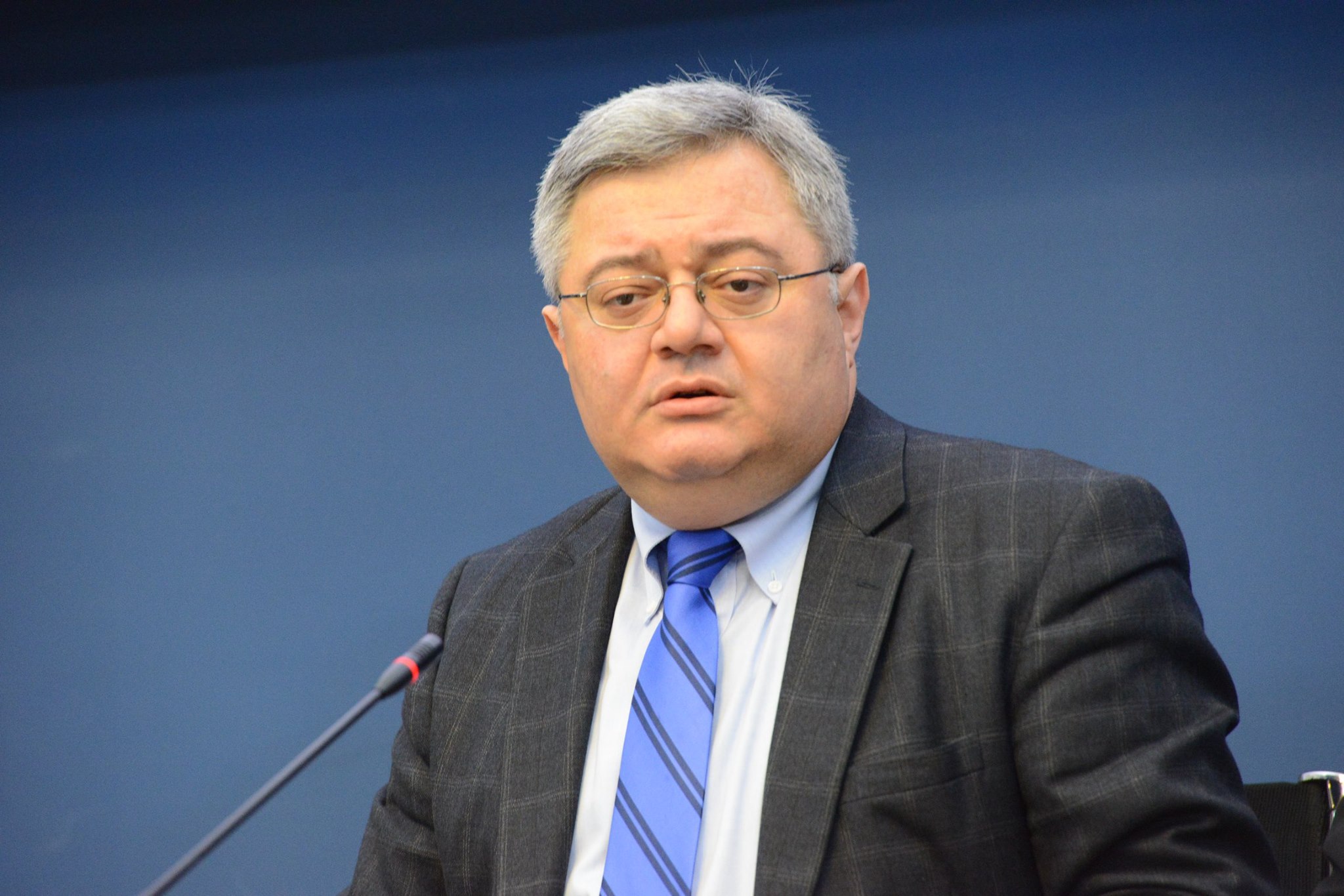
What exactly are the opposition parties accused of?
The accusations were presented by Georgian Dream MP Archil Gorduladze, who outlined the allegations against the five opposition parties. According to him:
● Unity – National Movement, Coalition for Change and the Federalists are accused of supporting attempts to overthrow the constitutional order by force.
Gorduladze argued that, during the National Movement’s rule in 2004–2012, they turned a blind eye to systematic human rights violations and acted against Georgia’s independence and territorial integrity by attempting to start a war with Russia in August 2008.
He also accused the party of denying the legitimacy of parliament and government after losing power.
● Lelo – Strong Georgia, led by Mamuka Khazaradze and Badri Japaridze, is accused of denying the legitimacy of the current elected parliament and government. Gorduladze said the party supported the idea of a parallel “technical government” in 2022 and backed attempts to overthrow the government and forcibly change the constitutional order between 2019 and 2025.
The party’s leaders are also accused of refusing to distance themselves from opposition politician Aleksandre Elisashvili, who was convicted over an attempted arson attack on a court building.
● For Georgia, led by former Prime Minister Giorgi Gakharia, is accused of refusing to distance itself from the events of 20 June 2019, when a protest was dispersed, and from the circumstances surrounding the 2021 arrest of Nika Melia, then leader of Unity – National Movement. Gorduladze also alleged that Gakharia denied the legitimacy of the elected government, supported the idea of a “technical government” and attempts to overthrow the constitutional order during protests, and backed foreign forces.
Gakharia is further accused of undermining Georgia’s territorial integrity by unilaterally ordering the establishment of a police checkpoint near the village of Chorchana in the Georgian-Ossetian conflict zone in 2019. A criminal case has been brought against him over the decision, alleging that it sharply escalated tensions in the region and resulted in Georgia losing control over additional territory.
“We have no right to turn a blind eye to these facts and leave future generations a state whose constitutional foundations remain unprotected. That is why the actions of the National Movement and its offshoots [referring to the other four parties named in the lawsuit] must be declared unconstitutional and the parties banned,” Gorduladze said.
“Are you responding to the lawsuit or criticising us?”
Zaza Bibilashvili spoke on behalf of Unity – National Movement. Shortly after he began his statement, Constitutional Court President Revaz Nadaraya interrupted him.
The judge objected to Bibilashvili’s remark that the parties had “no illusions about the outcome of the proceedings”.
Nadaraya interpreted the remark as an insult to the court.
“Are you responding to the lawsuit or criticising us? Are you challenging us, or what? To some extent, indirectly, you insulted the court by questioning our impartiality. You are showing disrespect, and there are limits to that too. Bear that in mind!” he said.
Bibilashvili: “The result will be the legitimisation of Russia’s military aggression in a Constitutional Court ruling”
Zaza Bibilashvili spoke for almost two and a half hours about Unity – National Movement after his opening remarks.
He recalled the difficult socio-economic situation in Georgia in the early 2000s, when the party came to power, and described how developed the country had become by the time Georgian Dream took office in 2012.
Bibilashvili criticised Georgian Dream’s policies and several of its decisions, which he said had harmed the country as a whole.
He also argued that “the actual aim of these proceedings is to give Russia confirmation that its military aggression against Georgia in 2008 was justified, because Georgia’s own Constitutional Court would be arguing that Georgia itself supposedly created the grounds for Russia’s aggression”.
“Some may object that this is not the court’s aim. But it is impossible to dispute that, if the claims in the lawsuit are upheld, the result will be the legitimisation of Russia’s military aggression through a ruling by Georgia’s Constitutional Court,” Bibilashvili said.
He stressed that the claimant, Georgian Dream, was deliberately conflating political and legal responsibility and failing to distinguish between the state and a political party.
Bibilashvili: “The fox brought its own tail as a witness”
Zaza Bibilashvili said the only evidence cited in the lawsuit to prove the opposition parties’ guilt was a report by a temporary parliamentary investigative commission.
According to him, the report contains so many factual and legal errors that it cannot be made public.
Bibilashvili noted that the opposition had effectively been found guilty even before the commission was established, in the explanatory note prepared for its creation.
“This means the outcome was known even before the commission was set up. It’s as if the fox brought its own tail as a witness — that is the essence of these proceedings,” Bibilashvili said.
Bibilashvili: “If the opposition is annulled, it can no longer pose an immediate threat to the state”
Zaza Bibilashvili used a football analogy to question how a championship could ban every team except one from competing.
He said that in a democratic country, banning political parties should not be a form of punishment but a means of protecting the state from an immediate threat posed by those parties. The state must demonstrate that a ban is urgently necessary.
In this case, Bibilashvili argued, the claimant had failed to prove any such necessity.
Moreover, he said, “Prime Minister Irakli Kobakhidze himself has stated that there is no immediate threat from the opposition and no need to ban it”.
Bibilashvili also urged the court to consider a statement Kobakhidze had made earlier: “Why ban the opposition? It has already been annulled.”
Bibilashvili to judges: “Act in a way you want to be remembered by history”
At the end of his lengthy statement, Zaza Bibilashvili said his closing remarks would be anything but conventional.
“I am not asking you to reject the lawsuit. But act in a way that you want to be remembered by history, in a way you would want your children to see you. Apply the same standards you would want those who come after you to apply to you.
“Servants of authoritarianism often hope that democratic forces will treat them according to democratic standards, rather than the standards they themselves have established. However, after 14 years of Georgian Dream rule, more and more people in Georgian society are rejecting this approach.
“They support the idea that, in future, everyone should be judged by the standards they themselves have established, both politically and legally. This would allow us to break once and for all the so-called vicious circle into which our enemy, Russia, has pushed us.”
Bibilashvili’s remarks once again angered the Constitutional Court judge.
“I told you to behave with dignity! How are we supposed to interpret your statement — as an attempt to put pressure on us?”
“What kind of pressure could I possibly exert on you?” Bibilashvili asked rhetorically.
“Stop lecturing us,” the judge replied.
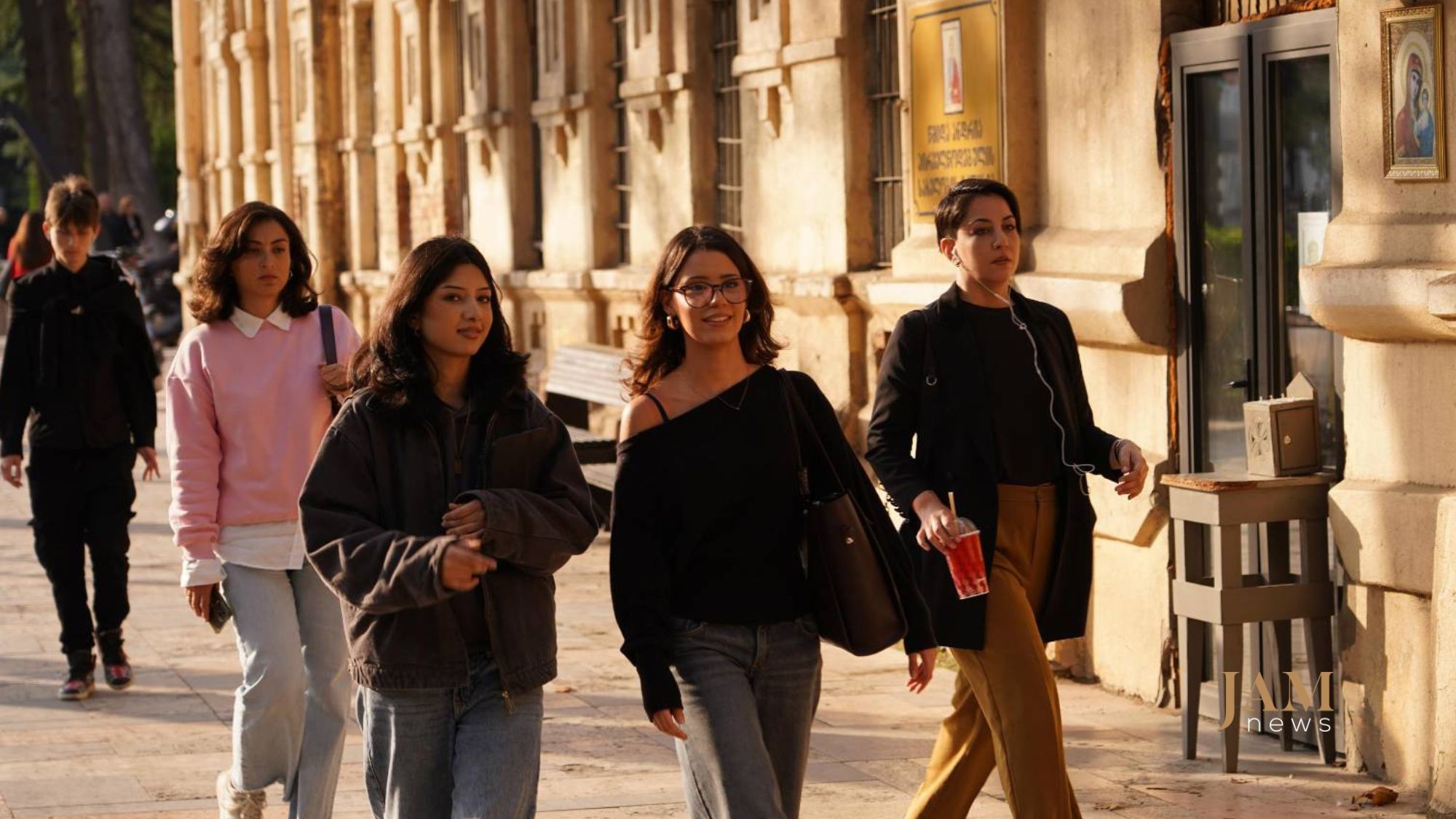
Zaza Bibilashvili finished his statement at 18:30, with only 30 minutes remaining before the end of the court session. Ana Tsitlidze, another member of Unity – National Movement, was due to speak next, but said she needed more time. The court therefore decided to adjourn.
Hearings on the constitutional lawsuit will resume tomorrow, 27 October, with Tsitlidze’s statement. Proceedings will begin at 12:00, and the court has agreed to sit until 19:00. According to the presiding judge, 20 representatives of the defendant parties are due to speak.
Reactions after the hearing
● After the hearing, Georgian Dream MP Archil Gorduladze said that the National Movement had no evidence to refute the facts presented in the lawsuit:
“The National Movement representative talked about everything and nothing. He claimed that Georgia experienced a triumph of democracy in 2004–2012, and that there was no torture or inhuman treatment.”
● “We heard truly unique accusations against Lelo – Strong Georgia. Apparently, signing the charter proposed by Ex-President Salome Zourabichvili and agreeing to cooperate with Giorgi Gakharia’s party during the municipal elections constitute violations of the Constitution,” said Badri Japaridze, one of the leaders of Lelo – Strong Georgia.
📌 Maia Kopaleishvili, a member of Coalition for Change, said: “We will fully refute all of Georgian Dream’s arguments and unfounded claims. An objective observer will see that Georgian Dream’s lawsuit is political in nature. Its aim is not to uphold the constitutional order in the country, but to eliminate political parties and establish one-party rule. This, of course, contributes to the establishment of a dictatorship in the country.”
News in Georgia