Top stories in Azerbaijan, Armenia, and Georgia from 9-13 March, 2026
 Live
Live




-
Friday, 13 March, Georgia. 24 OSCE member states called on the Georgian authorities to implement the strongly critical recommendations of the OSCE Moscow Mechanism
-
Friday, 13 March, Azerbaijan. Ilham Aliyev at the 13th Global Baku Forum on three aspects of security: peace with Armenia, energy, and transit
-
Friday, 13 March, Armenia. Director of the Armenian Genocide Museum-Institute resigns after giving a book on Karabakh to the U.S. vice president without approval
-
Thursday, 12 March, Armenia. Prime Minister Nikol Pashinyan spoke at the European Parliament in Strasbourg
-
Thursday, 12 March, Azerbaijan. President of the European Council António Costa visited Baku
-
Thursday, 12 March, Georgia. The popular opposition TV channel Pirveli is asking for help
-
Wednesday, 11 March, Azerbaijan. Azerbaijan sent more than 30 tons of humanitarian aid to Iran
-
Wednesday, 11 March, Georgia. The Chair of the OSCE Parliamentary Assembly: “The main problem in Georgia is the lack of dialogue between political opponents”
-
Wednesday, 11 March, Armenia. Nikol Pashinyan took part in the second summit on nuclear energy in Paris
-
Tuesday, 10 March, Georgia. Joe Wilson: "The anti-American Georgian Dream party is scared to death that Americans will learn that it is in cahoots with the Iranian regime"
-
Tuesday, 10 March, Armenia. Nikol Pashinyan took part in a remote meeting between the European Union and leaders of Middle Eastern countries
-
Tuesday, 10 March, Azerbaijan. Azerbaijan and Iran have resumed cargo transportation that had been suspended after an Iranian drone attack on Nakhchivan
-
Monday, 9 March, Azerbaijan. The President of Iran called Ilham Aliyev
-
Monday, 9 March, Georgia. Experts and politicians are being questioned in connection with their statements about a possible increase in Iran’s influence in Georgia
-
Monday, 9 March, Armenia. About $670 compensation per person for those forced to buy new tickets to travel to Armenia from the Middle East
-
Top stories in Azerbaijan, Armenia, and Georgia from 2-6 March, 2026

-
Friday, 13 March, Georgia. 24 OSCE member states called on the Georgian authorities to implement the strongly critical recommendations of the OSCE Moscow Mechanism
● 24 member states of the Organization for Security and Co-operation in Europe jointly called on the Georgian authorities to implement the recommendations of the OSCE Moscow Mechanism. The request is based on a strongly critical report presented by the OSCE special rapporteur. The countries that signed the statement demand, among other things, the repeal or fundamental revision of laws that do not comply with international obligations and have led to democratic backsliding. More details about the recommendations here.
● The OSCE/ODIHR Moscow Mechanism report on Georgia was published on March 12. The nearly 217-page document provides detailed information covering the period from the beginning of 2024 to the present, including democratic backsliding, deterioration in human rights and media freedom, persecution of protesters and opposition figures, repression of dissent, the existence of political prisoners, and repressive legislation. More details here.
● Georgia’s representative to the OSCE, Alexander Maisuradze, sharply criticized the report, saying it contains factual inaccuracies, loose interpretations and does not reflect the full picture of the country’s political and legal reality. More details here.
● An opposition alliance described the OSCE report as recognition of the international failure of the Georgian government. According to the alliance, international pressure on the ruling party and the risk of its legal responsibility will increase. In their view, the crisis can be resolved only through free elections and the release of political prisoners.
● The European Parliament also adopted a document condemning the systematic persecution of political opponents, journalists and activists. The resolution calls for the immediate release of politician Elene Khoshtaria and others detained for participating in pro-European protests that have continued for more than a year and a half. The resolution was supported by 438 members of parliament, while 37 voted against. More details here.
● Parliament Speaker Shalva Papuashvili said that today Georgia is a “defender” of the European Union, “while some countries and forces within the EU are turning the organization into an analogue of the Soviet Union of the 21st century.”
● Armenia’s Prime Minister Nikol Pashinyan said that no one in Tbilisi asked him to mention the “frozen” political dialogue between the European Union and Georgia during his speech in the European Parliament. Pashinyan said it was entirely his own opinion. “There was no request or appeal from Georgia. We are genuinely concerned about this situation, and it directly affects Armenia’s process of European integration,” he said.
● Prime Minister Irakli Kobakhidze said that no one plans to ban cars older than six years, but the customs tariff on importing them into the country has been significantly increased. Under the new rules, the excise tax is set at 4.5 lari (about $2) per cubic centimeter, which experts say will significantly increase the cost of importing used cars. More details about the changes here.
● Former MP Givi Targamadze was questioned by the State Security Service as part of an investigation into statements by Georgian politicians and experts about the growing influence of Iran in Georgia and the risks to the country’s security. After the questioning, Targamadze told journalists that he had told investigators: “The threat to the country is not the statements of politicians, but the problems themselves if they are not addressed.”
● Former head of the procurement department at the Ministry of Defense Vladimir Gudushauri, who is under investigation on charges of embezzling a large amount of state funds, claims that then-defense minister Buanesher Burchuladze (currently under arrest) was aware of all major procurements.
● A landslide occurred in the village of Kursi in western Georgia. Rescue teams have been mobilized and residents are being evacuated. At this stage there is no information about casualties; geologists are working at the site.
● A fire broke out under unclear circumstances in a tent set up in front of the parliament building. No one was injured, and the Interior Ministry said an investigation has been launched.

-
Friday, 13 March, Azerbaijan. Ilham Aliyev at the 13th Global Baku Forum on three aspects of security: peace with Armenia, energy, and transit
● The XIII Global Baku Forum is taking place on March 12–14. On the first day, three panel discussions were held: “Global Security: Respect for International Law, New Issues, New Challenges,” “Multilateralism in Crisis: A New Look at Global Cooperation,” and “80 Years of the UN.” The forum is organized at the initiative of the Nizami Ganjavi International Center, with more than 400 experts, politicians, and officials from various countries participating. The Global Baku Forum has been held in Azerbaijan since 2013.
● At the opening ceremony of the forum, Ilham Aliyev delivered a speech about three aspects that are critically important for Azerbaijan in the context of security: peace with Armenia, as well as energy and transport connectivity.
“In the period of occupation by Armenian forces, peace and the restoration of sovereignty were priority issues […] Azerbaijan has a unique experience on a global scale—about 20 percent of its territory was occupied for nearly 30 years, and one million people were subjected to ethnic cleansing. We suffered from a lack of attention from the international community and from the selectivity of some international actors who were supposed to deal with resolving the conflict. We faced a situation where the resolutions of the UN Security Council demanding the withdrawal of Armenian troops from our territories remained on paper for almost 30 years. We liberated the occupied territories by force and achieved peace by political means during the 44-day Patriotic War of 2020.”
“We achieved peace with Armenia first by force and then by political means. […] The establishment of this peace is also a unique situation. From the last bloody clash in September 2023 to peace in August 2025, less than two years passed. I think this is an unprecedented speed of normalization, which became possible thanks to strong political will and the understanding that eternal hostility is impossible and the war must end.”
“We achieved peace with Armenia not only on paper but also on the ground. Calm prevails along our borders. We have lifted all restrictions on the transportation of goods to Armenia from different directions. We have even begun trade with Armenia: exports of petroleum products important for them have started. In this way we demonstrate our commitment to peace—not long-term peace, but eternal peace.”
“Azerbaijan achieved peace with Armenia by insisting that there should be no mediators. Twenty-eight years of so-called mediation by the OSCE Minsk Group were a real disaster. The goal of the co-chairs was to freeze the conflict and use it as leverage against both countries. Therefore we decided that we needed to get rid of this so-called mediation, and as soon as we began engaging on a bilateral basis, without any third party, we achieved peace.”
“Another important issue is energy security. The unprecedented rise in oil and gas prices creates many problems for consumers. But if someone thinks that such unbalanced prices benefit those who produce and export oil, they are mistaken. Many countries that produce and export oil invest in various instruments […] And when the stock market collapses, those countries lose more there than they earn from high oil prices.”
“Azerbaijan produces and exports all types of energy resources—oil, gas, petroleum products, petrochemicals, and electricity. Over the year, the number of countries receiving Azerbaijani pipeline gas has increased from 12 to 16. In terms of the geographical coverage of countries, Azerbaijan is a world leader in the export of pipeline natural gas and contributes to global energy security.”
“Azerbaijan is an indispensable partner with regard to the East-West and North-South corridors and is in fact the only country actively participating in and investing in both the Middle Corridor and the North-West corridor […] After achieving peace with Armenia, we are closely cooperating on a new expansion of the Middle Corridor, which will pass through its territory. Armenia will also become a transit country for the first time in its independent history.”
● During the panel discussion held at the forum dedicated to the 80th anniversary of the United Nations, most speakers acknowledged that the organization’s work has been unsatisfactory.
Former president of Latvia and co-chair of the Nizami Ganjavi International Center Vaira Vīķe‑Freiberga: the UN has not fulfilled all the tasks for which it was created.
Former prime minister of Italy Romano Prodi: the UN, which once played an important role in the processes of decolonization and peacekeeping missions, has become increasingly powerless over the years.
Chair of the Council of Elders of the Organization of Turkic States: the UN has failed to demonstrate effective results in resolving wars and conflicts around the world.
President of the 72nd session of the UN General Assembly: the activities of the UN have significantly weakened since its creation.
President of the 62nd session of the UN General Assembly and former foreign minister of North Macedonia: deep reforms are needed in the UN.
Deputy secretary-general of the International Telecommunication Union: the UN’s financial situation should be reassessed.
● During a panel discussion, presidential aide Hikmet Hajiyev said: “Countries of the region and external partners can jointly contribute to the development of the region. But Baku no longer expects international structures to take responsibility for resolving key issues. […] For example, the Organization for Security and Co-operation in Europe failed and could not achieve a settlement of the Karabakh conflict.”
● A representative of the European External Action Service, Anwar Al‑Anouni, expressed gratitude to Azerbaijan for the assistance provided in the safe repatriation of European citizens from Iran.
● Parliament has begun considering legislative amendments that would introduce criminal liability for the creation and distribution of materials using artificial intelligence without a person’s consent. Depending on the severity of the offense, the guilty party would face a fine, community service, restriction of liberty, or imprisonment for a term of three to seven years.
● Parliament has also begun considering a draft amendment to the administrative code that would introduce fines and administrative arrest for begging and/or involving a minor in this activity.
● Russia sent humanitarian aid to Iran through the Azerbaijani-Iranian border. Cargo weighing more than 13 tons—medicines and medical supplies—was delivered by an aircraft of the Russian Ministry of Emergency Situations to the city of Lankaran, from where trailers of the Iranian Red Crescent Society transported it further.
● In the Khojavend District, which was liberated from occupation by Armenian forces, a local resident was killed after detonating an anti-tank mine while grazing cattle on an area of the former line of contact that had not been cleared of mines. The Interior Ministry, the Prosecutor General’s Office and the Azerbaijan National Agency for Mine Action once again called on citizens to follow safety rules, pay attention to mine-danger signs and avoid entering unfamiliar territories.
● Today was the third night of Laylat al-Qadr during the month of Ramadan. It is believed that on the night of Laylat al-Qadr angels descend from heaven to better hear people’s prayers. The Ramadan holiday will take place on March 20 and 21.
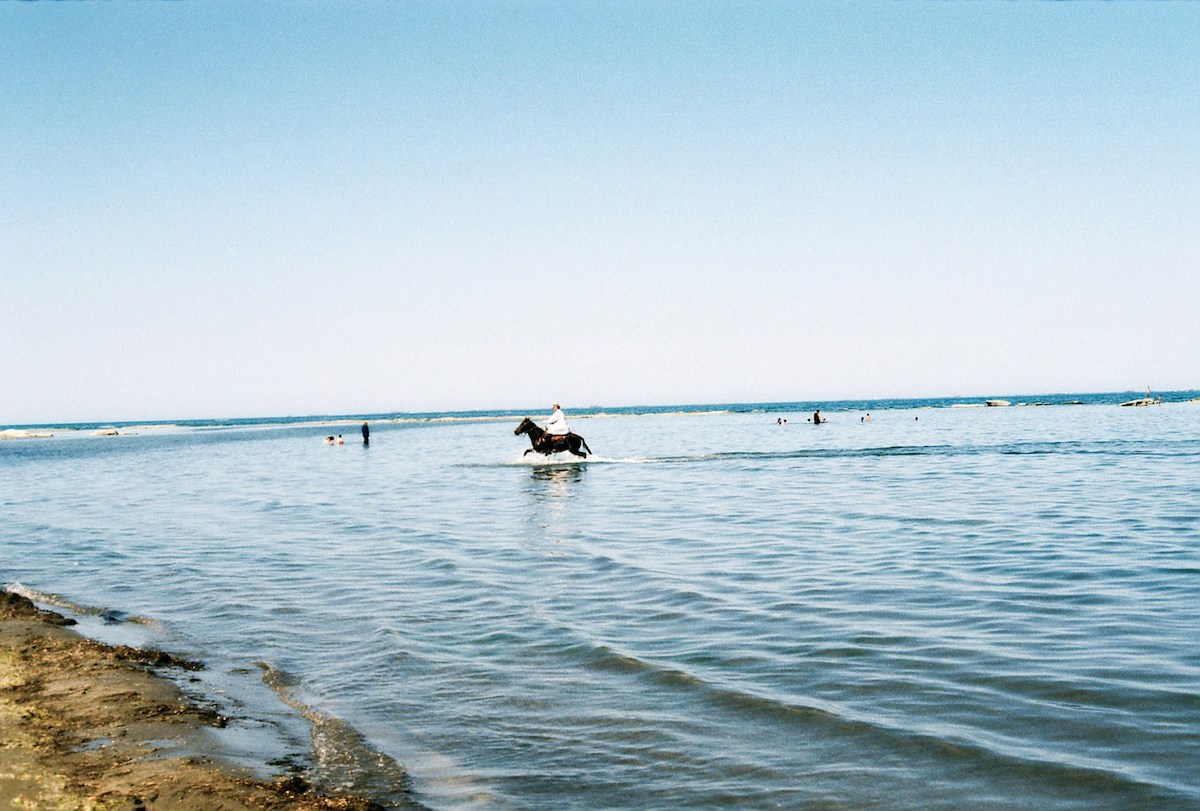
Photo by Daniel Silva. On the shore of the Caspian Sea in Azerbaijan.
-
Friday, 13 March, Armenia. Director of the Armenian Genocide Museum-Institute resigns after giving a book on Karabakh to the U.S. vice president without approval
● Prime Minister Nikol Pashinyan confirmed that he personally asked the director of the Armenian Genocide Museum-Institute, Edita Gzoyan, to resign. He said the reason was that she spoke about Karabakh with U.S. Vice President JD Vance during his visit to Armenia and presented him with a book on the subject. “Foreign policy in the country is determined by the government. If any official says or does something that contradicts that foreign policy, he or she must be dismissed, because that is a provocation. This is a state with its own logic of governance and a state system, and there is absolutely no need to pretend to be innocent,” Pashinyan said.
● Gzoyan’s resignation is being widely discussed in public circles. Former director of the museum Hayk Demoyan said the situation is evidence of complete and absolute madness. He agreed that during an official visit of such a level all protocol details should be carefully prepared and discussed, including the selection of gifts for guests. “But this was not done. The blame is not on Edita Gzoyan, but on the chief of staff and the foreign minister, who apparently were not aware of the current foreign policy course of the prime minister,” Demoyan said.
● Arman Tatoyan, head of the opposition political initiative “Wings of Unity,” said he was outraged that Gzoyan was “dismissed simply because she told the U.S. vice president about the mass killings of Armenians by Azerbaijan in different years and handed over books on the Artsakh issue and the Armenian Genocide.” “The Genocide Museum is not the foreign ministry. The mission of the museum is to preserve and pass on memory. Memory cannot be a provocation or an obstacle to peace,” Tatoyan said.
● “Our partners in the EU will support Armenia and will fight together with us against the hybrid threats we are witnessing. Discussions are underway about the timing of the arrival of an EU expert group,” Armenian Deputy Foreign Minister Vahan Kostanyan told journalists.
● Progress in the visa liberalization process with the EU and the implementation of the approved action plan were discussed during a meeting between Deputy Prime Minister Mher Grigoryan and a delegation led by the European Commissioner for Home Affairs and Migration Magnus Brunner. Armenia’s interior minister and the head of the EU delegation in Armenia also participated in the meeting.
● Foreign Minister Ararat Mirzoyan traveled to Bern on a working visit. “An important event in the development of bilateral relations between Armenia and Switzerland is expected in the Swiss capital. Stay tuned for updates,” Armenia’s Foreign Ministry wrote on social media.
● Armenia’s authorities refused Russian humanitarian aid intended for Armenians displaced from Karabakh, Russian Foreign Ministry spokesperson Maria Zakharova said at a briefing, expressing outrage. Zakharova called the decision a “pre-election desire by the Armenian authorities to remove mentions of Russia” and stressed that the proposed aid “was purely charitable and had no political implications.”
Armenian media reported that the organization Eurasia had been preparing the humanitarian aid package mentioned by the Russian Foreign Ministry. According to those reports, the organization had previously been involved in schemes to interfere in electoral processes in Moldova. It was reported that pro-Russian Moldovan oligarch Ilan Shor and blogger Mika Badalyan, a member of the organization’s board, coordinated financial networks through “Eurasia,” through which voters allegedly received bribes, including in cryptocurrency. The organization’s leadership reportedly includes well-known propagandists, including Margarita Simonyan. The United States Department of the Treasury has imposed sanctions on the organization.
● Mark Jones, a representative of the initiative International Observatory for Democracy in Armenia, told journalists that he has evidence that representatives of the European Union, as well as U.S., Turkish, and Azerbaijani officials attempted to influence the electoral process in Armenia by publicly expressing support for Prime Minister Nikol Pashinyan. However, he stressed that the authorities, while accusing opposition leaders and members of the clergy of having a “pro-Russian” orientation, have so far provided no evidence. No facts of illegal activity have been uncovered, Jones said.
● Nikol Pashinyan confirmed that his statement in the European Parliament that the main obstacle to Armenia’s path toward membership in the European Union is the suspended political dialogue between the EU and Georgia was solely his personal opinion. “There was no request or appeal from Georgia. We are indeed concerned about the situation in EU–Georgia relations,” Pashinyan said.
● The Armenian government approved a decision to connect the energy systems of Armenia and Georgia. A loan agreement titled “Caucasus Electricity Transmission Network EU Stage II” was signed between Armenia and the KfW Development Bank. The project aims to link the Armenian and Georgian energy systems through a 500/400/220 kV high-voltage direct current converter substation located near the border in Ayrum.
As a result, electricity exchange capacity between Armenia and Georgia is expected to increase from the current 200 MW to 350 MW in the first stage, and later—depending on demand in the regional market—to 1050 MW. The total budget of loan and grant funds allocated for the implementation of the program amounts to €188.75 million.
● Tigran Avinyan, the mayor of Yerevan, called on voters to “send all the oligarchs and representatives of the former authorities to hell” in the parliamentary elections on June 7.
● Armenia’s Foreign Ministry decided to provide entry visas to Saudi Arabia for all Armenian citizens currently in Qatar, taking into account the tense situation in the Middle East.
● Armenia’s Defense Minister Suren Papikyan took part in the ceremonial opening of the international exhibition BEDEX in Brussels.
● One of the streets in Yerevan will be named after the legendary coach of the equally legendary football club FC Ararat Yerevan (the “Ararat-73” team), Nikita Simonyan. The decision was made at a meeting of the capital’s Council of Elders.
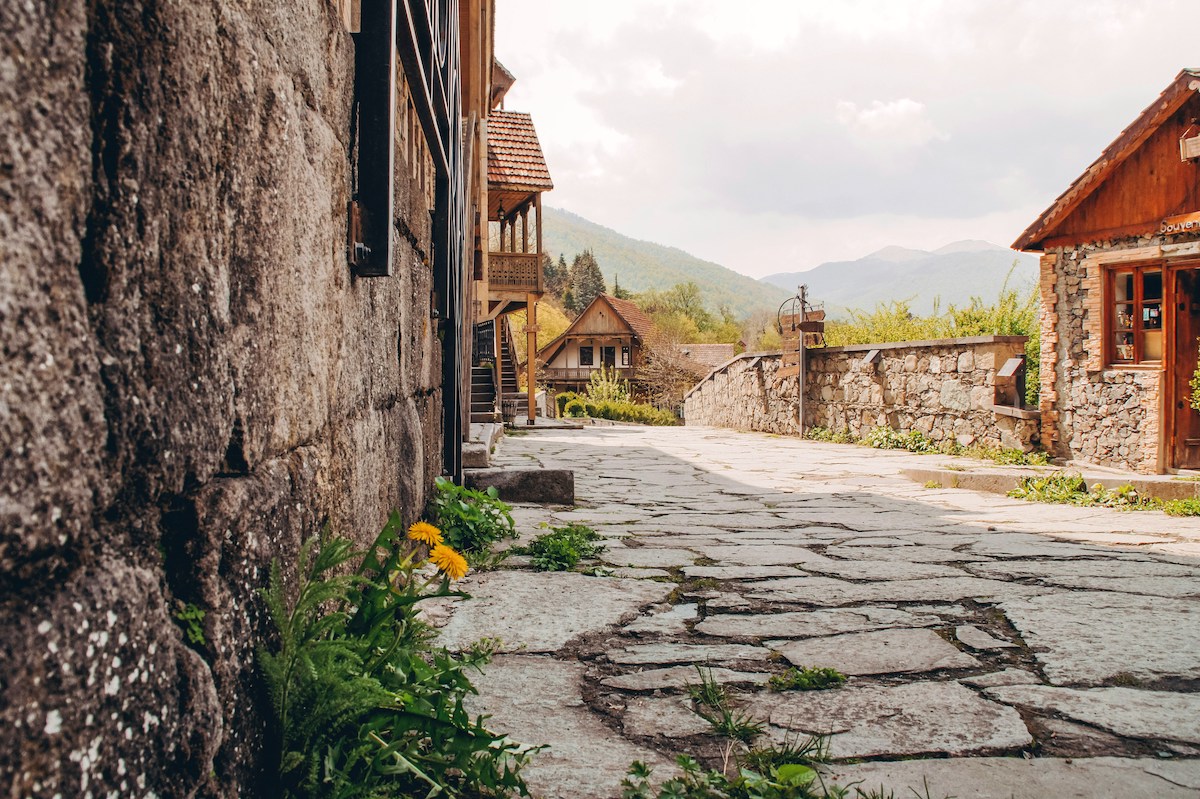
Photo by Ekaterina Krusanova . In the “Old Town” of Dilijan, Armenia.
-
Thursday, 12 March, Armenia. Prime Minister Nikol Pashinyan spoke at the European Parliament in Strasbourg
● Prime Minister Nikol Pashinyan spoke at the European Parliament in Strasbourg. Among other things, he stated:
“The frozen state of the political dialogue between the EU and Georgia is the biggest problem on Armenia’s path toward integration into the European Union. We adopted a law to begin the process of Armenia’s accession to the EU after Georgia received candidate status for membership in the Union. This made the prospect of Armenia joining the EU more tangible. A constructive process between the EU and Georgia is just as important for Armenia as it is for Georgia.”
The prime minister spoke about the possibility of Armenia joining the EU and stressed that the country now faces the task of continuing reforms in order to meet the membership criteria.
“Conflicts and hostility are a virus that blinds us and makes our independence and statehood vulnerable. The realization of the strategic interdependence of our destinies is another important factor that made peace between Armenia and Azerbaijan possible.”
“Some clergymen have taken on the leadership of the party of war, gathering around themselves former presidents of Armenia, forces connected with them, and certain Russian and pro-Belarusian oligarchs, and they are trying to sacrifice Armenia’s independence in the interests of third countries.”
“Our Karabakh brothers and sisters must obtain Armenian citizenship and settle in the country permanently. We have already launched a resettlement program, and so far 4,886 families have become its beneficiaries.”
More details about Nikol Pashinyan’s speech in the European Parliament can be found here.
● In the context of developments around Iran, Armenia is acting as an important humanitarian corridor for the evacuation of citizens of European Union countries, European Parliament President Roberta Metsola said at a joint briefing with Nikol Pashinyan in Strasbourg.
● Roberta Metsola highlighted Armenia’s role as an important partner and spoke about significant achievements in relations between Yerevan and Brussels, including the agreement on a strategic cooperation agenda and the progress in the visa liberalization process.
● “A long-term peace has already been established between Azerbaijan and Armenia, and the agreements reached have not remained only on paper — the sides are demonstrating political will,” Armenian media quoted Azerbaijani President Ilham Aliyev as saying during his joint press statement with President of the European Council António Costa, who paid a visit to Baku. “We are already living in conditions of long-term peace. Over the past seven months we have begun supplying petroleum products to Armenia. We have lifted all restrictions on the transit of goods from other countries to Armenia through our territory. This once again demonstrates our strong political will,” Aliyev said.
● Since the beginning of the escalation in the Middle East region, 196 Russian citizens have returned from Iran to Russia through the territory of Armenia. Most of them were employees of Iran’s Bushehr nuclear power plant who were evacuated on March 11. This was reported in a statement by the Russian Embassy in Armenia.
● The geographical coverage of those evacuated from Iran through Armenia has expanded and now includes citizens of 46 countries, according to a statement by Armenia’s Ministry of Foreign Affairs.
● A court has acquitted the leader of the opposition Prosperous Armenia party, Gagik Tsarukyan, who had been charged with bribing voters ahead of the parliamentary elections scheduled for June 7. Much of Armenia’s opposition is widely regarded as having a pro-Russian reputation.
● Turkish Airlines has begun operating flights on the Istanbul–Yerevan–Istanbul route. For now, the flights will operate daily. Starting from May 14, the frequency will increase to 10 flights per week, and from June 15 to 14 flights per week.
● “Many trees in Yerevan have already reached the age of 70–80 years, and we cannot rejuvenate them or make them immortal,” said Armen Begoyan, director of the state non-commercial organization Greening and Environmental Protection, commenting on complaints from citizens and specialists about the mass cutting of trees in the capital. According to him, the trees being cut down on Proshyan Street will be replaced with Japanese sophora trees costing up to 91,000 drams (about $240).
● During a working visit to Paris, Foreign Minister Ararat Mirzoyan familiarized himself with renovation works at the new building of the Armenian Embassy.
● Defence Minister Suren Papikyan took part in the ceremonial opening of the building of the women’s battalion.
-
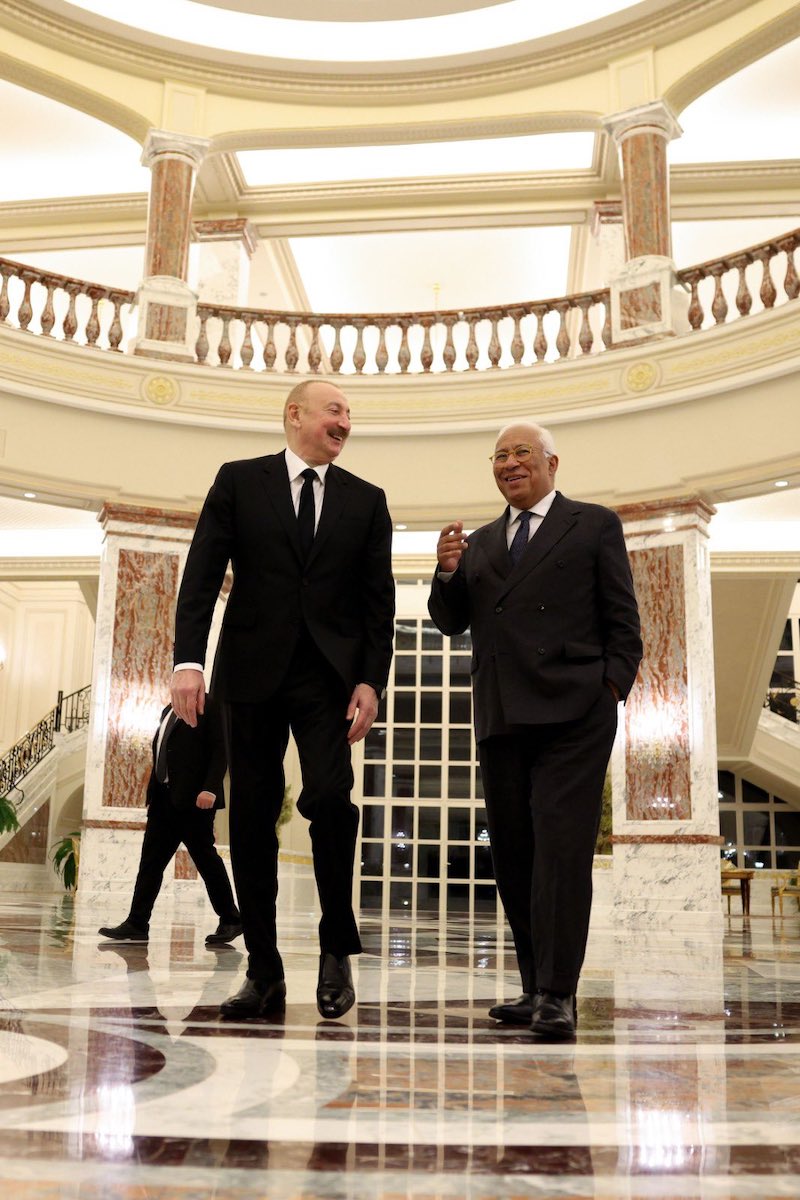
Thursday, 12 March, Azerbaijan. President of the European Council António Costa visited Baku
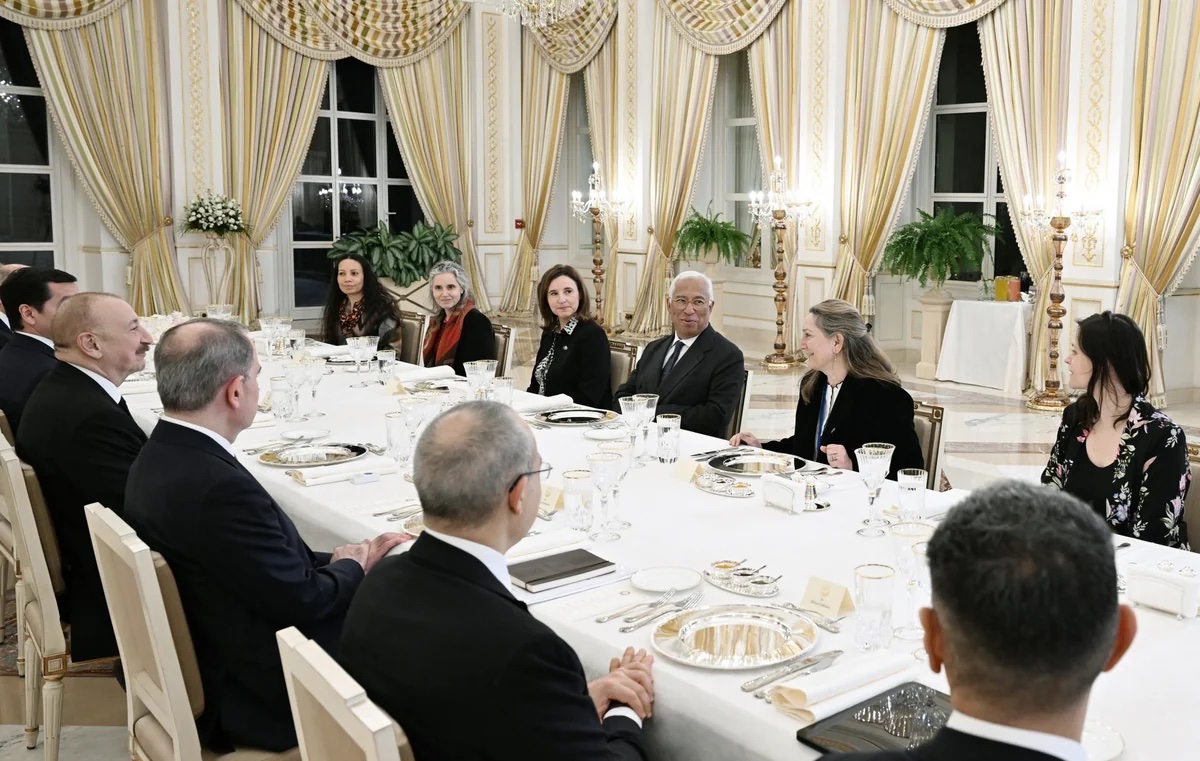
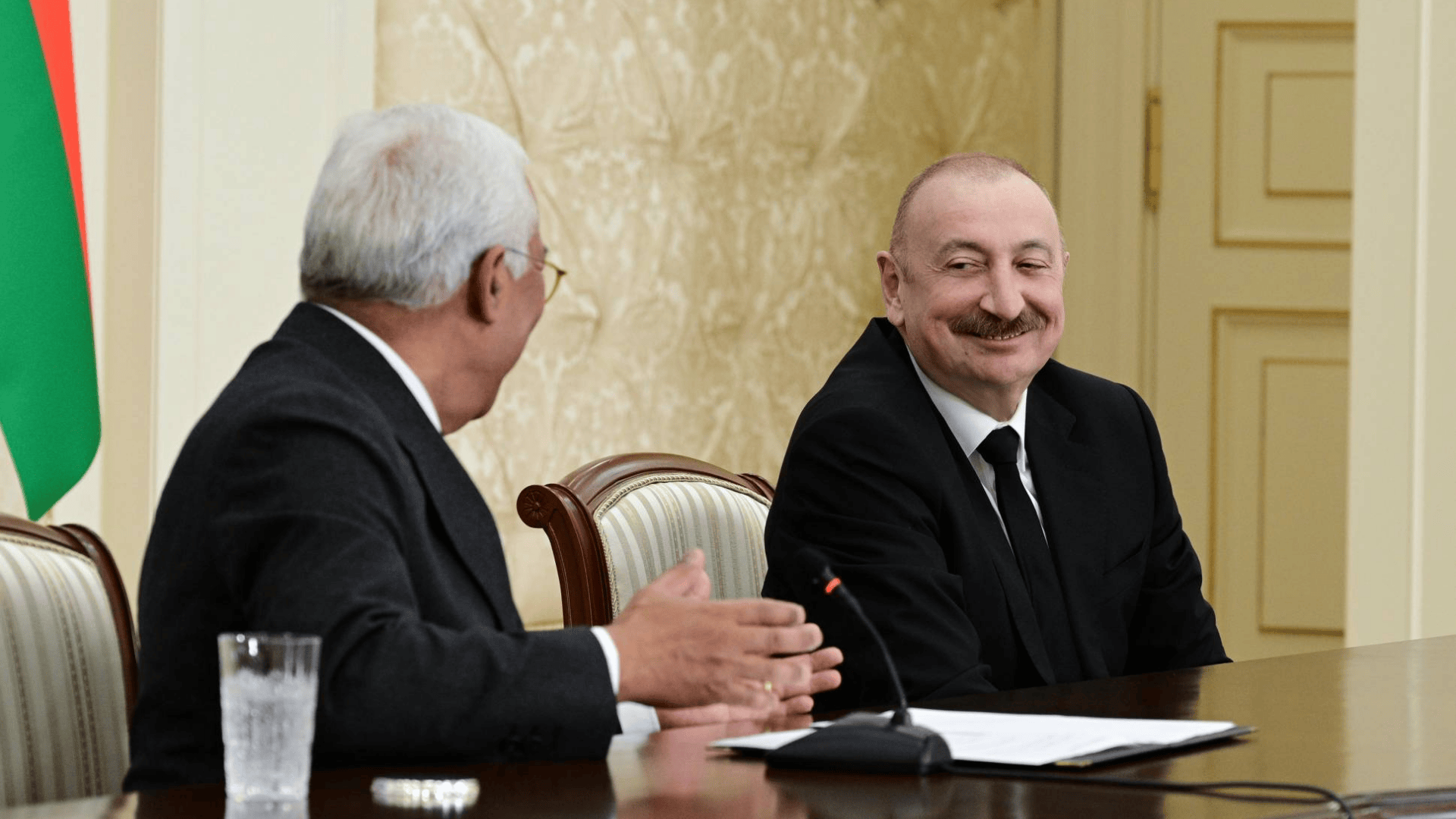
● President of the European Council António Costa paid a one-day visit to Baku, where he met with President Ilham Aliyev. During an official lunch, the leaders also held an expanded meeting with their delegations. Following the talks, a briefing for journalists was held and a joint statement was adopted.
The strategic nature of the partnership between Azerbaijan and the European Union was emphasized, and the sides expressed their intention to swiftly finalize negotiations on a new comprehensive bilateral agreement.
Both sides also highlighted plans to expand cooperation in the fields of security, energy, transport and digital technologies.
Costa described Azerbaijan as a key partner of the EU and expressed solidarity following the Iranian drone attack on Azerbaijani territory on March 5. He also reiterated that Azerbaijan will host the European Political Community summit in 2028 and invited Ilham Aliyev to visit Brussels.
The leaders also noted the historic momentum in the peace process between Azerbaijan and Armenia, referring to the results of the Washington summit of August 8, 2025, held with the participation of Donald Trump.
António Costa reaffirmed the EU’s full support for the peace efforts of the two countries. The importance of the large-scale reconstruction process and Azerbaijan’s efforts to develop the Karabakh and East Zangezur regions was also highlighted.
Both leaders called for increased international support to accelerate mine clearance efforts in these regions.
They also emphasized Azerbaijan’s key role in strengthening transport, trade, energy and digital links between the Black Sea region, the South Caucasus and Central Asia, particularly through the Middle Corridor.
The European Union reaffirmed its support for the modernization of railways in the Nakhchivan Autonomous Republic of Azerbaijan and for efforts to implement the TRIPP transit project.
The importance of the Southern Gas Corridor Advisory Council and the Green Energy Advisory Council meetings was also highlighted, along with the need to deepen cooperation in defense and security.
● During the briefing, António Costa and Ilham Aliyev said that Azerbaijan is a reliable partner in ensuring Europe’s energy security, currently supplying gas to 10 European countries. Aliyev noted that 50% of Azerbaijan’s foreign trade in January was with the EU, making it the country’s largest trading partner.
● António Costa later posted on X thanking Azerbaijan for the warm welcome in Baku. He wrote that he looks forward to continuing work on a new framework for closer EU–Azerbaijan cooperation reflecting their shared vision for the future. He also said that at a time of growing global tensions and instability, strengthening ties is more important than ever, and expressed full solidarity with Azerbaijan and its people as the dangerous military escalation in Iran and the Middle East risks having a direct impact on the country.
● A delegation led by the commander of the Turkish Land Forces visited Azerbaijan’s Nakhchivan Autonomous Republic. A meeting was held at the headquarters of the Separate Combined Arms Army with the participation of its commander. It was stated that Turkey always stands alongside Azerbaijan in strengthening regional stability and ensuring full security, and in accordance with the provisions of the Shusha Declaration is ready to provide any military assistance if necessary.
The visit followed the drone attack on Nakhchivan on March 5, which injured four people. Azerbaijani authorities blamed Iran for the attack, while Iranian officials denied involvement.
● A new verdict has been issued in the criminal “NGO case,” under which more than ten leaders of local and international organizations have been arrested on financial crime charges. Social worker Zamin Zaki was sentenced to 7 years and 6 months in prison on charges of money laundering and fraud. The case mainly concerned the failure to register grant funds received for training and civil rights protection. Zaki, like the other detainees in the case, denies the charges.
● Azer Gasimli, director of the Institute of Political Management and a political analyst, has been sentenced to 12 years in prison after being found guilty of extortion through threats. It is alleged that he threatened Gurbanali Yusibov, including threats to kidnap his son and kill his father while demanding money. In his final statement, Gasimli said the accusations were false and claimed he had been arrested on politically motivated charges for criticizing the authorities.
● Since February 28, more than 2,500 people have been evacuated from Iran to Azerbaijan, including 383 Azerbaijani citizens and citizens of 72 other countries.
● The 13th Global Baku Forum, organized by the Nizami Ganjavi International Center, is taking place from March 12 to 14. Dozens of international political figures are participating, with discussions focused on global challenges, multilateral cooperation and international security.
● Another freight train of 11 wagons carrying Russian grain has been sent in transit from Azerbaijan to Armenia, also passing through Georgia. According to official data, more than 22,000 tons of grain (320 wagons) and 610 tons of fertilizers (9 wagons) have been transported from Russia to Armenia via Azerbaijan.
-
Thursday, 12 March, Georgia. The popular opposition TV channel Pirveli is asking for help
● The popular opposition TV channel Pirveli has announced the suspension of its satellite broadcasting from March 11 due to financial debts. The broadcaster has called on viewers to provide financial support and has also published a bank account number for those willing to help: Account number: GE07TB7272236020100006.
● A representative of the ruling party, Irakli Kirtskhalia, accused the German ambassador to Georgia, Peter Fischer, of violating diplomatic norms and said the ambassador had “breached” the Vienna Convention. According to Kirtskhalia, the ambassador is attempting to interfere in Georgian politics.
● Parliament Speaker Shalva Papuashvili said there is no real opposition in the country and that the government’s main opponents today are the European Union and “Brussels,” which, according to him, are trying to exert pressure on Georgian politics.
● The European Commission stated that the Georgian authorities and the Azerbaijani state oil and gas company SOCAR, which operates the Georgian oil terminal in Kulevi on the Black Sea, have committed to no longer allowing tankers from the so-called Russian “shadow fleet” to enter Georgian ports. Only under this condition was Kulevi excluded from the EU’s 20th sanctions package against Russia. More details here.
● After visiting Georgia, a delegation of the OSCE Parliamentary Assembly said the country remains highly polarized. Assembly President Pere Joan Pons Sampietro called on all sides to engage in direct dialogue and constructive interaction. More details here.
● The Special Penitentiary Service has denied reports about a hunger strike by activists arrested for blocking a road during pro-European protests that have been ongoing in Tbilisi for more than a year and a half. The service released a video showing the named activists receiving food. The statement also denies claims that one of them, Zurab Menteshashvili, is being held in solitary confinement. According to the service, the activist is being held in a so-called quarantine cell with all conditions observed.
● ISFED reports that after the United Kingdom imposed sanctions, pro-government TV channels Imedi and POSTV were banned from placing advertisements on Meta platforms. However, according to ISFED, the broadcasters are attempting to place ads by creating new pages on Facebook. More details here.
● Prime Minister Irakli Kobakhidze met with the Israeli ambassador to Georgia, Walid Abu Haya. It was reported that current developments in the Middle East and Georgian-Israeli relations were discussed.
● The Ministry of Internal Affairs reported that as a result of operations conducted across the country, dozens of illegal firearms, ammunition and explosive materials were seized, and 51 people were detained.

-
Wednesday, 11 March, Azerbaijan. Azerbaijan sent more than 30 tons of humanitarian aid to Iran
● The transitional President of Syria, Ahmed al‑Sharaa, called President Ilham Aliyev. They discussed tensions in the Middle East region and the interest of both sides in strengthening bilateral ties.
● The President of Finland, Alexander Stubb, also called President Ilham Aliyev and expressed support following Iran’s attack on the Nakhchivan Autonomous Republic.
● Azerbaijan sent more than 30 tons of humanitarian aid to Iran by presidential order. The decision was reportedly made after a phone call between the Azerbaijani president and Iran’s president. The aid included 10 tons of flour, 6 tons of rice, 2.4 tons of sugar, more than 4 tons of drinking water, about 600 kg of tea, and around 2 tons of medicines and medical supplies.
● A citizen of Azerbaijan and Israel was killed in the Israeli city of Petah Tikva as a result of an Iranian missile strike. Azerbaijan’s embassy said he had emigrated to Israel with his family many years ago.
● Today the Ministry of Economy and the American company H Haimaker.AI Inc. will sign a memorandum of understanding in Washington on potential cooperation to develop a digital platform in Azerbaijan. Using generative AI solutions, the project is expected to create added value of 70 million manats (about $41,000).
● An Azerbaijani business delegation led by First Deputy Economy Minister Elnur Aliyev is visiting the United States and holding meetings with representatives of the local business community.
● Opposition figure Tofig Yagublu, sentenced to nine years in prison, has continued a hunger strike since February 21 in protest against his arrest and detention. His family says they are seriously concerned about his health. According to his daughter, a recent medical examination showed he lost 10 kg in 15 days, his blood pressure is 60/90, and he has difficulty speaking. In comments to the Azerbaijani service of Radio Free Europe/Radio Liberty, she said the authorities bear responsibility for his life. The editorial office could not obtain a comment from the penitentiary service.
● The MEDIA Development Agency called biased the 2025 annual report on press freedom in Europe published by the Council of Europe platform for the protection of journalism and safety of journalists. It described assessments of amendments to the “Media Law” adopted in 2025 as speculative. According to the agency, the main aim of the amendments is to improve state regulation in combating negative phenomena in the information space while taking public demands into account. The agency also stressed that there are no restrictions on journalists’ professional activities in Azerbaijan and that freedom of expression is fully guaranteed both legally and in practice. Regarding the more than 30 jailed journalists mentioned in the report, the agency said criminal charges had been brought against them.
● The Embassy of the Netherlands in Tehran will temporarily operate from Azerbaijan, the head of the diplomatic mission told journalists after crossing the Azerbaijani-Iranian border. Several diplomatic missions from different countries have temporarily relocated to Baku.
● The president signed a law approving amendments to the Constitution of the Nakhchivan Autonomous Republic. Two new articles were added, Article 5 was removed, and several other articles and the preamble were amended. Overall, the changes transfer many powers previously held by autonomous institutions to Baku and more closely integrate Nakhchivan into the country’s overall legal framework. Nakhchivan is recognized as an inseparable part of Azerbaijan. A presidential representative office has been established there under the direct authority of the president. The president of Azerbaijan now has the power to dissolve Nakhchivan’s Supreme Assembly. Read more here
● Today marked the second “Night of Destiny” during the month of Ramadan (Laylat al‑Qadr, the Night of Ahya). Believers say that on this night angels descend from heaven to better hear people’s prayers.
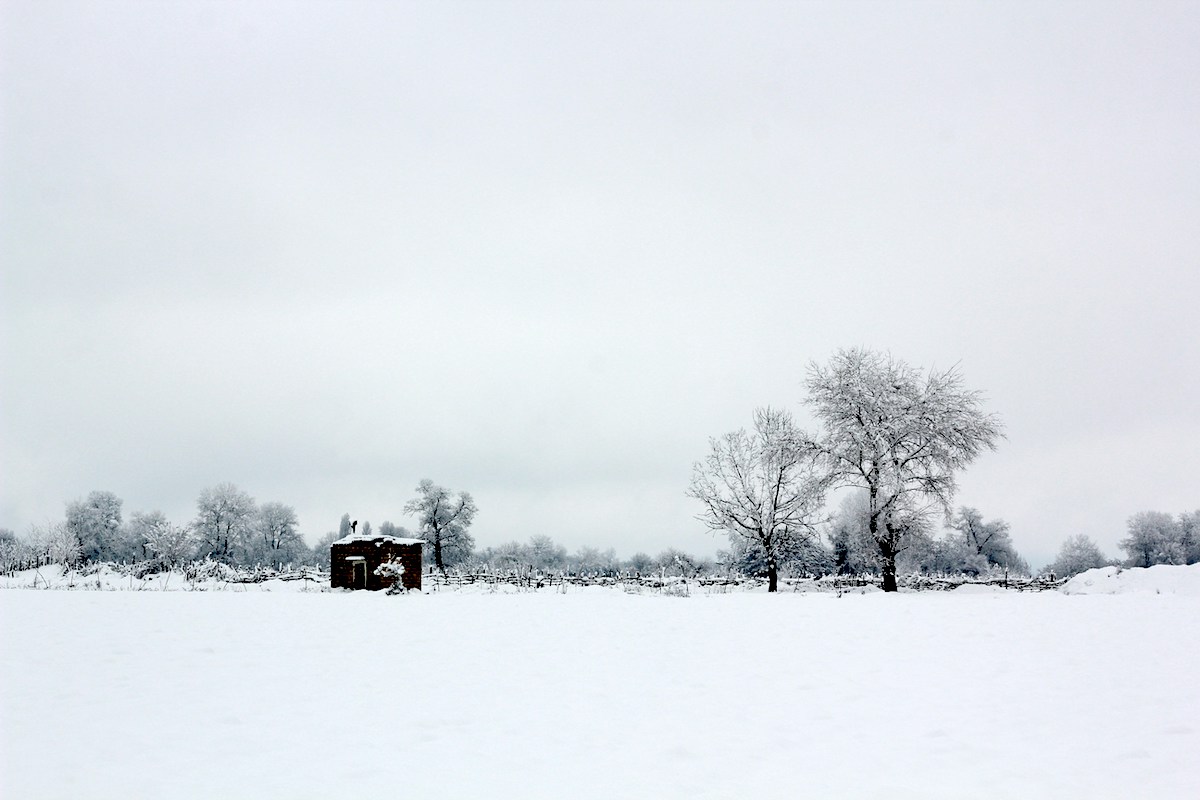
Photo by Leman. Gabala, Azerbaijan
-
Wednesday, 11 March, Georgia. The Chair of the OSCE Parliamentary Assembly: “The main problem in Georgia is the lack of dialogue between political opponents”
● The European Union removed the Kulevi Oil Terminal on Georgia’s Black Sea coast from the new 20th sanctions package against Russia after the Georgian authorities and the port operator, Azerbaijan’s state company SOCAR, provided Brussels with commitments to comply with sanctions. The EU’s Special Envoy for Sanctions, David O’Sullivan, informed Georgia’s foreign minister. Read more here
● Despite the clear explanation presented by David O’Sullivan, Foreign Minister Maka Bochorishvili told journalists that the Kulevi port had not been included in the EU’s 20th sanctions package because “there was no evidence justifying such a decision.”
● Political analyst Gia Khukhashvili was questioned by the State Security Service of Georgia for about four hours. According to him, the questions concerned statements he made on the TV channel Palitra News about possible threats from Iran. Khukhashvili believes discussing such risks is necessary to strengthen national security. More details about the questioning of politicians and experts on this issue can be found here.
● The President of the OSCE Parliamentary Assembly, Pere Joan Pons Sampietro, who is in Tbilisi leading a delegation, told journalists that one of the main outcomes of the visit was the opportunity to speak with all sides. He noted that the main focus of the meetings was the lack of dialogue between political opponents. OSCE representatives raised this issue in meetings with the prime minister, the president, the speaker of parliament, and opposition representatives.
● Pere Joan Pons Sampietro also said that the Georgian authorities refused the OSCE delegation permission to visit prisoners, including journalist Mzia Amaglobeli, a recipient of the Sakharov Prize. He said the delegation called on the Georgian authorities to consider releasing prisoners, particularly those who have already served at least half of their sentences.
● Prime Minister Irakli Kobakhidze said the meeting with the OSCE delegation focused on regional security and strengthening partnership with the organization. He stressed that Georgia remains committed to “constructive cooperation based on mutual respect.”
● The foreign ministers of France, Germany, and Poland said in a joint statement that they are concerned about new legislative acts tightening control over foreign funding and political activity. They said the move contradicts Georgia’s commitments to the EU and reinforces a repressive approach toward civil society.
● The House of Lords of the United Kingdom discussed the possible expansion of sanctions against senior Georgian officials. The discussion concerns those who continue cooperating with pro-government Georgian TV channels already under UK sanctions — Imedi TV and POSTV. Read more here
● The United National Movement said it remains committed to the opposition alliance agreement signed on March 2. The party announced it would distance itself from attacks on partner parties and called on its members to refrain from statements that discredit or turn other opposition groups against them.
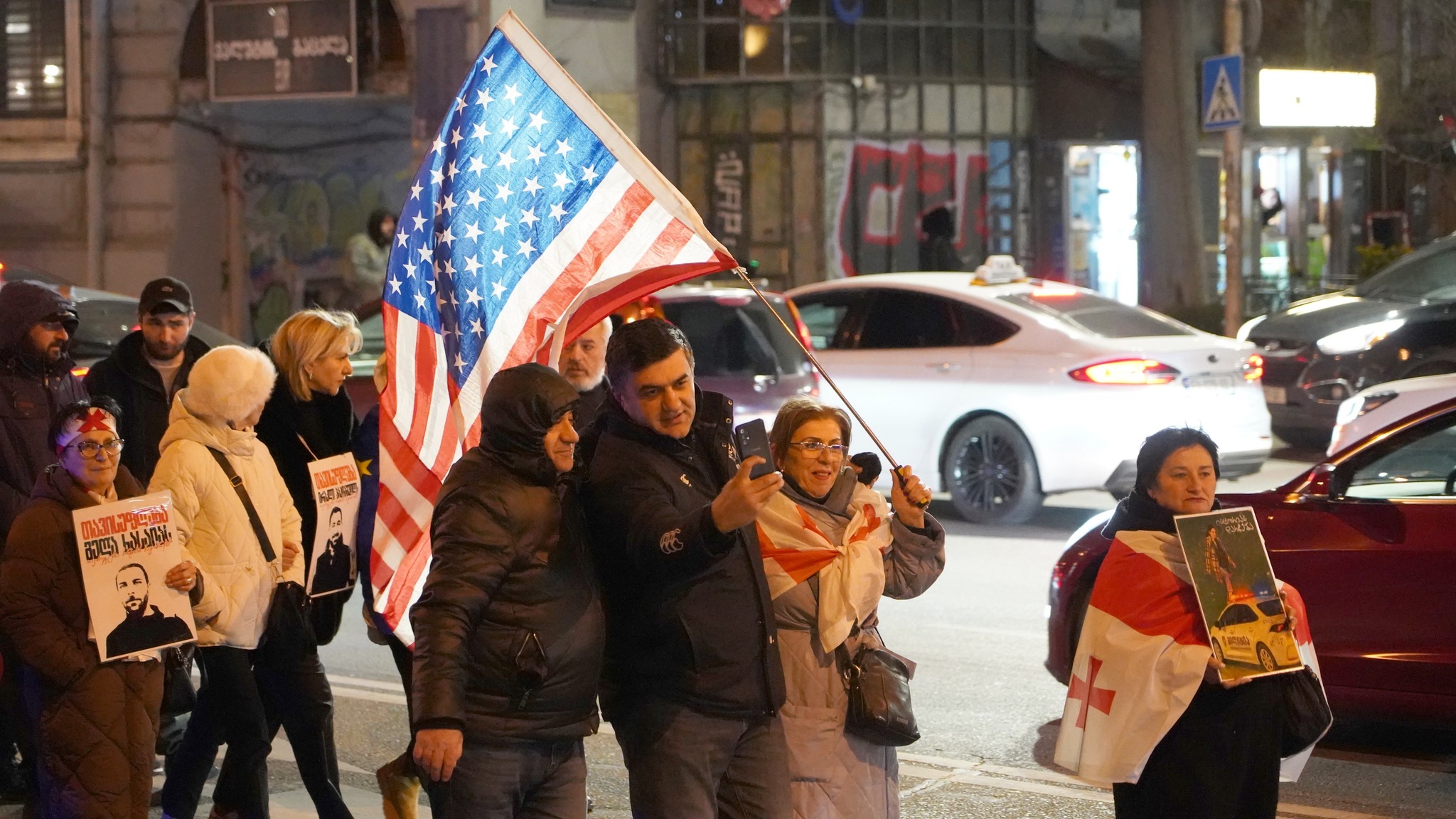
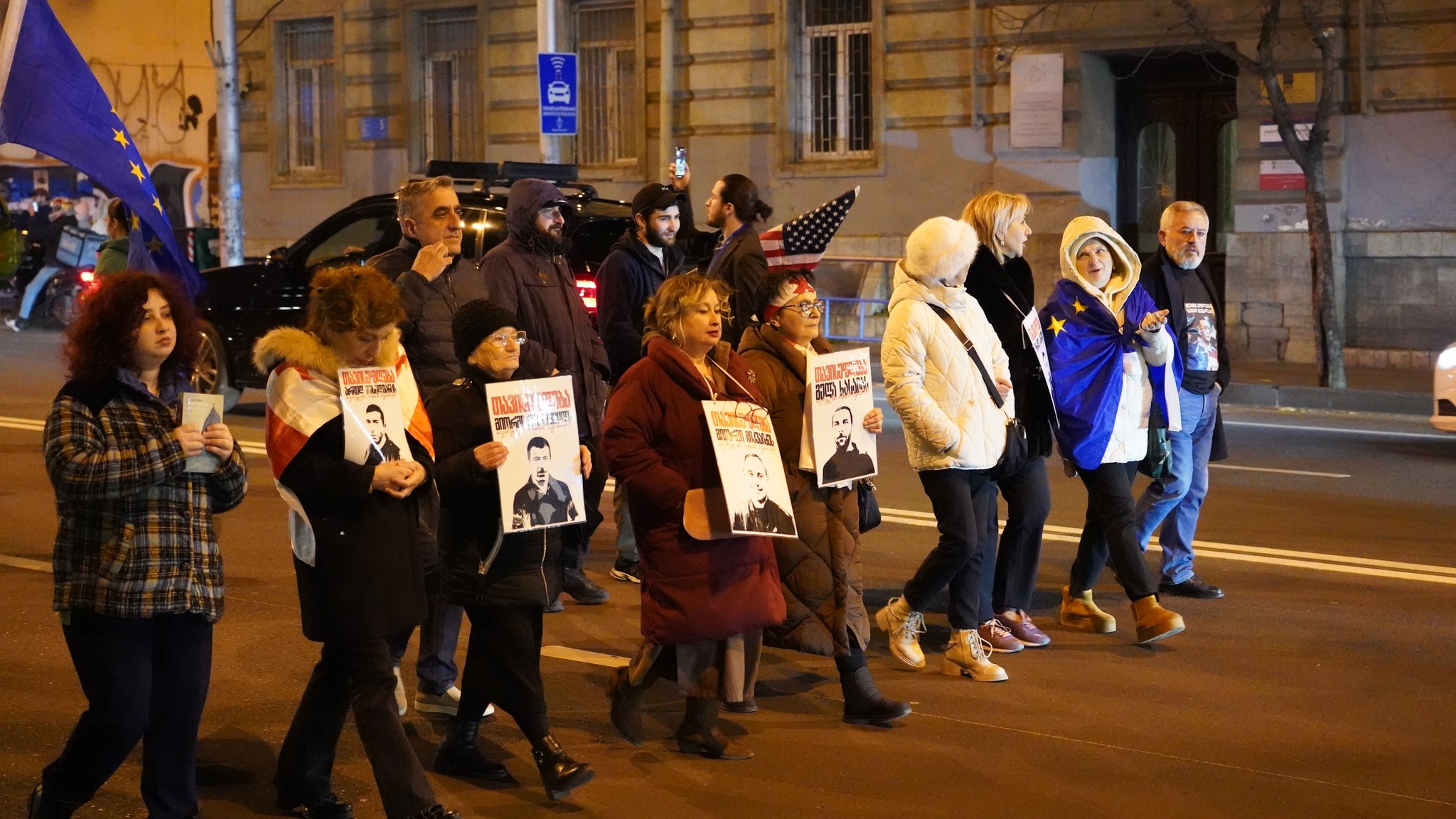
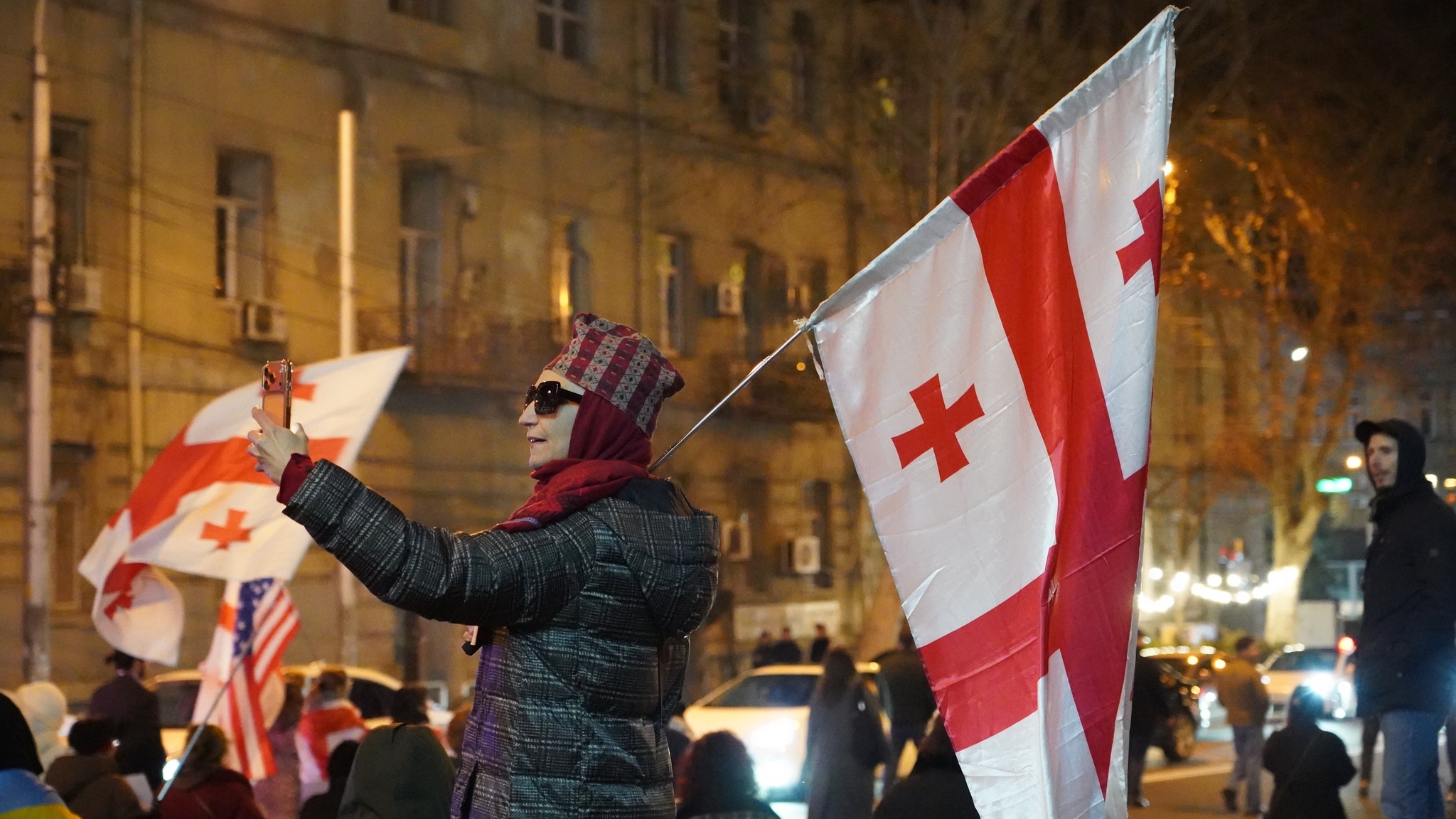
Photo JAMnews. At the pro-European protests in Tbilisi, which have been continuing without interruption for a year and a half, people are holding portraits of arrested protest participants
-
Wednesday, 11 March, Armenia. Nikol Pashinyan took part in the second summit on nuclear energy in Paris
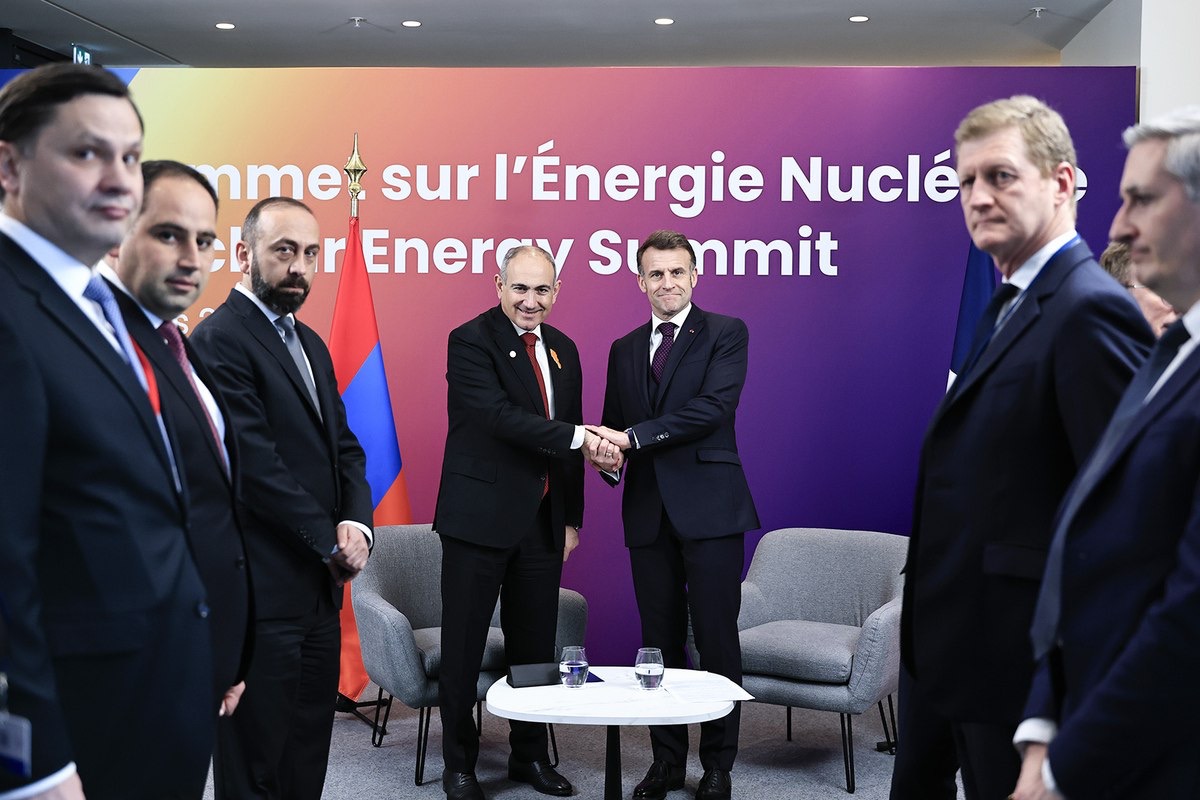
● Prime Minister Nikol Pashinyan took part in the second summit on nuclear energy in Paris (pictured). Participants were welcomed by the President of France, Emmanuel Macron, and the Director General of the International Atomic Energy Agency, Rafael Grossi.
● In his speech at the summit, Nikol Pashinyan said: “Alongside the development of safety technologies, extending the lifespan of existing nuclear reactors is an effective way to achieve zero emissions. Armenia has launched a program to extend the operation of its nuclear power plant until 2036. This will create a solid foundation for a safe transition to a new nuclear power unit. Our focus is on small modular reactor technologies, which offer promising prospects. We are currently carefully evaluating proposals from international partners.”
● On the sidelines of the summit, Nikol Pashinyan met with Emmanuel Macron. They discussed regional developments and stressed the importance of lasting peace.
● A meeting between the foreign ministers of Armenia and France also took place on the sidelines of the summit.
● The Minister of Energy of Turkey, Alparslan Bayraktar, wrote on X (Twitter) that he met in Paris with Nikol Pashinyan and Armenia’s Minister of Territorial Administration and Infrastructure Davit Khudatyan. They discussed peace in the region and potential areas of cooperation, particularly interaction between power grids, nuclear energy, and natural gas.
● The spokesperson of the Armenian Defense Ministry, Aram Torosyan, called false media reports claiming that in 2025 the armed forces of Azerbaijan allegedly established a new position on Armenia’s sovereign territory. “The Armenian General Staff relies on topographic maps from 1975 that have legal validity,” Torosyan said, showing the relevant map in a video.
● The ruling party Civil Contract discussed the draft of Armenia’s new Constitution. The meeting was led by Deputy Chairman of the party board and Economy Minister Gevorg Papoyan. No further details were disclosed.
● The European Union Monitoring Mission in Armenia (EUMA) announced that it had conducted its 8,000th patrol in the country. The mission said it remains committed to strengthening peace and stability in the region.
● The candidate for prime minister from the opposition Armenian National Congress, Levon Zurabyan, said the party will participate in the June 7 parliamentary elections exclusively with its own list, whether as a separate bloc or within a coalition format.
● As a result of US-Israeli strikes in Tehran, a residential complex in the old Armenian district of Majidiye was damaged, according to the Telegram channel “Iranist.” No deaths were reported, but some residents were trapped under the rubble.
● About 40 citizens of Armenia, including 14 students, are currently unable to leave the United Arab Emirates, the Foreign Ministry said.
● All Armenian citizens who were stranded in Vietnam due to flight cancellations related to the situation in the Middle East and who had previously contacted the Armenian embassy in Hanoi have returned home, the Foreign Ministry reported.
● “Those who were dismissed from power became opposition figures,” wrote Parliament Speaker Alen Simonyan on social media. “These are people who rejected our principles, and we rejected them — and they became opposition figures. Those who broke the law and faced criminal cases also became opposition figures. So how can anyone now claim that we are the ones shaping the opposition field?”
● The Anti-Corruption Court ordered the arrest of Alexander Sargsyan, the brother of former president Serzh Sargsyan, on charges of large-scale embezzlement. The court’s spokesperson said the decision was taken to prevent him from fleeing.
● A second shipment of Russian wheat in the past three days is being sent from Azerbaijan to Armenia. A train of 11 wagons will deliver Russian grain to Armenia in transit through Georgia, according to Azerbaijani media.
-
Tuesday, 10 March, Georgia. Joe Wilson: "The anti-American Georgian Dream party is scared to death that Americans will learn that it is in cahoots with the Iranian regime"
● The case of journalist Mzia Amaghlobeli has reached Strasbourg. The Georgian Young Lawyers’ Association has filed a third complaint with the European Court of Human Rights over the case of the founder of the popular outlets Netgazeti and Batumelebi. The complaint alleges ill-treatment during her detention and violations of fundamental human rights.
● U.S. Congressman Joe Wilson: “The anti-American Georgian Dream party is scared to death that Americans will learn that it is in cahoots with the Iranian regime so they are doing everything they can to silence experts highlighting this fact. To defeat Iran, defeat GD.” Wilson was commenting on a new investigation launched by the State Security Service of Georgia following statements by Georgian politicians and experts about a dangerous rise in Iranian influence in Georgia. Read more here
● John Walters, president of the Hudson Institute, expressed concern over the investigation by the State Security Service. He said the report in question was based on publicly available and verified information. Read more here
● During court proceedings at the Tbilisi City Court, a former defense minister said that ruling party founder and billionaire Bidzina Ivanishvili “must be overthrown.” Following the statement, the State Security Service opened an investigation under Article 317 of the criminal code — “calls to overthrow the government.”
● Prime Minister Irakli Kobakhidze said a new alliance of opposition parties “essentially brings together parties that emerged from the United National Movement,” and therefore it may be necessary to expand the lawsuit already filed with the Constitutional Court seeking to ban the party.
● Foreign Minister Maka Bochorishvili of the ruling party Georgian Dream said that “Georgia is part of European civilization — this is not a choice but a historical fact.” According to her, Europe needs Georgia in its transit role, “although EU bureaucracy does not express this properly.”
● The Georgian Charter of Journalistic Ethics protested against criminal charges brought by the Interior Ministry against three journalists and a photographer accused of “blocking a road.” According to the organization, they were preparing journalistic reports at the time.
● The State Security Service of Georgia said that 30 people had been arrested or charged in 12 corruption cases across different regions of the country. Among them are municipal employees and former local officials.
● Ruling party MP Gia Volski said the European Union decision to suspend visa-free travel for holders of Georgian diplomatic and service passports was “unfair” and politically motivated.
● In Batumi, a senior police investigator was arrested for attacking a shop and stealing money. According to investigators, he used a knife and stole 2,915 lari (about $1,000).
● A court found a man guilty of domestic violence and attempted murder of his wife. According to investigators, he wounded her with a knife and a stun device; the victim survived after receiving medical assistance.
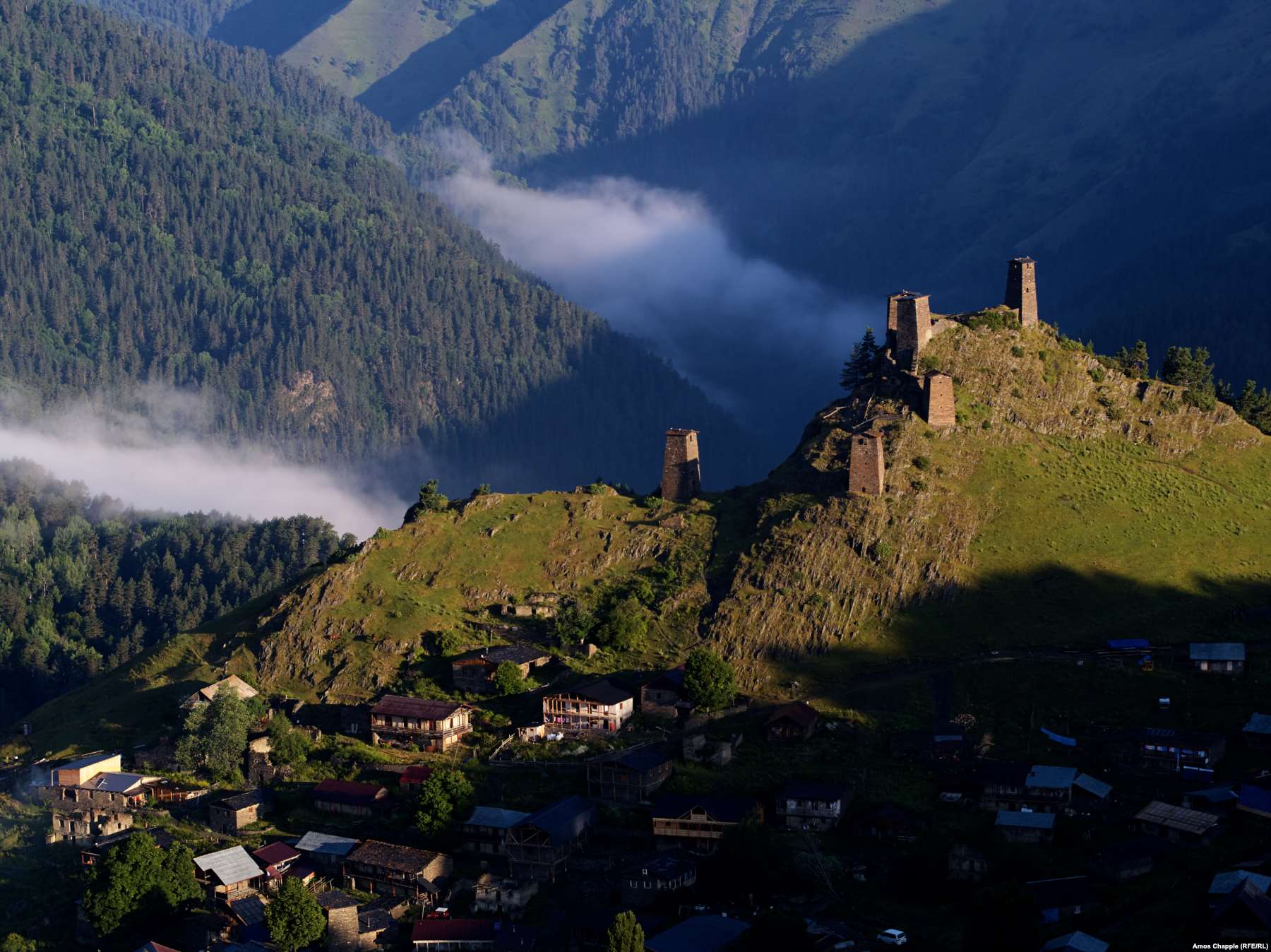
Tusheti. Photo by Amos Chapple
-
Tuesday, 10 March, Armenia. Nikol Pashinyan took part in a remote meeting between the European Union and leaders of Middle Eastern countries
● Another shipment of Russian grain has been sent to Armenia in transit via Azerbaijan, Azerbaijani media reported. The shipment consists of seven wagons carrying a total of 488 tonnes of grain. The train will reach Armenia after passing through Georgia.
● Prime Minister Nikol Pashinyan has left for a working visit to France. On March 10, he will take part in a nuclear energy summit. The following day Pashinyan will travel to Strasbourg, where he is scheduled to deliver a speech at the European Parliament. During the visit he will also meet with the president of the European Parliament, Roberta Metsola.
● Nikol Pashinyan also took part in a remote meeting organized at the initiative of António Costa, president of the European Council, and Ursula von der Leyen, head of the European Commission. Leaders of several countries in the region discussed the situation in the Middle East and possible ways to reduce regional tensions. Pashinyan said Armenia was closely and with concern following developments in the region, particularly because several countries involved are Armenia’s friends and partners.
● Another 63 Armenian citizens returned home on a Muscat–Yerevan flight, the foreign ministry’s press service said.
● In 2025, no cases of murder were recorded in the armed forces, it was announced at an expanded meeting of the board of the Prosecutor General’s Office of Armenia reviewing the body’s work for the year. According to the report, the following service-related deaths were recorded in 2025: six conscript soldiers, two conscripts from the border troops of the National Security Service of Armenia, and one militia member.
● A man who attempted to set fire to the building of the National Security Service of Armenia has been arrested for two months, the prosecutor general’s office said. Several days earlier, a video circulated on social media showing a man trying to set the NSS building on fire.
● In Makhachkala (Dagestan, Russian Federation), a man who used the nickname “Donald Trump” on Telegram and insulted Armenians was held administratively liable and fined 10,000 rubles (about $130). According to case materials, the comments included calls to commit illegal actions against Armenians.
● Domestic violence has increased in Armenia. In 2025, 1,723 cases were recorded — 363 cases (about 27%) more than in 2024, the Statistical Committee of Armenia said. In Yerevan, the number of cases rose by 85%, from 398 in 2024 to 735 in 2025.
● On the occasion of International Women’s Day, female members of parliament and female employees of the National Assembly of Armenia received bonuses of 70,000 drams (about $190), the parliament’s press service said.
-
Tuesday, 10 March, Azerbaijan. Azerbaijan and Iran have resumed cargo transportation that had been suspended after an Iranian drone attack on Nakhchivan
● President Ilham Aliyev called Turkish President Recep Tayyip Erdogan to condemn Iran’s latest missile attack on Turkish territory and express support.
● The foreign ministers of Azerbaijan and Turkey discussed by phone the situation in the Middle East, the escalation of the military conflict and its consequences for regional security. Azerbaijani Foreign Minister Jeyhun Bayramov condemned Iran’s new missile attack on Turkish territory and expressed support.
● President Ilham Aliyev sent a congratulatory letter to the newly elected Supreme Leader of Iran, Ayatollah Seyyed Mojtaba Hosseini Khamenei. The letter also expressed condolences over the death of his father, former Iranian leader Ayatollah Ali Khamenei, who was killed on Feb. 28, the first day of the U.S. and Israeli military operation. “I hope that in the interests of our peoples we will make joint efforts to develop our interstate relations based on mutual respect and trust,” the letter said.
● The war by the United States and Israel against Iran could expand to Turkey, the Persian Gulf countries, Asia, the South Caucasus and Europe, President Recep Tayyip Erdogan said. He stressed that Turkey would do everything possible to prevent such a scenario and to establish peace and stability in the region.
● Azerbaijan is an important supplier of natural gas to the European Union and contributes to the continent’s energy security, European Commission spokesperson Anna-Kaisa Itkonen said at a press conference in Brussels. She was responding to a question about whether the EU had discussed increasing fuel supplies from Azerbaijan amid tensions in energy deliveries caused by the latest escalation in the Middle East. “Last week Commissioner Dan Jorgensen was in Baku for a ministerial meeting on the Southern Gas Corridor. Clearly, this corridor plays an important role in ensuring Europe’s energy security,” she said.
● “The transit Middle Corridor will connect former rival countries of the South Caucasus (Azerbaijan and Armenia) with each other and with Europe,” European Commission President Ursula von der Leyen said. She said the corridor would make trade and cooperation the norm in this unstable region and open a path not only to Europe but also to peace. The route could reduce delivery times for goods from Asia to Europe from 30 days to 15 days.
● Azerbaijani Foreign Minister Jeyhun Bayramov held phone talks with his counterparts in the United Kingdom, Germany, Portugal, Romania and Somalia. Regional and international security issues were discussed. It was stressed that the March 5 drone attack from Iranian territory on Azerbaijan’s autonomous republic of Nakhchivan was unacceptable.
● Journalist Fatima Movlamli, arrested in the Meydan TV case, has begun a hunger strike in protest against a ban on open meetings with family members at the Baku pretrial detention center where she is being held, her mother said on social media. Relatives of Aytaj Tapdyg, also arrested in the same case, said they are informed about visiting days only at the last moment. The Azerbaijani service of Radio Free Europe/Radio Liberty reported that in late February the detention center chief warned the jailed journalists to “be careful in their speeches, letters and words,” threatening to open a new criminal case.
Since November 2023, more than 30 journalists and civic activists have been arrested in Azerbaijan on charges of smuggling and other financial crimes. Many of them worked for Meydan TV, Abzas Media and Toplum TV. Seven journalists in the Abzas Media case have been sentenced to prison terms ranging from 7.5 to 9 years. Trials in the Meydan TV and Toplum TV cases are ongoing. The journalists deny the charges and say they are being punished for exposing corruption among government officials and reporting on abuses of power.
● Azerbaijan and Iran have resumed cargo transportation that had been suspended on March 5 after the Iranian drone attack on Nakhchivan.
● The embassy of Mexico in Iran will now continue its operations in Baku.
● Air traffic on the Baku–Nakhchivan–Baku route has resumed. Nakhchivan International Airport had been closed since March 5 due to Iranian drone attacks.
● Another freight train carrying Russian grain has been sent to Armenia via Azerbaijan in transit. The shipment includes seven wagons with a total of 488 tonnes of grain. The train will pass through Georgia. A previous shipment was sent on Feb. 4 and contained 560 tonnes of Russian grain. In total, more than 21,000 tonnes of grain and 610 tonnes of fertilizer have been transported from Russia to Armenia via Azerbaijan so far.
● Today marks Yel Chershenbesi (“Wind Tuesday”), the third Tuesday before the spring holiday of Novruz. The day heralds the arrival of spring. At dusk, bonfires are lit in courtyards and people jump over them three times in turn. According to folk belief, this ritual helps get rid of troubles. Novruz will be celebrated on March 20–21.
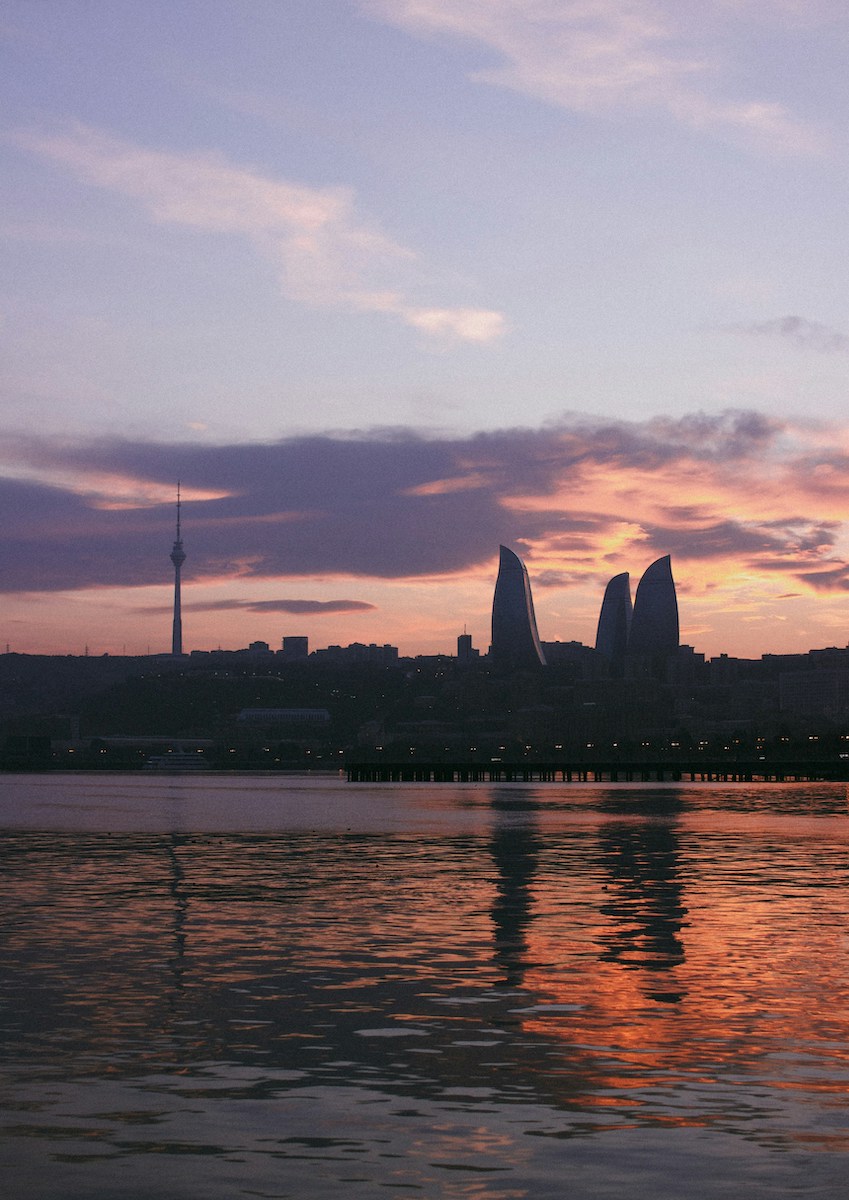
Photo by Agshin Osmanov
-
Monday, 9 March, Azerbaijan. The President of Iran called Ilham Aliyev
● Iranian President Masoud Pezeshkian called President Ilham Aliyev and thanked him for visiting the Iranian embassy and expressing condolences over the deaths of Supreme Leader Ayatollah Seyyed Ali Khamenei and many civilians, as well as for the intention to provide humanitarian assistance to Iran. Aliyev emphasized the importance of investigating the incident in the Nakhchivan Autonomous Republic, which was struck by an Iranian drone on March 5.
Earlier, President Ilham Aliyev clearly stated that the attack on Nakhchivan had been carried out by Iran and that civilian facilities were the targets. He described the incident as a “vile terrorist act.” According to official information, one drone hit the terminal building of Nakhchivan International Airport, while another fell near a school in the village of Shekerabad, injuring four people. Azerbaijan stated that it reserves the right to carry out a retaliatory strike. Initially, Iran’s Foreign Ministry denied claims that the country had carried out strikes on Azerbaijan.
● The Foreign Ministry stated that the support of the U.S. State Department, which issued a special statement condemning the Iranian drone attack on Nakhchivan, is of particular importance for the country.
● French President Emmanuel Macron called President Ilham Aliyev and expressed solidarity with Azerbaijan following the air attack from Iran. Macron also thanked Azerbaijan for helping evacuate French citizens from Iran through Azerbaijan.
● On Saturday, the State Security Service announced that it had uncovered a planned series of terrorist attacks that the Islamic Revolutionary Guard Corps (IRGC) was preparing on the territory of Azerbaijan. The state television channel AzTV reported that several local residents had been recruited and that an assassination attempt on a public figure was being planned. The targets were said to include the Baku–Tbilisi–Ceyhan oil pipeline, the Israeli embassy, the Ashkenazi synagogue in Baku, and one of the leaders of the Mountain Jewish community. Reports indicate the direct involvement of an officer from the IRGC’s intelligence structure. The State Security Service said that operational and investigative measures to uncover terrorist and sabotage plans by foreign intelligence services in Azerbaijan are ongoing.
● The foreign ministers of the Netherlands and Bulgaria held phone conversations with Azerbaijani Foreign Minister Jeyhun Bayramov to express solidarity after the recent Iranian drone strike on Nakhchivan Airport and to thank Azerbaijan for assisting in the evacuation of their citizens from Iran through Azerbaijan’s land border.
● Since the start of the U.S.–Israeli operation in Iran on February 28, more than 2,000 people have been evacuated from Iran to Azerbaijan. Among them, 314 are Azerbaijani citizens, while the rest are citizens of more than 40 countries. The evacuees also include staff from diplomatic missions.
● Turkey welcomes the steps being taken to achieve lasting peace and stability between Azerbaijan and Armenia, as well as to develop regional cooperation, Turkish Foreign Minister Hakan Fidan told journalists. According to him, these steps show that peace in the South Caucasus is already beginning to take shape in practical terms.
“Our greatest wish is to preserve this momentum and conclude the process as soon as possible with a permanent peace agreement,” Fidan said.● The first Night of Decree (Laylat al-Qadr, the Night of Ahya) of the month of Ramadan was observed today. March 20 and 21 have been declared public holidays in connection with Ramadan.
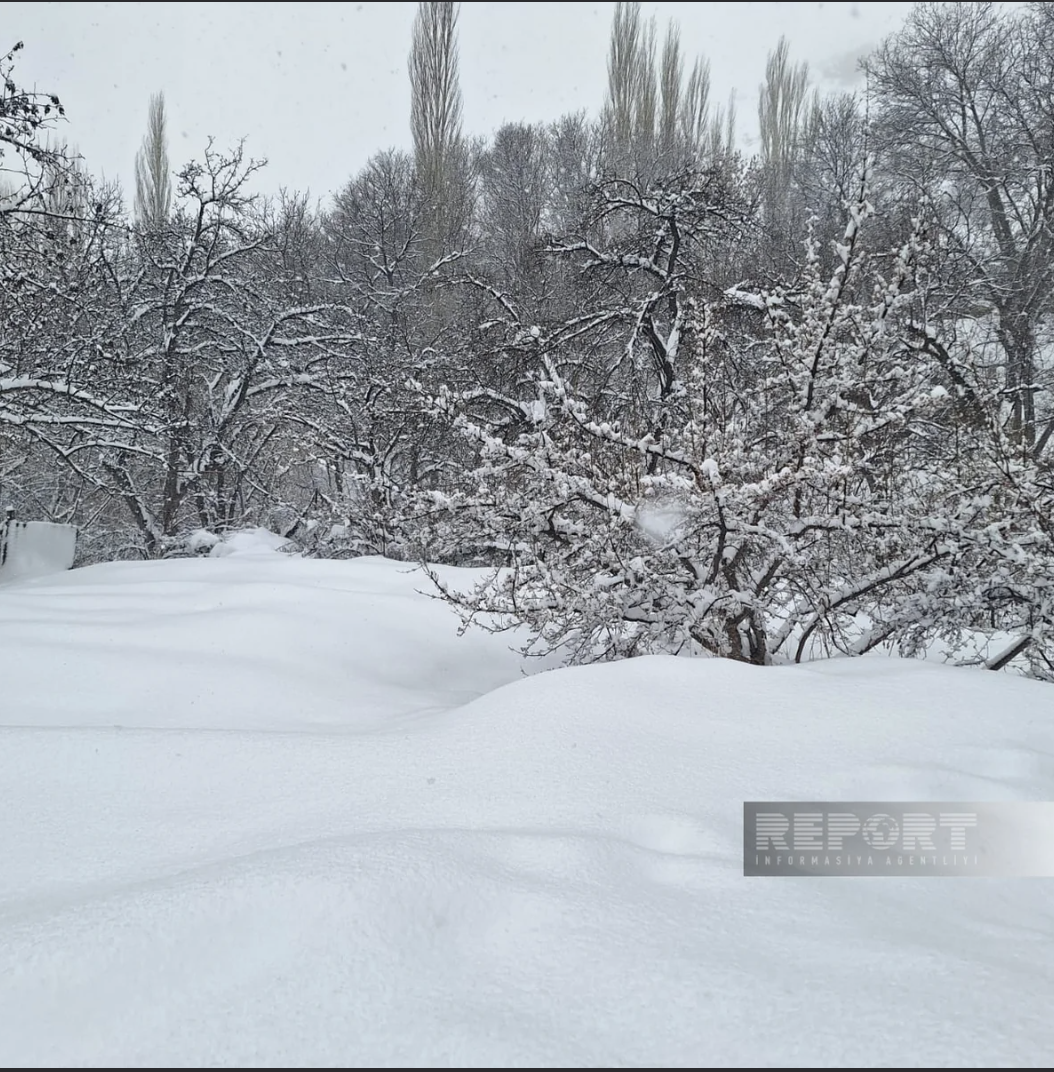
● Heavy snowfall occurred in the mountains of Nakhchivan over the weekend, with the snow cover exceeding one meter, according to the local Ministry of Ecology and Natural Resources.
-
Monday, 9 March, Georgia. Experts and politicians are being questioned in connection with their statements about a possible increase in Iran’s influence in Georgia
● Former diplomat and active participant in the pro-European protests in Tbilisi, David Chkheidze (pictured), has been detained. During a live broadcast on his Facebook page, he managed to report that police officers had stopped him as he was leaving a protest rally. He was tested for alcohol and drugs, and officers said the drug test came back positive. Chkheidze was taken to a police station for further testing. He claims he has never used any drugs.
● Israel’s national security agency has assigned Georgia, Azerbaijan, and Armenia a Level 3 security rating and recommended that its citizens refrain from “non-essential” travel to these countries. The statement says that in light of the ongoing U.S.–Israeli operations, the risk of Iranian actions against Israelis and Jewish facilities in the region has increased.
● Major General Vakhtang Kapanadze, former Defense Minister Tina Khidasheli, and Giorgi Kandelaki, a representative of the Soviet Past Research Laboratory, were questioned as witnesses at Tbilisi City Court. The case was opened by the State Security Service in connection with their public statements about a possible increase in Iran’s influence in Georgia and threats to the country’s security. Read more here
● After leaving the interrogation, Tina Khidasheli told journalists: “My task is accomplished — I have drawn attention to a possible threat to my country’s security. Let us hope this will be clarified. If there is no threat, we will all be grateful,” Khidasheli said.
● German Ambassador Peter Fischer stated that for Georgia to continue moving closer to the EU, the country’s legislation must align with EU law. In his opinion, Tbilisi should stop adopting laws that contradict the EU legal system and also end its anti-European propaganda campaign.
● A delegation of the OSCE Parliamentary Assembly, led by its President Pere Joan Pons Sampietro, is visiting Georgia. It is reported that on Sunday the members of the delegation, together with the chair of the Georgian parliament’s Committee on European Integration, Levan Makhashvili, visited the occupation line in the village of Khurvaleti (in the Georgian–Ossetian conflict zone). Makhashvili spoke about Russia’s ongoing occupation of regions of Georgia, the problems faced by the local population, and the related threats to the country’s security, according to a press release from the parliament.
● A group of Georgian citizens of Azerbaijani origin held a rally outside the Iranian embassy with photographs of the killed Ayatollah Ali Khamenei. Participants expressed their support and chanted slogans in his favor. The leader of Georgia’s Federalist Party, Goga Bokeria, called it “a public declaration of loyalty to a foreign regime” and warned of threats to the country’s security.
● A Georgian citizen has been arrested in Greece on suspicion of spying for Iran. According to Greek media, the 36-year-old ethnic Azerbaijani with Georgian citizenship was located near a naval base in Crete. The case concerns a strategic facility where the U.S. aircraft carrier USS Gerald R. Ford was recently stationed.
● The Interior Ministry has detained four minors accused of group robbery and theft. Three of them had previously been convicted and were serving suspended sentences. These crimes carry a maximum penalty of up to eight years in prison. Read an analytical review on the sharp rise in juvenile crime in Georgia here
● Gender policy remains a subject of political debate. On International Women’s Day, the Georgian Young Lawyers’ Association stated that the government uses stereotypes and disinformation instead of addressing gender equality issues.
● The issue of the Istanbul Convention on preventing violence against women and domestic violence has entered the political agenda in the country. Georgia ratified the convention in May 2017. Zurab Makharadze, a representative of the pro-Russian organization Alt-Info, called on the government to withdraw from this international document. Prime Minister Irakli Kobakhidze said this could become possible “if questions arise regarding legislation.” Kobakhidze stated that “in previous years Georgia faced strong external pressure to introduce harmful ideological approaches regarding legislation on minors’ rights, family values, and gender equality.” He said he considers the ideology “that negatively affects the institution of marriage and birth rates” to be a problem.
-
Monday, 9 March, Armenia. About $670 compensation per person for those forced to buy new tickets to travel to Armenia from the Middle East
● Another train carrying grain from Russia to Armenia will be sent in transit through the territory of Azerbaijan, pro-government Azerbaijani media report. In total, the shipment consists of seven railcars.
● Mothers of missing servicemen held a peaceful protest outside the government building. “Waiting and uncertainty are getting worse every day. It’s not true that time heals. The pain only grows stronger; we cannot live, we are dying. Many parents are no longer with us because they could not bear this pain. We demand that the Ministry of Justice, the Human Rights Protection Office, and the Prosecutor’s Office find our sons,” said Asya Danielyan, the mother of Varuzhan Israelyan, who went missing during the 44-day war with Azerbaijan in the autumn of 2020.
● The Armenian Embassy in Abu Dhabi and the Consulate General in Dubai organized free transportation for 54 Armenian citizens to Oman, the Foreign Ministry reported. As of the morning of March 8, 95 Armenian citizens remaining in the UAE were registered on the list, the statement said.
📌 Both religious and political authorities issued congratulatory messages on the occasion of International Women’s Day. “Today women are represented more than ever in the government, the legislative bodies, the judiciary, in local self-government, in military service, in the police, and in economic, political, and public life,” said Prime Minister Nikol Pashinyan.
“In today’s unstable world, when our people everywhere face many difficulties, many concerns also fall on the shoulders of women. Alongside caring for their families, they selflessly contribute to the progress of national life and the strengthening of our homeland,” said Catholicos of All Armenians Garegin II.
● “We have exhausted this government by initiating street actions and actively participating in other street protests,” said former president and leader of the opposition Armenia bloc Robert Kocharyan. “If we look at opinion polls, about 1.5–2 years ago around 60% of people had not decided who they would vote for. A significant part of them were those disappointed in the Civil Contract party but who had not yet decided whom to support. Now the percentage of such people is much lower — about 25–30%. We cleared the field for other political forces, perhaps partly exhausting ourselves as well. And it is good that there are other forces. Previously 5–6 parties entered parliament; now it is normal for three to enter. One could say that our efforts and street struggle have created good opportunities for a change of power,” Kocharyan said. The opposition in Armenia largely has a pro-Russian reputation.
● The Foreign Ministry has proposed compensating citizens up to 250,000 drams (about $670) per person whose return or transit flights to Armenia were canceled due to military actions in the Middle East and who had to purchase new tickets. If the ticket cost less, the compensation will be paid in the amount actually spent, said Foreign Minister Ararat Mirzoyan.
-
Top stories in Azerbaijan, Armenia, and Georgia from 2-6 March, 2026