Oligarch Shor has left Moldova. What leverage does Moscow now have over Chișinău?






Moldovan oligarch Ilan Shor
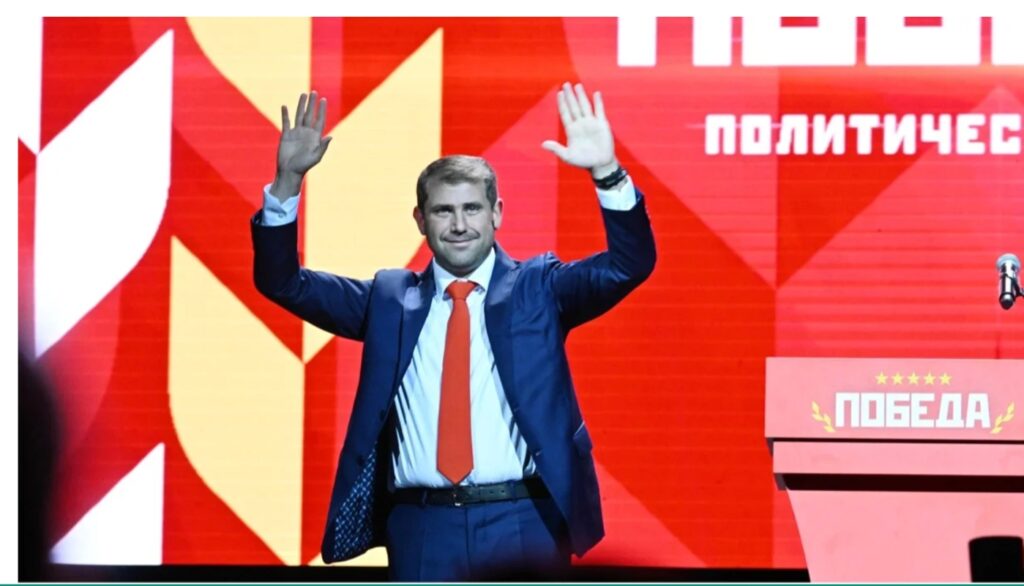
Moldovan oligarch Ilan Shor, a fugitive, announced at the end of last year that he was leaving politics. Behind this seemingly unexpected decision lies a series of setbacks—from the failure of his electoral projects to the imprisonment of his protégé, Gagauz autonomy governor Evghenia Guțul. At first glance, it might seem that Chișinău can breathe a sigh of relief. However, Shor’s figure long served as a convenient explanation for many internal problems, not always directly connected to him. Now that argument has disappeared, and the public is increasingly demanding improvements in living standards. Brussels, too, wants to see tangible results in judicial reform and the Transnistria settlement. References to external threats, where the authorities are capable of acting themselves, are no longer effective.
Material from Novaya Gazeta Europe.
Performance politics
Just six months ago, Ilan Shor—better known outside Moldova as the husband of Russian singer Jasmine—was considered almost the main threat to the country’s national security. He was accused of direct interference in domestic politics, promoting purchased candidates in elections at all levels, organizing paid anti-government rallies, bribing voters, running shadow financial schemes, and conducting large-scale disinformation campaigns against Moldova’s European integration.
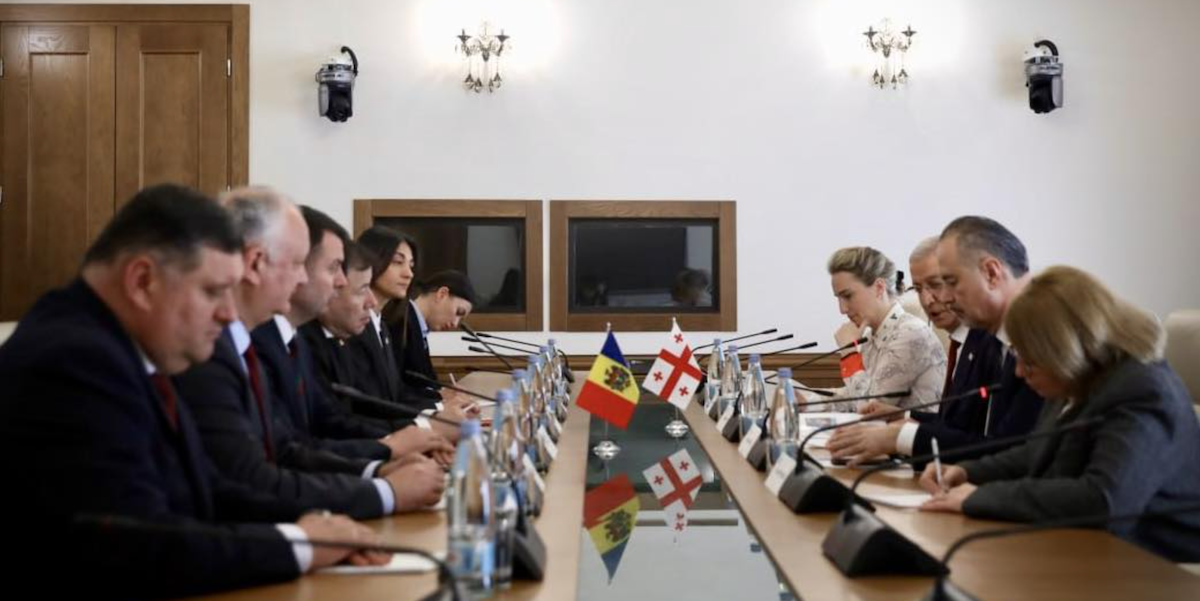
President Maia Sandu warned on international platforms that, through Shor’s projects, the Kremlin was attempting to block the country’s European path. Local officials echoed her, urging citizens not to fall under the influence of the fugitive oligarch, who at home faces a 15-year prison sentence for involvement in the theft of one billion dollars from three Moldovan banks—effectively public money belonging to taxpayers. There were also warnings that he was acting in coordination with Vladimir Putin and trying to impose narratives alien to Moldova, such as membership in the CSTO and the EAEU.
Russia has indeed never hidden its desire to keep Moldova within its sphere of influence. To this end, it has financed loyal parties, taken part in the Transnistrian settlement process, while at the same time refusing to withdraw its troops from the region not controlled by Chișinău.
After Russia’s full-scale invasion of Ukraine, the country became a source of new crises: Moldova faced an influx of Ukrainian refugees, inflation, and a sharp rise in gas prices.
Then Shor appeared. Moscow favored him for his ability to effectively mobilize masses for protests, creating constant pressure on the Moldovan authorities. His activity resembled an aggressive and demonstrative form of performance politics, in which pensioners, the unemployed, and young people were brought in from poor villages to Chișinău. They set up tent camps near government and parliamentary buildings, often without fully understanding what they were protesting about—though they knew very well how much they were being paid.
In addition, Shor demonstrated that through bribery and corruption he was capable of bringing random people to power. The most prominent example is Gagauzia, where his former aide Evghenia Guțul became başkan (head) of the autonomy thanks to large-scale vote buying. She had no political or managerial experience, but Shor promised that through her he would implement his most ambitious projects.
Thanks to his close ties with Russia, residents of Gagauzia were allegedly supposed to receive gas at reduced prices, along with higher pensions, salaries, and other social payments. The flagship—but questionable in terms of usefulness for one of the poorest regions—projects were meant to include an amusement park, a Gagauz “Disneyland” with free entry for children, as well as the construction of an airport. Construction of the park was formally launched, but it ended there: the rest of the promises never materialized.
However, real improvements in the lives of the region’s residents were hardly part of Shor’s or his appointee’s plans. In two and a half years in power, Guțul mainly clashed with Chișinău, often deliberately, in order to show that the central authorities were preventing her and Shor from fulfilling their campaign promises. In practice, this confrontational style of governance helped justify failures and only worsened the already difficult relations between the autonomy and the central government.
Shortly before Shor announced the winding down of his activities in Moldova, Guțul’s political career collapsed almost as quickly as it had begun. The authorities launched an investigation against her over involvement in schemes to bring Russian money into the country. She had engaged in this activity even before becoming başkan, for which she ultimately received a seven-year prison sentence.
Notably, after her arrest, Shor made no attempt to save her—intervening in a judicial process from Moscow proved far more difficult than managing protests via video link.
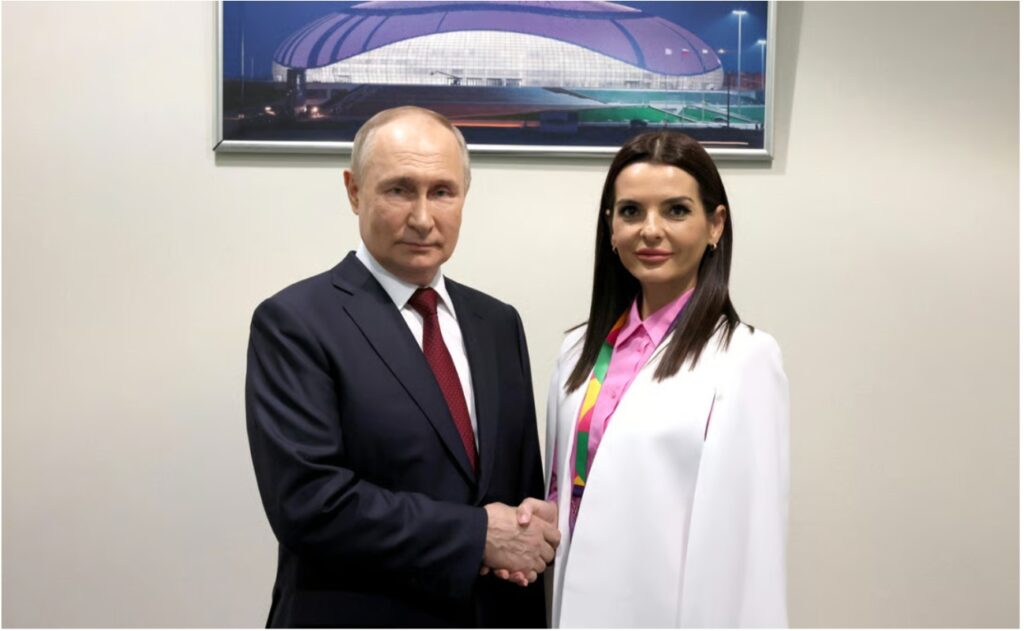
A photograph of Guțul with Putin also did not help them; it had previously been seen as evidence that the Kremlin would support Gagauzia. Rather, it only worsened her situation, reinforcing the perception that she had acted on the instructions of Shor and Moscow.
In addition to Guțul, the fugitive oligarch had protégés in other parts of Moldova, such as the mayor of Orhei, Tatiana Cociu, and Vyacheslav Lupov in Taraclia. They obtained their positions using the same methods—mass vote buying. But once the oligarch wound down his activities in Moldova and withdrew his political support, they voluntarily left their posts. Without his money, they were unable to offer voters cheap stores, free transport, or amusement rides in city parks.
Formally, Shor explained the winding down of his activities by claiming that the authorities had allegedly blocked his charitable accounts. He promised to return once the right conditions emerged around Moldova. However, his defeat was quite foreseeable. And it was not simply because the Moldovan authorities were obstructing him—although ahead of the latest parliamentary elections they did in fact try to act preemptively, identifying and penalizing fake Shor candidates.
Shor’s collapse can be explained by the fact that a pro-European consensus on European integration has long been established in Moldovan society: more than 50% of citizens supported the country’s European course in a referendum. Even if Shor had managed to buy votes and bring his people into parliament, this would hardly have changed the trend. For more than a decade, Moldovans have benefited from visa-free travel with the EU, working, studying, and living in European countries. For most of them, the choice between Europe and Russia has long ceased to be relevant.
Philanthropist and friend of Abramovich
In general, Shor was never a politician in the traditional sense—he was rather seen as an adventurer who created his own self-named party, “Shor,” to shield himself from criminal prosecution over the theft of a billion. He never had any real political base in Moldova: he typically operated through populist promises and the corruption of elites, and once he gained Moscow’s trust, through Russian money.
His sudden political rise in Russia—where he had been banned from entry since 2015 due to the same billion-dollar theft case—is linked to Roman Abramovich. Shor met him in Israel, where he had initially fled from Moldova while escaping prison. According to Moldovan intelligence services, it was Abramovich who organized his move to Russia: providing housing, a car, and even allowing him to use his private jet. Likely assessing Shor’s energy and effectiveness, the Russian oligarch reportedly suggested that the Kremlin consider him a useful instrument of pressure on Chișinău. Soon after, an “operational center” was established in Moscow under Russian authorities’ control to undermine the referendum on European integration and the presidential elections in October 2024.
Ilan Shor led the group and, according to Moldovan intelligence services, received funding only for social media—€140,000.
In Chișinău, he maintained an office to coordinate protests and handle organizational and PR tasks. The center was involved in disinformation, propaganda, and organizing illegal support for candidates.
At the same time as his Moldovan projects, Shor expanded his activity in Russia and other areas. He became a patron and a member of the board of trustees of the ANO “Eurasia,” a structure created by Moscow in 2024 to promote Eurasian integration across the post-Soviet space. This role appeared to be more of a symbolic gesture of loyalty. Notably, Margarita Simonyan is also a member of the “Eurasia” board of trustees, and the organization itself is under US Treasury sanctions. The launch of the “Nomad” television channel in Kyrgyzstan in autumn 2025 is also linked to “Eurasia”—a project in which Shor’s name appears. The channel is promoted by managers from RT and Sputnik.
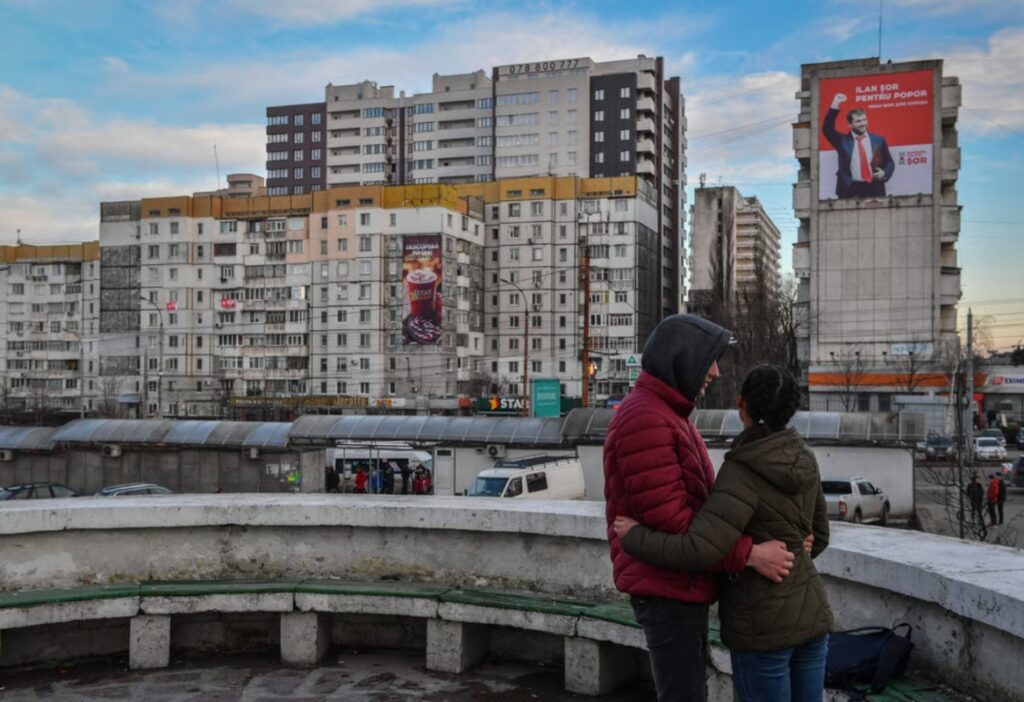
In Kyrgyzstan as well, at the beginning of 2025, the A7A5 stablecoin was launched—a token pegged to the Russian ruble. Behind it is the company A7, whose co-owners include Shor and Promsvyazbank, which is under Western sanctions. The token was positioned as a tool for international payments—essentially a scheme for bypassing sanctions against Russia. Through Promsvyazbank, Shor also transferred money to Moldovan citizens participating in his rallies: ahead of the 2024 elections, nearly $40 million was allegedly moved this way.
In January 2026, Shor’s name resurfaced in connection with the oil tanker Marinera, which was detained by US forces in the Atlantic Ocean on suspicion of sanctions evasion. The vessel was transporting Russian oil while changing its name and flag to conceal its route. It turned out that Marinera was linked to Shor and former Ukrainian MP Viktor Baranets through a chain of shell companies. No formal charges have been brought against Shor so far.
It increasingly appears that Moldova is no longer of much interest to Shor—he has shifted toward broader projects. However, his activity in Russia does not look like the next stage of his political career, but rather an attempt to win favor with the Kremlin so that he is not extradited to Chișinău, where he faces prison. In return, Russia gains an active operator with money, connections, and a willingness to work beyond any legal framework.
At the same time, Moscow is unlikely to see Shor as an irreplaceable instrument of pressure on the Moldovan authorities—for that, it has more reliable pro-Russian politicians and parties in Moldova.
Unlike the banned Shor party, these actors are legal and represented in parliament, although in the latest elections they won fewer seats than expected. This refers primarily to the Patriotic Bloc—a union of the Party of Socialists and the Party of Communists led by former presidents Igor Dodon and Vladimir Voronin, both well understood in the Kremlin. The bloc also includes two newer forces: “Heart of Moldova,” created by former Gagauzia başkan Irina Vlah, and “Future of Moldova,” led by Vasile Tarlev, a politician with long-standing ties to Moscow.
In addition to political parties, the Kremlin continues to rely on its traditional levers of influence. Gagauzia remains deeply pro-Russian, and Guțul’s departure did not change that. Transnistria continues to serve as a tool of pressure on Chișinău: after the start of the war in Ukraine, the region became almost isolated, and reintegration with Moldova seemed only a matter of time. Nevertheless, Moscow has maintained its influence, primarily through free gas supplies, even after Ukraine closed transit routes a year ago. Despite the fact that all these levers are still functioning, it is likely that the Kremlin has concluded that “useful idiots” like Shor are not superfluous.
Alone with reality
Shor’s departure should have been a relief for Moldova. Even if he was never held criminally responsible for the theft of the billion, at least he stopped—albeit temporarily—destabilizing the country. The authorities could have taken a breath and focused on domestic problems. However, the EU, which had actively supported Moldova in countering Russian risks, after the parliamentary elections became more insistent in demanding results in other areas as well.
Brussels’ key demand remains judicial reform. It is stalling due to a shortage of personnel in the country, insufficient qualifications among judges and prosecutors, and their resistance to change. The second problematic area where the EU expects progress is the Transnistria settlement. Ahead of the presidential and parliamentary elections, Brussels was sympathetic to pro-European forces and even allowed for the possibility of EU integration without resolving the Transnistrian issue. But now the tone has changed. EU officials are increasingly making it clear that it is difficult to speak about membership in the EU while a Russian military contingent is stationed on part of Moldova’s internationally recognized territory.
The authorities, who seem to have themselves come to believe that integration is possible without reunification with Transnistria, are now forced to take urgent measures to demonstrate that the problem is being addressed. Against this backdrop, direct negotiations between Chișinău and Tiraspol have intensified. Moreover, the Moldovan side has stopped insisting that meetings should alternate between the two banks of the Dniester River and is now ready to travel to the Transnistrian side.
Furthermore, the Moldovan authorities have finally presented their settlement plan—still vague, but its very appearance shows that Chișinău has acknowledged that the issue must begin to be resolved.
Brussels’ demands are not the only source of pressure on the government. There are also internal problems whose solutions are expected by voters, who have given pro-European forces another vote of confidence. These are primarily socio-economic issues.
In 2025, the poverty rate stood at 34%—significantly higher than the EU average. This is pushing people toward emigration: the country is losing between 30,000 and 42,000 people per year, or up to 1.8% of the population.
The economic situation is also affected by the war in neighboring Ukraine. Investors are staying away, deterred by war-related risks. Concerns are further fueled by an incomplete judicial reform, persistent corruption risks, high energy costs, and vulnerable infrastructure. Against this backdrop, the gap between pro-European rhetoric and everyday reality is becoming increasingly visible.
At the same time, the authorities—absorbed by external threats and the pursuit of a fugitive oligarch—are beginning to cause frustration even among part of their loyal electorate. People want to see solutions to domestic problems, not only geopolitical successes. This is where a paradox emerges: Shor’s departure has, in a sense, deprived the authorities of a convenient scapegoat. Now they are forced to focus on the domestic agenda and deliver results.
exchange