'Military escalation unlikely, but risks remain' — Armenian Foreign Intelligence Service report






Armenia intelligence report: 2026 outlook
Despite Azerbaijan’s continued increase in military spending, Armenia’s Foreign Intelligence Service says a military escalation in 2026 is unlikely. The agency believes the chances of maintaining peace have increased following bilateral talks, the Washington declaration and the initialling of a peace agreement. At the same time, its annual report warns that military and political risks remain.
“In the long term, state-promoted narratives advanced by Azerbaijan about the so-called ‘Western Azerbaijan’ and the ‘return of Western Azerbaijanis’, along with actions linked to these narratives, negatively affect the prospects for peace and constitute risk factors,” the report says.
Baku began actively promoting the narrative of so-called “Western Azerbaijan” in December 2022. In Azerbaijan, the term refers in practice to the entire sovereign territory of Armenia.
Armenia’s prime minister Nikol Pashinyan has repeatedly rejected this interpretation. He has said that “there can be no ‘Western Azerbaijan’ on the territory of Armenia”. According to him, the term can apply only to the western part of Azerbaijan’s own territory.
The Armenian prime minister also argues that discussions about the return of Azerbaijanis to Armenia and Armenians to Azerbaijan do not contribute to peace. He has therefore proposed postponing such debates.
According to the Foreign Intelligence Service, after the signing of the Washington declaration, Baku not only failed to scale back this rhetoric but significantly intensified it. The number of publications on the topic across five Azerbaijani media outlets rose by 36%.
The report stresses that the spread of these narratives creates “significant risks” to regional stability, security and long-term peace. The Foreign Intelligence Service says it will continue to monitor the situation throughout 2026.
“It will be necessary, in particular, to assess whether Azerbaijan, by turning these themes into a new national ideology, intends to shift the conflict onto Armenian territory in some new form, or whether talk of the return of Azerbaijanis to the so-called ‘Western Azerbaijan’ forms part of Azerbaijan’s foreign policy bargaining, countering the issue of the return of Karabakh Armenians,” the report says.
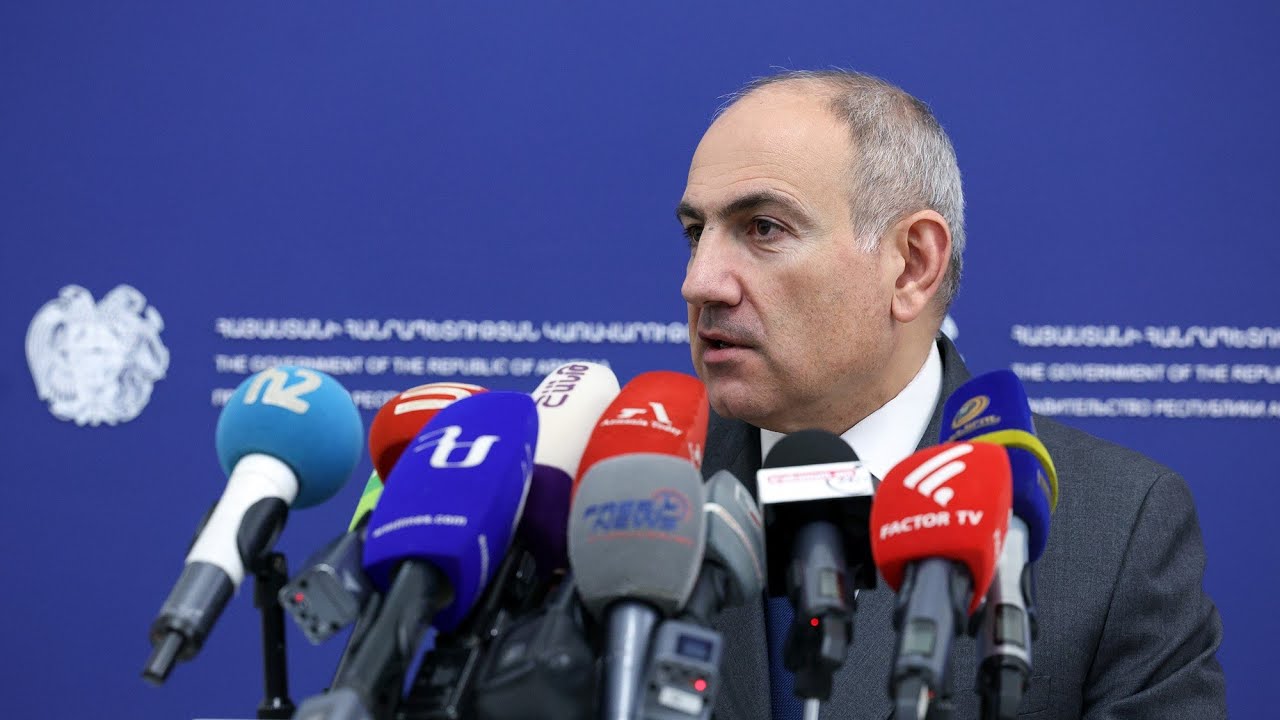
The service adds that the annual report, titled “On External Security Risks”, draws on intelligence analysis based on both open and classified sources. It addresses not only relations with Azerbaijan, but also regional unblocking, hybrid threats facing Armenia and other potential risks.
- Opinion: ‘Armenia will restore rail links with Azerbaijan and Turkey – with or without Russia’
- ‘We mutually closed page of enmity’: Armenian Parliament Speaker on relations with Turkey
- Armenia’s army to continue acquiring advanced weaponry, defence minister says
Armenia–Azerbaijan: progress and potential risks
Armenia’s Foreign Intelligence Service considers progress most likely this year in the following areas:
- the process of border delimitation and demarcation;
- the unblocking of regional infrastructure;
- bilateral trade and economic initiatives;
- dialogue between societies;
- humanitarian issues.
It adds that bilateral initiatives to develop transport infrastructure will contribute to “the implementation of more comprehensive regional economic projects”.
At the same time, the report forecasts an increase in risks. It highlights, in particular, steps that could negatively affect the development of transport infrastructure. The service says this is especially relevant with regard to states seeking to maintain their influence in the region.
“The use by Azerbaijan and other actors of narratives that question Armenia’s sovereignty and obstruct the implementation of transport infrastructure development programmes will contribute to the materialisation of these risks,” the document says.
On the TRIPP project and regional unblocking: “The positive momentum will continue”
The report also examines economic and infrastructure opportunities and risks. It expects the positive momentum in the region to continue in 2026. It also anticipates that competition among global and regional players interested in economic and infrastructure programmes will persist.
According to the Foreign Intelligence Service, these programmes will raise the cost of any military escalation in the region.
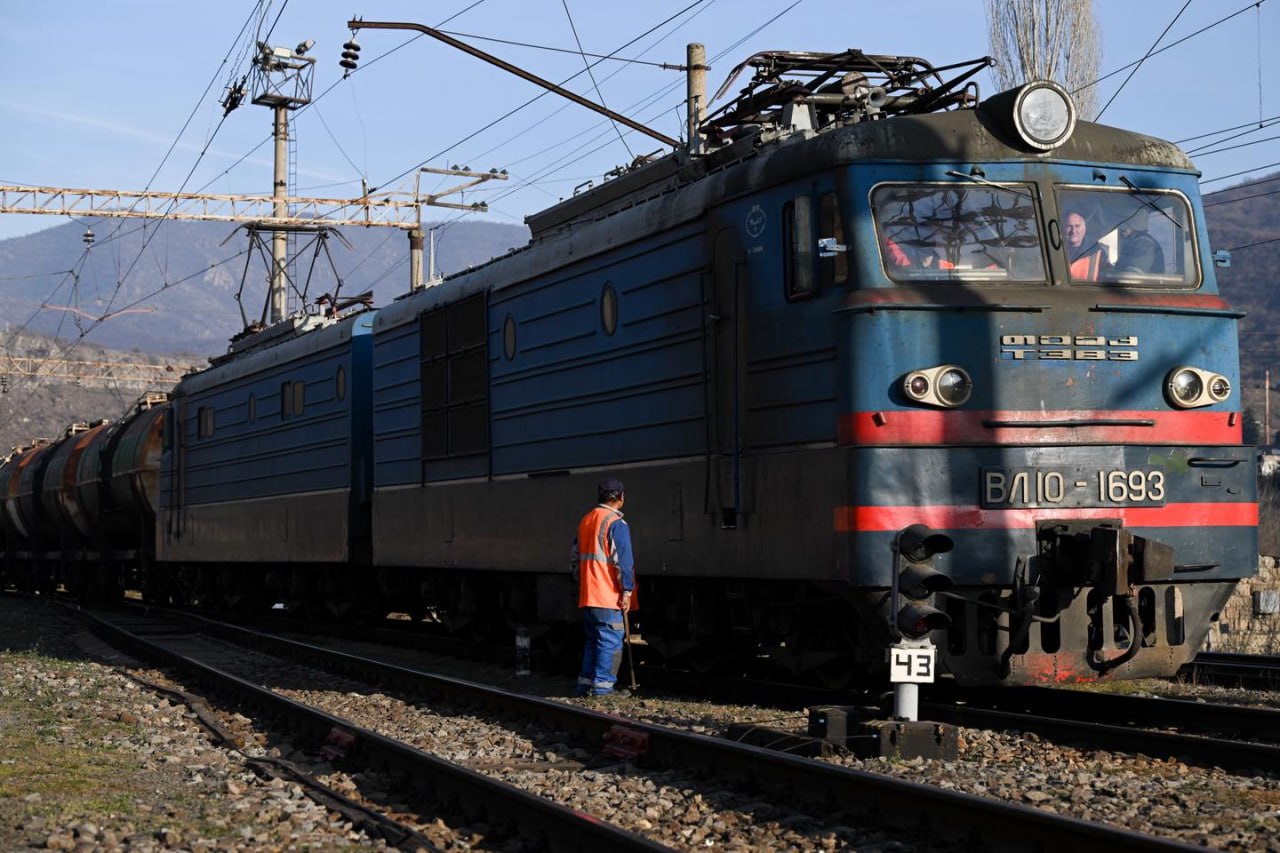
“A fully unblocked region, including the possible resumption of the Kars–Gyumri railway, the implementation of the TRIPP programme, and potential initiatives for bilateral cooperation with our neighbours, will create broad economic and logistical opportunities,” the report says. “This includes market diversification and an expansion of regional trade.”
TRIPP — short for Trump Route for International Peace and Prosperity — is a proposed road that will link Azerbaijan with its exclave of Nakhchivan through Armenian territory.
For several years, Yerevan and Baku failed to reach agreement on the issue. Azerbaijan demanded a route it referred to as the “Zangezur corridor”. The Armenian authorities responded that they were ready to unblock all roads, but rejected the term “corridor”, arguing that it implied a loss of state control and, therefore, of sovereign rights over the territory.
Only on 8 August, during talks in Washington, did the sides reach an agreement. They agreed that the road would remain under Armenia’s sovereign control, while the United States would join the unblocking process as a business partner.
As a result, the initiative became known as the “Trump Route”, after the mediator involved.
The document also points to the creation of opportunities for balanced development in border regions.
It refers to settlements on both sides of the border — along Armenia’s frontiers with Turkey and Azerbaijan.
“In addition, restoring communications with Turkey and Azerbaijan will allow faster and less costly movement of people, goods and services across the region. This will increase the region’s competitiveness and international appeal,” the report says.
At the same time, the authors do not rule out that regional initiatives could become “targets for various actors pursuing different interests”. They warn that such pressure could take the form of physical restrictions, information attacks or other hostile actions, according to the document.

‘Hybrid threats will become more wide-ranging‘
Against the backdrop of Armenia’s parliamentary elections due in June 2026, debate about hybrid threats has intensified. Politicians and civil society figures frequently raise concerns about external interference. They usually point to hybrid attacks, disinformation campaigns and efforts by Russia to influence Armenian society. The Foreign Intelligence Service report also addresses this issue.
The report says Armenia faced various forms of hybrid threats last year. It warns that in 2026 these threats will become “more complex and more wide-ranging”. In particular, it expects hybrid attacks aimed at disrupting the implementation of the TRIPP project.
According to the report, the toolkit of hybrid operations will include:
- cyberattacks targeting financial and banking institutions, communications and telecommunications systems, electricity distribution digital infrastructure, and state digital platforms;
- information attacks, including false or distorted information taken out of context, as well as organised disinformation campaigns;
- the activation of agent networks and agents of influence, along with various actors involved in political processes under the guise of business, religious or cultural institutions;
- economic pressure, including obstacles to imports and exports and the selective application of migration rules;
- energy-related pressure;
- pressure on senior government officials and their family members, including smear campaigns directed against them.

Impact of other conflicts on Armenia
The document also addresses the impact on Armenia of the Russia–Ukraine war and tensions between Israel and Iran. According to forecasts by Armenia’s Foreign Intelligence Service of Armenia, a long-term settlement of the conflict between Russia and Ukraine remains unlikely in 2026. The risk of reciprocal strikes between Israel and Iran will also persist.
The service says both conflicts could create challenges for Armenia, ranging from economic pressure to security threats.
“Most of the sanctions imposed on Russia are likely to remain in force,” the report says. “This will continue to create risks for Armenia’s economy, including the risk of secondary economic sanctions.
The possibility of mutual strikes between Israel and Iran will expand Armenia’s security burden. It will also generate economic and logistical problems and increase risks that threaten efforts to strengthen peace in the South Caucasus.”
Armenia intelligence report: 2026 outlook