Georgia makes first arrests of protesters for standing on pavement






First arrests for pavement protests in Georgia
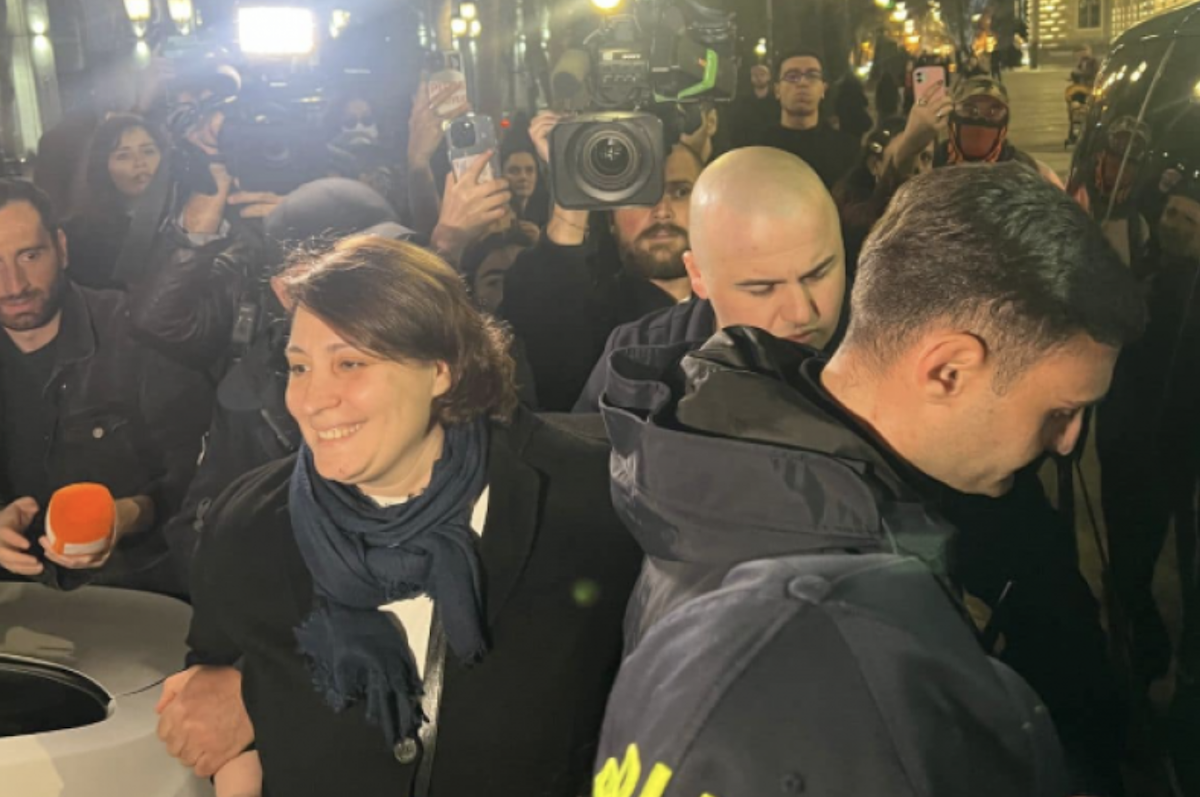
Georgia has recorded its first arrests for standing on a pavement during a protest.
Zviad Tsekvava, a judge at the Tbilisi City Court, found Mikheil Zakareishvili guilty of violating the law by standing on the pavement. He sentenced him to five days in prison.
In a separate ruling under the same article, judge Davit Makaridze sentenced Sandro Megrelishvili and Dimitri Jamburia to four days in prison. He gave Zakaria (Luka) Nagliashvili a five-day sentence.

Sandro Megrelishvili became the first person to receive a prison sentence for standing on a pavement after a law restricting freedom of expression and assembly came into force in Georgia.
In late 2025, Georgian Dream adopted new amendments that require prior notification of the Ministry of Internal Affairs of Georgia if a rally or demonstration takes place in areas used by pedestrians or vehicles. The rules also apply if a gathering obstructs the movement of people or traffic. Previously, the law imposed sanctions only when protesters blocked a roadway. The amendments now also make standing on a pavement punishable. Nona Kurdovanidze, chair of the Georgian Young Lawyers’ Association, said the restriction violates the constitution. She added that it effectively criminalises freedom of expression and assembly.
Earlier, judge Zviad Tsekvava also found protester Ani Akhmeteli guilty of a similar offence. He limited the penalty to a verbal warning.
On 22 January, judge Tornike Kapanadze found activist Rezi Dumbadze guilty under the same provision. He did not impose an administrative penalty.
The article of the administrative code used to file the cases allows for administrative detention of up to 15 days for participants. It provides for up to 20 days for organisers.

Background
Pro-European demonstrations have continued in Georgia since 28 November 2024. Thousands of people took to the streets after the prime minister from Georgian Dream, Irakli Kobakhidze, said the government would suspend the country’s EU integration process for four years.
Since then, Georgian Dream has repeatedly tightened restrictions on freedom of assembly through new repressive laws. These include a ban on wearing masks at rallies and the introduction of criminal liability for repeatedly blocking roads. The measures culminated in amendments that extend liability to blocking movement on pavements.
Organisers must now submit prior notification to the Ministry of Internal Affairs of Georgia before holding a protest. The ministry may propose an alternative location for a demonstration. If participants refuse the proposal, authorities can impose administrative detention of up to 15 days. In cases of repeat offences, the law allows for criminal charges, including prison sentences of up to one year.
First arrests for pavement protests in Georgia