Seven people detained during protests in Georgia released: What do we know about them?


Pardoning of protesters in Georgia
Seven people detained during the 2024 protests have been released from custody. They were among 232 people pardoned by President Mikheil Kavelashvili to mark St George’s Day.
Those released include Giorgi Okmelashvili, Irakli Metvinetukhutsesi, Giorgi Mindadze, Anri Kvaratskhelia, Nikoloz Javakhishvili, Davit Lomidze and Temur Zasokhashvili.
News of the pardons emerged late on Sunday, 22 November. The full list was not initially made public, but some of the names became known.
It also remained unclear exactly when those pardoned would be released. Some relatives and friends spent the entire night outside detention facilities, waiting for their release.
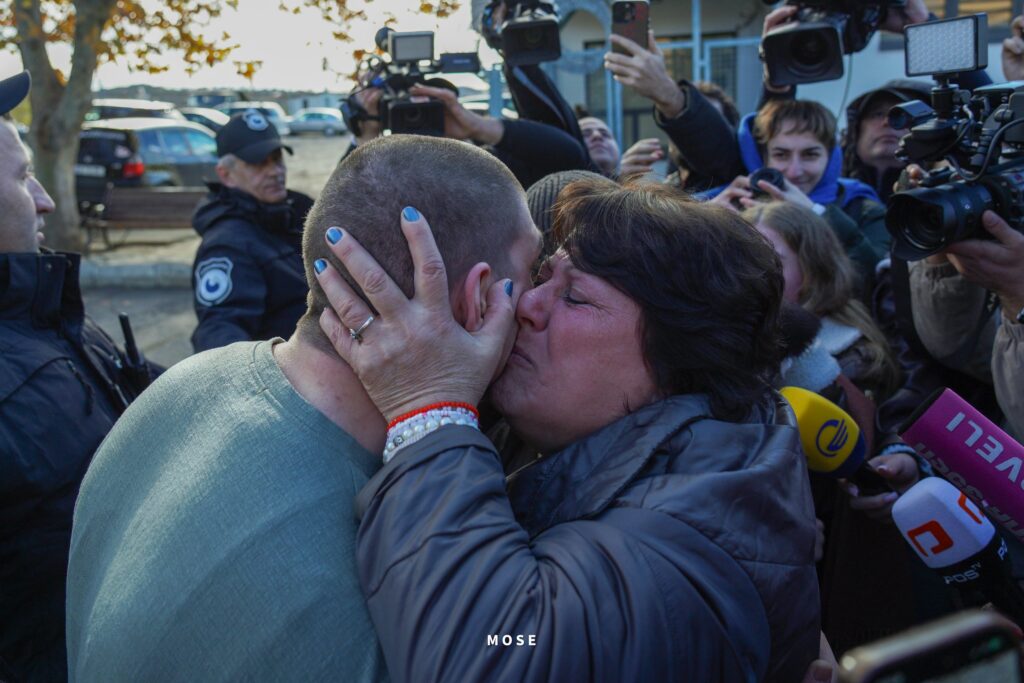
The prisoners were freed in the morning, shortly after 11:00. Footage of the moment shows highly emotional scenes.
- Freedom House: ‘Normalisation of US-Georgia relations should depend on release of political prisoners’
- One year on: What changed in Georgia since start of pro-EU protests?
Over the past two years, a period marked by protests in Georgia, more than 100 protesters have been arrested and prosecuted. All but three were sentenced to prison.
None of those detained admitted guilt during their trials.
Who was released and what were they accused of?
Two of the seven, Irakli Megvinetukhutsesi and Giorgi Okmelashvili, were arrested in May 2024 during protests against the so-called “Russian law” (the law on “foreign agents”).
The other five were arrested during pro-European protests that began in November-December 2024, after Irakli Kobakhidze announced the suspension of EU accession talks.
Giorgi Okmelashvili – 922 days in prison
Giorgi Okmelashvili is a film director and producer who works in marketing. He is the founder of Limoni, an advertising and video production company.
He was detained on 15 May 2024 while on his way to work. At the time, protesters were holding demonstrations outside the Georgian parliament against the “Russian law” on “foreign agents”.
His arrest stemmed from an incident during a protest outside parliament on 13 May. The day before the legal affairs committee was due to hold a third-reading vote on the “Russian law”, protesters spent the night outside the parliament building under the slogan: “We will stay awake all night for Georgia”.
According to the prosecutor’s office, Okmelashvili struck a police officer in the face with his elbow during the protest. After his arrest, the Interior Ministry released video footage in an attempt to substantiate the charge. Okmelashvili and his lawyers insisted that his actions were an instinctive response to defend himself: at the time, riot police were trying to push protesters back.
On 3 February 2025, Giorgi Okmelashvili was sentenced to five years in prison.
“Rock’n’roll goes on. It wasn’t easy – that’s all I can say. Greetings to cell 414. I’m pretty much the same person I was before. Nothing has changed, except that I’ve read a lot of books and thought about many things,” Okmelashvili said after his release.
His young wife, their child, who is in the first year of primary school, and his parents were waiting for him at home.
🟥 Giorgi Okmelashvili spent 922 days in detention, from 15 May 2024 to 23 November 2026. That is 2 years, 6 months and 8 days.
Irakli Megvinetukhutsesi – 928 days in prison
Irakli Megvinetukhutsesi was arrested in the spring of 2024 during protests against the “foreign agents” law. He was taken into custody on 9 May 2024.
Little information about Megvinetukhutsesi’s background is publicly available. His family rarely speaks to the media. It is known that he was over 21 at the time of his arrest.
Megvinetukhutsesi faced two charges: assaulting a police officer and illegally acquiring and possessing marijuana. According to the prosecution, he threatened police officers with a knife during the protest. The prosecution claimed that one officer was injured while disarming him.
The defence insisted that Megvinetukhutsesi had no intention of harming the officer and had merely raised the knife in a demonstrative gesture.
On 30 December 2024, Tbilisi City Court found Megvinetukhutsesi guilty on both charges. He was sentenced to five years in prison.
🟥 Irakli Megvinetukhutsesi spent 928 days in prison – 2 years, 6 months and 14 days.
Giorgi Mindadze – 722 days in prison
Giorgi Mindadze is a student who was arrested during the pro-European protests in November–December 2024. He was 21 at the time of his arrest and was in his third year at medical university.
On the evening of 1 December 2024, police arrived at his relatives’ home in the village of Tsilkani, where Mindadze was staying at the time, and detained him. They gave no explanation for his arrest at the scene.
It later emerged that investigators had accused him of setting off pyrotechnics during a protest on 29 November. He faced a criminal charge of assaulting a police officer. According to the prosecution, a firework launched by Mindadze struck a police officer, injuring his leg.
The defence lawyer noted that the case file contained no direct evidence that the officer had been injured by pyrotechnics launched by Mindadze. The prosecution presented a photograph taken on 29 November showing Mindadze holding a pyrotechnic device, as well as testimony from the police officer.
On 3 July 2025, the court found Mindadze guilty and sentenced him to five years in prison.
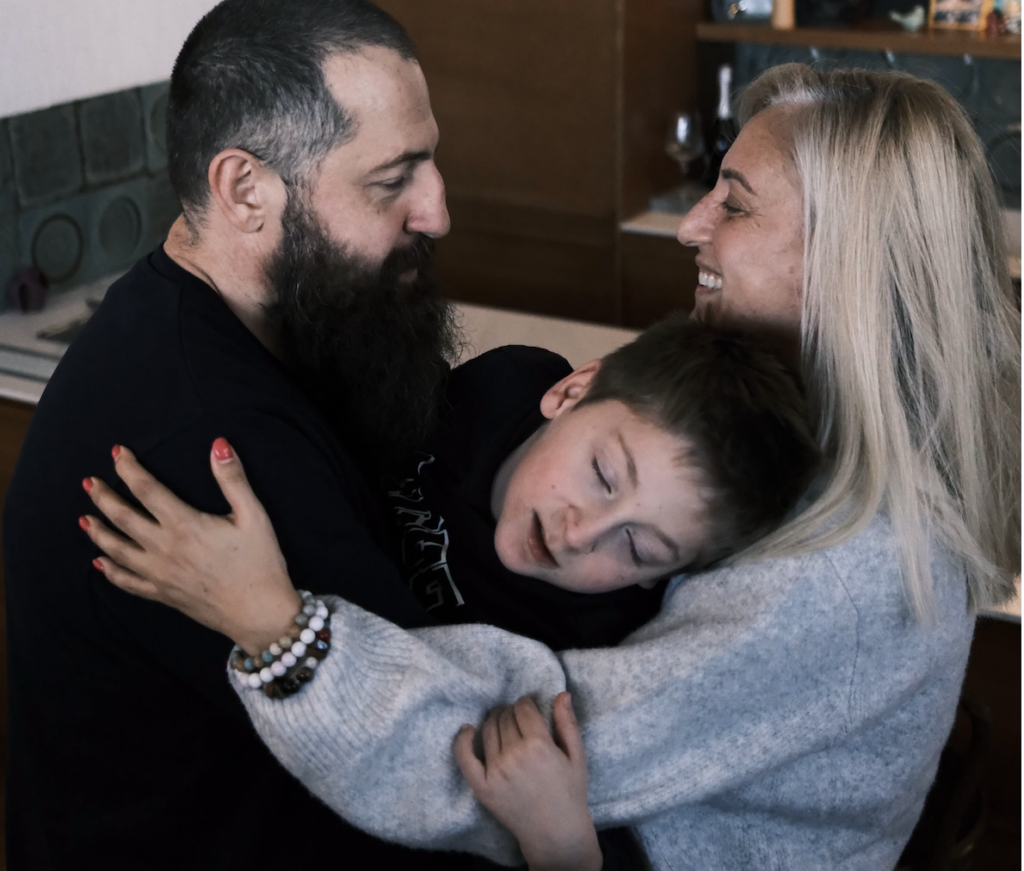
Giorgi has no mother – she died when he was very young. His neighbour, Nani Tsulaia, adopted him and raised him as her own son. Nani was with Giorgi when police arrested him. Officers took him away without telling her where they were taking him.
She went from one police station to another, trying to find out where they were holding her adopted son.
Nani Tsulaia has become one of the prominent figures in the protest movement. Since Giorgi’s arrest, she has taken part in street protests without fail. Along with other parents, she travelled across Georgia to tell the public the truth about those detained.
“I really want to go home… Freedom for everyone!” were Giorgi’s first words after his release from prison.
🟥 Giorgi Mindadze spent 722 days in detention, from 1 December 2024 to 23 November 2026. That is 1 year, 11 months and 22 days.
Anri (Anzor) Kvaratskhelia – 718 days in prison
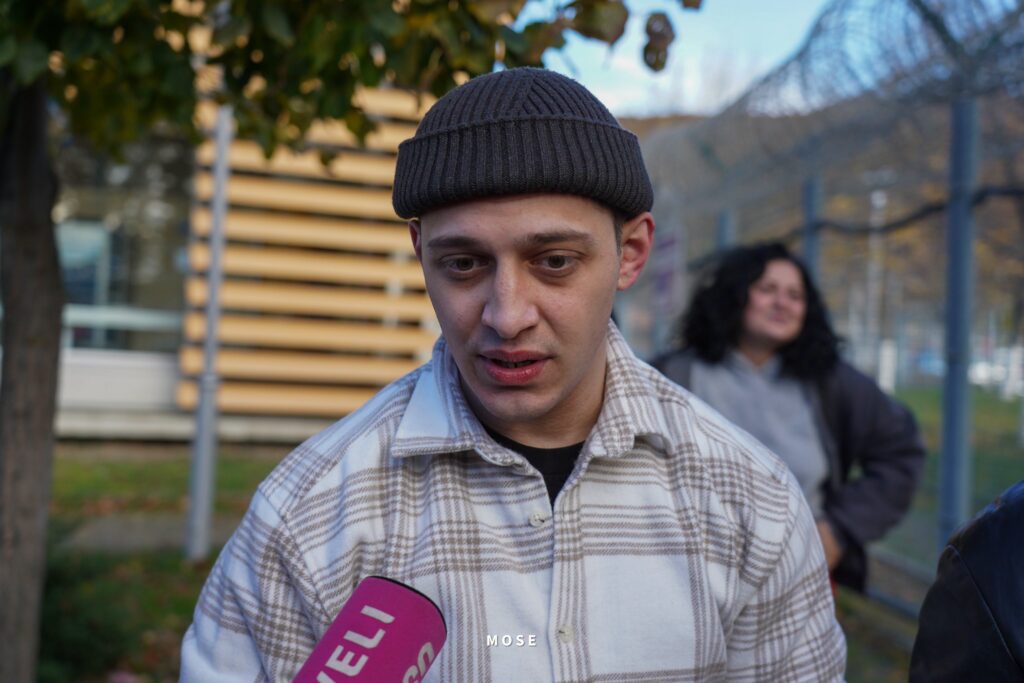
Anri (Anzor) Kvaratskhelia also took part in the pro-European protests in November and December 2024. He was among those charged with assaulting a police officer.
Anri was arrested at his home on 5 December 2024. He was 25 at the time. According to the prosecution, during a protest on Rustaveli Avenue on the night of 1 December, Kvaratskhelia threw a Molotov cocktail towards riot police officers.
His defence lawyers stressed that no law enforcement officers were injured in the incident. They argued that there was no actual victim who had sustained physical injuries and that the bottle had not reached the police cordon.
On 18 July 2025, Tbilisi City Court found him guilty and sentenced him to four years and six months in prison.
Anri was born on 20 January 1999 to a family of internally displaced people from Abkhazia. His mother is an emigrant.
“I’ll visit the guys. I hope they’ll be released soon. They’re great guys – they know what they’re doing!” he said after his release.
🟥 Anri Kvaratskhelia spent 718 days in detention, from 5 December 2024 to 23 November 2026. That is 1 year, 11 months and 18 days.
Nikoloz Javakhishvili – 723 days in prison
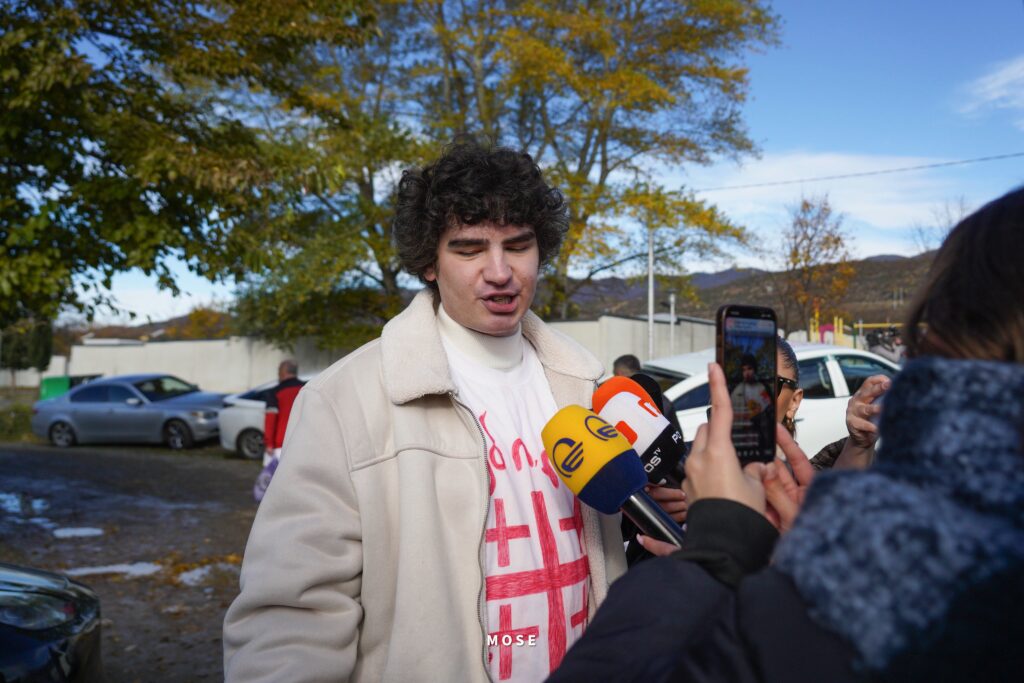
Nikoloz Javakhishvili was arrested on 30 November 2024. He also took part in the autumn protests. He was 20 at the time of his arrest and worked as a DJ before his detention.
Javakhishvili, along with seven other protesters, was charged with participating in group violence. The case became known in the media as the “case of the eight”.
Javakhishvili was accused of throwing pyrotechnics at police during a protest. As part of its evidence, the prosecution presented video footage showing a young man with a Georgian flag draped over his shoulders and a brown blanket thrown over it. The footage shows him throwing pyrotechnic devices. Investigators claimed that the person in the video was Javakhishvili.
The defence challenged this identification from the outset, arguing that the person could not be identified from the footage. Lawyers also insisted that the protesters had formed neither an organised group nor a prior conspiracy.
On 2 September 2025, the court sentenced Nikoloz Javakhishvili to two years in prison. He had been in custody since 30 November 2024. His sentence was due to end on 4 December 2026. The pardon secured his release 11 days before the end of his sentence.
🟥 Nikoloz Javakhishvili spent 723 days in prison – 1 year, 11 months and 23 days.
Davit Lomidze – 722 days in prison
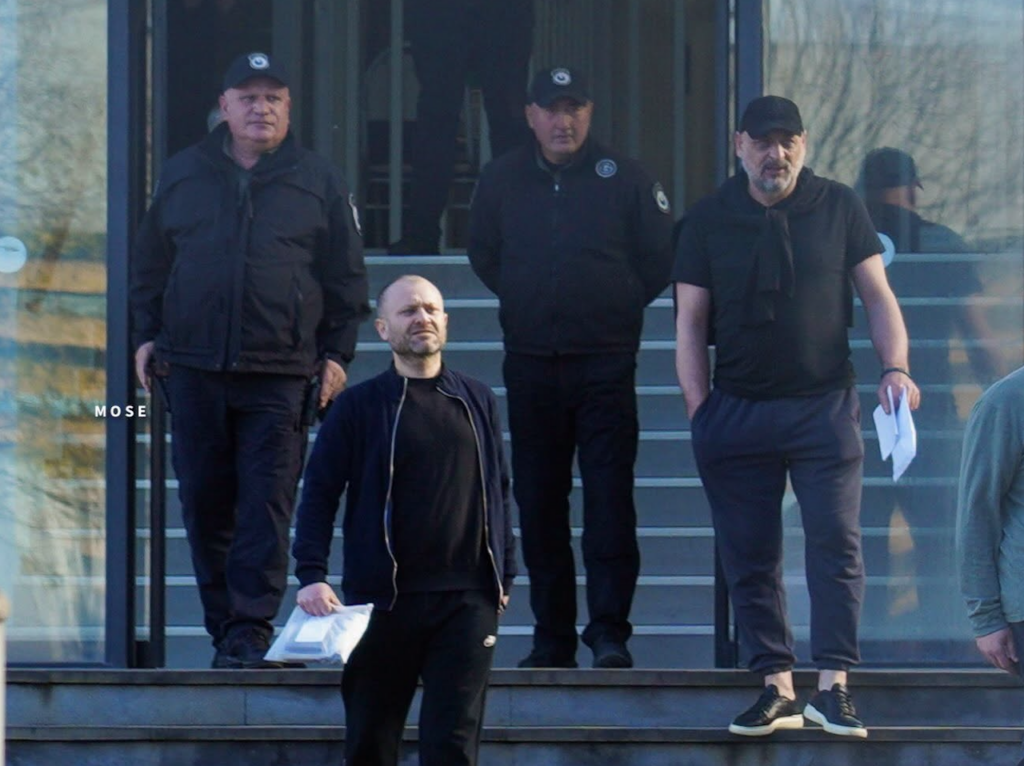
Davit Lomidze was 53 when police arrested him on 1 December 2024 during a pro-European protest on Rustaveli Avenue.
Police initially detained him on an administrative offence charge. However, just as he was due to be released, they took him into custody again, this time as part of a criminal case opened against him.
According to the prosecution, on the night of 1 December, during a protest outside parliament, Lomidze threw a Molotov cocktail towards riot police officers and a water cannon. Investigators claim that the water cannon caught fire as a result.
According to Lomidze’s lawyer, the case file contained two video recordings and a police report. The footage did not show who had thrown the Molotov cocktail, making it impossible to identify Lomidze as the perpetrator.
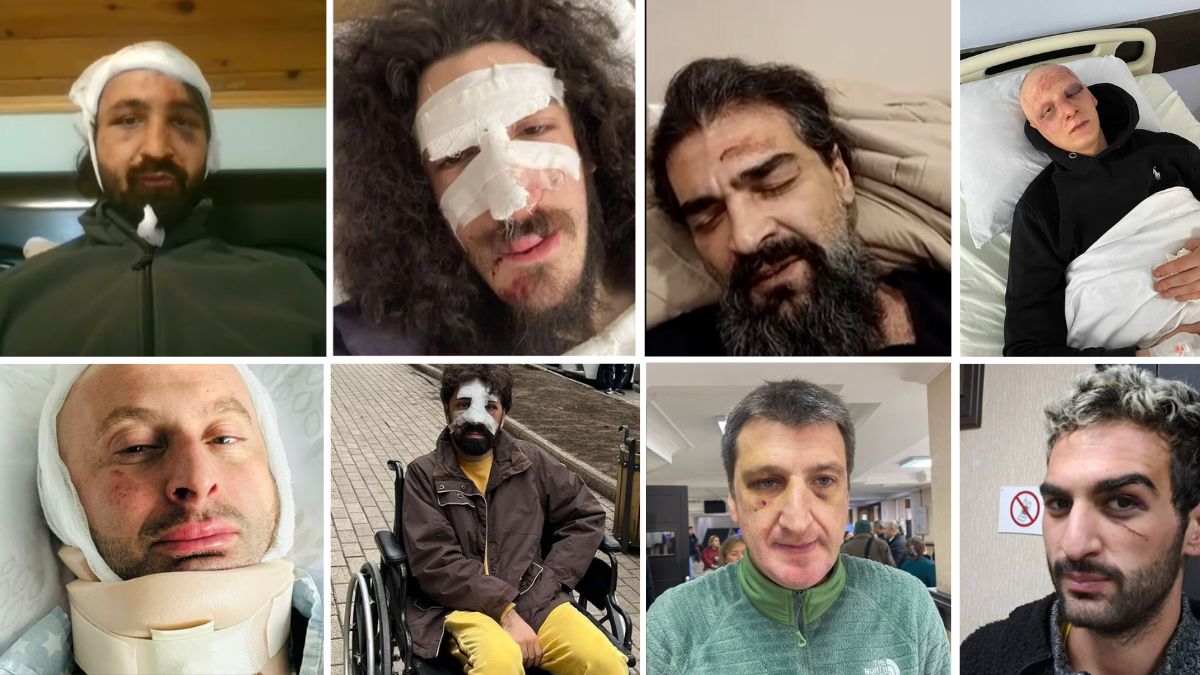
Moreover, riot police officers brutally beat and mistreated Lomidze during his arrest.
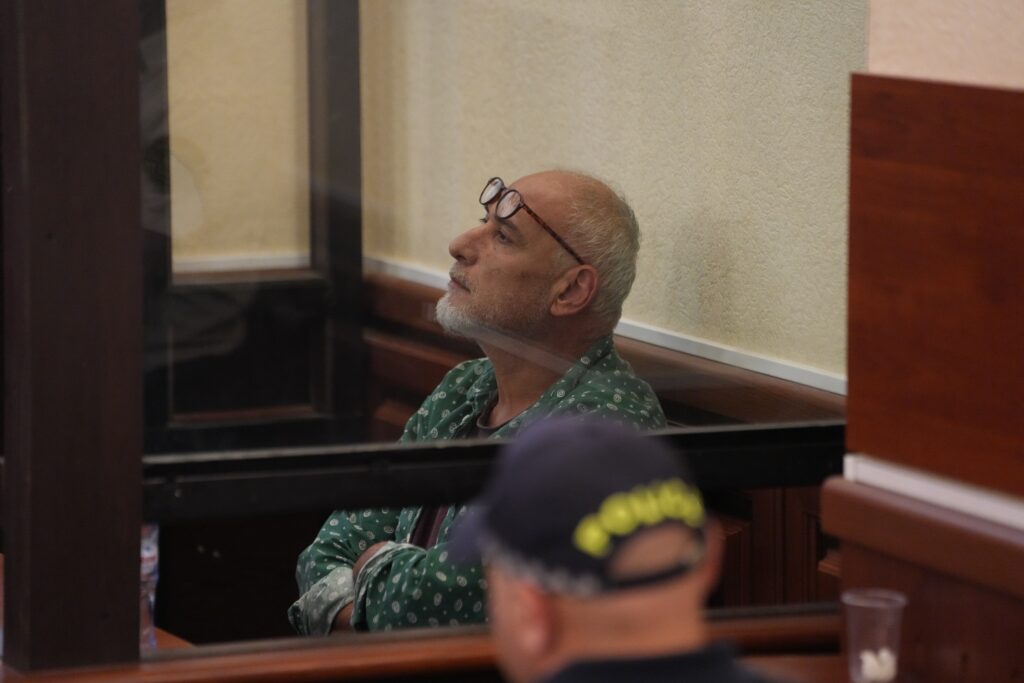
On 8 August 2025, Tbilisi City Court found Davit Lomidze guilty of assaulting a police officer. It sentenced him to four years and six months in prison.
🟥 Davit Lomidze spent 722 days in prison – 1 year, 11 months and 22 days.
Temur Zasokhashvili – 722 days in prison
Temur Zasokhashvili was arrested on 1 December 2024 alongside Davit Lomidze. The court heard their cases together.
He was 39 at the time of his arrest. He lived in Tbilisi with his father; his mother and brother had been living abroad for many years. He previously worked for the State Security Service and, before his arrest, was employed in the technical department of a hotel.
Zasokhashvili faced the same charge as Lomidze: setting fire to a water cannon using a Molotov cocktail. He denied the charges. His defence also questioned whether investigators could identify the person in the video footage.
His lawyer, Dimitri Vardiashvili, said he saw Zasokhashvili after his arrest at the detention centre. He had been beaten, his eyes were swollen and guards had to support him to prevent him from falling.
On 8 August 2025, the court sentenced him to four years and six months in prison.
🟥 Temur Zasokhashvili spent 722 days in detention – 1 year, 11 months and 22 days.
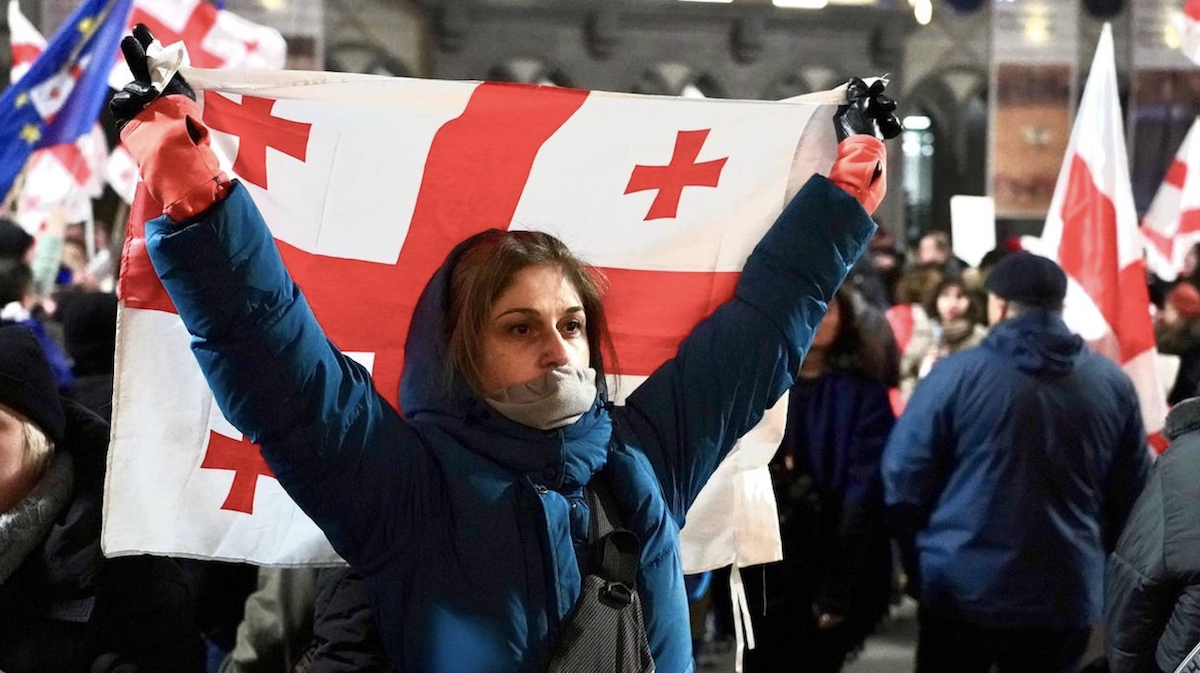
The pardon process
Under Georgia’s Constitution, granting pardons is the exclusive prerogative of the president and constitutes an individual act of clemency.
The president may exercise this power at any time. Traditionally, pardons are granted to mark significant religious holidays.
The president’s power to grant pardons allows them to:
- Grant a full pardon;
- Reduce a sentence;
- Remove a criminal conviction.
A pardon is not the same as an amnesty. A pardon is an individual decision by the president concerning specific people, while an amnesty involves the mass release of certain categories of convicted people and is granted by parliament.
When making a decision, the president may consult relevant government agencies or experts, although this is not mandatory.
Representatives of the Georgian Dream party have repeatedly raised the possibility of pardoning people arrested during protests. The ruling party has set a condition: those seeking a pardon must admit their guilt and express remorse.
In December 2025, Mikheil Kavelashvili said that people described as “prisoners of conscience” were in fact guilty and should admit their mistakes.
In May 2026, Prime Minister Irakli Kobakhidze also said that “repentance, remorse and admission of guilt” were essential conditions for receiving a pardon.
In June, he urged prisoners to admit their guilt and submit pardon applications to the president.
In September, Kobakhidze again stressed that there were no “prisoners of conscience” in Georgia. Nevertheless, the authorities said they were willing to grant pardons on condition that prisoners admitted their guilt and expressed remorse.
Some prisoners rejected this demand. They insist they have committed no crimes and refuse to admit guilt in exchange for their freedom. Some continue to hold this position. They include journalist Mzia Amaglobeli, actor Andro Chichinadze, 19-year-old Mate Davitdze, doctor Irakli Kerashvili and many others.
Dozens of people arrested during the protests remain in Georgian prisons. Some are due to complete their sentences by the end of this year, while others are scheduled for release in early 2027. However, some have received prison terms of four years or more.
“We all need to be free now. None of us belongs in prison. I would advise them to take this opportunity [for a pardon] and get out. The situation in the country is such that we – young people – are needed here,” pardoned protester Nikoloz Javakhishvili said, addressing those who remain behind bars.
Pardoning of protesters in Georgia