Opinion: 'Pashinyan’s proposal is aimed at Russia, not Armenian opposition'


Who did Pashinyan address his referendum proposal to?
Experts in Armenia are debating Prime Minister Nikol Pashinyan’s proposal to the parliamentary opposition. He suggested that opposition MPs vote to put the draft of a new constitution to a referendum. In return, he promised to resign as prime minister regardless of the referendum’s outcome.
Local analysts describe the offer as a “deal” with the opposition. Under its terms, if opposition MPs do not obstruct the constitutional referendum, Pashinyan will voluntarily step down. Opposition figures have repeatedly stated that their main goal is to remove him from office. Pashinyan, meanwhile, wants to change the Constitution. He believes a new version would allow Armenia to live in peace and resolve conflicts with its neighbours.
Political analyst Robert Gevondyan, discussing the opposition forces that could theoretically vote in favour of the referendum, highlights the following points:
- “They are part of, and even lead, political forces that have ‘united’ to overthrow the government;
- The political capital of these forces lies neither in their members, nor in their standing at home, nor in the other groups they have joined forces with.”
According to the analyst, the political capital of both opposition factions – “Strong Armenia” and “Armenia” – lies in “Moscow’s patronage”.
“They will only be able to respond to Pashinyan’s proposal after agreeing on their answer with the Kremlin. In reality, Russia is the party responding to the proposal,” Robert Gevondyan argues.
The political analyst also puts forward scenarios in which Moscow might allow the pro-Russian opposition to “make a deal” with the Armenian authorities.
- ‘The ball is in Armenia’s court’: Yerevan voices on Armenia losing its voting rights in Russia-led CSTO
- ‘Another attempt is being prepared to deprive Armenia of its independence’ — Pashinyan
- Russia seeks to retain Armenian railway concession as Yerevan avoids confrontation
“The opposition rejects the offer of its dreams”
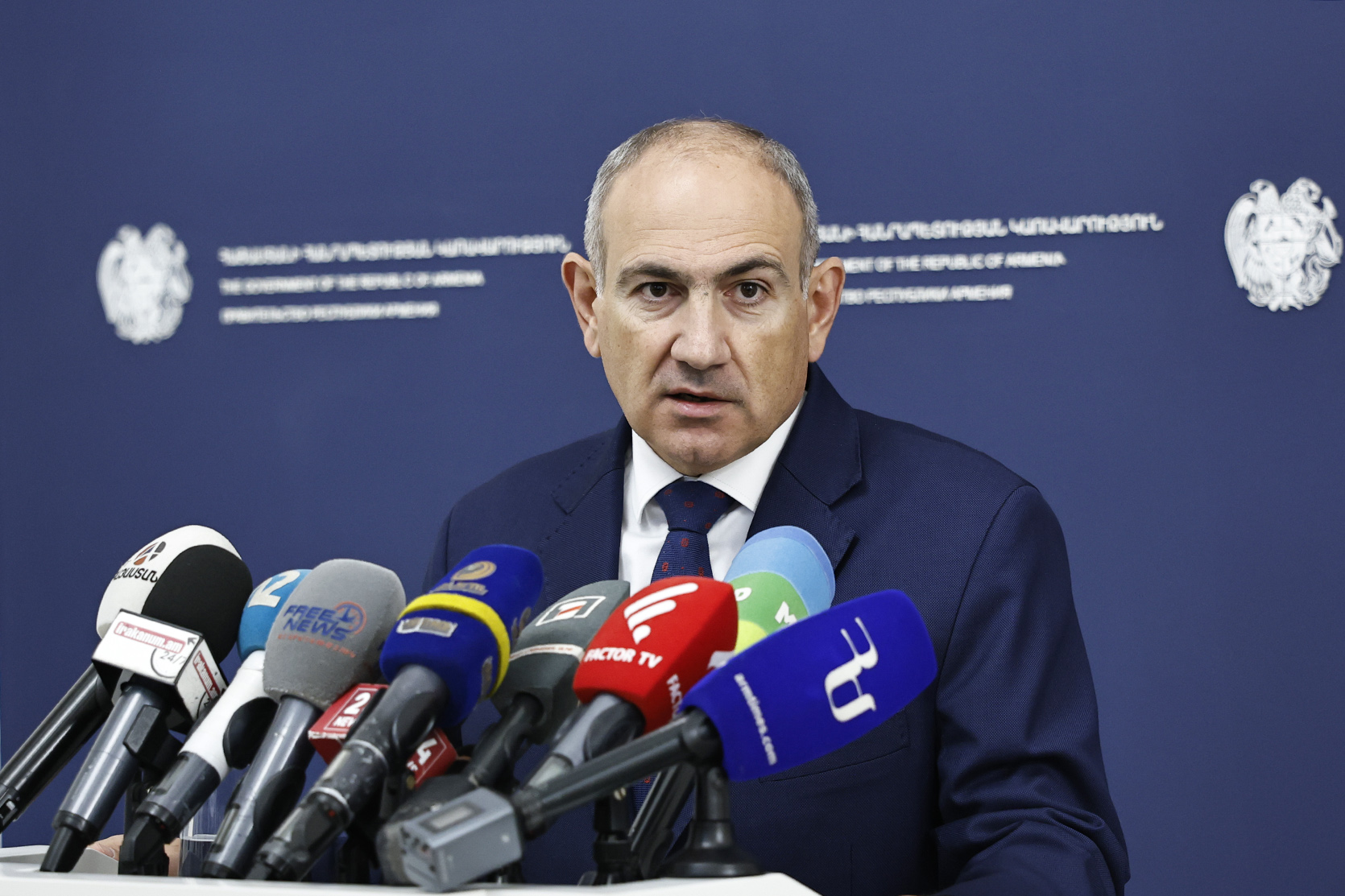
In recent days, Armenia’s prime minister has repeatedly presented his proposal in public appearances. Pashinyan is asking opposition MPs to vote in favour of holding a referendum on the draft Constitution. In return, he promises to resign if voters reject it. If they approve it, the ruling party will not nominate him for prime minister in the next election.
The opposition factions “Armenia” and “Strong Armenia” have rejected the offer.
They believe the incumbent prime minister will step down anyway and refuse to accept his proposed “deal”.
Opposition figures describe the draft of the new Constitution as “Aliyev’s Constitution”. They believe Armenia is changing its supreme law at Azerbaijan’s request.
Azerbaijan refuses to sign a peace treaty until Armenia changes its Constitution. Baku considers the reference in its preamble to the Declaration of Independence problematic. The declaration calls for the reunification of Armenia and Nagorno-Karabakh. The new draft omits this reference.
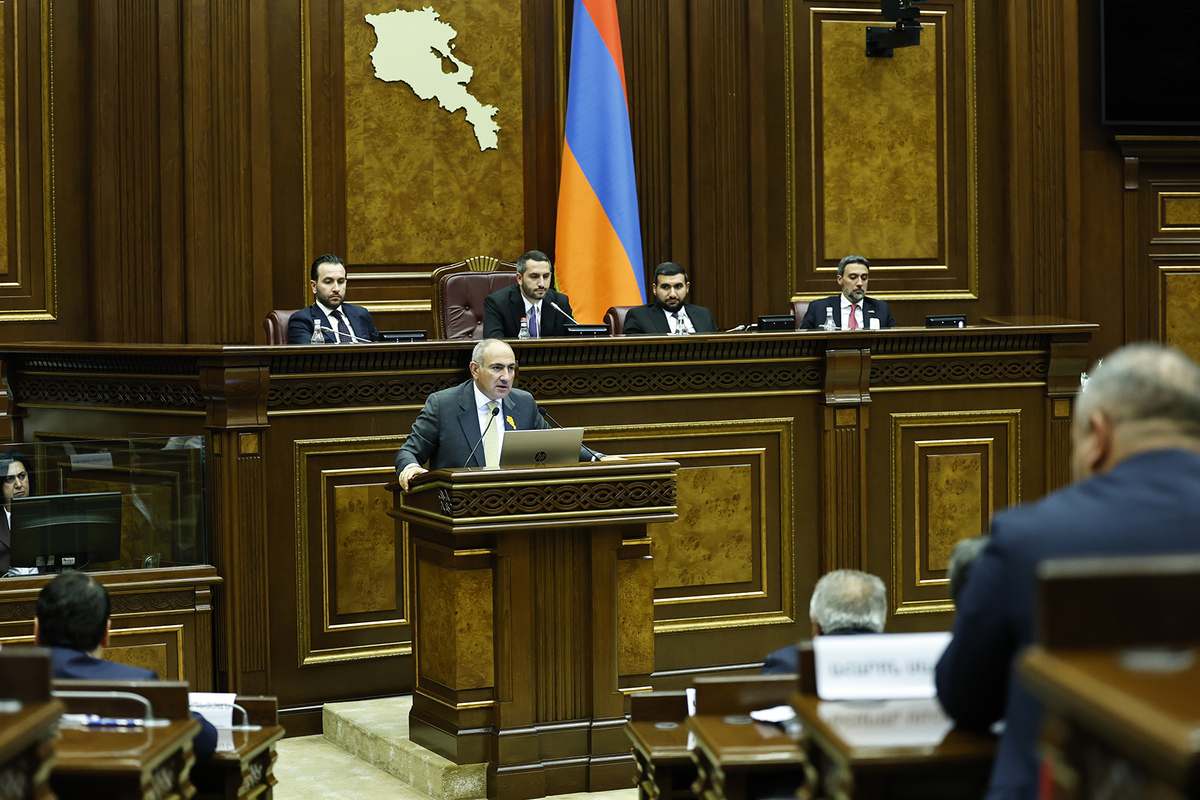
Parliament must first approve the proposal to put the draft Constitution to a referendum. At least two-thirds of MPs must vote in favour. The ruling Civil Contract party does not have enough seats to secure the required majority. It is six votes short.
Commenting on the opposition’s refusal, ruling party representative and Speaker of the National Assembly Ruben Rubinyan said that, for them, “obstructing peace matters more than removing Pashinyan from power”.
He also suggested that the opposition was seeking to “make peace impossible and incorporate Armenia into another state – the Union State of Russia and Belarus”.
Pashinyan himself describes his proposal as an unprecedented opportunity for the opposition.
He explains the opposition’s refusal by saying that “their mission is to prevent the country from achieving both peace and independence”.
Analysis
Political analyst Robert Gevondyan has outlined his views on the issue in an article titled “The new Constitution and Pashinyan’s proposal to Russia”:
“Pashinyan apparently understands that the Kremlin will make the final decision on the issue he has raised.
The proposal, made just days before three visits to Moscow scheduled for December this year, is addressed not to Armenia’s parliamentary opposition, but to the Kremlin.
The Armenian prime minister has announced that he will visit Russia on 3, 11 and 22 December. According to a preliminary agreement, Pashinyan will meet Russian President Vladimir Putin in Moscow on 3 December.
The Armenian prime minister also said that a meeting of the Eurasian Intergovernmental Council, bringing together the heads of government of the Eurasian Economic Union (EAEU), is scheduled for 11–12 December. The annual meetings of the leaders of the EAEU and Commonwealth of Independent States (CIS) countries will take place in St Petersburg at the end of the year.
There is little doubt that Armenia’s new Constitution will be on the agenda when Pashinyan meets Putin. The draft was published ahead of the planned visits.
But under what circumstances could Pashinyan secure the six votes he needs with Russia’s help? There are two theoretical scenarios.
First, Moscow could give the green light to a constitutional referendum if the new Constitution takes Russia’s interests and demands into account.
However, the draft has already been published, and it contains provisions that are clearly problematic for Moscow. In particular, removing the reference to Armenia’s Declaration of Independence from the preamble is primarily a geopolitical issue. But another provision, which bars political parties from operating with foreign funding, would directly limit Russia’s ability to exert influence in Armenia.
Under the current Constitution, the Constitutional Court may ban only parties that have advocated violence or used it to overthrow the constitutional order.
The new draft introduces the following additional grounds for banning a political party:
- receiving funding from foreign sources;
- advocating the renunciation of state independence;
- inciting ethnic or religious hatred;
- taking actions that obstruct the free expression of voters’ will.
The second way to secure Moscow’s approval for the six votes needed to hold a constitutional referendum would be to reach agreements on other issues.
These could include Armenia’s railway network, the construction of a new nuclear power plant, Russia’s 102nd military base in Gyumri, Armenia’s European integration process and other matters.
In other words, if Pashinyan and Putin reach agreements on key issues, Russia could “give the green light” to a referendum on constitutional amendments. The question is whether Yerevan is prepared to pay such a price.”
Who did Pashinyan address his referendum proposal to?