TV host gets 30-day detention in Georgia over Facebook post: reactions


journalist jailed over Facebook post
Popular Georgian TV host Vakho Sanaia was sentenced to 30 days’ administrative detention on 19 October over social media posts deemed insulting to government officials.
The lawsuit was filed by the Department for Monitoring Hate Speech and Aggressive Statements, which recently became part of the Interior Ministry. Sanaia was accused of insulting Parliament Speaker Shalva Papuashvili and MP Vladimir (Lado) Bozhadze in his Facebook posts and videos.
This is the third sentence handed down to the Formula TV host on similar charges since July this year, and his second term of detention.
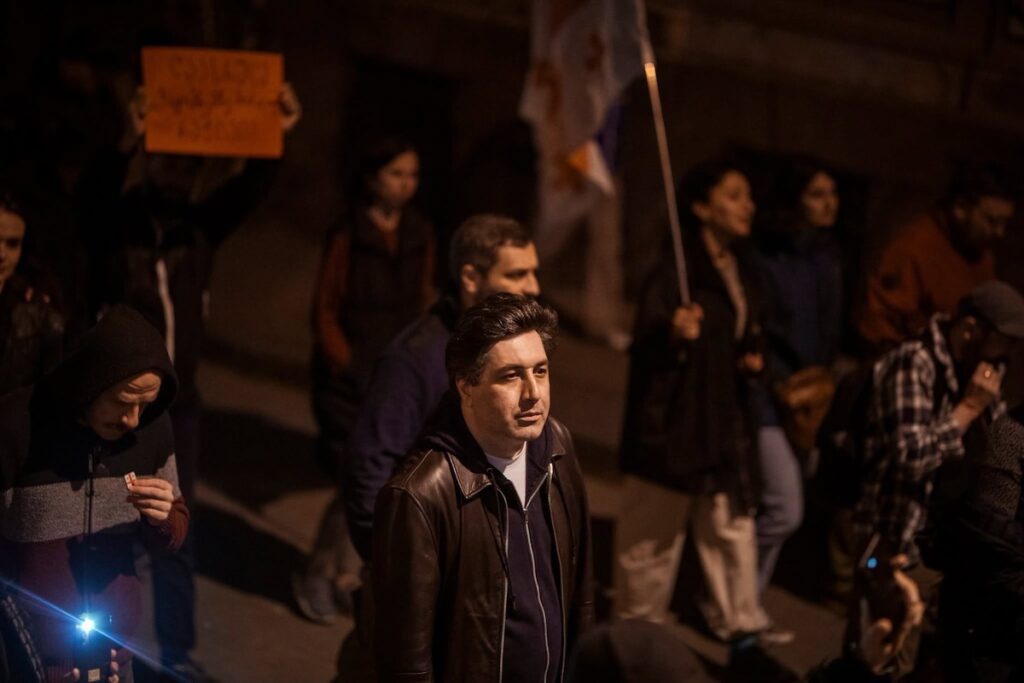
Sanaia did not attend the court hearing, saying that prosecuting him for his posts was absurd. Police arrested him at his home.
“They want to force society into silence, but society will never be silent. We will overthrow this regime, however long it takes. This will certainly end in our victory,” Sanaia said as he was being arrested.
A joke that became a case
Georgia’s administrative offences code penalises insulting, verbally abusing or harassing a public official in connection with their duties. The provision, Article 173-16, was added in February 2025 through a fast-tracked procedure. Offenders face a fine of GEL 2,500 to 6,000 (about $920 to $2,300) or five to 60 days of administrative detention, a form of short-term jailing imposed by a judge without a criminal trial.
Sanaia’s troubles began on July 10, when Judge Kochkiani fined him GEL 6,000 for a sarcastic post urging people not to call Bozhadze an obscene word. Sanaia responded with similar posts and was jailed for 14 days on July 22. Rights groups said he was the first journalist in Georgia to be detained over a social media post.
US Embassy expresses concern over creation of Georgia’s hate speech unit
Another activist in Georgia convicted over insulting Facebook post: doctor Giorgi Akhobadze
Georgian blogger says Interior Ministry wants to punish him for insulting Russian propagandists
The new ruling covers posts he wrote around that detention. Shortly before he was taken into custody on July 22, he wrote: “For 14 days, don’t call Shalva and Lado d**ks. When I get out, I’ll deal with that myself.”
Minutes after his release on August 5, he posted again: “When I wrote about Papuashvili and Bozhadze, ‘don’t call them d**ks’, I was jailed. Now a question that has been bothering me for two weeks: if Shalva Papuashvili and Bozhadze wrote about themselves, ‘don’t call us d**ks’, would they end up in jail too? Shalva, Lado, I dare you, boys!”
The court also reviewed a video published on September 24, in which Sanaia refers to Papuashvili with a vulgar Georgian wordplay. It ends with him saying “So, Shalva”, followed by a clip from the popular Georgian sitcom My Wife’s Friends in which a character delivers a profane insult.
Bozhadze entered parliament on Georgian Dream’s list in 2024 but has represented a separate party, the European Socialists, since 2025.
A unit that monitors social media
All of Sanaia’s cases were brought by the Interior Ministry’s Division for Combating Hate Speech, which began operating on June 1 to monitor public statements, including on social media, and refer cases to court. According to Civil.ge, an independent Georgian news site, the unit often acts without any complaint from the person said to have been insulted. Its cases have led to dozens of fines and several detentions.
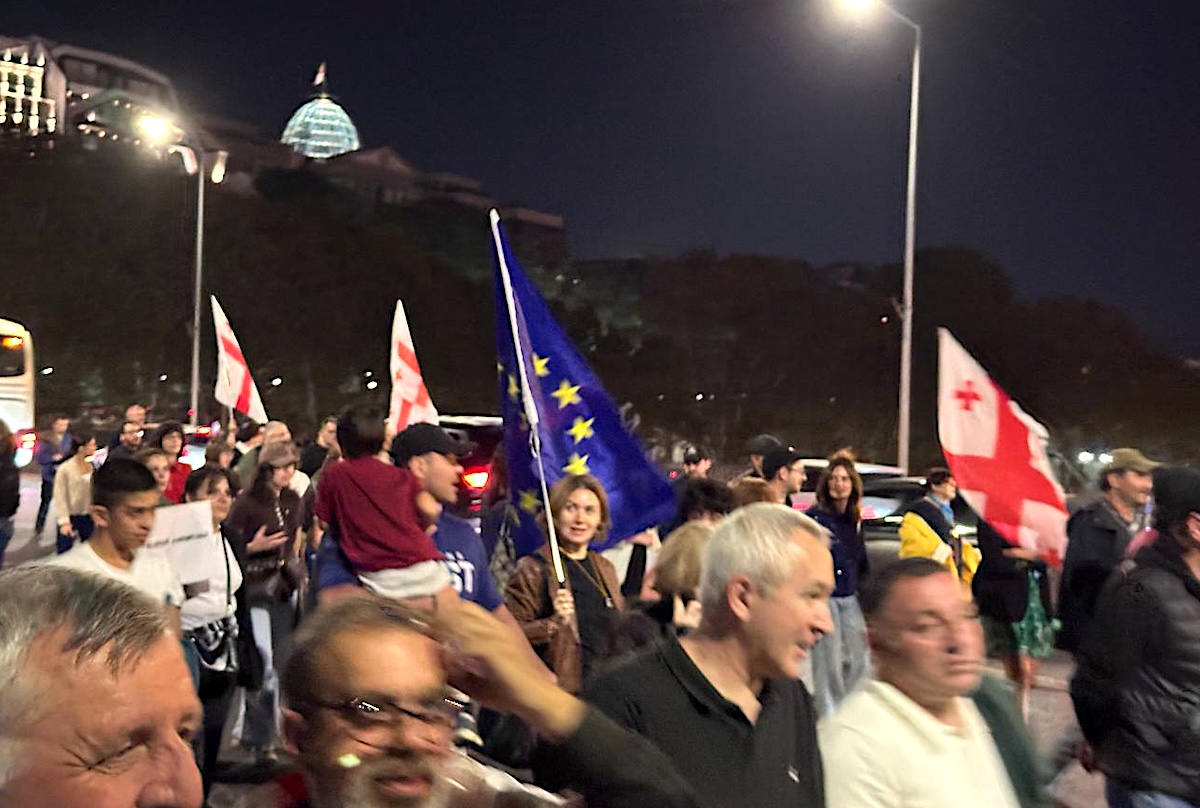
Sanaia had been jailed once before. In October 2025, he was given six days of detention for “blocking a road” during an anti-government protest in Tbilisi.
The case unfolds as Georgia’s relations with the West have deteriorated. The government halted EU accession talks in November 2024, triggering mass protests, and Georgia fell to 135th out of 180 countries in Reporters Without Borders’ 2026 press freedom index, down from 77th in 2022.
“A blatant attempt to silence critics”
A European Commission spokesperson, Christian Wigand, asked about Sanaia’s case, said Georgian Dream was trying to suppress the political opposition, journalists and activists and continued to shrink civic space. He called on the authorities to immediately release those unjustly detained and repeal what he called repressive legislation.
Georgian media and rights organisations condemned the ruling. The Georgian Charter of Journalistic Ethics, a self-regulatory body for journalists, called the sentence unjust and said the authorities were using the law and the courts to punish critical voices. It said Georgian Dream had abandoned public officials’ duty to tolerate criticism.
The Media Advocacy Coalition, a group of Georgian media and legal NGOs, said a third case against the same journalist pointed to a pattern of persecuting critical media.
PEN Georgia demanded that the ruling be overturned. “In a country where journalists and citizens are jailed for criticising the authorities, and free speech becomes grounds for punishment, democracy no longer exists,” the writers’ organisation said.
Transparency International Georgia said Sanaia was being punished for exposing Georgian Dream and its founder, the billionaire Bidzina Ivanishvili, and for supporting Georgia’s European future.
The speaker’s response
Papuashvili defended the ruling. “Obscenity has nothing to do with freedom of expression and is not protected by it,” he said.
He said he did not follow individual cases, adding that the Interior Ministry unit worked “automatically” and that those targeted by insults often learned of rulings only afterwards. He also accused the EU ambassador to Georgia of backing hatred, saying some critics were trying to impress the envoy.
Papuashvili pointed to Germany, where insulting someone online can be a criminal offence, citing a complaint filed by the German chancellor. German media reported last year that Friedrich Merz had pursued hundreds of insult cases, most of them before becoming chancellor. In Germany, however, a standard insult case requires a complaint from the person insulted.
“If Vakho Sanaia has the audacity to be obscene in public, he should also have the audacity to answer for it,” Papuashvili said.