Georgian Dream propaganda network ran coordinated campaign against Metropolitan Iov – ISFED


Campaign against Metropolitan Iov in Georgia
Following a sermon that included criticism of the Georgian government, a coordinated disinformation campaign against Metropolitan Iov was launched on social media. Dozens of social media pages published posts with identical content at almost exactly the same time.
As part of the campaign, at least 20 paid advertisements appeared on Meta platforms, generating between 77,600 and 107,180 views in total.
Pro-government media outlets, Facebook pages and individuals affiliated with Georgian Dream’s propaganda network stepped up the campaign against Metropolitan Iov following his critical sermon.
The campaign was investigated by the International Society for Fair Elections and Democracy (ISFED).
The organisation analysed how identical quotes targeting the metropolitan spread across dozens of pages within minutes of each other; how videos from previous years were used in a new context; and how paid advertising complemented the campaign’s organic reach.
What Iov said and why it led to a confrontation with the authorities
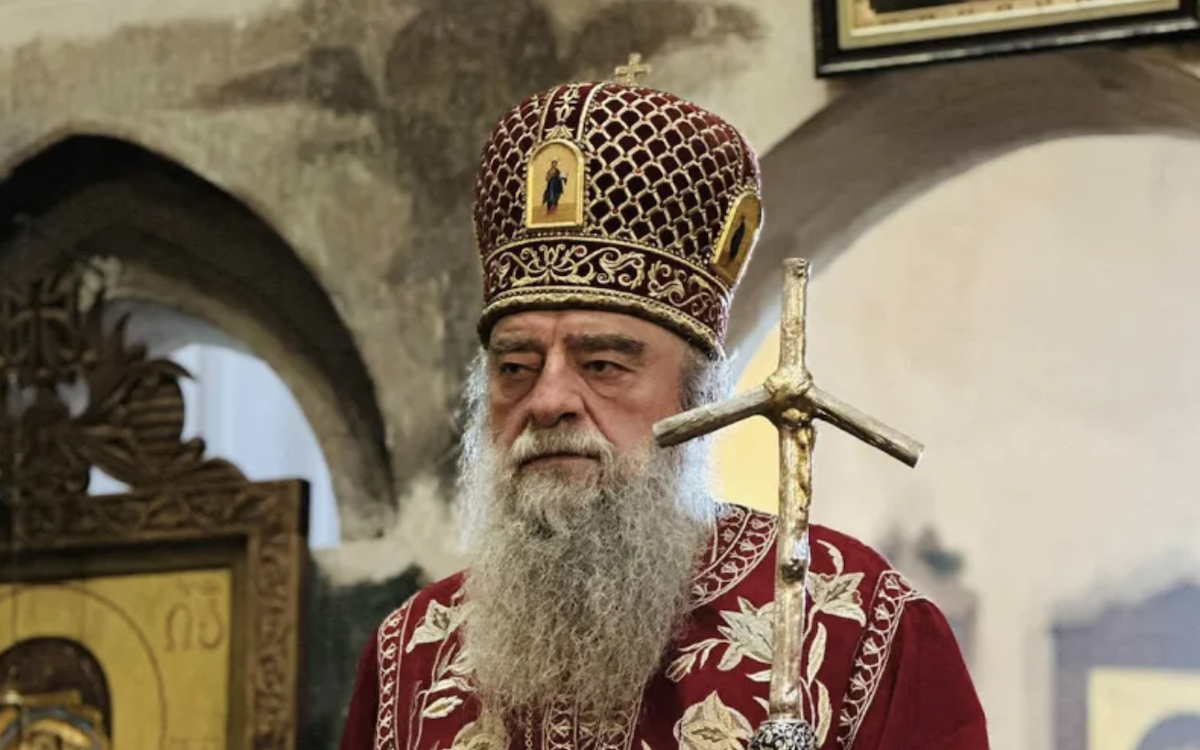
The confrontation followed a sermon that Metropolitan Iov delivered at Urbnisi Cathedral on 10 November. He called government officials “non-believers” and “alien to the Church”, saying that the government had exhausted its potential and that the Georgian people should choose more worthy leaders in the future.
The metropolitan criticised the Church’s dependence on state funding, saying that the authorities were trying to merge Church and state.
He also raised issues such as corruption, the prevalence of drug addiction among young people and the widespread popularity of gambling. In addition, he referred to information allegedly leaked from the State Security Service in 2021, which contained details of surveillance of members of the clergy.
In his sermon, Iov also mentioned Bidzina Ivanishvili, the founder of the Georgian Dream party. He also referred to the previous administration, saying: “We know what the previous government was doing; everything is obvious – the people voted against it.”
Metropolitan Iov’s remarks attracted particular attention because he had previously supported Georgian Dream.
On 21 November, during another sermon, he explained that although he had supported the ruling party, he believed it had since changed course, making criticism necessary.
“I supported Georgian Dream and stood by them, but I saw that they had gone astray. The situation had changed, and it became necessary to speak out against such actions. If they put things right, take these remarks into account and bring about change in Georgia – if they change the course of these developments – I may support them again,” he said.
Metropolitan Iov was also among the candidates for the post of patriarch in May 2026. Metropolitan Shio Mujiri was elected patriarch.
Identical posts and quotes from ‘experts’
According to ISFED’s monitoring, representatives of Georgian Dream were the first to react to Metropolitan Iov’s sermon.
MP Levan Machavariani called it “irresponsible”, saying that a senior clergyman should not use the pulpit to make political statements. Meanwhile, MP Mariam Lashkhi, responding to journalists’ questions, remarked: “May God forgive him.”
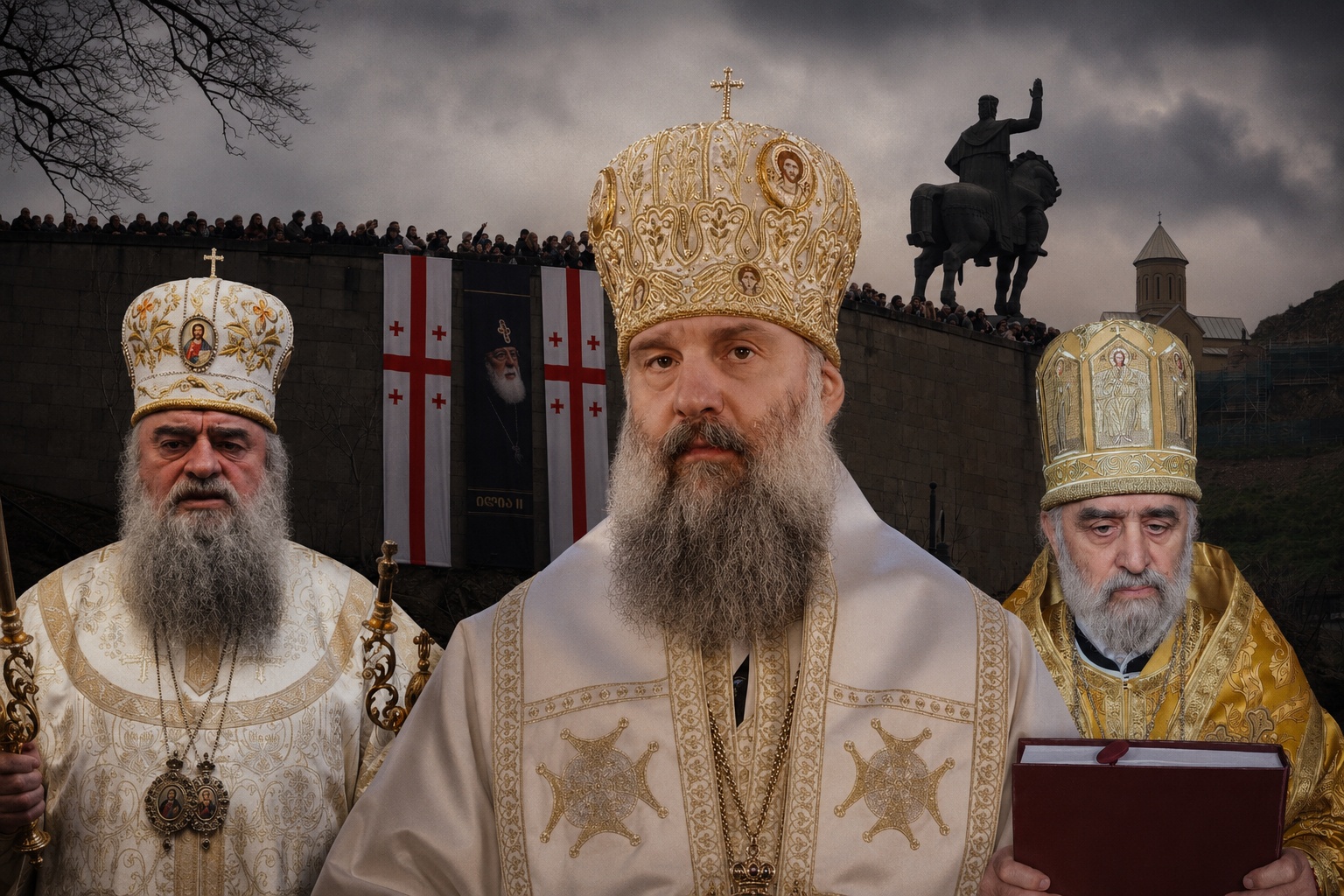
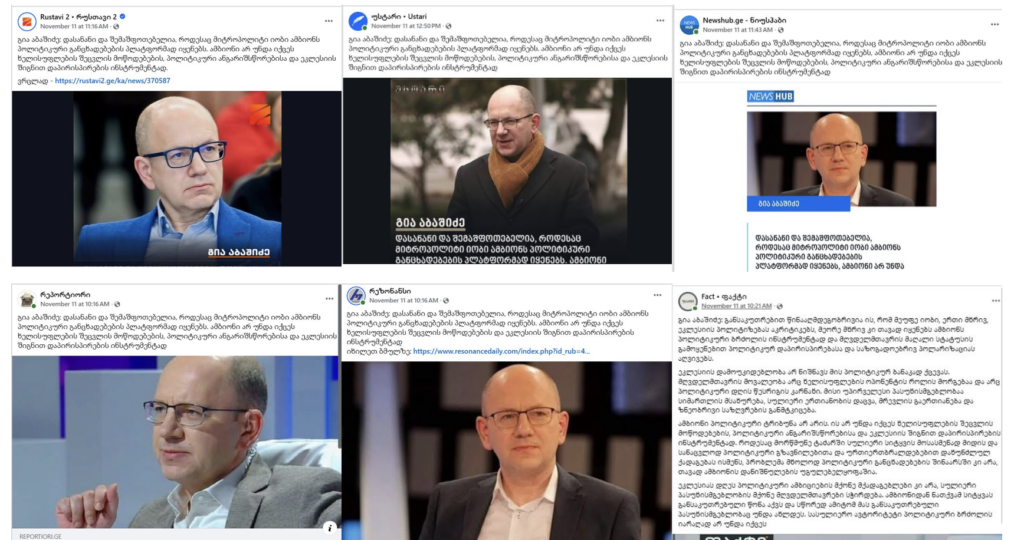
Meanwhile, pro-government figures began posting their views on social media.
On 11 November, news agencies and television channels linked to Georgian Dream published the same quote from a Facebook post by Gia Abashidze. He claimed that Bishop Iov was using the church pulpit to call for a change of government.
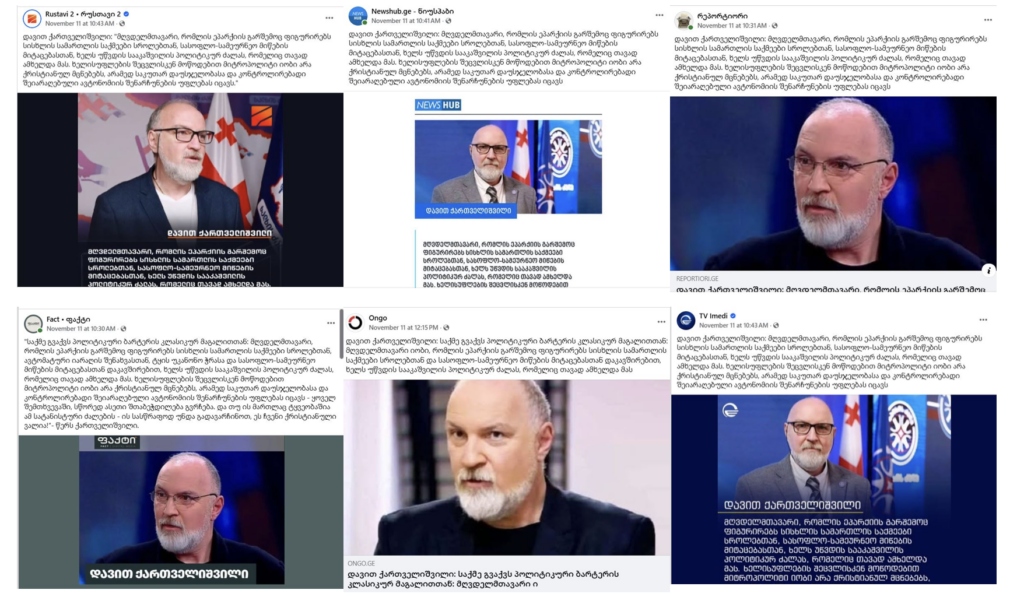
Thirteen minutes after Abashidze’s statement, a quote from Davit Kartvelishvili was circulated. He accused the metropolitan of having links to Saakashvili’s political forces, referred to criminal cases involving the metropolitan’s diocese and raised the issue of the seizure of agricultural land.
According to ISFED, these allegations came without references to specific sources or any particular case. Nevertheless, the text appeared on 14 pages within a few hours.
Tamta Megrelishvili, Davit Chikhelidze and Zaal Anjaparidze also joined the campaign. In their posts, they accused Metropolitan Iov of making political statements against the government, supporting Saakashvili and taking a position that ran counter to the country’s interests.
Davit Chikhelidze even linked the metropolitan’s diocese to harbouring criminals and “gangland-style disputes”.
A fake Facebook profile also took part in the campaign
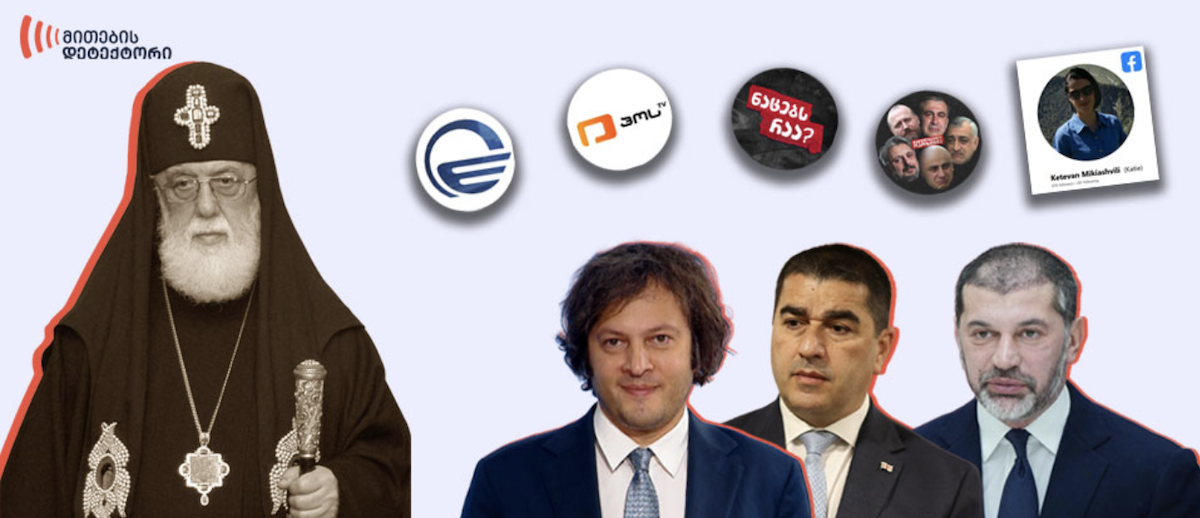
The campaign also involved a Facebook profile that Myth Detector had previously identified as fake. The account, registered under the name Ketevan Mikiashvili, published two posts targeting Bishop Iov, just a few hours apart.
In her first post, Mikiashvili addressed the metropolitan ironically, referring to the election of the new patriarch. She remarked that Bishop Iov had “dropped his mask” after Shio became patriarch. The post included an archive television report captioned “Call to release Saakashvili”.
In her second post, she shared a video recorded on 25 September 2019, titled “Bishop Iov on Petre Tsaava”, implying that the footage revealed the metropolitan’s true motives.
These posts highlighted another narrative promoted by the campaign: Bishop Iov’s criticism of the authorities was presented not as a political or ecclesiastical disagreement, but as a personal grievance stemming from his defeat in the patriarchal election.
Mikiashvili later published another post portraying Bishop Iov’s sermon as yet another attempt to stage a revolution.
Personal attacks also appeared in posts by other figures.
On 11 November, Lasha Natsvlishvili, a Georgian Dream supporter and propagandist, published a Facebook post containing insults directed at Metropolitan Iov. [Fact-checkers say Lasha Natsvlishvili is behind the fake “Ketevan Mikiashvili” profile – JAMnews].
The post prompted a strong reaction, including from members of the clergy.
In 2012, Lasha Natsvlishvili became an MP on the Georgian Dream party list. He later served as first deputy interior minister and deputy chief prosecutor, before working as a public relations adviser to Georgian Dream.
The Interior Ministry launched administrative proceedings against Lasha Natsvlishvili over the post containing insults directed at Metropolitan Iov. On 16 November, Judge Manuchar Tsatsua fined Natsvlishvili 2,500 lari.
20 adverts and nearly 107,000 views
According to ISFED, part of the campaign was paid for. Data from the Meta Ad Library as of 17 November showed that at least 20 adverts targeting Metropolitan Iov’s reputation had appeared on five Facebook pages.
All the adverts ran between 11 and 14 November, with up to $100 spent on each. ISFED estimated that they generated between 77,600 and 107,180 views in total.
The adverts published on an anonymous page called Ganulebuli Opozitsia (“Cancelled Opposition”) attracted the most views – between 47,000 and 60,094. The same page also shared a post about Metropolitan Iov’s “vast wealth”.
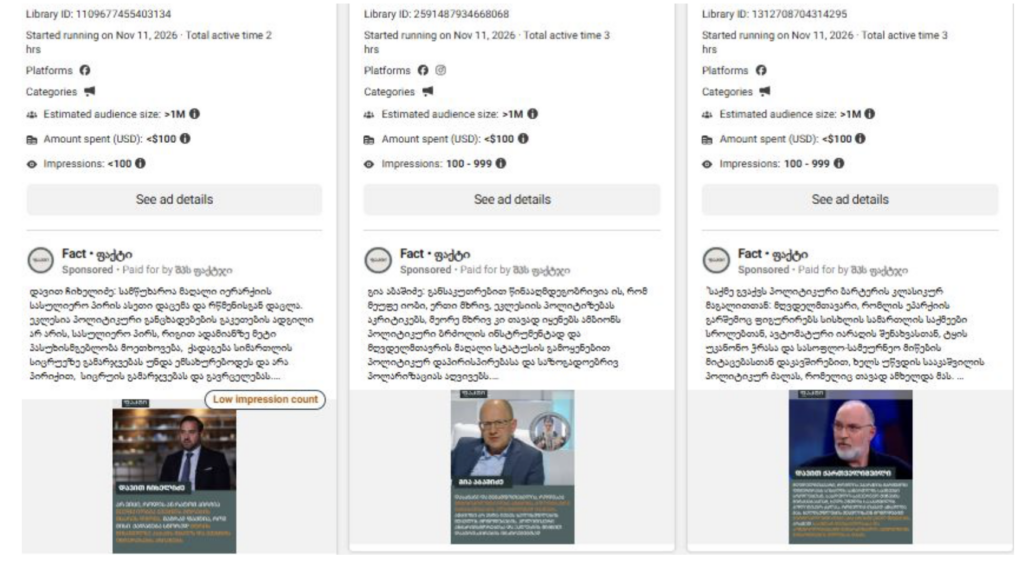
Advertising materials also appeared on the pages Fact • ფაქტი, Ustari, Akhla • ახლა and Saerto Gazeti.
According to ISFED’s research, Jaba Khubua, the head of Fact • ფაქტი, is a presenter on the pro-government Imedi TV channel. Shako Kuchashvili, the owner of Ustari, is a Georgian Dream supporter and one of the presenters of the Fake Control programme on the same channel.
ISFED notes that the Fact and Ustari pages were created in 2026 and that the people behind them have links to the pro-government Imedi TV channel and Georgian Dream.
ISFED says this is significant because, following sanctions imposed by the UK, the main pages of the pro-government Imedi and POSTV channels faced restrictions on placing advertisements. This forced them to use new pages to distribute their content.
The disinformation campaign also circulated footage from previous years. One advert used a recording of a sermon delivered by Metropolitan Iov in 2024, in which he discussed the release of Mikheil Saakashvili from prison. The video was accompanied by footage from Saakashvili’s time in power showing police storming a church in Gldani. However, the post did not mention that the sermon had been recorded two years earlier.
Government response and reaction within the Church
The campaign against Metropolitan Iov extended beyond social media. On 15 November, Imedi TV broadcast a 17-minute report as part of its Imedis Kvira (“Imedi Week”) programme, titled “A political manifesto from the pulpit”.
On the same day, Goga Khaindrava, a film director and Georgian Dream supporter, described the sermons delivered by Metropolitan Iov and the clergy who supported him as political statements.
Other members of the clergy, including Metropolitan Ilarion of Svaneti, expressed support for Metropolitan Iov. They criticised the ruling party’s policies and drew attention to issues such as the demographic crisis, gambling and drug addiction.
On 16 November, Prime Minister Irakli Kobakhidze commented on the dispute. He said that public arguments between the clergy and the authorities harmed both the Church and the country, adding that the government had no intention of joining the dispute.
Campaign against Metropolitan Iov in Georgia