

Armenian rights lawyer files ECHR complaint over Ruben Vardanyan's 20-year jail sentence in Baku






ECHR complaint over Vardanyan case
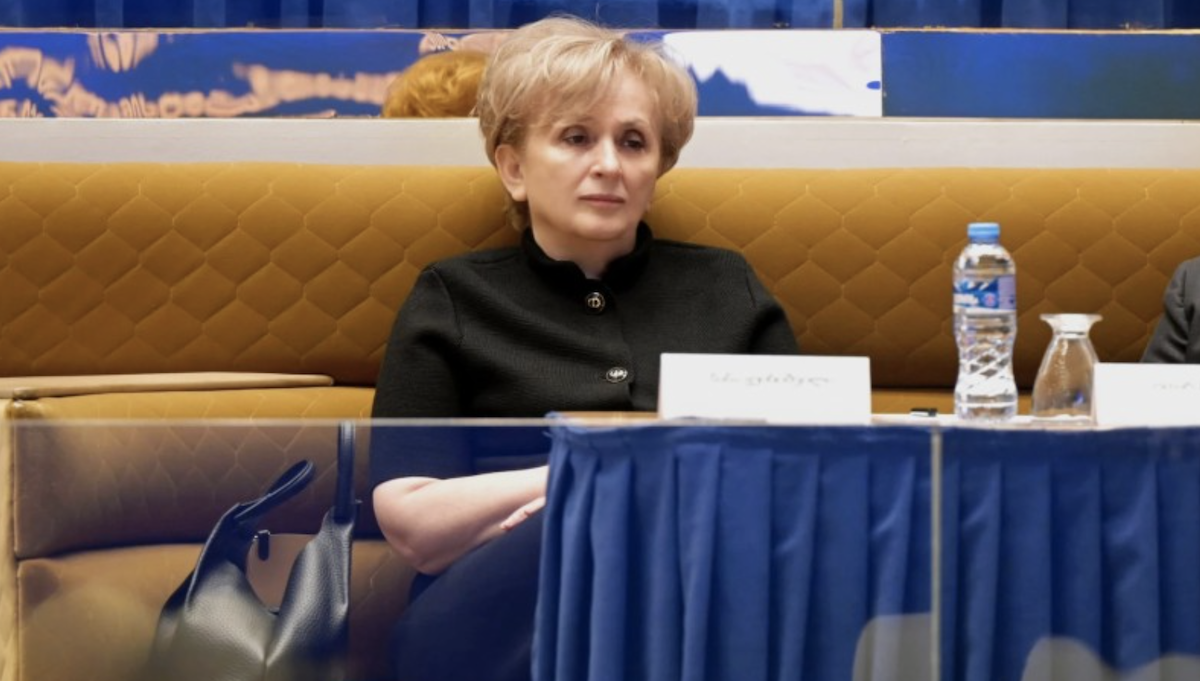
Human rights lawyer Siranush Sahakyan has filed a complaint with the European Court of Human Rights (ECHR) over the case of Ruben Vardanyan, the former state minister of the former unrecognised Nagorno-Karabakh Republic. She said she would represent Vardanyan before the court. Sahakyan has represented Armenian detainees at the ECHR for many years.
“The application sets out in detail violations of eight articles of the European Convention on Human Rights, supported by comprehensive legal and factual arguments,” Sahakyan said in a statement shared with the media and posted on social media.
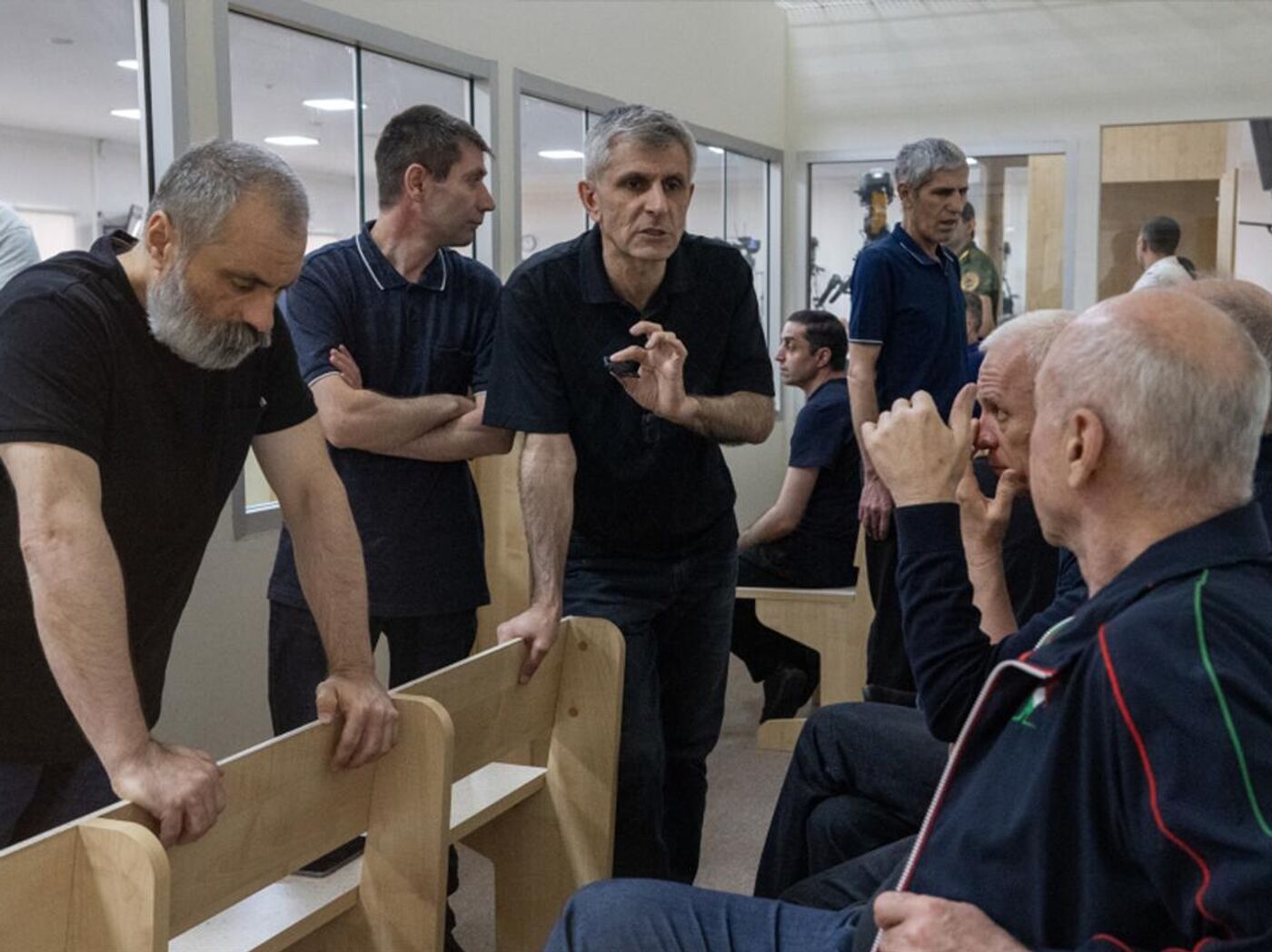
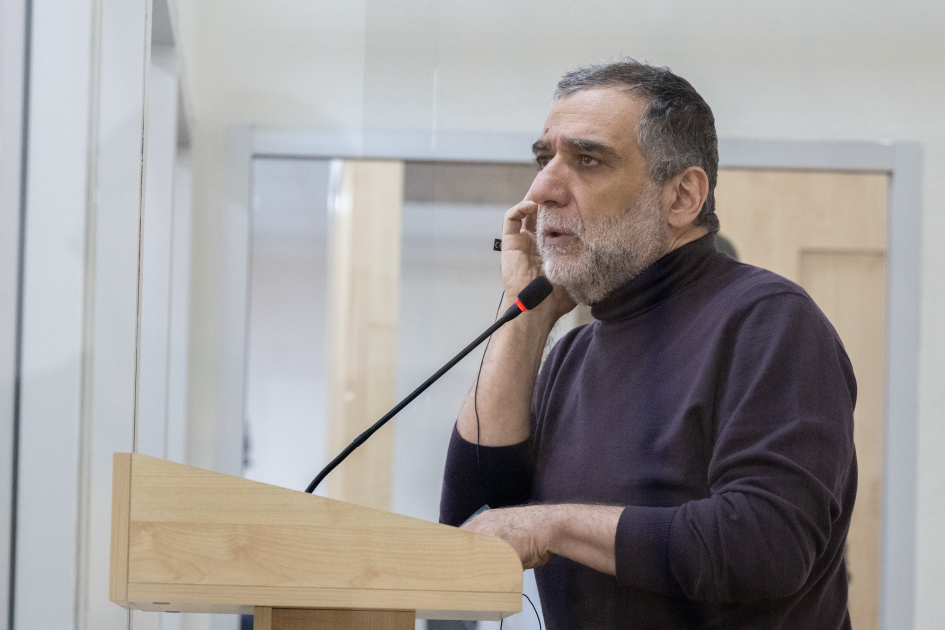
Vardanyan is one of 19 Armenians still held in Azerbaijani prisons. In February 2026, a military court in Baku sentenced him to 20 years in prison.
According to Sahakyan, the defence was only recently able to obtain the court’s written judgment, which was required before an application could be submitted to the ECHR. She said Azerbaijan had withheld the ruling until then, which is why the complaint was filed only on 19 July.
The court found Vardanyan guilty of a number of serious offences, including waging war, financing terrorism and deportation.
Armenian rights groups, however, have described the trial in Baku as “political rather than legal”. Vardanyan himself called the proceedings “a farce” and “a mockery of justice”. During the hearings, he instructed his lawyer not to present arguments in his defence.
“It is impossible to protect rights in a system that fundamentally denies the right to a fair trial. That is why Ruben Vardanyan decided to continue his fight for justice through international legal mechanisms,” Sahakyan said.
- Opinion: ‘ECHR ruling is indisputable historical fact’
- Four ethnic Armenians held in Azerbaijan jails handed over to Armenia
- Ruben Vardanyan not allowed to finish what he wanted to tell Azerbaijan’s ombudsman
Details of Vardanyan case
In her statement, Sahakyan disclosed further details of the case. She said the military court in Baku did not read out the full verdict. Now that Vardanyan’s family has passed the written judgment to his lawyers, it has become clear that he was convicted on 41 counts under 21 articles of Azerbaijan’s Criminal Code.
According to Sahakyan, the judgment does not substantiate Vardanyan’s personal criminal responsibility with facts or evidence.
“Instead, the court concluded that the ‘criminal organisation’ – the leadership of the self-proclaimed Republic of Artsakh – had been operating in Nagorno-Karabakh since 1988. It also found that Vardanyan joined this ‘organisation’ in December 2020, although he was living in Moscow at the time.”
She also said the court treated Vardanyan’s appointment to a civilian administrative post as a violent seizure of power. His commercial and charitable activities were classified as illegal entrepreneurship and financing terrorism, while his entry into Nagorno-Karabakh via the Lachin Corridor was deemed an illegal crossing of Azerbaijan‘s state border.
Sahakyan said Vardanyan had not appealed against the verdict because he regarded the trial as staged and pre-planned, and considered all domestic legal remedies ineffective.
Background
On 17 February, a military court in Baku sentenced Russian-Armenian businessman, billionaire and philanthropist Ruben Vardanyan to 20 years in prison. His case was heard separately from those of the former leadership of Nagorno-Karabakh.
A month after the verdict, Vardanyan’s family said he had tried to raise concerns with Azerbaijan’s Human Rights Commissioner, Sabina Aliyeva, during a phone call with relatives, but the call was cut off.
The family has repeatedly appealed to the international community, saying that neither Vardanyan nor the other Armenian detainees in Azerbaijan have access to institutional protection. They argue that the country lacks independent human rights protection mechanisms. They have also noted that the International Committee of the Red Cross, which had facilitated contact between detainees and their families, has ceased operations in Azerbaijan.
On 5 February, two weeks before Vardanyan’s sentence was announced, an Azerbaijani court handed life sentences to several other former Nagorno-Karabakh leaders, including former President Arayik Harutyunyan, former Defence Army commander Levon Mnatsakanyan, his deputy Davit Manukyan, former parliament speaker Davit Ishkhanyan and former Foreign Minister Davit Babayan. Former presidents Arkady Ghukasyan and Bako Sahakyan were sentenced to 20 years in prison.
All of the detainees faced a range of serious charges, including terrorism and genocide. Ghukasyan and Sahakyan received lighter sentences because they are over 65, and Azerbaijani law does not allow life imprisonment for people above that age.
Independent media and human rights observers were not allowed to attend the trials. Information about the proceedings was published by Azerbaijani state and pro-government media.