Making a living in dangerous waters: Challenges facing Azerbaijani sailors in Black Sea


Azerbaijani sailors in Black Sea
Rufan Ahmadov was among the Azerbaijani sailors rescued from a vessel attacked off the coast of Romania on 23 October. According to Azerbaijan’s Foreign Ministry, he sustained minor injuries and was accommodated in a hotel after undergoing a medical examination.
Russia was behind the drone attack on the Khoryv vessel. Two other Azerbaijani nationals on board were also rescued. This time, the sailors’ families received news that their loved ones had survived.
However, in recent months, families of other Azerbaijani sailors working in the Black Sea have received news of their loved ones being killed or going missing.
According to Azerbaijani Foreign Ministry statements on individual incidents, at least 48 Azerbaijani nationals were on board vessels targeted in attacks between June and October. Six Azerbaijanis were confirmed killed. Two others, initially reported missing, were subsequently declared dead. One person remains missing. At least 39 survived, ten of whom were injured or hospitalised.
Both Russia and Ukraine regularly launch strikes against merchant vessels in the Black Sea. Azerbaijani nationals work on these ships as captains, engine operators and in other roles. They transport civilian cargo, but their routes take them through areas affected by hostilities.
When a vessel comes under attack, the entire crew is put at risk. If a voyage is interrupted, the threat to their safety is compounded by other concerns: will the sailors receive their wages, will they be able to return home, and who will cover the cost of their repatriation?
Azerbaijani sailors killed or missing following attacks
Rustam Hasanov was killed on 5 October in an attack on the Royad Mammadov vessel. Ukrainian President Volodymyr Zelensky said the vessel had been struck by two Russian drones.
The victim’s father, Ismail Hasanov, last spoke to his son on 4 October, a day before the attack. In an interview with Khazar Khabar TV, he said Rustam had been working as the vessel’s captain since August.
Joshgun Mammadaliyev, a native of Digah village in Azerbaijan’s Masalli district, who worked as an engine operator on the same vessel, was injured and hospitalised in Romania. According to the broadcaster, he had worked in this role for three years.
In a statement issued on 6 October, Azerbaijan’s Foreign Ministry listed another Azerbaijani sailor, Muhammad Suleymanzade, born in 2002, as missing. At the time, three rescued Azerbaijani nationals were reported to be in hospital. There has been no further information about Suleymanzade’s fate.
Attacks continue
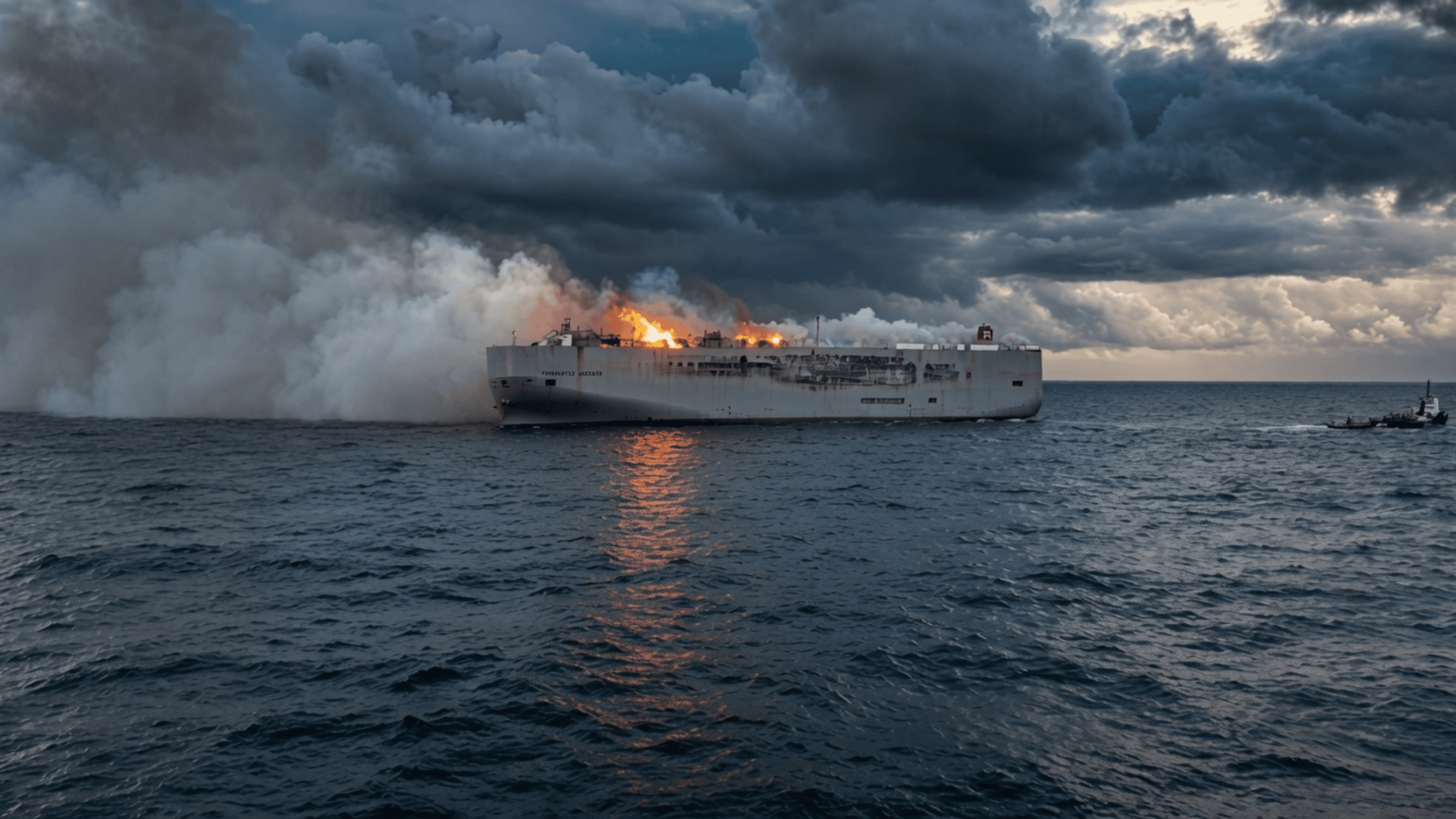
On 14 July, the Atlas Bey vessel, carrying 11 Azerbaijani nationals, came under attack off the coast of Odesa. Ukrainian officials described the incident as part of a series of Russian attacks on civilian vessels.
Ten sailors were brought ashore. The body of the vessel’s captain, Samad Nasrullayev, was recovered during a search operation and repatriated to Azerbaijan on 17 July.
Azerbaijani sailors were also affected by attacks on the Natra and Zirkon vessels in the Sea of Azov on 5 June. Russian Foreign Ministry spokeswoman Maria Zakharova said the vessels had been struck by Ukrainian drones.
These incidents suggest that the threat is not confined to a single vessel or voyage. Over several months, Azerbaijani sailors have repeatedly faced attacks in the same region.
Crew awaiting wages and hoping to return home
The difficulties facing sailors extend beyond the threat of attacks. On 7 October, Sabukhi Salahov, captain of the Consul vessel, told Konkret that his crew had been stranded in Rostov-on-Don for several months without receiving their wages. According to the sailors, ongoing drone attacks near the vessel’s mooring location have prevented them from leaving the ship and returning to Azerbaijan.
“We want to get the money they owe us and return to Azerbaijan. But there’s nothing we can do,” the captain said.
According to Salahov, the crew have been waiting for their wages for several months and remain unable to return home. There has been no information about whether the sailors have since received their outstanding pay or been reunited with their families following their complaint.
“We were transporting dry cargo from Russia. Our last delivery was coal to Moldova. We then set off to collect a similar cargo, but the routes were blocked. Around 200 vessels have come under drone attack in the Azov-Black Sea region. Since then, we’ve been in the Russian city of Rostov-on-Don. We’ve been here for almost three or four months,” Salahov said.
The complaint also raises questions about how to ensure the safe return of Azerbaijani nationals from the dangerous region. If, as the captain claims, the crew are not receiving their wages and cannot return home, the sailors need consular assistance. However, there is no information about what steps Azerbaijani authorities are taking to repatriate the sailors or resolve the issue of unpaid wages.

Do all sailors have the right to refuse dangerous voyages?
The International Transport Workers’ Federation (ITF) has established rules for seafarers covered by certain collective bargaining agreements. Depending on the level of risk in the area of operation, these rules provide for additional payments, the right to refuse dangerous voyages and repatriation at the employer’s expense.
However, these protections do not automatically apply to all Azerbaijani sailors. To establish whether an individual seafarer is entitled to such protection, it is necessary to examine the terms of their employment contract, determine which collective bargaining agreement applies to the vessel and establish the risk classification of the area of operation.
Azerbaijan’s Foreign Ministry warns citizens about the risks of working in regions affected by war and instability. However, for those already working on vessels in such areas, it is important not only to be aware of the dangers but also to have a genuine opportunity to refuse to continue a dangerous voyage.
The ministry has also reported providing medical and consular assistance to sailors following attacks. However, measures to ensure their safety should not be limited to rescue operations and the repatriation of those affected.
It is also important to establish what support is available to Azerbaijani nationals who wish to leave dangerous areas, recover unpaid wages and provide for their families. For these sailors, warnings about the risks are not enough. They also need practical assistance that would enable them to refuse dangerous work.