Azerbaijan’s corruption whistleblowers: protection on paper and in practice






Azerbaijan drafts anti-corruption bill
Azerbaijan has drafted a separate bill aimed at encouraging and protecting people who report corruption. The bill was submitted to the Milli Majlis on 5 October and is due to be discussed by a parliamentary committee on 6 October.
The initiative comes amid continuing complaints that police officers demand money from citizens, while journalists investigating corruption are sentenced to lengthy prison terms. Existing legislation already provides protections for people who report corruption. The key question, therefore, is from whom – and how – the state intends to protect citizens after they report such cases.
Protection provided by law
Article 11-2 of the Law on Combating Corruption prohibits disclosing the identity of a person who reports corruption without their consent, as well as threatening them or their relatives. It also prohibits dismissing an employee because they have filed a complaint, transferring them to another position, making unlawful deductions from their salary or obstructing their career progression.
If an employee provides evidence that retaliatory measures have been taken against them, the burden of disproving the allegation falls on the employer. The law also prohibits assigning a complaint for review to the person against whom it was made or to anyone with an interest in the outcome of the investigation.
Information registered through an internal reporting procedure must be examined within 20 working days, after which the person who submitted it must be informed of the outcome. If a complaint concerns the head of an organisation, the person may approach a higher-ranking official or a specialised anti-corruption body. The obligation to investigate reports and inform complainants of the outcome therefore existed before the new bill was introduced.
However, a 2025 report by the Organisation for Economic Co-operation and Development (OECD) points to significant gaps in the implementation of these safeguards. Azerbaijan has no specialised body, unit or official dedicated exclusively to protecting people who report corruption. The authorities were also unable to provide examples of the provision placing the burden on employers to disprove evidence of retaliation being applied in 2023-2024.
The report also notes that public disclosure through the media and social networks is not recognised as a protected channel for reporting corruption. This gap is particularly significant for people who report wrongdoing to journalists rather than to state bodies.
Alleged $300 bribe demand and claim of violence
On 28 August, Gündəlik Naxçıvan reported that a young driver had been detained. According to the outlet, police officers said the driver was under the influence of alcohol. He denied this and said he was willing to undergo a medical examination at a hospital.
Instead of being given a medical examination, he was allegedly asked to pay 500 manats (about $300):
“They told me: either you pay the money now, or they will take both you and the car away.”
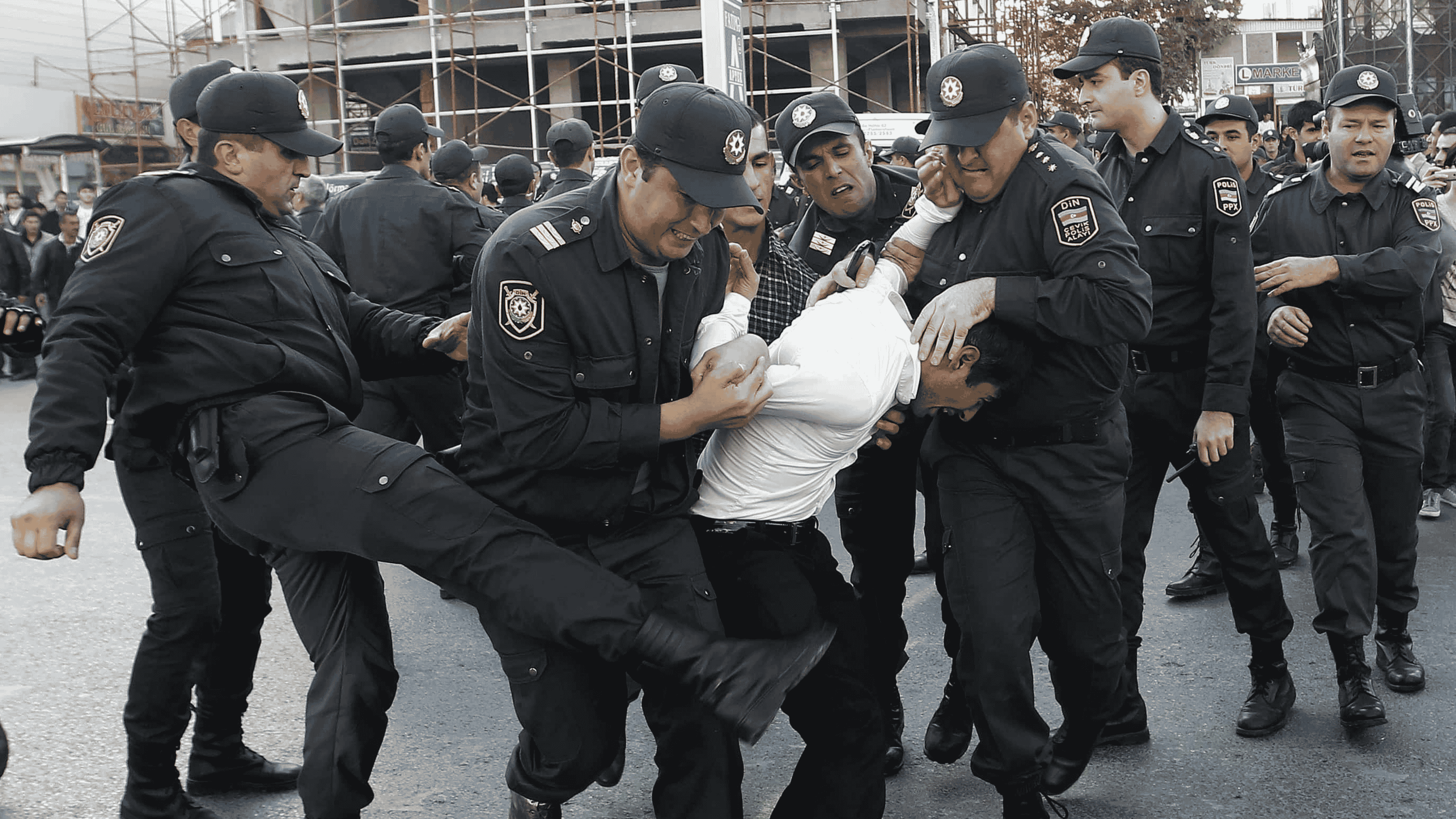
According to the outlet, after the driver refused to pay, additional traffic police officers arrived at the scene. Five or six officers allegedly used force against him. Witnesses said the driver suffered a broken arm and ribs as a result.
The complaint therefore concerns not only an alleged demand for a bribe, but also claims that force was used instead of allowing the driver to undergo a medical examination and challenge the allegation against him.
Threats of drug possession and other criminal charges
On 10 September, Gündəlik Naxçıvan published another complaint from residents of Ordubad. People who had returned from Russia said they were taken from their homes and brought to a police station, where they were tested for drugs in a toilet without a doctor present.
One complainant, who asked to remain anonymous, said his test was negative but that he was nevertheless asked to pay 10,000 manats (about $5,882). He said that after being threatened with arrest and torture, he paid 5,000 manats (about $2,941).
Similar allegations have been made in the past. In a Toplum TV report published on 17 December 2025, Shiraz Guliyev, who had returned from Turkey, said he was asked to pay 300 manats (about $176.50) near the Sadarak customs checkpoint on the grounds that he had allegedly dropped a cigarette butt. Guliyev said he told officers that he did not smoke, but was threatened with arrest on charges of resisting police if he refused to pay.
In June 2025, blogger Mehman Huseynov alleged that officers from Baku’s Khatai district police station No 37 beat five teenagers and released them after receiving money from their parents.
Lawyer Khalid Bagirov told Meydan TV that the problem was not the absence of mechanisms for holding officers accountable, but that those mechanisms were not being effectively applied.
What do the official figures show?
The Main Anti-Corruption Directorate under the Prosecutor General’s Office said it reviewed 5,655 complaints in the first half of 2026. A total of 54 criminal cases involving 102 people were sent to court. Of the calls received through the “161” hotline, 4,062 were registered as reports of corruption-related offences.
The figures show that investigations are being carried out. However, the number of cases sent to court does not indicate how effectively people who report corruption are subsequently protected from pressure or retaliation.
This distinction is particularly important in cases involving complaints against the police. A person who complains about an officer with the power to detain them, take them to a police station and formally record offences is seeking more than the return of money. They also need guarantees that those powers will not be used against them in retaliation. Receiving a complaint and protecting the complainant are two separate tasks.
According to an OECD report assessing the situation in 2023-2024, Azerbaijan has made no significant overall progress in combating corruption since 2022. The system for declaring the assets and interests of public officials was not operational, while gaps also remained in declaration forms and procedures for their electronic submission and verification.
In Transparency International’s 2025 Corruption Perceptions Index, Azerbaijan scored 30 out of 100 and ranked 130th out of 182 countries. Despite an eight-point increase compared with the previous year, the score remains low in terms of perceived levels of public-sector corruption.
Arrests of journalists investigating corruption
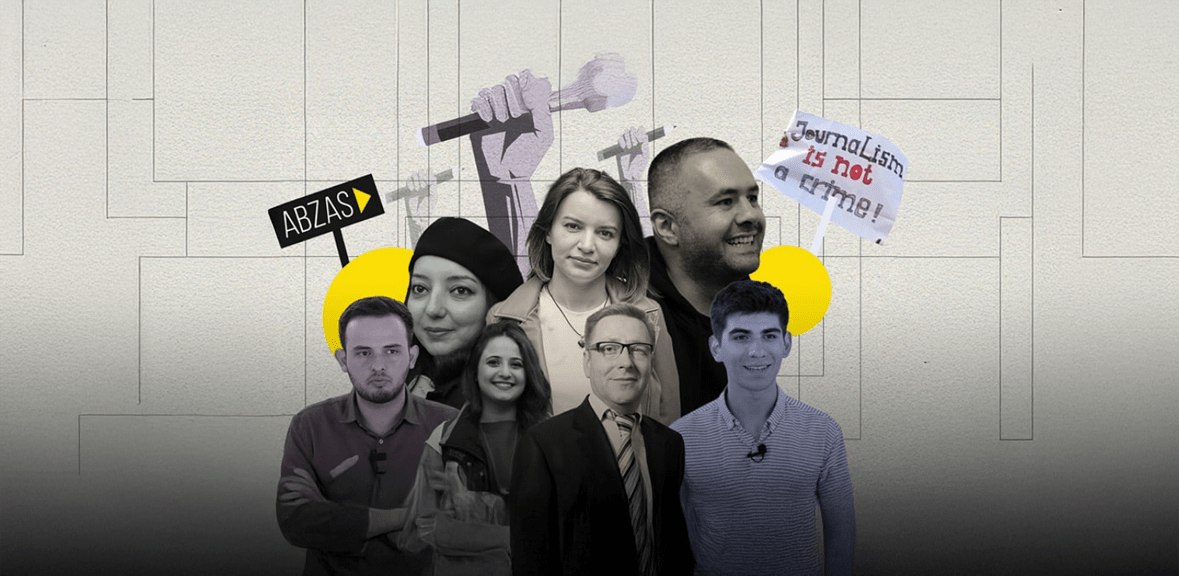
The authorities’ pledge to protect those who report corruption also contrasts with the situation surrounding the Abzas Media case. On 20 June 2025, seven defendants in the case were sentenced to prison terms ranging from seven years and six months to nine years. They included journalists Ulvi Hasanli, Sevinj Vagifgizi and Hafiz Babali, who had investigated corruption.
The defendants rejected the charges against them. Reporters Without Borders described the sentences as the result of a politically motivated trial aimed at silencing those who expose corruption and injustice.
Against this backdrop, several questions arise: Is a person who reports an alleged demand for a bribe protected from retaliation? Is the alleged offence independently investigated, and are the findings made public? And can a journalist who exposes corruption continue their work without facing the threat of imprisonment?