Opinion: 'Signs of cult-like behaviour are becoming increasingly apparent in Georgia’s ruling Georgian Dream party'






“It is absolutely inappropriate to call an institutionalised protest movement a cult,” sociologist Iago Kachkachishvili says, commenting on an open letter by Georgian Parliament Speaker Shalva Papuashvili, published on the 666th day of continuous anti-government protests.
In his letter, the speaker refers to the protesters as a “cult”. Kachkachishvili, however, argues that the protest movement has no single prominent leader or figurehead whose will its participants blindly follow. He also says Papuashvili’s remarks suggest that the ongoing protests are clearly troubling the authorities.
“When the outcome no longer justifies the process, the process itself must begin to justify itself. Ritual is one of the mechanisms through which this happens, and when continuing the ritual itself becomes the goal, a political movement gradually turns into a closed pseudo-religious cult. Today, on the 666th day, we see a combination of these characteristics,” Papuashvili wrote.
Speaking on the Free Studio programme, Iago Kachkachishvili said authorities could, in the future, impose certain restrictions on the protest movement, including legal restrictions, similar to their attempts to ban opposition parties. However, the sociologist believes that even in such circumstances, public protests would find a way to continue.
Kachkachishvili also discussed the criteria for what constitutes a “cult”. He said that, when comparing a social movement with a political party in this context, he believed political parties showed more characteristics of a cult.
He singled out the ruling Georgian Dream party in particular. In his assessment, the party is effectively run according to the decisions of its founder, Bidzina Ivanishvili, while its other members follow his directives without question.
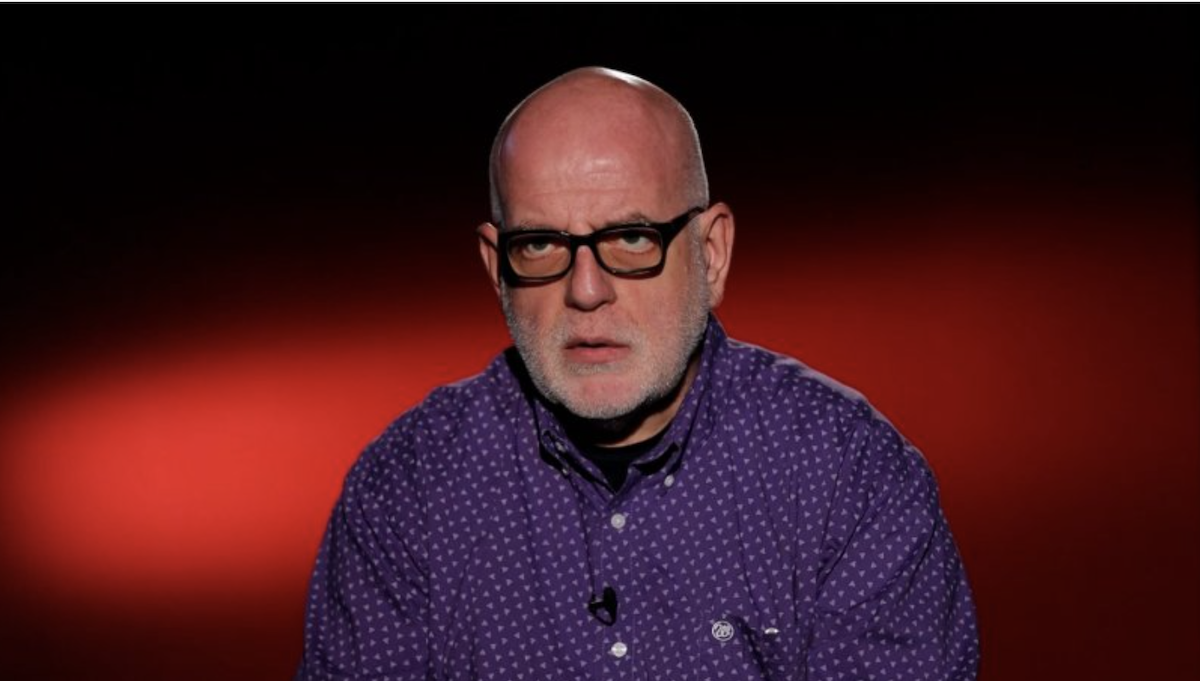

Iago Kachkachishvili: “The sheer length of Shalva Papuashvili’s letter confirms that the authorities are troubled by the daily, ongoing protests.
The rhetoric he uses about the protest movement shows that the protests are a thorn in their side. This is despite the fact that they are no longer as large as they once were. But it is impossible for a protest to maintain the same scale when it has been going on for two years.
Shalva Papuashvili cynically called this protest movement a sect, even though he knows very well what the word ‘sect’ means. But, as always, he has turned his attitude towards the opposition into a cynical propaganda campaign.
Of course, the protest movement has become routine, and it is accompanied by certain symbols that have taken root. For example, the Georgian and EU flags at these rallies are a tangible symbolic expression of the movement’s support for Georgia joining the European Union. Another established symbol is the fact that the protests have remained on Rustaveli Avenue in Tbilisi, despite the roadworks currently taking place there.
Of course, Rustaveli Avenue is a symbol of protest — a place associated with the spirit and energy of dissent. We can point to other symbols as well. This is perfectly normal when a phenomenon becomes institutionalised, in this case a protest movement. This movement has developed into an institution with its own participants, rules, symbols, values and so on.
It is absolutely inappropriate to call this institutionalised protest movement a sect. First and foremost, it has no single prominent leader or figurehead whose will the protesters follow unquestioningly.
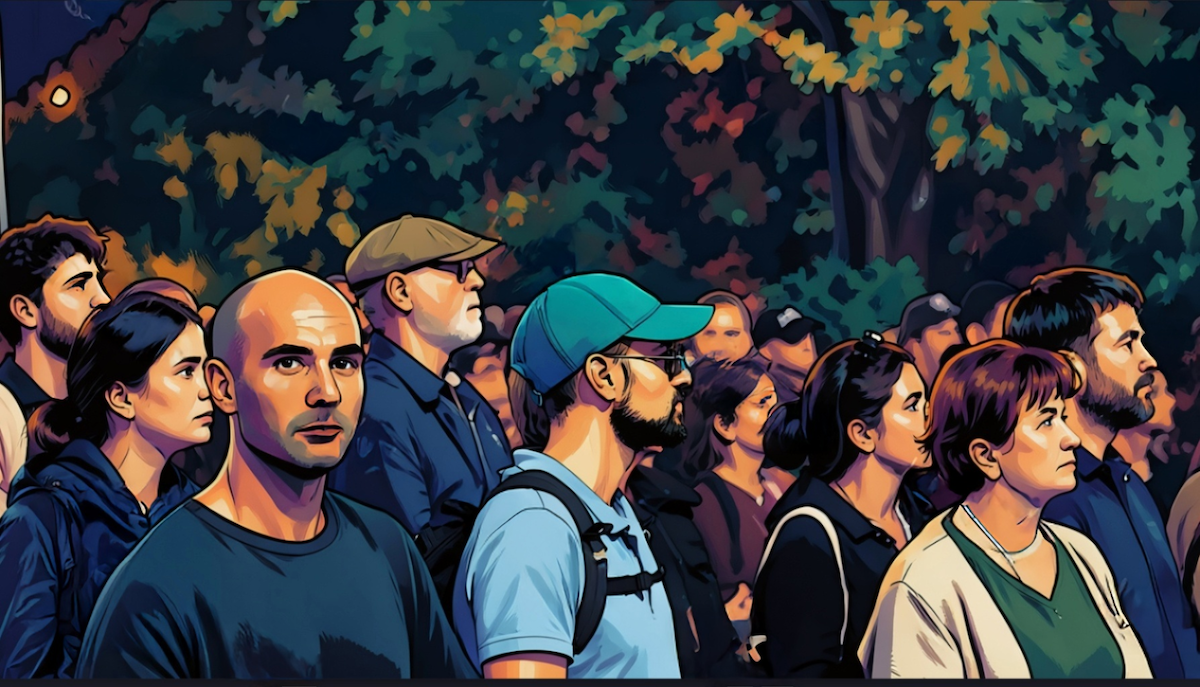
The protest movement brings together a wide range of people from different parts of society. It includes people who are not affiliated with any political party, academics, civil society representatives, members of organisations, artists and representatives of various political parties, including opposition parties that do not get along particularly well with one another. The protest movement is highly diverse, whereas a sect is characterised by almost everything except such diversity of views and backgrounds.
A second important indicator that this is not a sect is that it is not a closed group: people join it and leave it. Movement within the protest movement, including joining or leaving it, is not controlled, and there are no strict rules governing participation.
Another feature that fundamentally contradicts the perception of the protest movement as a sect is that it is not isolated from the opposition-minded public, or the broader society that supports the protests. It is an important representative of the opposition electorate.”
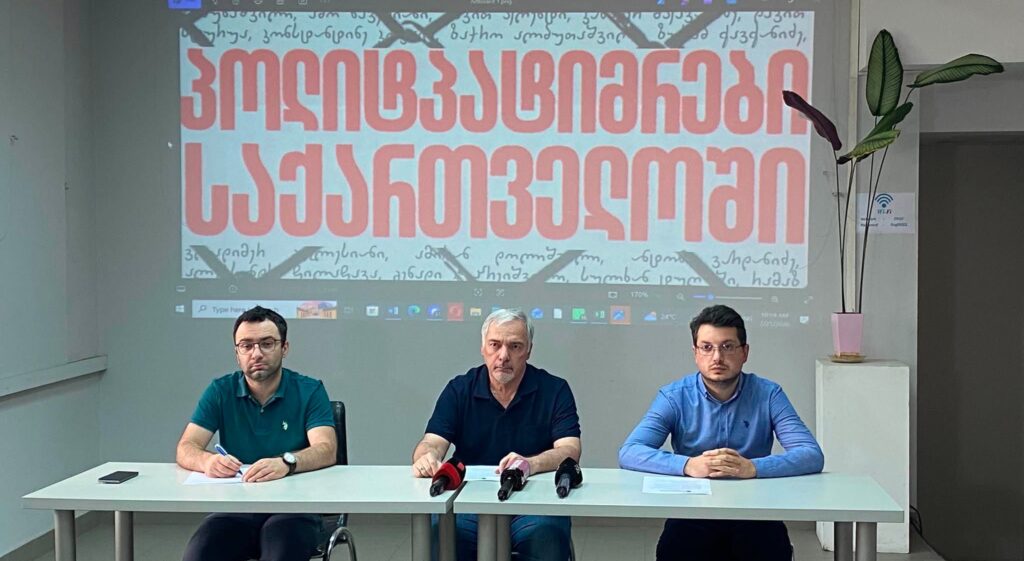
“It is entirely possible that this stigma, this negative label that Georgian Dream has attached to the protest movement — portraying it as a sectarian, almost satanic movement — could lead to the movement being declared illegal, banned, and its participants held legally accountable.
But it is impossible to silence the protest voice of an opposition-minded society on such a scale. The authorities would then have to shut down social media as well. However, I do not expect things to go that far. There will be certain restrictions, including legal ones, but the protest movement will still find a way to continue.
In general, a political party is much more likely to resemble a sect because, compared with a social movement, a political party is a more closed institution.
Political parties allow less pluralism and diversity of opinion, although this depends on the type of party we are talking about — democratic or authoritarian. In a democratic party, different views are legitimised and have their own legitimate space. Members exchange opinions, and there is no single leader or figurehead whose will dictates the party’s direction. But what happens in Georgian Dream? Isn’t Georgian Dream effectively Bidzina Ivanishvili?
Georgian Dream is a party built around one person’s authority. It acts exclusively in the direction set by Bidzina Ivanishvili. The defining feature of a sect is the presence of a leader to whom followers show unquestioning, unconditional and uncritical loyalty, whose authority they never challenge, and whose directives determine the group’s actions and direction. This is precisely what Georgian Dream has become under Bidzina Ivanishvili, and it is the clearest indicator of its sect-like nature.
And the most important thing we have witnessed in recent years is that anyone who criticises Georgian Dream is punished — harshly and through various means. This is what sectarianism looks like: the absolute and unquestionable principle that ‘whoever is not with me is my enemy’.”
On the protests and Georgian Dream