Russia no longer attracts Armenian migrant workers as they look for new opportunities in Europe






Armenian workers turn to Europe instead of Russia
The geography of labour migration from Armenia is changing. Russia, which until recently remained the main destination, has become less attractive. The main reasons are Russia’s economic downturn, driven by the war in Ukraine, and the depreciation of the rouble.
Many migrants are now returning from Russia to Armenia. Some are trying to find work in their home villages or in the capital, while others are looking for new opportunities, particularly in Europe. The direction of labour migration is changing, with European countries becoming increasingly popular.
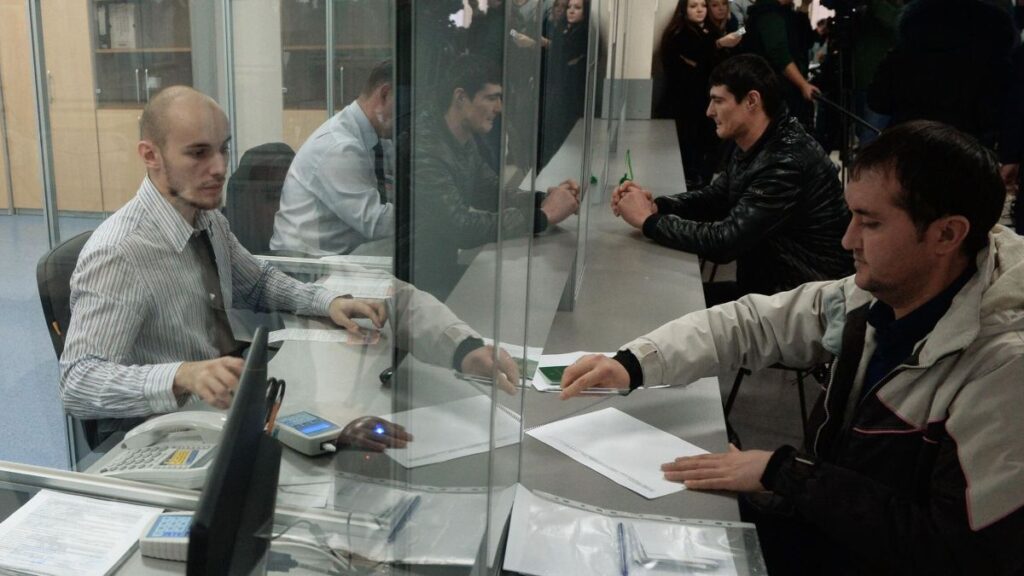
- ‘Working in Armenia pays better’- labour migration to Russia falls
- ‘We have proved that Armenia is not a province, but a crossroads’ — Pashinyan
- ‘There are signs Armenia is heading for ‘divorce’ from the Russian-led EAEU,’ says Armenian political analyst
Work visa for Poland
After two years working at a meat-processing plant in Poland, 40-year-old Serob (name changed) returned to Armenia for a month. He came to prepare all the necessary documents and take his wife and children with him to Warsaw.
“I received a three-year residence permit and the right to work. Living away from my family is difficult. I decided that we should be together. I should also say that Poland has become one of the first steps towards the European labour market for many people. Many of my friends work in the Czech Republic, the Netherlands and other countries on legal work visas. I was also offered a job in the Netherlands, but I decided to stay in Poland,” he says.
Serob is a butcher. He was also in demand in Armenia. However, he says his salary there was not enough to support his family:
“I had friends who worked as butchers in Europe. They told me that the profession was in demand there and well paid. Gradually, I started thinking: why not try going to Europe and working there? I also had a lot of debts and loans. I went to Poland on a work visa. The process moved slowly. The Polish embassy invited me for an interview a year after I submitted my application.”
A recruitment agency then sent his details to a meat-processing company. Representatives of the company interviewed Serob online. During the video call, he demonstrated his professional skills to the employer, including how he deboned meat.
“The employer liked my work and sent me a contract and the necessary documents. The embassy then approved my work visa. At first, I lived in a house in Poland with people of different nationalities. They all worked for the same company and lived in separate rooms. Later, when my financial situation improved, I moved into a separate flat with a friend from Armenia. I sent most of my earnings to my family to help resolve our financial problems. I did not work in a shop or at a market. I worked at a specialised meat-processing plant with refrigerated storage facilities. It is physically demanding work,” the butcher says.
He notes a shortage of butchers in the European labour market, which creates demand for migrants with the necessary skills. Meat-processing plants employ workers from Ukraine, Argentina, Azerbaijan and Armenia.
“Many Armenians are now going to European countries for work. And not only to meat-processing plants. When I flew to Poland, I met some women who worked as pastry chefs on the plane. They were also travelling to Poland under legal employment contracts. Many Armenians also work in shops. These are people who speak foreign languages. In any case, I am happy. I will return to work in a month, this time with my family,” Serob says.
Working at a German medical clinic with an Armenian degree
Doctors, teachers and highly skilled professionals in various fields are also in demand on the European labour market. Dentist Edgar Mirzoyan has been living and working in Germany for nine months.
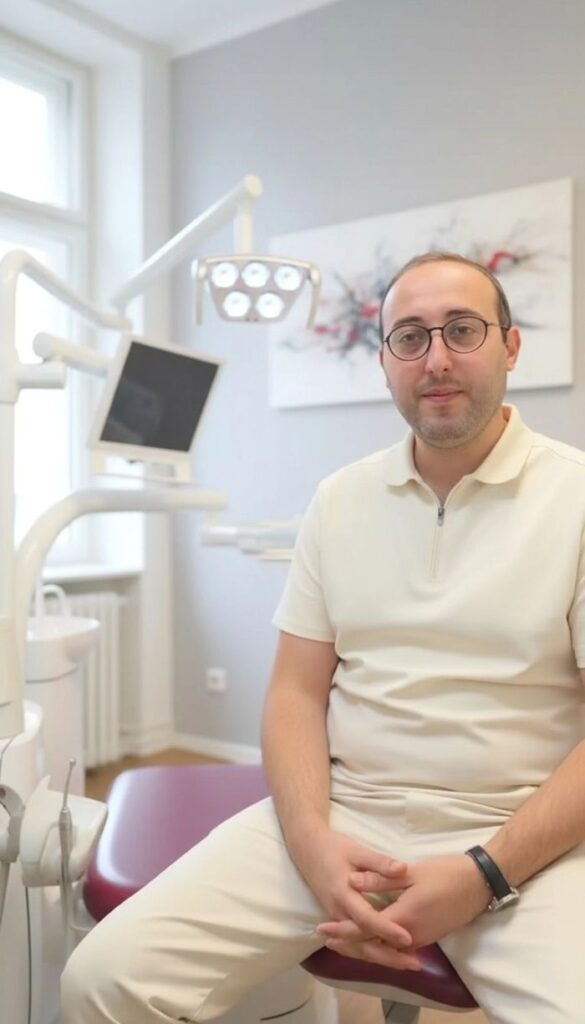
“One day, my nurse told me that her friend worked in Germany and that they might need a dentist. I simply gave her my contact details and forgot about it. Some time later, they contacted me. At the same time, I started learning German. The whole process took two years: learning the language, preparing documents and taking exams. Finally, I moved to Germany. By the way, getting my Armenian degree recognised in Germany seemed more realistic and achievable than in other European countries,” Edgar says.
At the same time, the 30-year-old dentist studied not only the professional requirements but also the overall situation in the country, including its economy, level of safety and even happiness index.
“Geography also influenced my final decision. It was important for me to stay connected to Armenia. You can get from Germany to Armenia in just a few hours. In this sense, Europe was a much more convenient destination for me than, for example, Canada. Before moving to Germany, I had a completely different idea of what it would be like. Of course, everyone’s experience is different. Some doctors who arrived at the same time as me had a much harder journey. A lot depends on which city you move to, who your employer is and who you interact with. Everyone has their own experience,” he says.
Edgar started working two days after arriving in Germany. Some time later, his wife also joined him.
“Before moving to Germany, I registered in advance to take a language exam. They tested my knowledge of medical German. I passed the exam successfully. After that, I received a temporary licence valid for two years. I can work during this period, but I must work under the supervision of an experienced doctor.
However, the process of having my degree fully recognised is still under way. The authorities compare my entire university curriculum, the number of hours I completed and the subjects I studied with the German curriculum. I applied for this process while I was still in Armenia. They only started reviewing my documents after two years of waiting. If they find differences between the curricula, I will have to make up the gaps. It is not yet clear how significant those differences will be,” the doctor says.
According to Edgar, working in Germany has its own particularities. Berlin is a multicultural city, and his patients include not only Germans. About 30 per cent are Armenians and Yazidis, while another 30 per cent are Russians and Ukrainians.
Edgar continues to practise in Armenia as well:
“I can take leave twice a year. I come to Armenia, mainly perform implant procedures and surgeries, and then return to Germany. I have many patients who wait for me to come back. They book appointments in advance, I come and perform the surgery, and the next stage of treatment takes place three to six months later, when I can return again.”
When labour migration is a family choice
For many people who move to Europe, leaving is a decision about their family’s future, improving their living conditions and trying to build a new life in a different environment.
Vergine (name changed) chose this path. She has lived in the Czech Republic with her husband for seven years and now has two children.
“First, my husband moved to Prague on a work visa. He started working in the security department of a shopping centre. Two years later, I joined him. We made the decision consciously, after carefully considering everything. We wanted to settle down and continue our lives in a European country. In this sense, the Czech Republic seemed like a suitable option, and we are very happy with our choice,” Vergine says.
Before moving to the Czech Republic, the couple worked at Zvartnots Airport.
“At first, I worked at a language centre as an English teacher. Then my second child was born here. Of course, there were many difficulties. We lived in a foreign country without support from relatives and with a small child, but we managed. I now work as an English teacher at a school,” she says.
The young family does not plan to return to Armenia for now, but they regularly visit their relatives.
“We have the right to live and work here, but I am sure that one day we will definitely return,” Vergine says.
Changing migration patterns
According to Tatevik Bezhanian, an expert with the migration programme of the charitable organisation Armenian Caritas, Armenia currently has no statistics showing how many people leave for European countries to work.
One reason is that Armenia has no intergovernmental labour migration agreements with EU countries. Bulgaria is the only exception. In addition, most people who leave for Europe find jobs through private recruitment agencies, and the state does not register this process.
“You will not find this data in official statistics. On the other hand, we also do not have a migration card system under which people have to state when entering or leaving the country that they are going abroad to work. They may not indicate the purpose of their departure at all,” Bezhanian says.
She says this problem is not unique to Armenia. Internationally, governments mainly register migrant workers arriving in their countries because they can manage these migration flows. Countries that pursue targeted labour migration policies, sign bilateral agreements and organise the recruitment of their citizens abroad usually have comprehensive data on those who leave. The Philippines and Uzbekistan are among them, for example.
Tatevik Bezhanian notes that even when Armenian authorities want information about labour migrants leaving for Russia, they have to rely on official Russian statistics:
“If the geography of labour migration expands, we will have to approach the relevant authorities in countries such as Poland, the Czech Republic and the Netherlands. We will need to obtain data and determine how many Armenian citizens work there.”

Armenian workers turn to Europe instead of Russia