Armenia begins shift from Russia towards EU – but finish line remains distant






Armenia between Europe and Russia
Against this backdrop, the European Union pledged to “stand by Armenia”. EU leaders have already announced tens of millions of dollars in financial assistance and opened the bloc’s markets to Armenian goods that had suddenly ceased to meet Russian quality standards. More importantly, Brussels has expressed interest in further deepening ties with Yerevan, while Armenia’s re-elected leadership says the election results demonstrate the public’s desire to continue along the country’s European path.
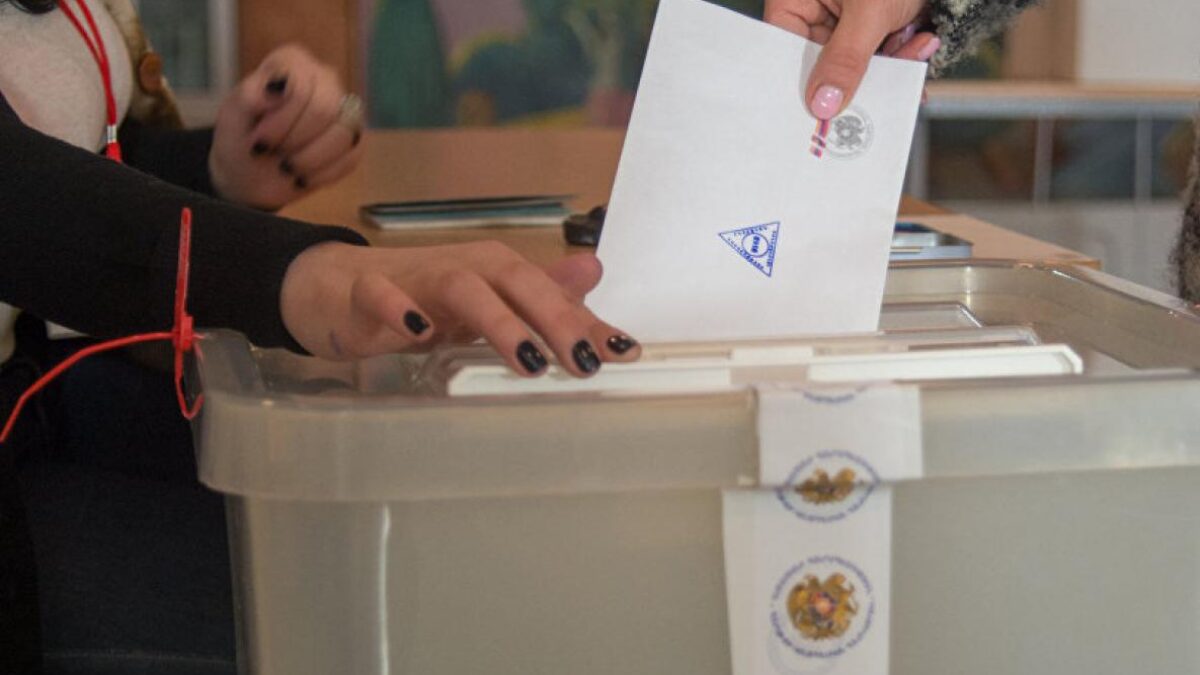
Parliamentary elections in Armenia are over, but the political—and geopolitical—debate continues. Many viewed the vote as a de facto referendum on the country’s future orientation: Russia or the European Union.During the election campaign, Moscow imposed restrictions on imports of Armenian food products, a move widely interpreted in Armenia as an attempt to influence public opinion. Contrary to some expectations, Russia not only kept those trade restrictions in place after the election but tightened them.
JAMnews reviewed the latest developments and spoke to analysts with opposing views. Residents of Armenia also shared their opinions on how they believe the country should shape its future.
- ‘Moscow will only push Armenia out of Russian-led blocs’: Reaction to Russia’s foreign intelligence claim
- Armenia debates new mechanisms to tackle vote-buying
- New EU mission in Armenia to help address post-election risks
- Pashinyan: ‘Russia wants either exclusive ties or nothing’
How Armenia’s pivot took shape
Few people remember now, but immediately after the 2018 “Velvet Revolution”, led by then-opposition figure and now Prime Minister Nikol Pashinyan, he insisted that his government would not pursue any geopolitical realignment. At the time, Armenia was already a member of the Russian-led Collective Security Treaty Organization (CSTO) and the Eurasian Economic Union (EAEU). Years later, speaking from podiums in both Europe and Yerevan, the same Pashinyan has declared Armenia’s aspiration to join the European Union.
So what happened in between? Over the past several years, the entire security architecture of the South Caucasus has unraveled, triggering a snowball effect. Initially, relations between Yerevan and Moscow developed without major friction. Then came the 2020 Karabakh war. Armenia was defeated and ceased to be the guarantor of Nagorno-Karabakh’s security. Formally, Yerevan had no grounds to hold Moscow responsible in 2020. Nagorno-Karabakh was not part of Armenia, and the agreements signed between the two countries applied only to Armenia itself, not to the unrecognised entity.
However, events then took an unexpected turn.
Over the following two years, Azerbaijan launched several military operations on Armenia’s internationally recognised territory. Yerevan appealed to its allies in the CSTO for assistance, but received neither military support nor even a political assessment of the situation.

The allies responded that it was first necessary to establish where exactly the escalation had taken place, arguing that the Armenia-Azerbaijan border had not been formally delimited. Pashinyan replied sharply:
“To say that there is no border between Armenia and Azerbaijan is to claim that the Collective Security Treaty Organization has no area of responsibility. And if there is no area of responsibility, then there is no organisation.”
Since then, Yerevan, finding itself alone in the face of what it viewed as an external security threat, has frozen its participation in the CSTO and turned increasingly towards Europe. According to some analysts, the price of that shift was Armenia’s official recognition of Nagorno-Karabakh as part of Azerbaijan. In return, the European Union deployed a civilian monitoring mission to Armenia, which helped stabilise the situation along the border with Azerbaijan. Armenia also secured the EU’s political backing.
Retiree Andrey Karapetyan shares his views on European integration. Video and editing: Arman Gharajyan/JAMnews.
Shift gathered pace
These developments on the ground were inevitably followed by political change. The entire Armenia-Azerbaijan negotiation process shifted to Western platforms—an outcome few had anticipated. Since the conflict began in the 1990s, Moscow had served as the principal mediator and facilitator of the peace talks.
Following the events of September 2023, when Azerbaijan’s one-day military operation prompted the entire Armenian population to flee Nagorno-Karabakh, Russia effectively lost its influence in the region.
At the same time, Russia also lost its standing among much of Armenia’s population, no longer being viewed as a friendly state.
Although Russia formally remains Armenia’s strategic ally, many Armenians have not forgotten that Russian peacekeepers effectively acted as bystanders, failing to fulfil their mission of protecting the Armenian population of Nagorno-Karabakh. Following the CSTO’s refusal to defend Armenia’s territorial integrity, relations between Moscow and Yerevan cooled even further. The Armenian leadership also adopted a more outspoken tone towards Russia, both in its rhetoric and in its actions.
At the same time, contacts between the Armenian government and its European partners intensified. Brussels allocated hundreds of millions of dollars to support political and economic reforms in Armenia, as well as strengthen the country’s borders. France also began supplying Armenia with military equipment. The culmination of these developments came on 17 October 2023, when speaking at the European Parliament in Strasbourg, Prime Minister Nikol Pashinyan declared:
“The Republic of Armenia is ready to be as close to the European Union as the European Union considers possible. Our joint statement with President von der Leyen says: ‘In these difficult times, the EU and Armenia stand shoulder to shoulder.'”
In the years that followed, Pashinyan repeatedly stated that Armenia would seek EU membership. The parliamentary elections held in June and their outcome only reinforced the government’s determination.
“Last year, we adopted a law launching the process of accession to the European Union, which, I would remind you, was initiated by civil society. I believe this provides an additional incentive to give new momentum to our democratic and institutional reforms so that we can achieve EU standards as quickly as possible.
This is our main intermediate goal because we understand that no country can become a full member of the European Union without meeting its standards. Therefore, our primary task is first and foremost to comply with EU standards. […]If we are admitted to the European Union, we will be happy. If we are not, we will still benefit, because Armenia will have become a country that meets European standards, with all the positive consequences that entails,” Pashinyan said at the time.
System administrator Artak Gaboyan shares his views. Video and editing: Arman Gharajyan/JAMnews.
Russia pushes back
At the start of the crisis in Armenian-Russian relations, Moscow responded relatively cautiously to Yerevan’s efforts to move closer to Europe. The Kremlin sought to avoid further destabilising the situation, citing Armenia’s difficult historical circumstances. Even Armenia’s effective suspension of its participation in the CSTO did not result in a fundamental reassessment of bilateral relations.
However, Moscow appeared to change its approach in the run-up to the parliamentary elections held in June.
One of the defining moments came during Pashinyan’s meeting with Vladimir Putin in Moscow in April, when the Russian president openly asked him to allow pro-Russian political forces to participate in the elections. He was primarily referring to Russian-Armenian billionaire Samvel Karapetyan. However, as Karapetyan holds citizenship of several countries, not only Armenia, Armenian law bars him from serving as an MP or becoming prime minister. Pashinyan reportedly made this clear to Putin.
The Kremlin nevertheless continued to support pro-Russian political figures while also taking more concrete steps. Russian regulators began imposing restrictions on imports of Armenian products. Initially, the measures targeted specific companies and categories of goods, but they were later expanded to cover almost all agricultural produce from Armenia.
Businessman Suren Margaryan shares his views. Video and editing: Arman Gharajyan/JAMnews.
The situation continued to escalate. Armenian officials began openly accusing Moscow of attempting to interfere in the country’s internal affairs and engineer a change of government.
At the same time, international media reported on alleged hybrid attacks against Armenia. Reuters also published a report alleging that the Kremlin had devised a plan to bring 100,000 Armenian citizens into the country to vote for pro-Russian political forces.
Following the elections, Moscow has stepped up its calls for Armenia to decide, once and for all, which direction it intends to take. Russian officials have specifically called for a referendum on whether the country should pursue integration with the European Union or the Eurasian Economic Union (EAEU), arguing that choosing the EU would require Armenia to leave the EAEU.
“No one is pushing Armenia out of the EAEU. They themselves have said they want to join the European Union. They need to make a choice. And the sooner that choice is made, the better it will be for everyone,” Russian Deputy Prime Minister Aleksey Overchuk said.
This culminated in a joint statement by the EAEU member states calling for Armenia to hold a referendum on whether the country should remain in the EAEU or pursue EU membership.
Armenia says time is not right for referendum
In response to Moscow’s demands, the Armenian authorities say they have no plans to hold a referendum or withdraw from the EAEU—for now. The key word is “for now.” Yerevan intends to remain a member of the EAEU until there is a realistic prospect of joining the European Union. Moreover, under the EAEU’s founding rules, Armenia cannot be expelled from the bloc without its consent.
However, holding a referendum on EU membership appears to be a realistic prospect in the longer term. Opinion polls also suggest such a referendum could succeed. Since the 2020 war, Russia’s popularity in Armenia has declined markedly, while support for European integration has continued to grow.
According to a survey conducted by the International Republican Institute (IRI) in May 2026, 75% of Armenians support the country’s accession to the European Union, while 58% say they would vote in favour of joining the bloc in a referendum. The findings point to a sustained decline in trust in Russia and growing pro-European sentiment among the Armenian public.
Photographer Mane Sergoyan shares her views. Video and editing: Arman Gharajyan/JAMnews.
What do experts say?
Which direction should Armenia take? That is arguably the country’s defining question today. Does Armenia have the capacity to make a definitive choice in favour of the European Union? How might Russia respond if it does? And what security risks could such a shift entail?
Political analyst Robert Gevondyan says Yerevan is pursuing a diversification of its foreign policy, a goal repeatedly articulated by the country’s leadership. In his view, this aligns with the interests of Armenia’s European partners.
“Armenia is already receiving a certain level of support, particularly through its cooperation with France. It is possible that, in the future, security cooperation will expand to include other countries, although there is not yet enough information at this stage to identify them. At the same time, it should be remembered that the EU operates under NATO’s security umbrella. While Armenia is not currently seeking rapid accession to the Alliance, if it succeeds in developing close ties with individual EU member states, it could gain access to additional opportunities as an indirect beneficiary of NATO’s resources,” he said.
Is Armenia ready to become part of the European Union today? Gevondyan argues that the question itself is misplaced, as every country must go through a lengthy accession process before joining the bloc.
“No country is ever fully prepared to begin the integration process overnight. By the time Armenia is ready, it will effectively already be part of Europe. States usually go through a long period of integration, during which they implement reforms across various sectors, align with European standards, improve product quality and reach agreements on mutual trade. This process takes years. Armenia is ready to embark on that journey. At the same time, it is impossible to reconcile EU requirements and the conditions for trading with the West with the standards and requirements that exist within the EAEU. We are only at the beginning of a long road.”
Journalist Marianna Mkrtchyan shares her views. Video and editing: Arman Gharajyan/JAMnews.
“Armenia is still a long way from joining the European Union. But the current trajectory could already result in serious losses—not only economically, but also in terms of the country’s sovereignty,” argues political commentator Hayk Khalatyan, founder of the Analytical Centre for Strategic Studies and Initiatives.
Khalatyan also argues that the Armenian leadership will ultimately be unable to sustain its current course of deepening ties with the European Union while remaining a member of the EAEU:
“Pashinyan’s challenge now, after the elections, is to try to normalise relations with Moscow. He will be expected to take concrete steps demonstrating that he is abandoning his previous foreign policy course. But that would effectively mean turning his back on the powerful external actors who helped him remain in power. The question, then, is which path he will choose: to turn his back on the West and Turkey, or continue down the path of confrontation with Russia and the gradual breakdown of bilateral relations. I very much doubt that Pashinyan will abandon his Western partners and move towards normalising ties with Russia. He would like to preserve the policy he has pursued in recent years—reaping the economic benefits of EAEU membership while, in practice, steadily distancing Armenia politically from Russia. But we are now seeing that Moscow is no longer willing to tolerate that approach.”
Human rights activist and film director Hovhannes Ishkhanyan shares his views. Video and editing: Arman Gharajyan.
At the same time, relations between Brussels and Moscow remain deeply confrontational, with some political and security circles even discussing the possibility of a future conflict between Russia and the West.
Whatever the outcome, Armenia is now adapting to a new geopolitical reality while facing Russian trade restrictions. The country is seeking to redirect its exports towards European markets and diversify its trade partners. If it succeeds, Yerevan will remove what many see as its last major economic dependency on Russia.
Yasha Solomonyan, chairman of the Armenian Association of Professional Guides, shares his views. Video and editing: Arman Gharajyan/JAMnews
With the support of the Media Exchange