Georgia’s spy hunt: who is targeted and why?






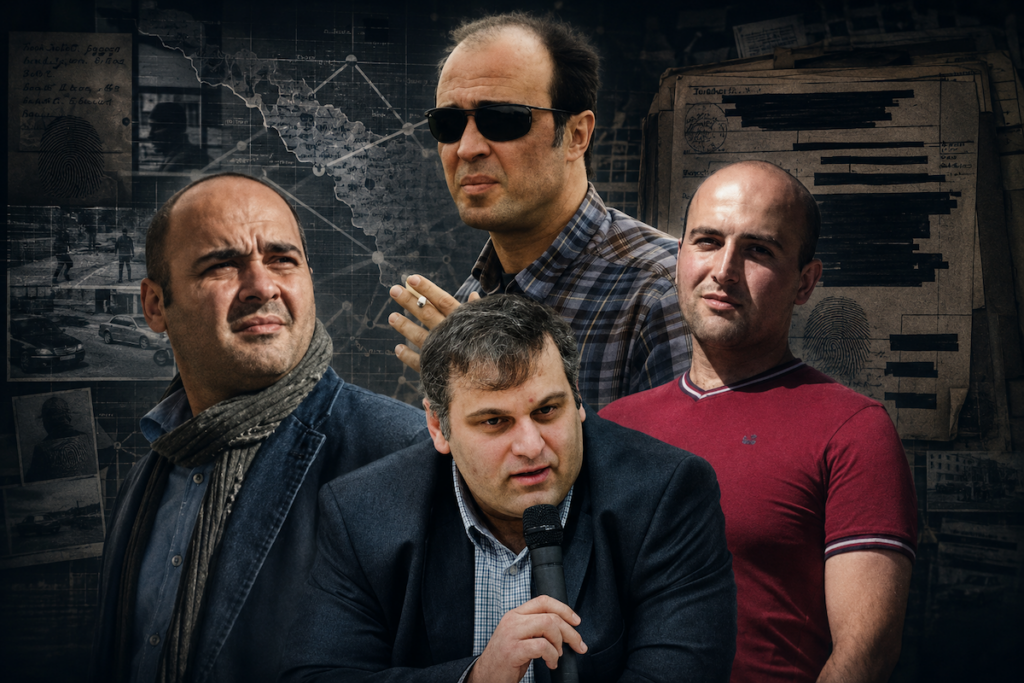
Over the past month, Georgia’s State Security Service (SSG) has arrested four people on espionage charges. The detainees include pro-Russian activists, a journalist and a former public official. Authorities have classified all of the cases, and courts are conducting the proceedings behind closed doors.
Officials have not disclosed which countries the suspects allegedly spied for. However, information has surfaced through unofficial channels, including pro-government television stations. If those reports are accurate, the allegations involve both Russia and several European states.
According to analysts, the entire process lacks a proper legal foundation and serves primarily as a tool for foreign policy messaging and domestic political confrontation against government opponents.
Four “spies” in four weeks
The first person authorities detained was 27-year-old Tamaz Gagloev. The State Security Service announced his arrest on 22 April.
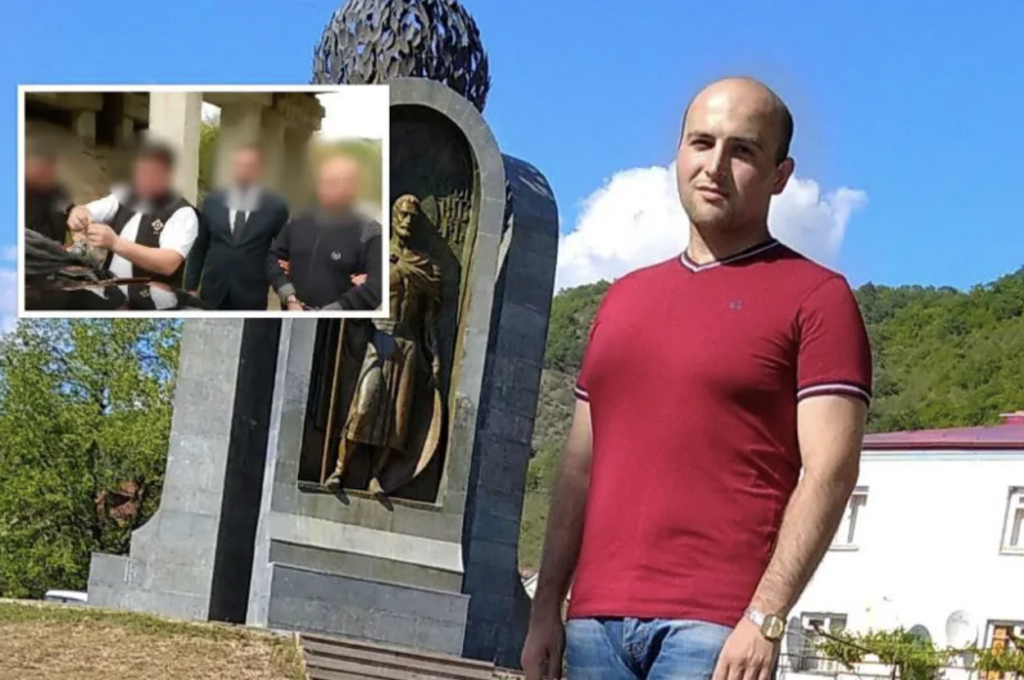
The State Security Service did not identify the country for which Gagloev allegedly carried out espionage activities. However, pro-government television channels Rustavi 2 and Imedi TV reported that the case involved Russia.
According to the SSG, Gagloev collected information on Georgia’s military and law enforcement structures, strategic facilities, bridges and major highways in exchange for payment. Authorities say two other suspects linked to the same case are currently outside Georgia. Interpol has placed both individuals on its international wanted list.
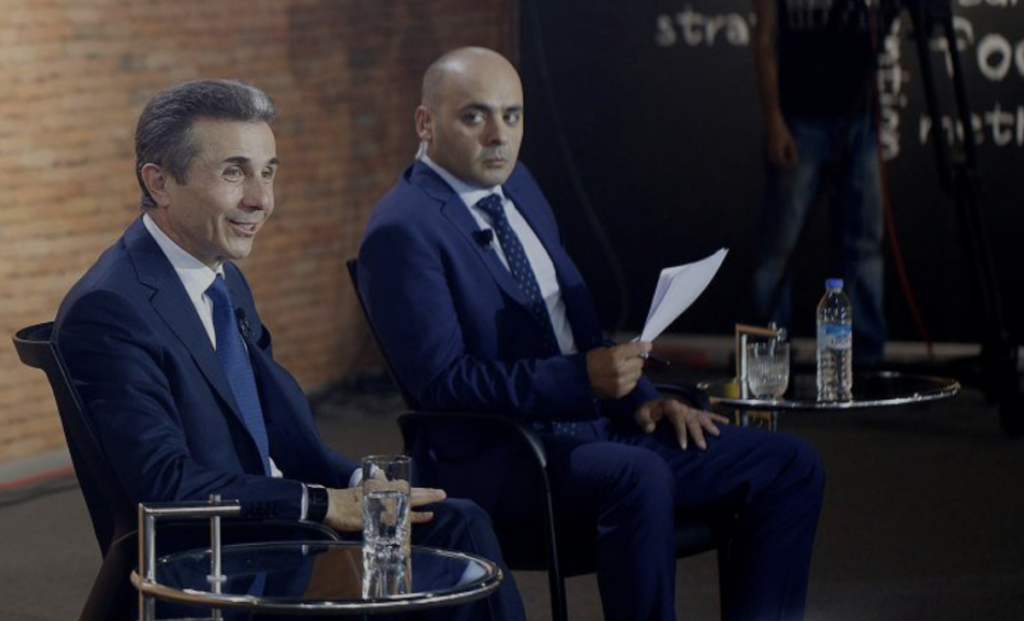
On 5 May, authorities also arrested Giorgi Udzilauri on espionage charges. Udzilauri previously held a senior position in Georgia’s financial police and later headed the public relations department of a holding company owned by Bidzina Ivanishvili, the founder of the ruling Georgian Dream party.
On 8 May, Mamuka Mdinaradze, the state minister responsible for coordinating law enforcement agencies, confirmed that Udzilauri faces accusations of spying for “one of the major European countries”.
On 30 May, the State Security Service arrested two more individuals.
One of them was Gulbaat Rtskhiladze, director of the pro-Russian Eurasia Institute. Once again, the SSG did not identify the country for which he allegedly spied. However, pro-government television channels claimed that the case involved both Russia and Iran.
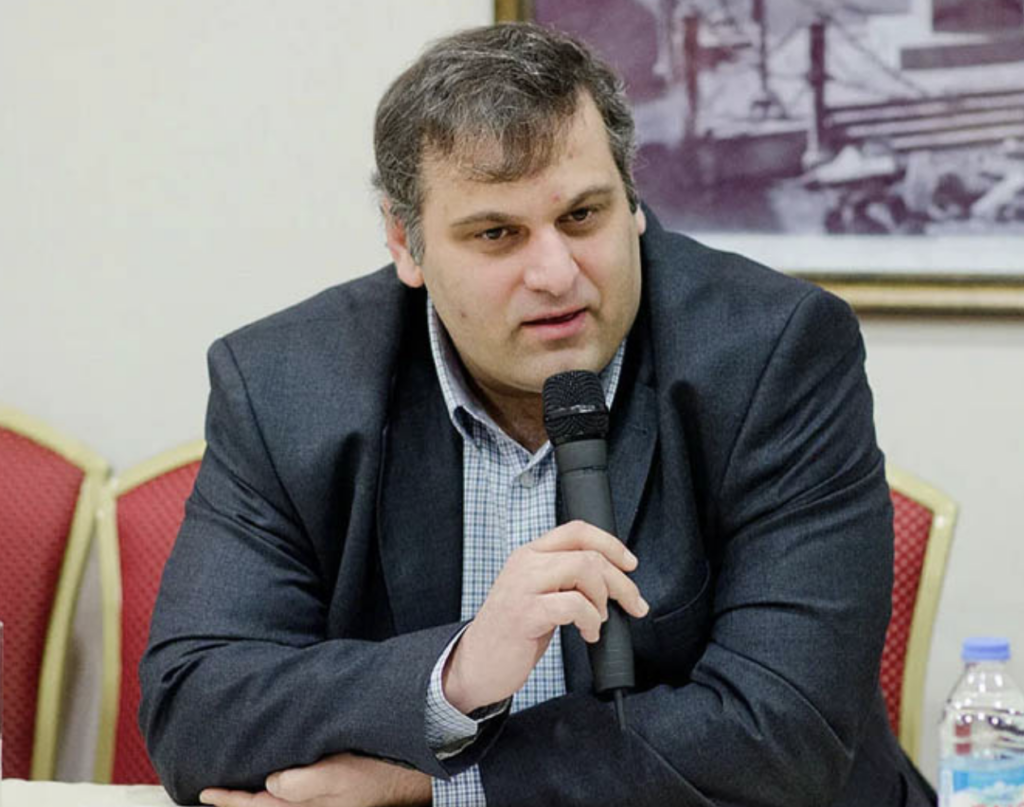
Rtskhiladze’s sympathy for Russia is no secret. In 2008, he launched an online publication whose central narrative blamed Georgia for starting the war with Russia.
More recently, he announced plans to establish a “Council for Monitoring Russophobia” — a body that would compile a catalogue of anti-Russian statements made in Georgia and share that information with “Russian government agencies”.
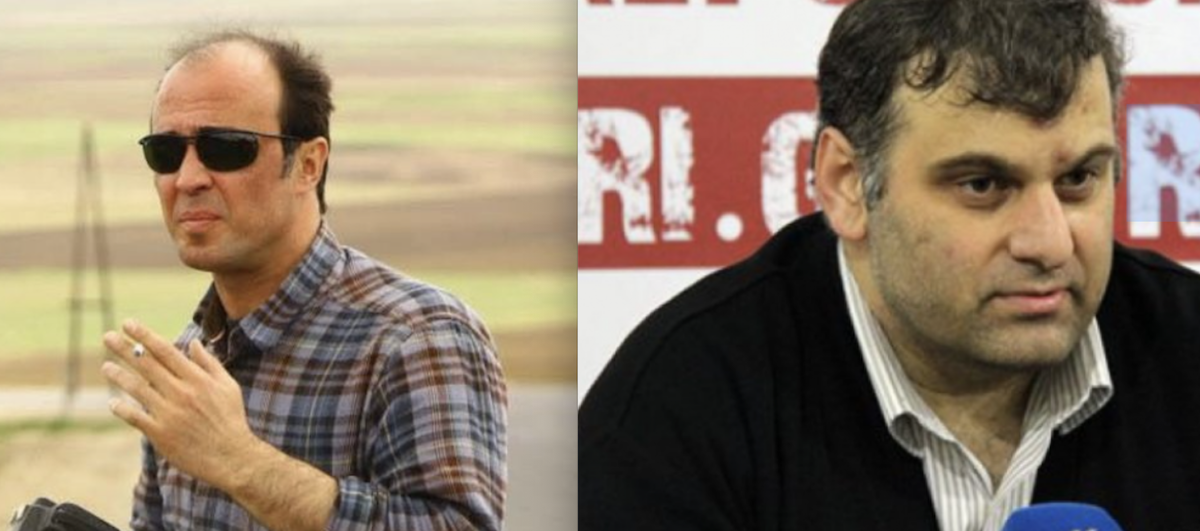
On the same day, 30 May, authorities arrested Irakli Chikhladze on espionage charges. His political views differ sharply from those of Rtskhiladze.
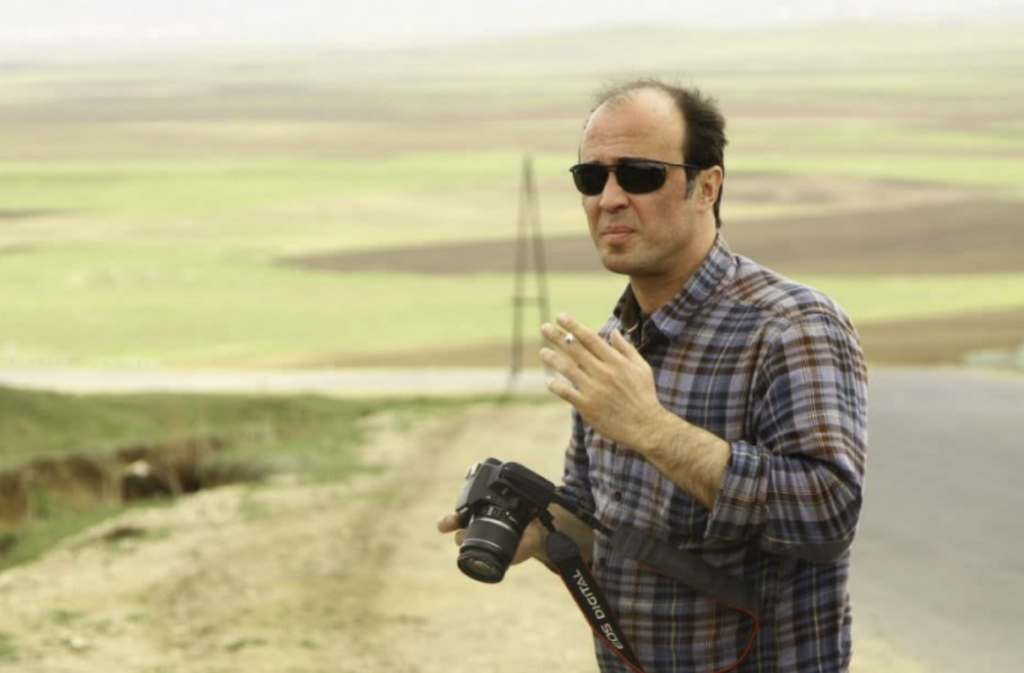
Irakli Chikhladze is a journalist who has worked extensively as a freelancer with Western organisations and media outlets. Authorities accuse him of spying for a European country, reportedly France.
Investigators have presented a more specific version of events in Chikhladze’s case. According to the prosecution, he managed an intelligence network on behalf of a foreign security service, coordinated the activities of several individuals and oversaw the collection and transfer of information.
When a journalist from Imedi TV asked whether the cases involving Rtskhiladze and Chikhladze concerned Russia, Poland, Iran and France, Mamuka Mdinaradze removed only Poland from the list.
What investigators and the authorities say
All of the current cases centre on the same charge: espionage under Article 314, Part 1 of Georgia’s Criminal Code, which classifies espionage as treason.
If convicted, the defendants face prison sentences ranging from eight to 12 years.
Prosecutors say they possess “direct evidence” in the cases against Gulbaat Rtskhiladze and Chikhladze.
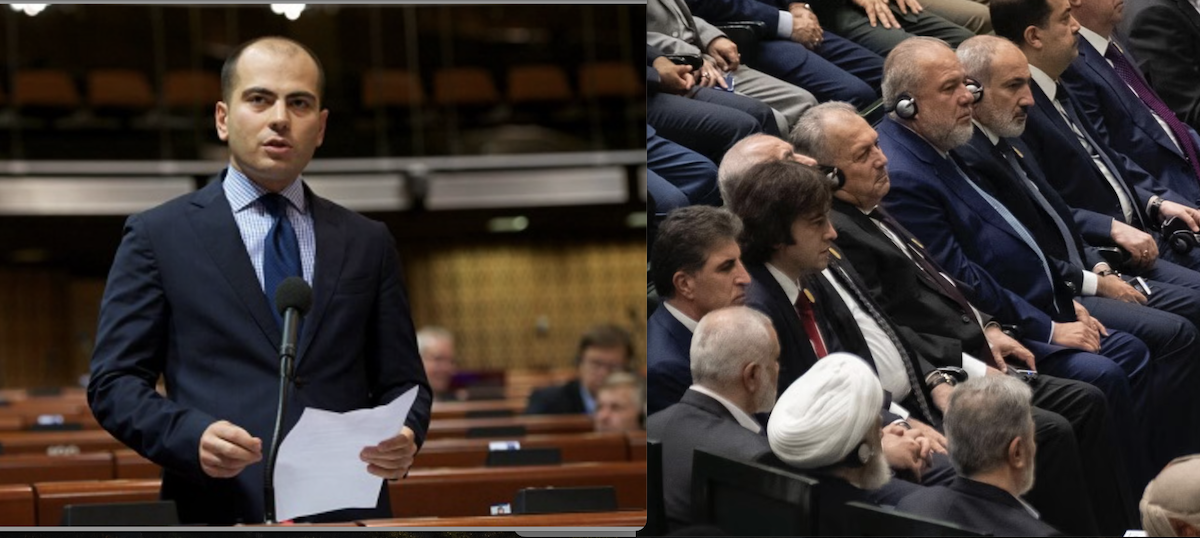
According to prosecutor Elizbar Gozalishvili, investigators have established that both suspects received money, collected and transmitted information, and maintained contacts with foreign intelligence services. He claims that the information concerned not only the activities of Georgia’s security agencies but also the country’s political and public life.
Government representatives say the arrests are the result of long-term operational work by the security services. Mamuka Mdinaradze also argued that the latest arrests followed repeated warnings that the suspects allegedly ignored.
“The State Security Service detained only those individuals who, despite warnings and even after previous arrests, continued certain activities in the direction we have mentioned.”
What the lawyers say
Authorities have classified all of the cases, and lawyers involved in the proceedings have signed non-disclosure agreements.
After leaving the courtroom, Lasha Golubiani, who represents Gulbaat Rtskhiladze, said:
“He had no connection with any foreign intelligence service and acted on nobody’s instructions. This man is not a spy. To accuse someone of espionage or prove such a charge, two elements must exist: the person must act on behalf of a foreign state, collect information, including classified information, and cause harm to the country.”
Golubiani added that the prosecutor himself acknowledged during the hearing that “Mr Gulbaat did not have access to classified information”. According to the lawyer, the prosecution’s evidence consists of “Mr Gulbaat’s public activities”.
He believes the arrest is linked to Rtskhiladze’s proposal to establish a “Council for Monitoring Russophobia”.
Lawyer Giorgi Gelkhauri, who represents Irakli Chikhladze, also argues that the case contains no evidence linking his client to espionage.
“This is a very sad situation. With evidence of this standard, they can accuse anyone, come out and call that person a spy. Then they impose a non-disclosure obligation on us, which means we cannot speak about the case and cannot properly defend ourselves,” Gelkhauri said.
“Balance policy” and “laying the groundwork”
Espionage cases are not new in Georgia’s modern history. Most have traditionally centred on the Russian threat. Given Russia’s longstanding military, intelligence and political interests in Georgia, that pattern has been unsurprising. The threat became even more apparent after the 2008 war.
What makes the current wave of cases different is that the Georgian Dream government is also pursuing suspects accused of spying for European countries.
The arrests come amid a sharp deterioration in the government’s rhetoric towards the West. Terms such as “global war party”, “deep state”, “foreign agents” and claims that foreign actors seek to drag Georgia into war have become common in official discourse. Now, critics argue, the most serious criminal label of all — espionage — has joined that vocabulary.
In this context, the arrests may help create a new narrative: one in which partnership with the West is portrayed not as a security guarantee but as a source of covert interference.
Independent analysts and opposition figures see both domestic and foreign policy calculations behind the cases. Some experts argue that the arrests of pro-Russian activists serve as a balancing act, allowing the authorities to avoid accusations that they are targeting only alleged “Western spies”.
Retired colonel and psychologist Zurab Mkheidze says the search for an external enemy is a common political technique:
“To keep a country under control, you need to identify an external enemy. When that enemy appears powerful enough, it becomes possible to blame it for everything that goes wrong. This is a common pattern in political influence and power games.”
Former intelligence chief Shalva Lomidze views the current cases as a purely political decision. He argues that classifying the investigations and creating an information vacuum is a deliberate tactic:
“This is a signal and a warning to others. It suggests that, if necessary, similar measures can be taken against them as well.”
According to Lomidze, the authorities are using the cases both to intimidate domestic opponents and to signal abroad that they retain full control of the situation. He also believes the government is pursuing a “balance strategy” by targeting individuals linked both to adversarial states and to partner countries.
Zaza Davitaia likewise links Rtskhiladze’s arrest to his proposal to create a “Council for Monitoring Russophobia”. He argues that the authorities are artificially constructing political balance.
Opposition politician Roman Gotsiridze went further, describing the arrests as a “green light” from Moscow to punish individuals — many of whom reportedly hold dual Russian-Ossetian citizenship — whose actions had displeased the Kremlin:
“They cannot openly boast that they have arrested Russian spies, so they leaked the information through their television channels. There is nothing surprising about that.”
Historian and analyst Beka Kobakhidze places the developments in a broader context of political monopoly and relations with Russia. He argues that the ruling party seeks to implement reforms that make Georgia more compatible with the Russian sphere. At the same time, he says, Moscow continues to demand formal recognition of Abkhazia and South Ossetia — a step the authorities cannot take because of domestic resistance.
According to Kobakhidze, the Kremlin has spent years cultivating a more radical pro-Russian pole to pressure the ruling party. In his view, the arrests of Rtskhiladze and other pro-Russian activists help the government preserve its monopoly over that political space. He also believes the real trigger for Rtskhiladze’s arrest was his plan to monitor “Russophobia”, which prompted the authorities to establish their own Interior Ministry unit to monitor “hate speech” rather than allow a rival structure to emerge.
Political commentators argue that, by targeting alleged agents of Western countries, the government is attempting to reinforce its narrative about a “global war party” and foreign interference in domestic affairs. Critics say this approach directly contradicts Article 78 of Georgia’s Constitution, which commits the country to Western integration. The complete secrecy surrounding the cases has further fuelled suspicions that the proceedings are intended to preserve regime stability rather than strengthen national security. Courts have postponed the hearings until late July.
Spies in independent Georgia
Campaigns aimed at uncovering foreign intelligence networks have a long and controversial history in Georgia. During the presidency of Mikheil Saakashvili, espionage cases targeted only individuals accused of working for Russia. According to official figures, authorities arrested 58 people on espionage charges between 2006 and 2010 alone.
The first major scandal erupted on 27 September 2006, when Georgian authorities detained officers linked to Russian military intelligence. The arrests triggered a severe diplomatic crisis with Russia. Moscow recalled its ambassador, suspended air and postal links with Georgia, imposed economic restrictions, and launched a campaign of mass detentions and deportations against ethnic Georgians living in Russia.
The most high-profile operation of that period was Operation Enver. In 2010, Georgia’s Interior Ministry announced that it had uncovered a network allegedly connected to Russia’s military intelligence agency, the GRU. Those arrested included Georgian military pilots, businessmen and Russian citizens. Authorities classified the case, and in July 2011 courts handed down lengthy prison sentences to several defendants.
Later that same year, authorities arrested several prominent photojournalists, including an official government photographer, on espionage charges. The case quickly attracted strong domestic and international criticism and generated significant public attention. The authorities later released the photographers.
Another controversial case from the Saakashvili era involved Vaagn Chakhalyan, chairman of the Javakhk organisation. Authorities arrested him in 2008, and a court sentenced him to ten years in prison in 2009. Saakashvili described Chakhalyan as a “direct agent of Russian intelligence services” who had sought to obstruct the withdrawal of Russian military bases from the Akhalkalaki region.
After the change of government in 2012, the new parliamentary majority radically altered its approach. In December 2012, parliament adopted a resolution recognising 215 people as political prisoners or victims of political persecution. Using that list as a basis, the new Georgian Dream government released most individuals convicted of espionage during the Saakashvili period. An amnesty freed 11 people convicted in the Enver case, as well as Chakhalyan. The new authorities characterised many of the previous government’s cases as fabricated and politically motivated.
The issue of Russian intelligence activity in Georgia later returned to the spotlight. In 2022, former officers of Russia’s Federal Security Service (FSB), Mikhail Sokolov and Vsevolod Osipov, told CNN that Russian intelligence had sent them to Georgia on a special mission. They said their task was to gain the trust of members of the growing Russian diaspora who had fled repression in Russia and to assess public attitudes towards the war in Ukraine.
Another case attracted attention after Albanian authorities detained Russian blogger Svetlana Timofeeva, also known as Lana Sator, in 2022 on allegations of illegally entering a military facility. Before her arrest, she had spent years living in Tbilisi. Georgian opposition figures argued that the case highlighted the lack of effective oversight of Russian citizens entering and residing in the country.
Spy hunt in Georgia