

"Georgia deported journalist Sadygov to avoid protests during Azerbaijan’s president’s visit” - view from Baku






Deportation of an Azerbaijani journalist from Georgia
Azerbaijani observers believe that the reason for the sudden early-morning deportation on April 4 of Azerbaijani opposition journalist Afghan Sadygov from Tbilisi to Baku was an intention to create a comfortable backdrop for the equally unexpected visit to Georgia that same day by the president of Azerbaijan.
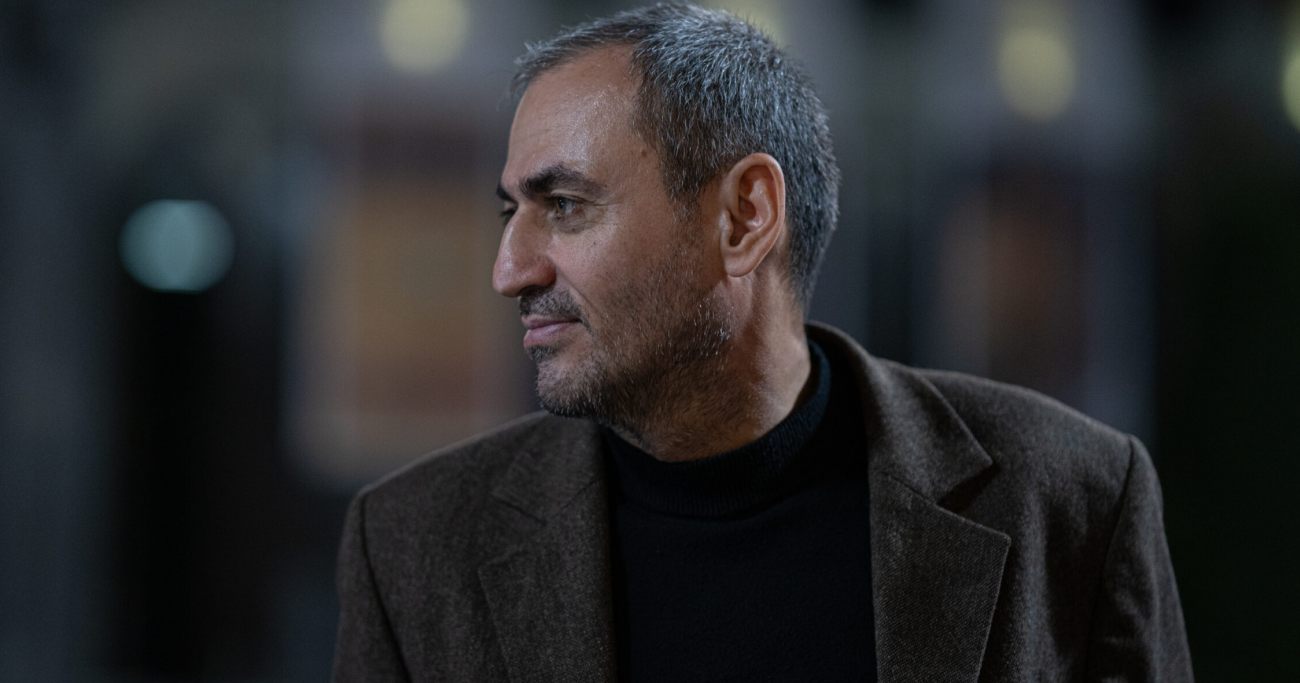
One analyst, speaking on condition of anonymity, described the events as follows:
“No protests were supposed to accompany the arrival of Ilham Aliyev in Tbilisi, as had happened during his recent visit to Washington, where a group of activists shouted offensive slogans and one of them tried to force their way into the hotel where the president was staying.
That is why, on the night before Aliyev’s arrival, Georgian police raided the home of Afghan Sadygov, who has been living in exile in Tbilisi, has for years criticized Ilham Aliyev’s government, and is known for his protest activities. In this way, it appears that the Georgian authorities unquestioningly carried out the will of the Azerbaijani leadership.”
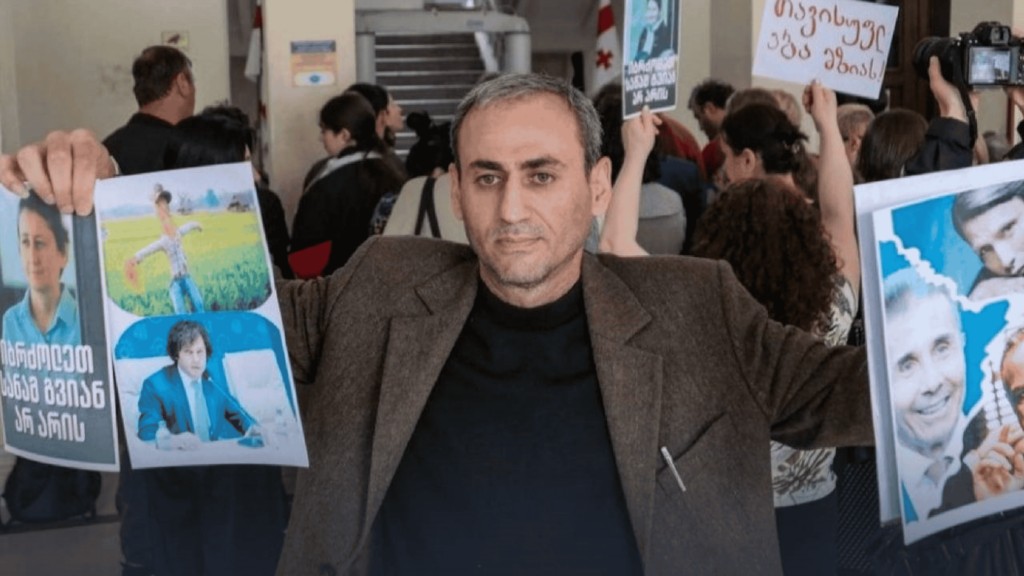
Afghan Sadygov was accused of posting an insulting message about a Georgian police officer on social media. In the early hours of the morning, a court hearing was held, which fined him 2,000 lari (about $700) and ordered his deportation to Azerbaijan. By early morning, he had already been handed over at the border to the Azerbaijani migration service.
His lawyer, Nemat Karimli, said that he was then questioned by the State Migration Service and released after 40 minutes.
- Ilham Aliyev’s visit to Tbilisi: meeting with Bidzina Ivanishvili, key points and reactions
- ‘All within law’: How president of Azerbaijan destroyed or subjugated media
Context: why Sadygov was in Georgia
Afghan Sadygov, who headed the AzelTV news portal, arrived in Georgia in December 2023 with his wife and two children and had been living in Tbilisi ever since. He said the reason for his move was the crackdown on journalists in Azerbaijan. He himself had been detained in Azerbaijan in May 2020 on charges of extortion and sentenced to seven years in prison. The sentence was later reduced, and upon his release, Sadygov immediately left the country.
After that, a new criminal case was opened against him in Azerbaijan, and for nearly two years the authorities sought his extradition from Georgia. In connection with this, Sadygov was detained in 2024 and went on a hunger strike, demanding that he not be extradited to Azerbaijan.
His lawyers appealed to the European Court of Human Rights, requesting a suspension of the extradition. The court issued a corresponding ruling.
However, on April 1, Azerbaijan unexpectedly dropped the criminal case against Sadygov and, accordingly, withdrew its extradition request. Georgian authorities now insist that there was no extradition, and that Sadygov was expelled for violating Georgian law.
The Ministry of Internal Affairs of Georgia also noted that the court took into account the fact that Sadygov had been held responsible for 62 different administrative offenses during his time in Georgia. Most of these violations were related to his participation in pro-European protests in Tbilisi.

Experts say that the root of the incident lies in Georgia’s economic and political dependence on Azerbaijan
Georgian human rights defenders have described Afghan Sadygov’s deportation as unlawful, noting that he may face serious risks in Azerbaijan. Many have angrily characterized what happened as a political gesture by Georgia on the eve of Ilham Aliyev’s visit.
Many Azerbaijani experts believe the incident is indicative of Georgia’s economic and political dependence on Azerbaijan. In a comment to Radio Free Europe/Radio Liberty, human rights defender Zafar Ahmadov said the deportation was the result of an agreement between Baku and Tbilisi.
Many observers also point to a strengthening partnership between the two countries against a shared backdrop of weakening democratic institutions. For this reason, the case of Afghan Sadygov requires a broader view of the emerging system of political relations in the South Caucasus.
In recent years, Azerbaijan has acted in the region not only as a participant in economic and energy projects, but also as a player seeking to expand its political influence.
This influence is manifested less through open diplomatic channels and more through shaping the model of influence over the domestic political course of partner countries.
In this context, certain parallels can be drawn between internal political transformations in Georgia and the Azerbaijani model.

Is Georgia adopting Azerbaijan’s model of suppressing civil society and independent thinking?
Commentary by an independent expert who requested anonymity
“The increasing pressure on NGOs and independent media in Georgia, along with tighter control over the political environment, resembles a trajectory already familiar from Azerbaijan.
This trajectory involves последовательные stages: first the weakening of civil society, then the narrowing of the information space, and ultimately the minimization of political competition.
Azerbaijan already demonstrates an institutionalized form of this model.
Close economic and energy ties with Azerbaijan, as well as security considerations, may be pushing Tbilisi to align its policies with Baku. Such adaptation may come at the cost of further weakening democratic institutions.
In the long term, this raises serious questions about the direction of the region’s political development.”
Deportation of an Azerbaijani journalist from Georgia