Georgia to elect new Patriarch within two months: What we know about the candidates






Who will become Georgia’s new Patriarch
Following the funeral of Ilia II, the Georgian Orthodox Church has entered a transitional period. A system that for nearly 50 years revolved around a single figure is now shifting towards collective decision-making. Within the next two months, the Church must elect a new Patriarch. While the process is formally строго regulated, in practice it is far more complex and multi-layered.
A Church without a Patriarch: who is in charge now?
The Church is currently led by Metropolitan Shio Mujiri of Senaki and Chkhorotsku. This is not a temporary arrangement or political compromise, but a pre-established mechanism. Ilia II himself appointed Shio Mujiri as locum tenens of the Patriarchal throne in 2017. Following the Patriarch’s death, his authority took effect automatically.
Formally, all members of the Church are required to obey the Throne. In practice, however, this marks the beginning of a phase that will test how unified the internal structure of the Church remains.
How the Patriarch is elected: a complex but regulated process
The election of a Patriarch does not take place in a single session or through a single decision. The process is divided into two stages and involves several bodies.
Stage one: the Holy Synod nominates candidates
The first stage involves a session of the Holy Synod, which currently consists of 39 hierarchs.
Each member of the Synod has the right to nominate one candidate, including themselves. A secret ballot is then held to select the three candidates who receive the highest number of votes.
Stage two: an expanded Church vote
The second stage involves a broader vote attended by all members of the Synod, as well as representatives of the clergy and laity invited from dioceses, along with delegates from monasteries and theological schools.
They take part in the discussion, but only members of the Holy Synod have voting rights. This means the final decision remains in the hands of the same 39 individuals.
A candidate who secures more than half of the votes — at least 20 — will be elected Patriarch. If no candidate reaches that threshold, a second round will be held between the two leading contenders.
Timeline: when will the Church have a new leader?
Under Church rules, the process is strictly time-bound.
The expanded vote must take place no earlier than 40 days after the Patriarch’s death and no later than two months.
This means that within a maximum of two months, the Georgian Orthodox Church will have a new Patriarch.
The enthronement will traditionally take place at Svetitskhoveli Cathedral.
A will no one has seen
One of the key documents shaping the process is the Patriarch’s will. However, it has not been officially published, and there is no information about when or whether it will be made public.
Andria Jagmaidze, head of the Georgian Patriarchate’s press service, has said that the appointment of Shio Mujiri in 2017 should be seen as reflecting the Patriarch’s “will”. According to him, Ilia II had stated that everything that needed to be included in the will had already been said publicly.
Who could become Patriarch?
The most likely candidate for the post, reportedly backed by the ruling Georgian Dream party, is Shio Mujiri.
No other specific candidates have been publicly identified.
According to Church rules, the criteria for a Patriarch are strictly defined:
- must be an ethnic Georgian;
- must be a serving bishop;
- must have a theological education;
- must be a monk;
- must be aged between 40 and 70;
- must have experience in Church administration.
Formally, the process is clear. In practice, however, the key questions go beyond procedure. Who controls the votes within the Synod? How consolidated is support for any given candidate? Will there be competition within the Church?
Over 49 years of Ilia II’s leadership, the Church developed into a strong, centralised system. The Patriarch’s authority was so significant that internal Church conflicts rarely became public. After his death, that balance may begin to shift.
What is known about the frontrunner, Shio Mujiri?
Metropolitan Shio Mujiri of Senaki and Chkhorotsku is currently seen as the most realistic contender for the Patriarchal post.
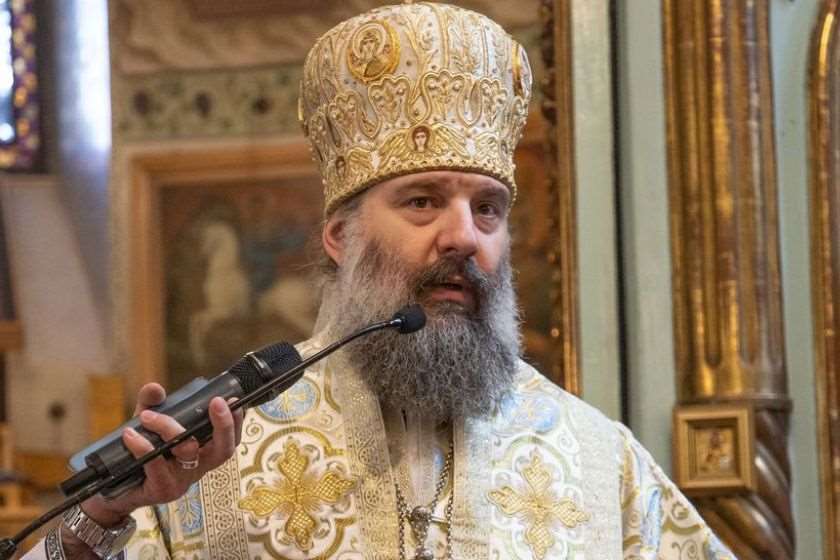
Metropolitan Shio, born Elizbar Mujiri, is 57. He studied at Tbilisi School No. 53 before continuing his education at the Tbilisi State Conservatoire, where he specialised in cello.
His church life began in 1993, when he took monastic vows and received the name Shio. Shortly afterwards, he was ordained as a deacon and then as a priest. Since the 1990s, he has been actively involved in church life, serving as rector of several churches, including St George’s Church in Kldisubani and St Nicholas Church at Narikala Fortress.
He received theological education at Batumi Theological Seminary and later continued his studies at the Moscow Theological Academy and St Tikhon’s Theological Institute.
In 2003, the Holy Synod appointed him head of the newly established Senaki and Chkhorotsku diocese. His career progressed rapidly in the following years: he became an archbishop in 2009 and was elevated to the rank of metropolitan in 2010. Shio Mujiri also oversees parishes of the Georgian Orthodox Church in Australia and New Zealand.
He was a childhood friend of former president Giorgi Margvelashvili and businessman Levan Vasadze.
Who controlled the final day of the Patriarchate?
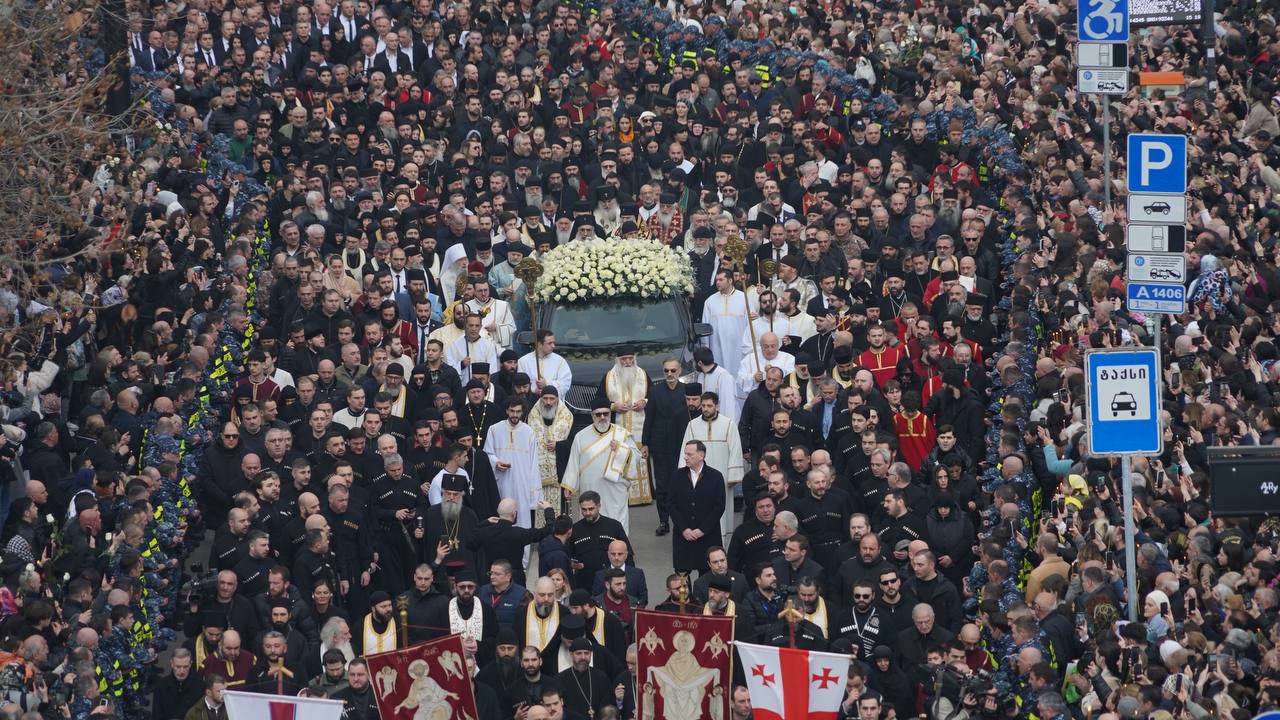
The Patriarch’s funeral raised another key issue — the relationship between the Church and the state.
On the day of Ilia II’s funeral, access to the Holy Trinity Cathedral and the farewell ceremony was restricted to those with special passes.
These passes were largely issued to representatives of the ruling party, their families, as well as public figures and celebrities seen as close to Georgian Dream.
Among lay speakers, only government representatives were allowed to deliver farewell speeches, including the president, the prime minister and the honorary chairman of Georgian Dream, Bidzina Ivanishvili.
Opposition representatives — including non-parliamentary parties and former presidents Giorgi Margvelashvili and Salome Zourabichvili — were denied entry to the cathedral.
The funeral was organised by a joint commission involving both government and church representatives. However, it remained unclear who decided, and on what basis, who would be allowed inside the cathedral.
Theologian Shota Kintsurashvili described the process as “uncomfortable and unfair”, while political analyst Archil Gamzardia said it appeared to be an attempt to turn religious authority into political capital.
Who will become Georgia’s new Patriarch