Disinformation ahead of Armenia’s elections: new claims exposed






Disinformation campaigns in Armenia
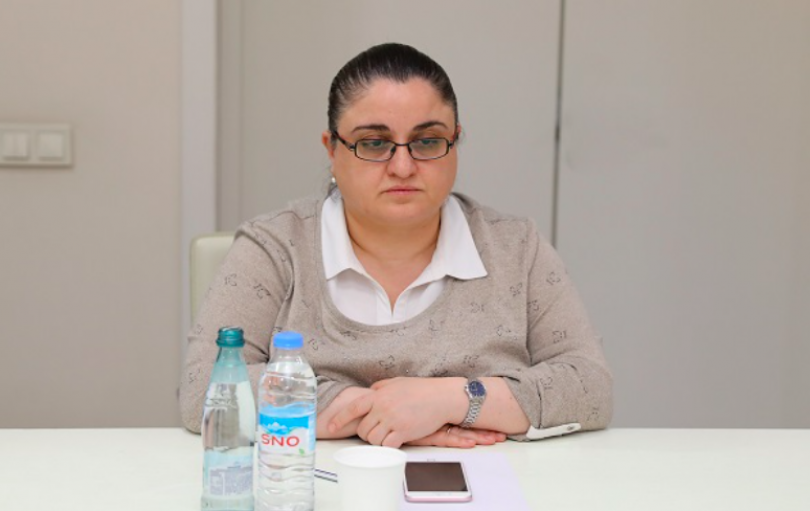
As Armenia approaches parliamentary elections, disinformation campaigns targeting the public have intensified. The press secretary of Prime Minister Nikol Pashinyan regularly issues warnings about new false claims and publishes rebuttals. Most recently, Nazeli Baghdasaryan reported another fake publication. It alleged that the Armenian prime minister and several officials were involved in trafficking and the sale of organs.
Baghdasaryan rejected the claims and said they had no basis in fact. “I consider it necessary to clearly state that this publication is disinformation and should be regarded as another manifestation of hybrid information actions,” she said.
The fact-checking platform of Armenian outlet CivilNet examined the methods used in these disinformation campaigns. Journalists found that false claims capable of influencing voters ahead of the elections first spread on social media. Anonymous users often post them. In other cases, accounts that had remained inactive for long periods begin sharing them again. Russian-language Telegram channels also take part in these campaigns. They circulate fake front pages of well-known French publications.
More details follow on what is happening, the types of disinformation involved, and how it spreads across social media and the media landscape.
- ‘Russia trying to send tens of thousands of voters to Armenia’s elections’: debate in Yerevan
- Armenian parliament vice-speaker urges voters to ‘burn bridges with oligarchs’
- ‘Opposition aims to take power by forming post-election coalition’ – Armenian parliament vice-speaker
‘An attempt to create a shocking information backdrop‘
Commenting on allegations of “trafficking and organ sales” against the prime minister, published on the website VT Foreign Policy, Pashinyan’s press secretary said those behind the claims deliberately choose highly sensitive topics. Such issues inevitably affect public emotions. In this case, the claims touched on healthcare, organ transplantation and trafficking.
She described it as an attempt to create a “shocking and discrediting information backdrop”.
“Such a methodology is one of the common tools of information manipulation. It uses topics to which society is especially sensitive in order to undermine trust in state institutions and their leaders,” she said.
Nazeli Baghdasaryan also noted how the material spread. It first appeared on social media. Azerbaijani media outlets then picked it up. After that, “certain political circles” in Armenia amplified it further. She stressed that this sequence reflects a typical pattern for the spread of fake news in the regional information space.
CivilNet debunks fake ‘Macron–Pashinyan deal‘
On 11 March, the Telegram channel “Odessa Za Pobedu!” shared a post during Pashinyan’s visit to France. The post claimed that French President Emmanuel Macron was urging Nikol Pashinyan to confront Russia.
“Macron guarantees Pashinyan support after the elections if he starts a war with Russia.”
To make the claim look credible, the post included images of what it presented as the front pages of French newspapers Libération, Le Parisien, and the French Jewish community outlet ActuJ.
Another Telegram channel also cited Libération. It claimed the paper reported that Pashinyan was seeking a deal with Macron to “provoke a conflict with Russia”.
CivilNet reviewed the publications and found that all the attached images were fake.
The actual front pages of the newspapers on those dates showed different stories and photographs.
“Libération’s front page on 10 March featured US President Donald Trump. Le Parisien’s front page focused on rising fuel prices. ActuJ is a weekly paper, and the issues closest to that date, 4 and 11 March, also had completely different front pages from those shown in the fake material,” CivilNet journalists said.
In one video circulating on X, the authors claim that under a supposed “secret Macron–Pashinyan deal”, Armenian political consultants travelled to France to learn vote manipulation techniques and apply them in the upcoming elections in Armenia.
“The video uses the logo of the US-based fact-checking organisation NewsGuard to create the impression that the information comes from a credible source,” Armenian journalists said.
They checked the claims and found that a user named Jocelyn McMorrow first shared the video on X. The account had remained inactive since 2013. It suddenly became active again on 9 March 2026.
“A sudden reactivation of an account after a long period of inactivity often suggests that it may have been repurposed or taken over for use in information campaigns,” the fact-checkers explained.
Journalists also examined disinformation related to elections in France. They found that fake stories again used logos of well-known media outlets or fabricated front pages to create an “illusion of credibility”.
“These methods resemble those used in a disinformation campaign known as ‘Matryoshka’. In that campaign, false or fabricated materials first appear on social media. Coordinated networks of accounts and channels then amplify them,” CivilNet said.

Disinformation campaigns in Armenia